Fire Safety Audit as per National Building Code 2016: A Complete Guide

Hazard Identification and Risk Assessment study report Consultancy and training services by TheSafetyMaster
May 19, 2025
How Do the Consultants Perform Fire Safety Audits in the Workplace?
May 20, 2025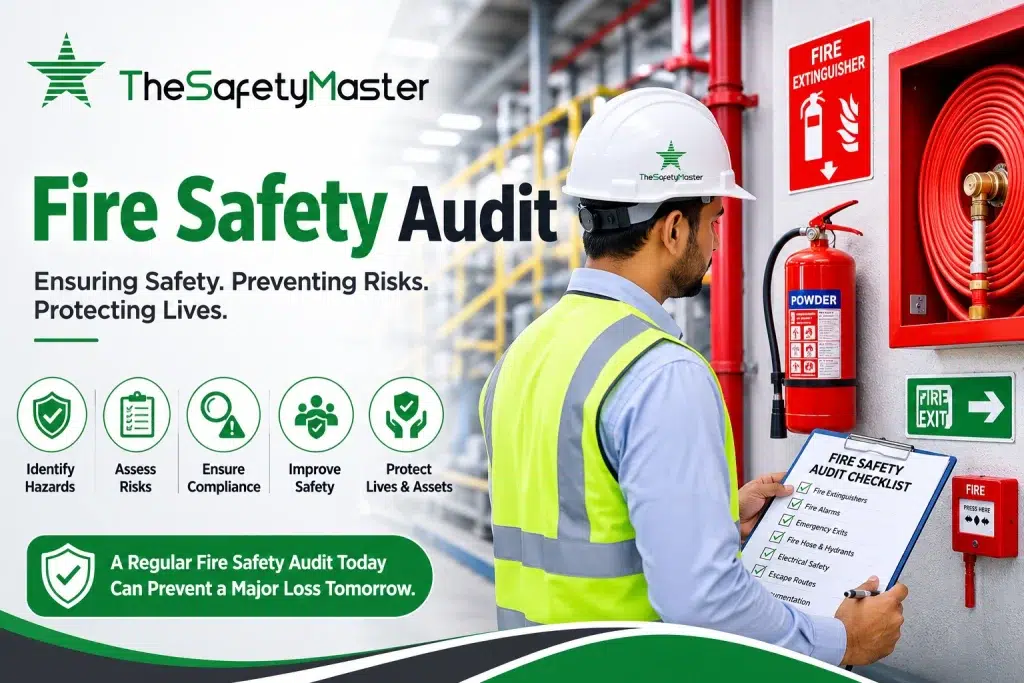
Fire safety is an important part of protecting people, buildings, equipment, and business operations from fire-related risks. A proper fire safety audit guide helps organizations identify fire hazards, check fire protection systems, improve emergency preparedness, and find gaps in compliance.
A fire can spread within minutes and cause serious injury, property damage, production loss, and business interruption. Regular fire safety audits help organizations identify problems before an emergency occurs. The Safety Master provides professional safety and risk management solutions to help organizations improve fire prevention, protection, and emergency preparedness.
What Is a Fire Safety Audit?
A Fire Safety Audit is a systematic examination of a building, workplace, industrial facility, or other premises to identify fire hazards and evaluate the effectiveness of existing fire prevention and protection measures.
The audit normally covers fire detection systems, fire extinguishers, hydrants, sprinklers, emergency exits, fire doors, electrical safety, emergency lighting, evacuation arrangements, fire training, documentation, and maintenance records.
The main purpose is not simply to check whether fire equipment exists. The audit should determine whether the equipment is suitable, accessible, maintained, tested, and ready to work during an emergency.
Why Is a Fire Safety Audit Important?
A regular fire safety audit can help an organization understand its actual level of fire preparedness.
Protects Life and Property
The first priority of fire safety is protecting employees, visitors, customers, contractors, and other people inside the premises.
A fire safety audit identifies conditions that could increase the chance of fire or make evacuation difficult.
Identifies Fire Hazards
Auditors look for common hazards such as:
- Electrical faults and overloaded circuits
- Poor housekeeping
- Improper storage of combustible materials
- Flammable liquid and gas hazards
- Unsafe hot work
- Blocked emergency exits
- Improper chemical storage
- Poor maintenance of fire protection systems
- Inadequate emergency lighting
- Lack of employee fire safety awareness
Improves Fire Safety Compliance
A structured audit can help organizations identify gaps against applicable building, fire, electrical, industrial, and other safety requirements.
The National Building Code of India provides comprehensive guidance for fire and life safety, while relevant Indian Standards address areas such as fire detection, fire extinguishers, and fire safety audits.
Supports Business Continuity
A major fire can stop production, damage equipment, destroy documents, affect employees, and interrupt customer services.
Finding and correcting fire risks early can reduce the possibility and potential impact of such incidents.
Fire Safety Audit Guide: What Does an Audit Check?
A professional fire safety audit should cover both physical conditions and management systems.
Fire Detection and Alarm Systems
The auditor should check:
- Smoke detectors
- Heat detectors
- Manual call points
- Fire alarm control panels
- Alarm sounders
- Visual alarm indicators where applicable
- System fault indications
- Testing and maintenance records
- Backup power supply
The important question is whether the system can detect and communicate a fire quickly and reliably.
Fire Extinguishers
Fire extinguishers should be checked for:
- Correct extinguisher type
- Suitable location
- Accessibility
- Identification and signage
- Physical condition
- Inspection and service status
- Pressure condition where applicable
- Proper mounting
- Maintenance records
Different fire hazards require appropriate extinguishing methods. Extinguishers should therefore be selected according to the hazards present.
Fire Hydrant and Hose Reel Systems
The audit may examine:
- Hydrant points
- Hose reels
- Fire hoses
- Hydrant valves
- Fire pumps
- Fire water tanks
- Pressure availability
- Accessibility
- Maintenance and testing records
Firefighting systems should not only be installed; they should also be maintained and periodically tested.
Sprinkler Systems
Where sprinkler systems are provided, the audit should consider:
- Sprinkler head condition
- Coverage
- Control valves
- Water supply
- Fire pumps
- Pressure
- Obstructions
- Maintenance records
Damaged, blocked, painted, or poorly maintained sprinkler components can affect system performance.
Emergency Exits and Evacuation Routes
Emergency escape arrangements are a major part of fire safety.
The auditor should check whether:
- Exit routes are clearly identified
- Emergency exits remain accessible
- Escape routes are free from obstruction
- Exit doors operate correctly
- Emergency lighting is available
- Exit signs are visible
- Assembly points are identified
- Evacuation plans are displayed
- Employees understand emergency procedures
An emergency exit is useful only when people can reach and use it quickly during an emergency.
Electrical Fire Safety Inspection
Electrical faults are an important area to consider during a fire safety audit.
The inspection may include:
- Electrical panels
- Wiring condition
- Cable management
- Overloaded circuits
- Loose connections
- Temporary electrical arrangements
- Earthing
- Electrical equipment
- Housekeeping around electrical panels
- Maintenance records
Electrical rooms and panels should be kept accessible and free from unnecessary combustible storage.
Fire Prevention and Housekeeping
Good housekeeping can significantly reduce fire risk.
During an audit, attention should be given to:
- Accumulation of combustible waste
- Storage of cardboard and packaging
- Flammable material storage
- Chemical storage
- Smoking controls
- Hot work areas
- Welding and cutting activities
- Storage near electrical equipment
- Dust accumulation
- Waste disposal arrangements
Keeping work areas clean and controlling combustible materials are simple but important fire prevention measures.
Fire Safety Training and Emergency Preparedness
Fire protection equipment alone cannot provide complete protection. Employees should know what to do when a fire or alarm occurs.
A fire safety audit can review:
- Fire safety training
- Emergency response procedures
- Mock drills
- Evacuation training
- Fire extinguisher awareness
- Emergency contact information
- Roles and responsibilities
- Assembly point arrangements
- Emergency response plans
Regular training helps employees respond more confidently during an emergency.
Fire Safety Audit Process: Step-by-Step Guide
A structured audit process helps ensure important areas are not missed.
Step 1: Review Documents
Before or during the audit, relevant documents may be reviewed, including:
- Fire NOC and related approvals
- Building plans
- Fire system drawings
- Maintenance records
- Inspection certificates
- Fire drill records
- Emergency response plans
- Previous audit reports
- Training records
Step 2: Conduct a Site Inspection
The auditor conducts a physical inspection of the premises.
This can include production areas, warehouses, offices, electrical rooms, utility areas, storage areas, kitchens, parking areas, emergency exits, and fire protection equipment.
Step 3: Identify Fire Hazards
Potential sources of ignition, combustible materials, unsafe activities, and weaknesses in fire protection systems are identified.
Step 4: Assess the Risk
Identified hazards should be evaluated according to their potential severity and likelihood.
Critical findings should receive immediate attention.
Step 5: Check Fire Protection Systems
Detection, alarm, suppression, firefighting, emergency lighting, fire doors, and other applicable systems should be assessed for condition and readiness.
Step 6: Prepare the Fire Safety Audit Report
The audit report should clearly document:
- Audit observations
- Identified hazards
- Photographs where appropriate
- Compliance gaps
- Risk classification
- Recommendations
- Corrective actions
- Priority and responsibility
- Suggested completion timeline
Step 7: Corrective Action and Follow-Up
An audit should not end with the report.
Management should track corrective actions and verify that important deficiencies have been properly closed.
Fire Safety Audit Checklist
A basic fire safety audit checklist can include the following areas:
- Fire extinguishers available and accessible
- Correct extinguisher type provided
- Fire alarm system functional
- Smoke and heat detectors maintained
- Manual call points accessible
- Fire hydrants accessible
- Fire hoses in good condition
- Fire pumps maintained and tested
- Fire water tank available as required
- Sprinkler system maintained where applicable
- Emergency exits clearly marked
- Escape routes free from obstruction
- Emergency lighting functional
- Fire doors maintained
- Exit signage visible
- Electrical panels maintained
- Combustible materials properly stored
- Flammable materials properly controlled
- Emergency plan available
- Fire drills conducted
- Employees trained in fire response
- Inspection and maintenance records available
This checklist provides a starting point. The actual audit checklist should be customized according to the building type, occupancy, processes, fire hazards, applicable regulations, and installed fire protection systems.
Fire Safety Audit for Different Industries
Fire risks vary from one industry to another. Therefore, a fire safety audit should be specific to the facility.
Manufacturing Industries
Manufacturing facilities may have machinery, electrical equipment, combustible materials, chemicals, hot work, and production processes that increase fire risk.
The audit should focus on process hazards, ignition sources, storage, fire protection systems, emergency response, and employee preparedness.
Warehouses
Warehouse audits should pay special attention to storage arrangements, combustible materials, aisle access, electrical systems, fire detection, sprinklers, emergency exits, and housekeeping.
Hotels and Commercial Buildings
Hotels, offices, malls, and commercial buildings often have high occupant density.
Audits should focus on evacuation routes, emergency exits, fire alarms, emergency lighting, fire extinguishers, fire doors, staff training, and emergency response procedures.
Hospitals
Hospitals require special attention because patients may have limited mobility or may need assistance during evacuation.
Fire detection, compartmentation, emergency planning, electrical safety, oxygen-related hazards, staff training, and evacuation arrangements are important areas.
Schools and Educational Institutions
Schools should have clear evacuation routes, fire alarms, extinguishers, emergency plans, trained staff, assembly areas, and regular drills.
Fire Safety Audit vs Fire NOC
A Fire NOC and a fire safety audit are not the same thing.
A Fire NOC is an approval or clearance issued by the relevant fire authority based on applicable requirements. A fire safety audit is a systematic assessment used to identify fire risks, safety gaps, and the effectiveness of fire protection measures.
Organizations should not assume that having a valid Fire NOC means every fire safety condition will remain satisfactory over time. Equipment can become defective, exits can become blocked, storage arrangements can change, and maintenance can be missed.
Regular audits help identify these changes.
How Often Should a Fire Safety Audit Be Conducted?
The required or recommended frequency depends on the type of building, occupancy, processes, fire hazards, applicable regulations, and organizational risk profile.
Higher-risk facilities may require more frequent inspections and audits than lower-risk offices.
Organizations should also consider conducting an additional audit after:
- Major building modifications
- Changes in production processes
- Installation of new equipment
- Significant changes in occupancy
- A fire or near-miss
- Major changes in chemical or combustible material storage
- Significant changes to fire protection systems
Benefits of Professional Fire Safety Audits
A professional audit can provide an independent assessment of the organization’s fire safety arrangements.
Key benefits include:
- Identification of hidden fire hazards
- Improved emergency preparedness
- Better maintenance of fire protection systems
- Identification of compliance gaps
- Improved employee awareness
- Prioritized corrective actions
- Better documentation
- Reduced potential for fire-related losses
- Improved overall safety performance
Why Choose The Safety Master for Fire Safety Audit?
The Safety Master supports organizations with professional safety, risk management, and fire safety solutions.
A structured audit approach can help organizations understand their fire risks, identify gaps, evaluate fire protection arrangements, and develop practical corrective actions.
Whether you operate a manufacturing facility, warehouse, commercial building, hotel, hospital, educational institution, or other workplace, a properly planned fire safety audit can help strengthen your overall fire prevention and emergency preparedness.
Conclusion
A good fire safety audit guide should go beyond checking whether fire extinguishers are present. It should examine fire hazards, detection systems, firefighting equipment, emergency exits, electrical safety, storage practices, emergency procedures, employee training, documentation, and maintenance.
Regular assessment helps organizations identify weaknesses before they become serious problems. By conducting systematic audits and closing identified gaps, businesses can create a safer workplace and improve their readiness for fire emergencies.
For professional fire safety audit and risk management support, The Safety Master can help organizations develop a practical approach to identifying and controlling fire risks.
FAQs
1. What is a fire safety audit?
A fire safety audit is a systematic assessment of a building or workplace to identify fire hazards and evaluate fire prevention, protection, emergency response, and compliance arrangements.
2. What is included in a fire safety audit checklist?
A checklist commonly covers fire extinguishers, alarms, detectors, hydrants, sprinklers, emergency exits, fire doors, emergency lighting, electrical safety, housekeeping, training, drills, documentation, and maintenance records.
3. Why is a fire safety audit important?
It helps identify fire hazards, detect gaps in fire protection systems, improve emergency preparedness, support compliance, and reduce the potential impact of fire incidents.
4. How often should a fire safety audit be conducted?
Frequency depends on the facility’s risk level, occupancy, processes, applicable regulations, and changes to the premises. Higher-risk facilities may need more frequent audits.
5. Is a Fire NOC the same as a fire safety audit?
No. A Fire NOC is an approval or clearance from the relevant authority, while a fire safety audit is a systematic assessment of fire hazards, protection systems, preparedness, and safety gaps.
6. Who should conduct a fire safety audit?
A fire safety audit should be conducted by competent and appropriately qualified professionals with knowledge of fire protection systems, applicable requirements, risk assessment, and emergency preparedness.