
Environmental Management Audit: Complete Guide to Environmental Compliance and Performance Improvement
An Environmental Management Audit is a systematic evaluation of an organization’s environmental practices, processes, legal compliance, and overall environmental performance. It helps businesses identify environmental risks, reduce pollution, improve resource efficiency, and maintain compliance with applicable regulations. The Safety Master provides professional audit and safety consulting support to help organizations strengthen their environmental management systems and achieve continuous improvement.
What Is an Environmental Management Audit and Why Is It Important for Organizations?
An Environmental Management Audit is a structured assessment of an organization’s environmental management system, operational activities, documentation, and compliance requirements. The audit determines whether environmental policies and procedures are properly implemented and whether the organization is effectively controlling its environmental impacts.
Regular environmental audits can help organizations:
- Identify environmental risks and compliance gaps
- Evaluate environmental policies and procedures
- Reduce waste, emissions, and pollution
- Improve water and energy management
- Check compliance with applicable environmental laws
- Identify opportunities for cost reduction
- Improve environmental performance
- Strengthen environmental documentation and records
- Support continual improvement of the Environmental Management System
What Are the Main Objectives of an Environmental Management Audit?
The primary objective is to evaluate whether an organization’s environmental management practices are effective, compliant, and aligned with its environmental objectives.
Key objectives include:
Identifying Environmental Risks
Auditors assess activities that may create environmental impacts, including waste generation, emissions, wastewater discharge, chemical handling, storage, and resource consumption.
Checking Legal and Regulatory Compliance
The audit reviews whether the organization meets applicable environmental requirements, permits, consent conditions, standards, and regulatory obligations.
Evaluating Environmental Management Systems
The auditor examines whether environmental policies, responsibilities, procedures, monitoring systems, and corrective actions are properly implemented.
Improving Environmental Performance
The audit identifies areas where an organization can reduce environmental impacts and improve the efficient use of energy, water, materials, and other resources.
Key Areas Covered During an Environmental Management Audit
A comprehensive audit may cover several operational and management areas.
Environmental Policy and Management System
The audit reviews the organization’s environmental policy, objectives, responsibilities, procedures, and management controls.
Legal Compliance and Documentation
Auditors verify relevant environmental approvals, permits, licenses, monitoring reports, records, and compliance documentation.
Waste Management
The audit evaluates the generation, segregation, storage, transportation, treatment, recycling, and disposal of different types of waste.
Water and Wastewater Management
Water consumption, wastewater generation, treatment systems, discharge quality, monitoring, and related records may be assessed.
Air Emissions and Pollution Control
The audit can review sources of air emissions, pollution-control equipment, monitoring practices, and compliance with applicable requirements.
Hazardous Material and Chemical Management
Chemical storage, labeling, handling, spill prevention, emergency arrangements, and disposal practices are reviewed to identify environmental risks.
Energy and Resource Efficiency
Organizations can assess energy consumption, material usage, resource efficiency, and opportunities for reducing environmental impact.
Emergency Preparedness
Environmental emergency scenarios such as chemical spills, leaks, uncontrolled releases, and other incidents are reviewed to determine whether appropriate response arrangements are available.
How Is an Environmental Management Audit Conducted?
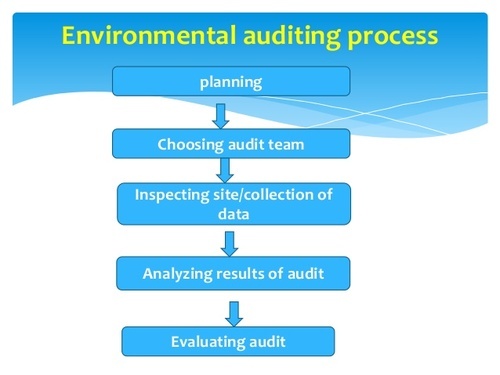
A professional audit generally follows a systematic process.
1. Audit Planning
The audit scope, objectives, locations, activities, criteria, and audit schedule are defined before the assessment begins.
2. Document Review
Relevant policies, procedures, permits, registers, monitoring reports, environmental records, inspection reports, and previous audit findings are reviewed.
3. Site Inspection
Auditors visit the facility to observe actual working conditions and compare operational practices with documented procedures and compliance requirements.
4. Employee and Management Interviews
Discussions with responsible personnel help auditors understand environmental responsibilities, operational controls, training, and implementation practices.
5. Compliance Evaluation
Environmental practices are compared with applicable legal, regulatory, organizational, and management-system requirements.
6. Identification of Findings
Nonconformities, observations, environmental risks, and improvement opportunities are documented with supporting evidence.
7. Audit Report
The final report presents audit findings, compliance gaps, risks, recommendations, and suggested corrective actions.
8. Corrective Action and Follow-Up
The organization develops corrective actions and monitors their implementation to ensure identified issues are effectively addressed.
Benefits of Conducting Regular Environmental Management Audits
Regular audits provide both environmental and business benefits.
- Better environmental compliance
- Early identification of environmental risks
- Reduced possibility of regulatory non-compliance
- Improved waste management
- Lower resource consumption
- Better operational efficiency
- Improved environmental awareness among employees
- Stronger environmental documentation
- Reduced environmental incidents
- Support for continual improvement
- Improved organizational reputation
Environmental Management Audit Checklist: What Should Be Reviewed?
An effective audit checklist may include:
- Environmental policy
- Environmental objectives and targets
- Applicable legal requirements
- Environmental permits and approvals
- Waste management practices
- Hazardous waste handling
- Water consumption and wastewater management
- Air emission sources
- Pollution-control systems
- Chemical storage and handling
- Spill prevention and response
- Environmental monitoring
- Emergency preparedness
- Employee environmental training
- Environmental records
- Previous audit findings
- Corrective and preventive actions
- Management review and continual improvement
Environmental Management Audit and ISO 14001
An Environmental Management Audit can support organizations implementing or maintaining an ISO 14001 Environmental Management System. The audit evaluates whether environmental processes are effectively established, implemented, maintained, and improved.
An audit can also help identify gaps before an organization undergoes an external certification or surveillance audit.
Why Choose The Safety Master for Environmental Management Audit Services?
The Safety Master supports organizations in identifying environmental risks, evaluating compliance practices, reviewing environmental management systems, and developing practical improvement recommendations.
A professional audit approach can help organizations move beyond basic compliance by developing stronger environmental controls and improving overall environmental performance.
Our audit approach can be tailored according to the organization’s industry, operations, environmental aspects, regulatory requirements, and specific audit objectives.
Frequently Asked Questions About Environmental Management Audit
Q-What is an Environmental Management Audit?
It is a systematic assessment of an organization’s environmental practices, management system, compliance status, operational controls, and environmental performance.
Q-Why is an Environmental Management Audit required?
It helps organizations identify environmental risks, evaluate compliance, detect gaps, improve operational controls, and support continual environmental improvement.
Q-What does an environmental audit cover?
It may cover waste, wastewater, air emissions, chemicals, environmental permits, resource consumption, emergency preparedness, monitoring, documentation, and legal compliance.
Q-How often should an Environmental Management Audit be conducted?
The frequency depends on the organization’s activities, environmental risks, regulatory requirements, internal policies, and management-system objectives. High-risk operations may require more frequent assessments.
Q-Can an Environmental Management Audit support ISO 14001 compliance?
Yes. It can help identify gaps in an organization’s Environmental Management System and support preparation for ISO 14001 certification and continual improvement.
Q-What is the outcome of an environmental audit?
The organization typically receives an audit report containing observations, nonconformities or gaps, environmental risks, recommendations, and corrective-action requirements.
Conclusion
A well-planned Environmental Management Audit helps organizations identify environmental risks, evaluate compliance, improve resource efficiency, and strengthen environmental management practices. With professional audit support from The Safety Master, organizations can develop practical corrective actions, improve environmental performance, and build a more effective environmental management system.