
Fire risk assessment is an important process for identifying fire hazards, evaluating risks, protecting people and property, and improving overall fire safety in workplaces, commercial buildings, residential properties, and industrial facilities. The Safety Master provides professional safety and risk management solutions that help organizations identify fire hazards, evaluate existing controls, and develop practical measures to reduce the likelihood and impact of fire incidents.
What Is a Fire Risk Assessment?
A fire risk assessment is a systematic examination of a building, workplace, process, or premises to identify potential fire hazards and determine who may be at risk. It evaluates the probability of a fire occurring and the potential consequences if a fire starts.
The assessment normally considers ignition sources, combustible materials, electrical systems, fire protection equipment, emergency exits, evacuation arrangements, housekeeping, storage practices, employee awareness, and the needs of vulnerable occupants.
The objective is not only to identify hazards but also to recommend suitable control measures. A good assessment helps organizations prevent fires, protect employees and visitors, support emergency preparedness, and improve compliance with applicable fire safety requirements.
Why Is Fire Risk Assessment Important?
Fire can spread rapidly and may result in injuries, fatalities, property damage, business interruption, and financial losses. A structured assessment allows organizations to identify weaknesses before they contribute to an incident.
Regular assessment can help determine whether fire extinguishers are suitable and accessible, emergency exits are available, alarm systems are functional, electrical installations are adequately controlled, combustible materials are properly stored, and employees understand emergency procedures.
A fire risk assessment can also help management prioritize corrective actions according to the severity of identified risks.
Objectives of Fire Risk Assessment
The main objectives of a fire risk assessment include:
- Identifying potential fire hazards.
- Identifying people who may be exposed to fire risks.
- Evaluating the likelihood and consequences of fire.
- Reviewing existing fire prevention and protection measures.
- Checking emergency evacuation arrangements.
- Assessing the adequacy of fire detection and alarm systems.
- Reviewing firefighting equipment and emergency access.
- Identifying additional control measures.
- Assigning responsibilities for corrective actions.
- Supporting continuous improvement of fire safety.
Fire Risk Assessment Steps
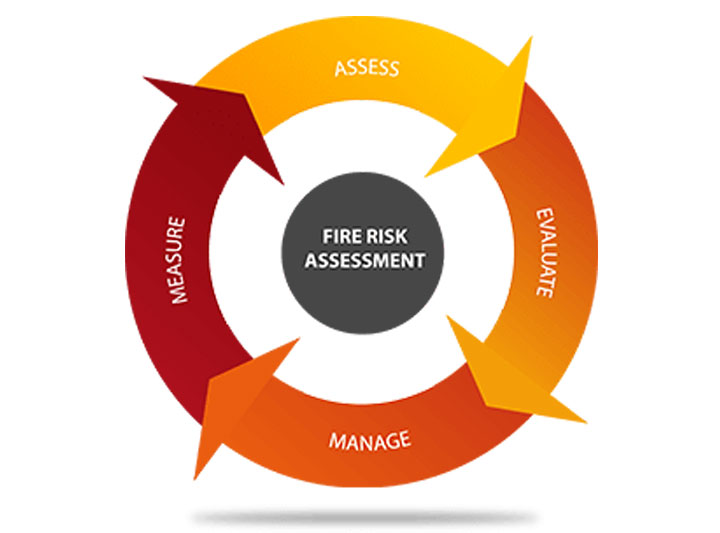
A systematic approach makes the assessment more effective. The following fire risk assessment steps can be used as a practical framework.
1. Identify Fire Hazards
The first step is to identify anything that could start or contribute to a fire. Common sources include electrical equipment, overloaded circuits, hot work, open flames, heating equipment, flammable liquids, combustible dust, gas systems, and smoking materials.
The assessor should also identify combustible materials such as paper, packaging, plastics, chemicals, fabrics, wood, and stored products.
2. Identify People at Risk
The assessment should determine who could be affected by a fire. This may include employees, contractors, visitors, customers, security personnel, maintenance workers, children, elderly people, or individuals with mobility limitations.
Special attention should be given to people who may require additional assistance during evacuation.
3. Evaluate Fire Risks
After identifying hazards and people at risk, the assessor evaluates the likelihood of a fire and the potential consequences.
Risk evaluation should consider the effectiveness of existing controls. For example, a flammable material stored near an ignition source may represent a higher risk than the same material stored in a suitable controlled area.
4. Review Existing Fire Safety Controls
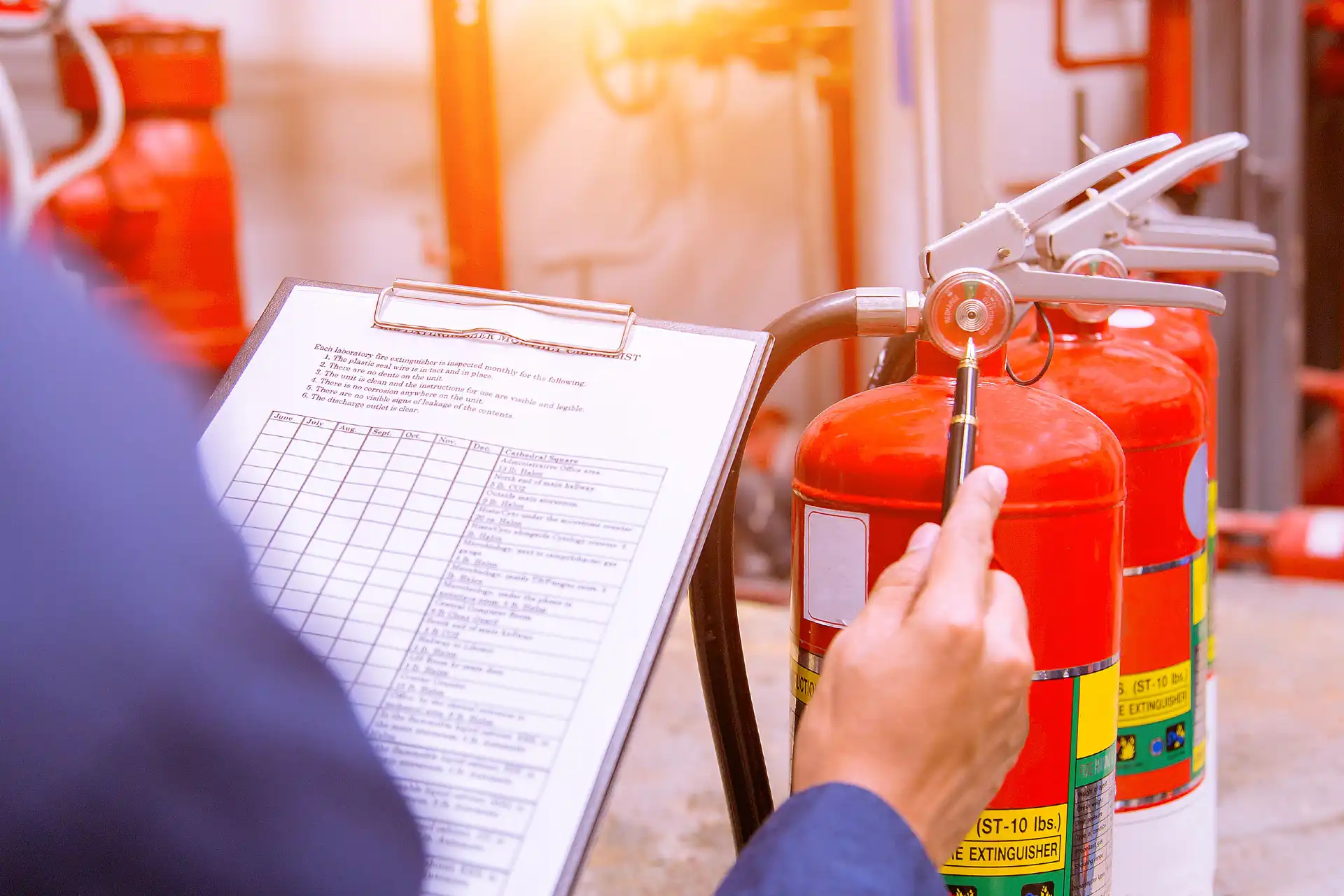
Existing measures should be examined to determine whether they are suitable and maintained. These may include fire alarms, smoke detectors, emergency lighting, fire extinguishers, hydrants, sprinklers, fire doors, compartmentation, signage, emergency exits, and evacuation procedures.
5. Recommend Additional Controls
Where existing controls are inadequate, additional measures should be recommended. These may involve improving housekeeping, relocating combustible materials, repairing electrical systems, installing additional detection systems, improving emergency lighting, providing suitable firefighting equipment, or conducting employee training.
6. Prepare an Action Plan
The findings should be converted into an action plan. Each action should have a responsible person and a target completion date. High-risk issues should receive priority.
7. Record and Review the Assessment
The findings, recommendations, responsibilities, and corrective actions should be documented. The assessment should be reviewed periodically and whenever there are significant changes to the building, process, occupancy, equipment, or fire risk.
Fire Risk Assessment for Flats
Fire risk assessment for flats requires attention to both individual living areas and common areas. Apartment and residential buildings may have shared corridors, staircases, electrical rooms, parking areas, service rooms, kitchens, and other spaces that can influence fire safety.
The assessment should consider escape routes, fire doors, emergency lighting, smoke detection, firefighting equipment, electrical installations, cooking-related hazards, storage in common areas, combustible materials, access for emergency responders, and fire separation between apartments.
For multi-storey buildings, protecting staircases and maintaining clear escape routes are particularly important. Residents should also understand what to do if a fire occurs and how emergency procedures apply to their building.
Management’s role in protecting workplace from fire hazards
-
1.Emergency Preparedness
2.Mockdrills
3.Trainings and Instructions to handle Fire Emergencies
Fire Risk Assessment for Industrial Buildings
Industrial premises can have more complex fire risks because of machinery, chemicals, production processes, storage arrangements, hot work, electrical equipment, fuels, gases, and combustible materials.
An industrial assessment should examine production areas, warehouses, utility areas, chemical storage, loading and unloading zones, maintenance workshops, electrical rooms, emergency exits, fire protection systems, and interactions between different processes.
Where hazardous materials or high-risk processes are present, the assessment may need to be integrated with broader risk assessment and process safety activities.
Fire Risk Assessment for Commercial Buildings
Commercial buildings such as offices, retail stores, hotels, restaurants, warehouses, educational facilities, and business premises can have different fire hazards depending on their use.
The assessment should consider occupancy levels, customer movement, storage, electrical equipment, kitchens, emergency exits, fire alarm systems, emergency lighting, firefighting equipment, fire doors, housekeeping, and evacuation arrangements.
Fire Risk Assessment Cost
The fire risk assessment cost depends on several factors, so there is no single price applicable to every property. Important factors include building size, location, occupancy, type of business, number of floors, complexity of operations, number of occupants, fire hazards, hazardous materials, existing fire protection systems, and the scope of the assessment.
A small office may require a simpler assessment, while a manufacturing plant, warehouse, hospital, hotel, or high-rise residential building may require a much more detailed evaluation.
Organizations should compare the scope and deliverables of an assessment rather than selecting a service only on the basis of price. A professional assessment should provide clear findings, risk priorities, and practical recommendations.
Fire Risk Assessment Course
A Fire risk assessment course can help safety professionals, managers, supervisors, facility teams, and responsible persons develop the knowledge required to identify and evaluate fire hazards.
Training generally covers fire hazards, risk identification, fire prevention, emergency evacuation, fire protection systems, risk evaluation, documentation, and practical assessment techniques.
For organizations, trained personnel can also contribute to better day-to-day fire safety management and help identify changing hazards before they become serious problems.
HSE Fire Risk Assessment Template
An HSE fire risk assessment template can provide a useful structure for recording information such as fire hazards, people at risk, existing controls, additional actions, responsible persons, and review dates.
However, a template should not be treated as a substitute for a site-specific assessment. Every workplace has different processes, layouts, occupants, hazards, and control measures. The assessment should be based on actual site conditions and applicable legal and technical requirements.
Common Fire Hazards Identified During Assessment
Electrical Fire Hazards
Damaged cables, overloaded sockets, faulty equipment, poor maintenance, temporary wiring, and unsuitable electrical installations can increase fire risk.
Flammable Materials
Flammable liquids, gases, aerosols, solvents, fuels, and other combustible materials should be appropriately stored, handled, and controlled.
Hot Work
Welding, cutting, grinding, brazing, and other hot work can generate sparks and heat. Suitable precautions and hot-work controls should be established.
Poor Housekeeping
Accumulated waste, packaging, combustible materials, blocked exits, and poor storage can increase both the likelihood and consequences of a fire.
Kitchen and Cooking Hazards
Commercial kitchens and residential cooking areas can present significant risks from cooking oils, gas appliances, electrical equipment, and unattended cooking.
Fire Safety Measures Recommended After Assessment
The recommendations will depend on site conditions, but common measures include maintaining clear escape routes, installing suitable fire detection and alarm systems, providing appropriate firefighting equipment, maintaining emergency lighting, controlling ignition sources, improving housekeeping, storing combustible materials safely, maintaining fire doors, conducting emergency drills, and providing fire safety training.
Fire protection systems should be inspected and maintained according to applicable requirements and manufacturer recommendations.
Benefits of Professional Fire Risk Assessment
A professional assessment provides an independent review of fire safety conditions and can help organizations identify risks that may be overlooked during routine inspections.
It can support better emergency preparedness, improve awareness of fire hazards, identify gaps in existing controls, prioritize corrective actions, and contribute to a stronger overall safety management system.
Professional assessors can also provide practical recommendations that are relevant to the specific building, occupancy, processes, and hazards.
How Often Should a Fire Risk Assessment Be Reviewed?
The assessment should be reviewed periodically and whenever significant changes may affect fire risk. Examples include building modifications, changes in occupancy, new machinery, new chemicals or materials, changes in processes, alterations to escape routes, installation of new fire protection systems, or after a fire or significant near miss.
A review should also be considered when previous corrective actions have not been completed or when inspection findings indicate deterioration in fire safety controls.
Why Choose The Safety Master?
The Safety Master offers professional safety consulting and risk management solutions designed around the specific needs of organizations. A site-focused approach can help businesses identify fire hazards, evaluate existing controls, improve emergency preparedness, and develop practical corrective actions.
The objective is to move beyond simply identifying deficiencies and help organizations understand what needs to be improved, why it matters, and how corrective actions can be prioritized.
Conclusion
A properly conducted Fire risk assessment is an essential part of effective fire prevention and emergency preparedness. It helps organizations identify hazards, protect people, evaluate existing controls, and take practical action to reduce fire-related risks. From offices and factories to warehouses, commercial premises, and residential buildings, a site-specific assessment provides a structured approach to improving fire safety. With professional guidance from The Safety Master, organizations can strengthen their fire safety arrangements and build a safer workplace. A comprehensive Fire risk assessment should be treated as an ongoing safety process rather than a one-time paperwork exercise.