
Hazard Identification and Risk Assessment (HIRA) Services
Hazard Identification and Risk Assessment (HIRA) is a systematic process used to identify workplace and process hazards, evaluate the level of risk, and determine suitable control measures. A well-planned HIRA helps organizations understand what can go wrong, how serious the consequences could be, and what actions are required to reduce the risk.
The Safety Master provides HIRA services for industries such as oil and gas, chemical, petrochemical, manufacturing, pharmaceutical, construction, power, infrastructure, logistics, and other high-risk operations. Our approach focuses on identifying actual hazards, evaluating existing safeguards, recommending practical controls, assessing residual risk, and documenting clear actions for risk reduction.
What Is Hazard Identification and Risk Assessment (HIRA)?
HIRA stands for Hazard Identification and Risk Assessment. It is a structured risk management method used to identify hazards associated with activities, equipment, processes, materials, and workplace conditions and assess the risks arising from them.
A HIRA study generally answers three key questions:
- What can go wrong?
- How likely is it to happen?
- How severe could the consequences be?
Once the risk is understood, appropriate controls are identified according to the nature and level of the risk.
Hazard vs Risk
A hazard is a source or situation that has the potential to cause harm. Risk considers the likelihood of that harm occurring and the potential severity of its consequences.
| Example | Description |
|---|---|
| Hazard | Flammable chemical |
| Cause | Loss of containment |
| Event | Vapour release and ignition |
| Consequence | Fire, explosion or injury |
| Risk | Likelihood and severity of the potential event |
This distinction is important because effective HIRA should not simply list hazards. It should explain how those hazards can lead to unwanted events and what can be done to control them.
Why Is HIRA Important for Workplace Safety?
HIRA allows organizations to identify hazards before they result in incidents. It supports proactive risk management by helping teams prioritize significant risks and determine whether existing controls are adequate.
A structured HIRA can help organizations:
- Identify workplace and process hazards
- Prioritize high-risk activities
- Evaluate existing safeguards
- Select appropriate risk controls
- Reduce exposure to significant hazards
- Improve workplace safety
- Support risk-based decision-making
- Assign corrective actions
- Review risks after operational changes
HIRA should not be treated only as a compliance document. Its findings should be useful to employees, supervisors, engineers, HSE teams, and management when making day-to-day safety decisions.
HIRA Process: How Is a HIRA Study Conducted?
A professional HIRA follows a systematic process from defining the assessment scope to reviewing residual risk.
1. Define the Scope
The assessment team first establishes the activities, processes, equipment, location, personnel, and operating conditions that will be assessed.
2. Identify Hazards
Potential hazards are identified using available process information, workplace observations, discussions with personnel, previous incidents, checklists, and other appropriate assessment techniques.
Common hazards include:
- Chemical exposure
- Fire and explosion
- Electrical hazards
- Mechanical hazards
- Working at height
- Confined spaces
- Pressure systems
- Ergonomic hazards
- Biological hazards
- Environmental hazards
3. Identify Causes and Consequences
The assessment considers how a hazard could result in an unwanted event.
Hazard → Cause → Event → Consequence
For example:
Flammable hydrocarbon → Loss of containment → Vapour release → Ignition → Fire or explosion
This approach provides a clearer understanding of the actual risk scenario.
4. Assess Likelihood and Severity
The likelihood of an event and the severity of its potential consequences are assessed using the organization's approved risk assessment criteria.
5. Determine Initial Risk
A commonly used approach is:
Risk Score = Likelihood × Severity
The exact scoring method and risk categories may vary between organizations.
6. Identify Risk Controls
Additional controls are identified where existing safeguards do not adequately reduce the risk.
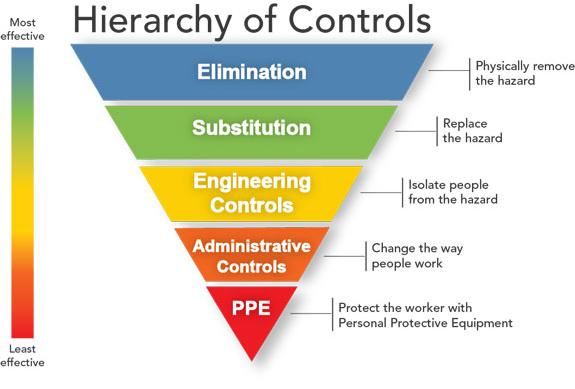
The hierarchy of controls should be considered:
- Elimination
- Substitution
- Engineering controls
- Administrative controls
- Personal protective equipment
7. Assess Residual Risk
After considering the recommended controls, the remaining risk is reassessed. This is known as residual risk.
8. Assign Actions
Recommendations should have clear ownership, priorities, and target dates so they can be tracked to completion.
9. Review and Update
HIRA should be reviewed when significant changes occur, such as process modifications, new equipment, incidents, new materials, or changes in work methods
Understanding the HIRA Process Step-by-Step
A successful Hazard Identification and Risk Assessment (HIRA) follows a structured approach to identify workplace hazards, assess risks, and implement effective control measures. The process helps organizations reduce accidents, improve compliance, and maintain a safe working environment. HIRA is often conducted alongside other risk management activities such as Safety Audit, Fire Safety Audit and specialized programs like HAZOP Training and Process Safety Training to strengthen an organization's overall safety management system.
HIRA Workflow
Identify Activities → Identify Hazards → Evaluate Risks → Determine Controls → Calculate Residual Risk → Monitor & Review
1. Identify Activities
The process begins by identifying all workplace activities, tasks, operations, and processes that need to be assessed. Understanding what work is being performed helps define the scope of the assessment and ensures that no critical activity is missed.
2. Identify Hazards
For each activity, potential hazards are identified. These may include physical, chemical, biological, ergonomic, electrical, mechanical, fire, or environmental hazards that could cause injury, illness, property damage, or operational disruptions.
3. Evaluate Risks
Once hazards have been identified, the associated risks are evaluated by considering the likelihood of an incident occurring and the severity of its potential consequences. This helps determine which risks require immediate attention and control.
4. Determine Control Measures
Appropriate control measures are then selected to eliminate or reduce risks to an acceptable level. Organizations typically apply the hierarchy of controls, including elimination, substitution, engineering controls, administrative controls, and personal protective equipment (PPE).
5. Calculate Residual Risk
After implementing control measures, the risk is reassessed to determine the residual risk level. This step helps verify whether the selected controls are effective or if additional safeguards are required.
6. Monitor and Review
HIRA is a continuous process rather than a one-time exercise. Risk assessments should be reviewed regularly, especially after incidents, workplace changes, new equipment installations, process modifications, or regulatory updates. Continuous monitoring ensures that risks remain controlled and the assessment stays relevant over time.
By following these six steps, organizations can systematically identify hazards, control workplace risks, improve compliance, and build a stronger safety culture across their operations.
Where HIRA is Used
HIRA is applicable across both routine and non-routine activities, making it a critical safety tool for industries where operational risks are high and continuous risk monitoring is essential. It helps organizations identify potential hazards at every stage of operations, from planning and execution to maintenance and shutdown activities.
It is widely implemented in:
Construction and Infrastructure Projects – Managing site hazards, heavy equipment risks, and worker safety in dynamic environments
Manufacturing Industries – Identifying process-related risks, machinery hazards, and production safety challenges
Oil and Gas Operations – Controlling high-risk activities such as drilling, refining, and transportation of hazardous materials
Chemical and Petrochemical Plants – Preventing exposure to toxic substances, process failures, and fire or explosion risks
Pharmaceutical Industries – Ensuring safe handling of chemicals, controlled environments, and compliance with strict safety standards
By applying HIRA across these sectors, organizations can maintain safer workplaces, reduce operational disruptions, and ensure compliance with industry regulations while improving overall efficiency.
HIRA Risk Matrix: Understanding Risk Levels
A HIRA Risk Matrix is a practical tool used to evaluate and prioritize workplace risks. It combines the severity of a potential consequence with the likelihood of occurrence to determine the overall risk level. This helps organizations focus their resources on the most critical hazards first.
Severity Scale
| Score | Description |
|---|---|
| 1 | Minor Injury or Negligible Impact |
| 2 | First Aid Case |
| 3 | Medical Treatment Injury |
| 4 | Major Injury or Permanent Disability |
| 5 | Fatality or Catastrophic Loss |
Likelihood Scale
| Score | Description |
|---|---|
| 1 | Rare |
| 2 | Unlikely |
| 3 | Possible |
| 4 | Likely |
| 5 | Almost Certain |
Sample HIRA Risk Matrix
| Severity ↓ / Likelihood → | 1 | 2 | 3 | 4 | 5 |
|---|---|---|---|---|---|
| 5 | 5 | 10 | 15 | 20 | 25 |
| 4 | 4 | 8 | 12 | 16 | 20 |
| 3 | 3 | 6 | 9 | 12 | 15 |
| 2 | 2 | 4 | 6 | 8 | 10 |
| 1 | 1 | 2 | 3 | 4 | 5 |
Risk Rating Interpretation
| Risk Score | Risk Level | Action Required |
|---|---|---|
| 1–5 | Low Risk | Maintain existing controls and monitor periodically. |
| 6–10 | Medium Risk | Implement additional controls where necessary. |
| 11–15 | High Risk | Immediate action required to reduce risk. |
| 16–25 | Extreme Risk | Stop work until effective controls are implemented. |
Using a HIRA Risk Matrix enables organizations to make informed safety decisions, prioritize corrective actions, and reduce workplace incidents through a structured risk management approach.
Sample HIRA Table Examples
One of the most practical parts of a HIRA study is documenting hazards, associated risks, and control measures for specific work activities. The following examples illustrate how HIRA is applied across common workplace operations.
HIRA Example: Working at Height
| Activity | Hazard | Risk | Control Measure |
|---|---|---|---|
| Ladder Work | Fall from Height | Serious Injury or Fatality | Full Body Harness, Ladder Inspection, Safe Work Procedure |
| Roof Maintenance | Slip or Fall | Major Injury | Edge Protection, Lifeline System, Permit to Work |
HIRA Example: Welding Operations
| Activity | Hazard | Risk | Control Measure |
|---|---|---|---|
| Arc Welding | Sparks and Hot Metal | Burns and Fire | Welding Shield, Fire Extinguisher, PPE |
| Gas Cutting | Fume Exposure | Respiratory Issues | Local Exhaust Ventilation, Respiratory Protection |
HIRA Example: Material Handling
| Activity | Hazard | Risk | Control Measure |
|---|---|---|---|
| Manual Lifting | Overexertion | Back Injury | Proper Lifting Techniques, Training, Mechanical Aids |
| Forklift Operations | Collision | Injury or Property Damage | Trained Operators, Traffic Management Plan |
HIRA Example: Confined Space Entry
| Activity | Hazard | Risk | Control Measure |
|---|---|---|---|
| Tank Cleaning | Oxygen Deficiency | Asphyxiation | Gas Testing, Ventilation, Entry Permit |
| Vessel Inspection | Toxic Gas Exposure | Poisoning | Continuous Monitoring, Emergency Rescue Plan |
HIRA Example: Electrical Maintenance
| Activity | Hazard | Risk | Control Measure |
|---|---|---|---|
| Panel Maintenance | Electric Shock | Serious Injury or Fatality | Lockout-Tagout (LOTO), Insulated Tools |
| Cable Repair | Arc Flash | Burns and Equipment Damage | Arc-Rated PPE, Isolation Procedures |
These sample HIRA tables demonstrate how workplace hazards can be systematically identified, assessed, and controlled. In practice, organizations customize HIRA registers based on their specific activities, equipment, processes, and industry requirements to ensure effective risk management.
HIRA Example for Construction Industry
Construction sites involve a wide range of high-risk activities that require systematic hazard identification and risk assessment. The example below demonstrates how HIRA can be applied to common construction operations to evaluate risks and implement effective control measures.
| Activity | Hazard | Severity (1-5) | Likelihood (1-5) | Risk Score | Control Measures |
|---|---|---|---|---|---|
| Scaffolding Work | Fall from Height | 5 | 4 | 20 | Full Body Harness, Guardrails, Scaffold Inspection, Work-at-Height Training |
| Excavation Work | Trench Collapse | 5 | 3 | 15 | Shoring, Sloping, Barricading, Daily Inspection by Competent Person |
| Crane Operation | Load Falling or Crane Failure | 5 | 3 | 15 | Certified Operators, Load Testing, Lifting Plan, Exclusion Zones |
| Material Handling | Struck by Moving Materials | 4 | 3 | 12 | Proper Rigging, Safe Storage, PPE, Traffic Management |
| Concrete Work | Slips, Trips, and Falls | 3 | 3 | 9 | Good Housekeeping, Non-Slip Surfaces, Safety Signage |
Interpretation of the Assessment
In this example, scaffolding work presents an extreme risk due to the potential for fatal falls. Excavation and crane operations are classified as high-risk activities because they can result in serious injuries, fatalities, or major property damage if controls fail. By implementing appropriate preventive measures, organizations can reduce the likelihood of incidents and lower the residual risk to an acceptable level.
This example highlights how HIRA helps construction companies prioritize critical hazards, allocate resources effectively, and maintain compliance with workplace safety requirements.
HIRA Example for Manufacturing Industry
Manufacturing facilities contain numerous hazards related to machinery, electrical systems, and material handling operations. Conducting a HIRA helps identify these risks and implement controls to prevent workplace incidents.
| Activity | Hazard | Severity (1-5) | Likelihood (1-5) | Risk Score | Control Measures |
|---|---|---|---|---|---|
| Machine Operation | Entanglement with Moving Parts | 5 | 3 | 15 | Machine Guarding, Emergency Stop Systems, Operator Training |
| Electrical Maintenance | Electric Shock or Arc Flash | 5 | 3 | 15 | Lockout-Tagout (LOTO), Insulated Tools, Arc-Rated PPE |
| Material Movement | Collision with Forklift | 4 | 3 | 12 | Traffic Management Plan, Trained Operators, Warning Signage |
| Conveyor Operation | Pinch Points | 4 | 2 | 8 | Safety Guards, Routine Inspection, Safe Work Procedures |
| Manual Material Handling | Musculoskeletal Injury | 3 | 3 | 9 | Ergonomic Controls, Lifting Aids, Employee Training |
Key Findings
Machine operation and electrical maintenance typically present the highest risks in manufacturing environments due to the potential for severe injuries or fatalities. Regular inspections, preventive maintenance, employee training, and strict safety procedures are essential to reducing these risks.
HIRA Example for Oil & Gas Industry
The oil and gas sector involves complex operations with significant process safety risks. HIRA plays a critical role in identifying hazards that could lead to fires, explosions, environmental damage, or major operational disruptions.
| Activity | Hazard | Severity (1-5) | Likelihood (1-5) | Risk Score | Control Measures |
|---|---|---|---|---|---|
| Hydrocarbon Handling | Hydrocarbon Leak | 5 | 4 | 20 | Leak Detection Systems, Preventive Maintenance, Emergency Response Plan |
| Tank Farm Operations | Product Overflow or Spill | 5 | 3 | 15 | Level Monitoring Systems, Secondary Containment, Operating Procedures |
| Pipeline Maintenance | Loss of Containment | 5 | 3 | 15 | Pressure Monitoring, Corrosion Inspection, Isolation Procedures |
| Hot Work Activities | Fire or Explosion | 5 | 3 | 15 | Hot Work Permit, Gas Testing, Fire Watch Personnel |
| Process Equipment Operation | Flammable Vapor Release | 5 | 3 | 15 | Process Safety Controls, Ventilation Systems, Continuous Monitoring |
Key Findings
Hydrocarbon leaks, fire hazards, tank farm operations, and pipeline maintenance are among the most critical risks in oil and gas facilities. Effective risk management requires a combination of engineering controls, operational procedures, emergency preparedness, and continuous monitoring to maintain safe and reliable operations.
These examples demonstrate how HIRA supports process safety by identifying major hazards and prioritizing control measures before incidents occur.