
Thermography Assessment Services by The Safety Master
Electrical equipment can develop overheating problems before a visible failure occurs. A professional Thermography Assessment uses infrared thermal imaging to identify abnormal temperature patterns in electrical and mechanical equipment. The Safety Master provides thermography assessment services to help organizations identify potential faults, reduce unplanned downtime, improve electrical safety, and support preventive maintenance.
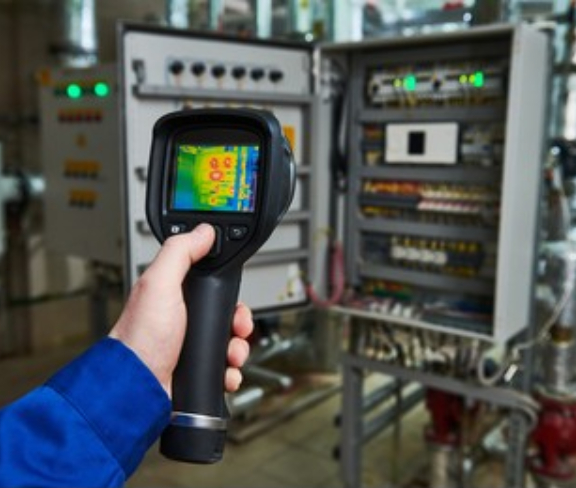
Infrared thermography is a non-contact inspection method. A thermal camera detects heat patterns and temperature differences on equipment surfaces. This can help identify conditions such as loose connections, overloaded circuits, phase imbalance, deteriorating components, and other abnormal heating conditions. ASTM guidance also describes infrared examination as a method for identifying and documenting exceptions in electrical and mechanical systems.
What Is Thermography Assessment?
Thermography assessment is the process of inspecting equipment using an infrared camera to identify abnormal heat patterns. Unlike a normal visual inspection, thermal imaging can show temperature differences that may not be visible to the human eye.
For electrical systems, thermography can be used to inspect panels, switchboards, switchgear, breakers, cable connections, busbars, transformers, motor control centers, and other electrical components.
The assessment normally includes thermal images, temperature measurements, identification of abnormal areas, observations, and recommendations for corrective action.
Infrared Thermography Assessment for Electrical Safety
Infrared thermography assessment is widely used as part of condition-based and predictive maintenance programs. It allows maintenance teams to identify potential electrical problems while equipment is operating.
Common conditions that may produce abnormal thermal patterns include:
- Loose electrical connections
- High-resistance connections
- Overloaded circuits
- Phase imbalance
- Damaged or deteriorating components
- Poor connections and terminations
- Abnormal heating of electrical components
- Mechanical friction and abnormal loading
- Cooling-related problems
- Uneven temperature distribution
NFPA 70B includes requirements concerning infrared thermography, including comparing similar electrical components under similar loading and comparing components with ambient temperature. It also calls for documenting relevant temperature differences and loading characteristics.
What Is Thermography in Electrical Systems?
What is thermography in electrical systems? It is an inspection technique that uses an infrared camera to measure and display apparent surface temperatures and thermal patterns of energized electrical equipment.
When an electrical connection has increased resistance or an equipment component is operating abnormally, it may generate additional heat. A thermal camera can help identify this abnormal heat pattern so that the condition can be investigated and corrected.
Thermography should not be treated as a replacement for complete electrical inspection, testing, and maintenance. ASTM guidance notes that infrared examinations provide information about equipment at the time of inspection and that additional testing and maintenance may be necessary.
Thermography Test for Electrical Panels
A thermography test for electrical panels is performed using an infrared thermal camera to identify abnormal temperature patterns across breakers, terminals, busbars, cables, connections, and other accessible components.
During an inspection, the thermographer may compare:
- Similar components under similar electrical loads
- Different phases of the same system
- Equipment temperature against ambient temperature
- Hot spots against nearby reference points
- Current loading and operating conditions
NFPA 70B specifies that infrared thermography should be performed under normal circuit loading where applicable, with documentation of loading characteristics. Where normal loading is not feasible, its provisions allow a lower loading condition under specified circumstances.
Thermography Test for Electrical Panels Temperature Range
There is no single universal thermography test for electrical panels temperature range that can be applied to every panel or component. The interpretation should consider the equipment type, ambient conditions, electrical load, component design, manufacturer information, and temperature difference from a suitable reference.
For this reason, a thermography assessment should not classify a component as unsafe based only on one absolute temperature reading.
Important parameters can include:
- Measured surface temperature
- Ambient temperature
- Temperature difference or ΔT
- Electrical load
- Similar-component comparison
- Equipment condition
- Manufacturer limits
- Operating environment
NFPA 70B specifically emphasizes temperature differences between similar electrical components under similar loading and comparison with ambient temperature.
How Thermography Assessment Works
A typical thermography assessment can follow these steps:
1. Review Equipment Information
The inspection team reviews available equipment details, electrical drawings, previous inspection reports, operating conditions, and maintenance history.
2. Identify Critical Equipment
Important electrical equipment and components are identified for inspection based on operational importance, risk, loading, and maintenance requirements.
3. Perform Thermal Scanning
A suitable infrared camera is used to scan accessible equipment while considering safe operating conditions and electrical hazards.
4. Record Thermal Images
Thermal images and relevant temperature information are recorded for areas showing unusual heat patterns.
5. Compare Temperature Differences
The thermographer compares similar components, reference areas, and ambient conditions to identify potentially abnormal conditions.
6. Analyze Findings
The thermal patterns are reviewed together with equipment information and operating conditions to determine whether further investigation or maintenance is required.
7. Prepare the Assessment Report
The final report can include equipment identification, thermal images, observations, temperature information, findings, severity/prioritization, and recommended corrective actions.
Benefits of Thermography Assessment
A planned thermography assessment can support electrical safety and maintenance by helping organizations:
- Identify potential overheating conditions
- Detect problems before equipment failure
- Reduce unexpected equipment downtime
- Support predictive maintenance
- Improve electrical equipment reliability
- Identify abnormal connections and components
- Prioritize maintenance activities
- Maintain inspection records
- Support fire prevention efforts
- Improve overall equipment condition monitoring
Thermography is particularly useful because it can provide condition information while equipment is operating, when performed safely and by appropriately qualified personnel.
Thermography Assessment for Industrial Facilities
Industrial facilities have large numbers of electrical and mechanical assets that require regular monitoring. A thermography assessment can be integrated into a predictive maintenance program for equipment such as:
- Electrical distribution panels
- MCCs
- Switchboards
- Switchgear
- Transformers
- Motors
- Generators
- Cable connections
- Busbars
- UPS systems
- Control panels
- Capacitor banks
- Battery systems
- Solar electrical systems
The exact inspection scope should be developed according to the facility's equipment, operating conditions, maintenance program, applicable standards, and safety procedures.
Thermography Assessment Nursing
The term thermography assessment nursing is generally associated with the use of thermal imaging in healthcare or nursing-related applications rather than industrial electrical inspection.
Healthcare thermography and electrical thermography are different applications. Medical thermography may be used as an imaging technique for observing skin-surface temperature patterns, while electrical thermography is used for condition assessment of electrical equipment.
For industrial safety and maintenance, The Safety Master focuses on thermography assessment of electrical and industrial equipment.
Thermography Assessment PPT and PDF
Organizations often need technical documentation for training, internal awareness, audits, and maintenance records. A thermography assessment PPT can explain the basic principles of thermal imaging, inspection procedures, common electrical findings, safety precautions, and reporting methods.
A thermography assessment PDF can be useful as a reference document containing inspection methodology, thermal images, observations, findings, and recommendations.
The exact report format should be customized according to the equipment and purpose of the inspection.
Thermography Test Price
The thermography test price depends on several factors. There is no single fixed price for every thermography assessment.
Factors that can affect the thermography test price include:
- Number of electrical panels
- Number and type of assets
- Facility size
- Inspection duration
- Equipment accessibility
- Number of thermal images required
- Reporting requirements
- Site location
- Complexity of the electrical system
- Required inspection scope
For an accurate quotation, organizations should provide the equipment list, site details, approximate number of panels/assets, and required reporting scope.
Why Choose The Safety Master for Thermography Assessment?
The Safety Master provides safety and risk-management services designed around the specific requirements of workplaces and industrial facilities.
Our thermography assessment approach focuses on:
- Professional thermal inspection
- Identification of abnormal thermal patterns
- Electrical equipment assessment
- Clear documentation
- Practical recommendations
- Support for preventive maintenance
- Safety-focused reporting
Our existing thermography service focuses on using thermal imaging to identify abnormal heat patterns in electrical equipment and providing findings and recommendations to help prevent failures, fires, and injuries.
Get Thermography Assessment Services from The Safety Master
Regular thermal inspection can help organizations identify abnormal conditions before they develop into major equipment failures. A properly planned Thermography Assessment provides useful condition information for electrical maintenance, safety planning, and corrective action.
The Safety Master can support your organization with professional thermography assessment services, thermal imaging, documentation, findings, and practical recommendations for electrical and industrial equipment. Contact our team to discuss your facility requirements and request a customized assessment.