Because Real Safety Happens When No One Is Watching

Engineering Out Risk Before Incidents Happen
February 18, 2026
From Paper to Predictive Safety – The Safety Master
February 21, 2026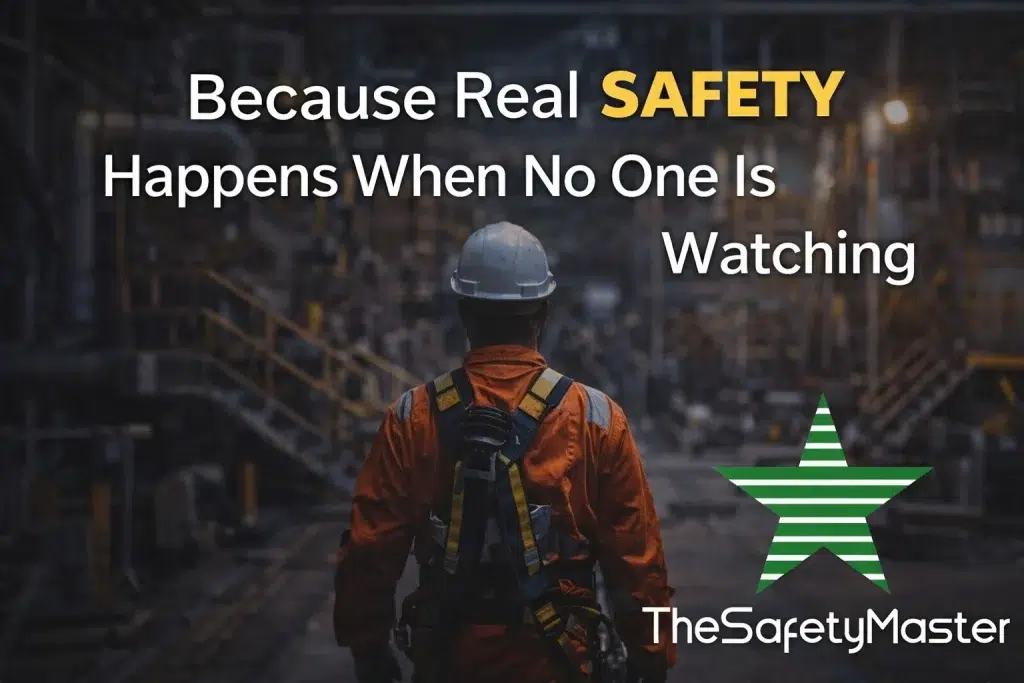
Safety Is Proven in Ordinary Moments
Safety is not defined by presentations, audits, or inspection days. It is defined by what happens during routine shifts, late-night maintenance work, and high-pressure production targets. Real safety exists in everyday decisions that workers make when there is no supervisor standing beside them and no checklist in front of them.
When individuals choose to follow procedures correctly, wear protective equipment consistently, and stop unsafe practices even when it slows work down, safety becomes real. These moments rarely appear in reports, but they prevent incidents long before they can escalate.
The Difference Between Compliance and Commitment
Compliance is visible. It is documented in forms, training logs, and inspection reports. Commitment is quieter. It is reflected in behavior. An organization may appear compliant during audits, yet still face frequent near misses because daily habits do not align with written policies.
Real safety requires internal discipline. Workers must understand not just what rules exist, but why they exist. When people understand the consequences of shortcuts, they are more likely to resist them. Commitment transforms safety from an obligation into a personal responsibility.
The Risk of Performative Safety
In many workplaces, safety activities increase before scheduled inspections. Housekeeping improves, documentation is updated, and equipment is checked more thoroughly. While preparation is positive, it can sometimes hide deeper issues.
Performative safety creates the illusion of control. It focuses on appearances rather than consistent practice. Once inspections end, standards may gradually slip. Real safety does not fluctuate based on external attention. It remains steady regardless of oversight.
Why Behavior Matters More Than Policies
Policies provide structure, but behavior determines outcomes. An evacuation plan is useful only if employees know exits instinctively. Fire extinguishers are effective only if workers are trained and confident in using them. Personal protective equipment reduces injuries only when worn correctly and consistently.
Behavior is shaped by culture. If productivity is rewarded while safe practices are ignored, employees receive mixed signals. If supervisors overlook small violations, those small deviations can normalize unsafe behavior. Over time, this erosion increases risk.
Leadership Influence When No One Is Watching
Leadership has a powerful impact on invisible safety. When managers demonstrate safe behavior consistently, employees observe and replicate it. If leaders follow entry procedures, wear protective gear properly, and respond seriously to hazard reports, they reinforce expectations.
On the other hand, when leaders bypass procedures for convenience, employees may interpret that as permission to do the same. Real safety leadership is not about speeches. It is about visible consistency in actions, even during routine operations.
The Role of Accountability
Accountability does not mean punishment. It means clarity. Each individual must understand their role in preventing harm. Operators monitor equipment responsibly. Maintenance teams address minor faults before they worsen. Supervisors review processes regularly.
When accountability is shared rather than centralized, safety becomes resilient. Workers begin correcting unsafe behaviors among peers, not because they are instructed to, but because they value collective well-being.
Learning from Near Misses
Many serious incidents are preceded by warning signs. Near misses, minor equipment failures, or small process deviations provide opportunities to learn. However, these signals often go unreported if employees fear blame.
A strong safety culture treats near misses as valuable information. Analyzing them constructively helps organizations identify patterns and prevent future harm. Real safety grows when lessons are applied immediately, not stored in reports.
Process Discipline Beyond Supervision
Industrial environments involve complex systems. Pressure, temperature, chemical reactions, and mechanical operations must remain within safe limits. Even small deviations can escalate quickly if unnoticed.
Process discipline means operators monitor conditions carefully and act promptly when irregularities appear. This vigilance must continue even during night shifts or low-supervision periods. Automated systems support safety, but human attention remains critical.
Everyday Housekeeping and Hidden Risks
Simple practices often determine safety outcomes. Clear walkways prevent trips and falls. Proper storage of flammable materials reduces fire hazards. Organized electrical wiring prevents overheating and short circuits.
These tasks may seem routine, but they require daily attention. When no one checks consistently, clutter accumulates and risks increase gradually. Small lapses are rarely dramatic, yet they create conditions where larger incidents can occur.
Building Intrinsic Motivation
External rules create boundaries, but intrinsic motivation sustains safety. Employees who feel personally responsible for their colleagues’ well-being are more likely to act carefully. This sense of shared responsibility develops through trust, communication, and consistent reinforcement of values.
Training plays an important role. When workers understand the science behind hazards and the consequences of unsafe acts, they develop informed judgment. Education transforms safety from mechanical compliance into thoughtful decision-making.
Measuring Invisible Safety
Traditional safety metrics often focus on injuries and incidents. While important, these are lagging indicators. Real safety requires attention to leading indicators such as near-miss reports, preventive maintenance completion, safety suggestions, and training participation.
Tracking these measures provides insight into behaviors that occur when no one is watching. They reflect engagement, awareness, and proactive effort rather than reactive response.
Strengthening Culture Through Consistency
Consistency builds trust. When policies remain stable, training is regular, and corrective actions are completed promptly, employees recognize that safety is not temporary. Over time, this consistency becomes embedded in organizational identity.
Culture does not change through slogans. It evolves through repeated actions aligned with values. When safe behavior becomes habitual, it no longer depends on reminders.
Conclusion: Safety as a Habit, Not a Performance
Because real safety happens when no one is watching, organizations must focus on daily habits rather than occasional demonstrations. Inspections and audits are important tools, but they cannot replace personal responsibility and consistent discipline.
True safety is visible in small decisions made quietly throughout the day. It is reflected in maintained equipment, clear communication, and thoughtful actions. When every individual chooses to act responsibly regardless of supervision, safety becomes reliable and sustainable.