Creating Effective Fire Emergency Response Plans

Training for Fire Safety: The Safety Master’s Expert Recommendations
July 31, 2023Maximizing Operational Efficiency: How Process Safety Consultancy Can Benefit Your Business
August 4, 2023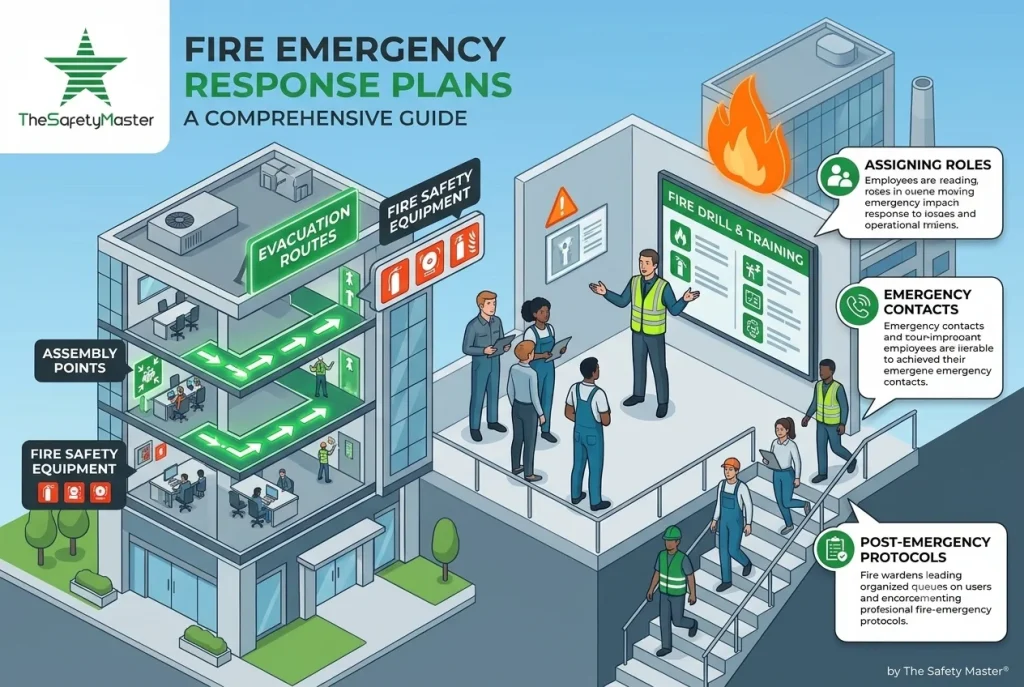
A well-prepared and practiced fire emergency response plan is crucial for any organization to ensure the safety and well-being of its occupants in the event of a fire. Disasters strike without warning, and when a fire breaks out, every single second counts. Having a structured layout helps minimize confusion, panic, injury, and massive property loss.
In this comprehensive guide, we will delve into the critical components required to build robust fire emergency response protocols and explore how partnering with industry-leading experts like The Safety Master can elevate your workplace safety standards.
Understanding Fire Emergency Response Plans
An effective fire emergency response plan is a detailed, dynamic document that outlines the step-by-step actions that must be taken if a fire incident occurs. It must cater to all potential scenarios and address the safety needs of every single occupant inside a facility, including full-time employees, contractors, temporary visitors, and customers.
Without a clear blueprint, even minor incidents can quickly escalate into catastrophic disasters due to poor communication and panic. Developing a meticulous plan ensures that everyone knows precisely how to react, where to go, and who to contact.
Essential Components of an Effective Fire Emergency Response Plan
To build a fail-safe framework, organizations must incorporate several indispensable components into their strategy:
1. Emergency Contact Information Directory
Your plan must feature an updated, highly visible list of emergency contact numbers. This directory should include:
- Local fire departments and municipal emergency services.
- Nearby hospitals and trauma centers.
- Key internal response personnel within the organization (e.g., Fire Wardens, Safety Officers, and facility managers).
2. Clear Evacuation Procedures and Routes
Confusion during an evacuation can lead to bottlenecks and injuries. A robust plan must layout:
- Clearly marked primary and secondary escape routes from every room, floor, and zone.
- Designated outdoor assembly points where occupants must gather for headcounts.
- Accessible pathways explicitly designed for differently-abled individuals.
3. Fire Safety Equipment and Proper Usage
Occupants should know where safety assets are stationed and how to operate them safely. Information must cover:
- The precise physical locations of fire extinguishers, fire blankets, pull stations, and alarm boxes.
- Clear instructions on when it is safe to use an extinguisher versus when it is vital to evacuate immediately.
4. Emergency Communication Protocols
A dependable communication system ensures real-time updates across the facility. This involves sounding alarms, deploying public address announcements, or utilizing internal messaging alerts so everyone is instantly aware of the hazard.
5. Assigning Specific Roles and Responsibilities
An emergency plan fails if everyone assumes someone else is taking charge. Designating specific responsibilities—such as floor wardens, utility shut-off operators, and liaison officers for emergency responders—keeps operations streamlined and orderly.
The Role of Training and Regular Fire Drills
Writing a policy on paper is only the first step; bringing it to life requires continuous reinforcement. Regular training sessions and routine fire drills bridge the gap between theoretical knowledge and practical execution.
Building Muscle Memory Through Drills
Conducting unannounced or scheduled fire drills at regular intervals helps occupants build muscle memory. When people practice evacuating repeatedly, panic is replaced by trained reactions. It also allows safety managers to evaluate evacuation times, identify bottlenecks in exit paths, and refine the emergency response plan accordingly.
The Safety Master – Leading Safety Consultants in India
When it comes to designing foolproof safety frameworks, organizations need industry-recognized expertise. The Safety Master stands tall as one of the premier safety consulting firms in India, offering cutting-edge solutions tailored to diverse industrial, commercial, and residential sectors.
With years of specialized experience, The Safety Master helps enterprises transform their safety culture, ensuring compliance with rigorous national and international statutory codes.
Comprehensive Fire Safety Audit Services
A foundational step in building an effective fire response strategy is identifying hidden vulnerabilities. The Safety Master provides comprehensive fire safety audit services that rigorously evaluate your infrastructure.
- Hazard Identification: Experts inspect electrical loads, chemical storage areas, and machinery to spot potential ignition sources.
- System Review: Evaluating existing fire detection alarms, sprinkler efficiency, smoke extraction systems, and passive fire barriers.
- Gap Analysis: Highlighting discrepancies between current practices and statutory compliance standards, followed by actionable recommendations.
Key Benefits of Partnering with The Safety Master
Collaborating with The Safety Master offers multi-layered advantages to businesses striving for a zero-incident workplace:
- Regulatory Compliance Assurance: Avoid heavy penalties and legal liabilities by ensuring full alignment with local and international fire safety codes.
- Proactive Risk Mitigation: Uncover and neutralize fire risks before they manifest into devastating accidents.
- Tailored Solutions: Receive customized engineering and procedural frameworks built specifically around your facility’s unique operational nature.
- Empowered Workforce: Benefit from expert-led training programs that boost safety awareness, hazard spotting, and confidence among staff members.
- Ultimate Peace of Mind: Rest assured knowing your people, assets, and business continuity are safeguarded by seasoned safety professionals.
Conclusion
A disaster does not announce its arrival, but preparation guarantees resilience. Developing and maintaining effective fire emergency response plans is a non-negotiable responsibility for any forward-thinking organization. By combining clear evacuation protocols, regular employee training, and professional guidance from industry leaders like The Safety Master, businesses can create a secure, compliant, and resilient working environment that protects both lives and livelihoods.
Frequently Asked Questions (FAQs)
1. What is a fire emergency response plan?
A fire emergency response plan is a formal, written document outlining the exact steps, evacuation routes, communication channels, and responsibilities that building occupants and designated personnel must follow during a fire incident to ensure safety and minimize damage.
2. How often should an organization conduct fire drills?
As a best practice, organizations should conduct fire drills at least once every six months. However, high-risk industrial environments, chemical plants, or multi-story commercial buildings may require more frequent drills to maintain peak readiness.
3. How does The Safety Master help with fire safety management?
The Safety Master assists organizations by conducting thorough fire safety audits, designing customized emergency response plans, executing risk assessments (like HIRA and fire load calculations), and delivering engaging employee safety training programs.
4. Why are fire safety audits important for businesses?
Fire safety audits are critical because they objectively evaluate existing fire protection systems, uncover hidden electrical or operational hazards, ensure adherence to statutory laws, and provide strategic recommendations to prevent workplace fires.
5. Can a fire emergency response plan be customized for different industries?
Yes. Every industry—whether it is manufacturing, healthcare, IT, warehousing, or hospitality—faces unique hazards. The Safety Master specializes in creating custom-tailored fire safety solutions that address the specific risk profile of your sector.