Fire Audit Service
In today's world, fire safety is a critical concern for businesses and institutions. Ensuring that a building is fully compliant with fire safety regulations can prevent tragedies and save lives. The Safety Master stands at the forefront of this mission, offering meticulous fire safety audits that cover every aspect of fire prevention and safety. By understanding the nuances of a fire audit, including the creation and use of fire safety audit checklists and fire audit reports, organizations can ensure their environments are safe and compliant.
What is a Fire Safety Audit?
A fire safety audit is a way to check how safe a building or workplace is from fire. It looks at possible fire dangers in daily activities and suggests ways to make the place safer and reduce fire risks.
Fire Safety Audits by The Safety Master (TSM)
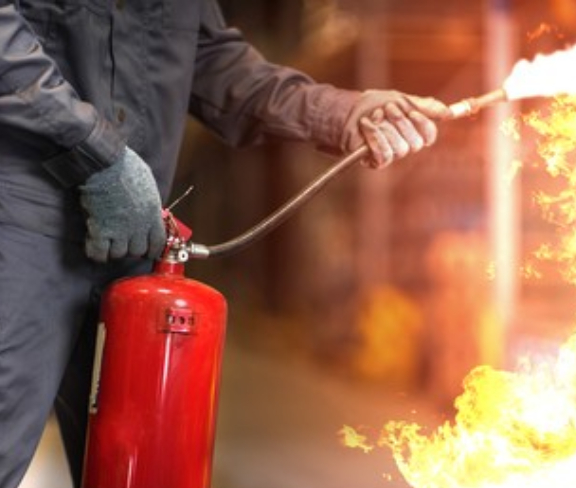
The Safety Master (TSM) provides fire safety audits for all types of buildings and industries, including hotels, hospitals, homes, schools, factories, chemical plants, power plants, FMCG companies, foundries, and mines.
Fires can cause serious harm to people and property. A fire safety audit is the best way to check fire safety standards in a building or workplace. It helps owners find areas that need improvement, create safety plans, prepare for emergencies, and conduct fire drills.
TSM’s expert team regularly carries out fire safety audits for high-rise buildings, hotels, banks, and businesses of all sizes. We follow important IS standards like the Automatic Fire Detection and Alarm System, Fire Extinguisher Selection and Maintenance Guidelines, National Building Code, Fire Safety Code for Buildings, and other safety rules. Our audits help identify fire hazards so they can be fixed and prevented.
Contact Us Now for More Details About Fire Audit

Our Address :- Unit No 221-450-451-452, SPL1/J, 2nd & 4th Floor, Sunsquare Plaza Complex, RIICO Chowk, Bhiwadi 301019, Rajasthan, India
TSM TheSafetyMaster Private Limited
(ISO 9001 & ISO 45001 Certified Company)
Contact Number
Contact E-Mail
Components of a Fire Safety Audit
- Inspection of Fire Safety Equipment: This includes checking fire alarms, extinguishers, and sprinkler systems.
- Review of Fire Safety Procedures: Ensuring that all evacuation plans and emergency procedures are up to date.
- Training and Drills: Verifying that staff are trained in fire safety and regular fire drills are conducted.
The Safety Master ensures that all these components are thoroughly reviewed during a fire audit.
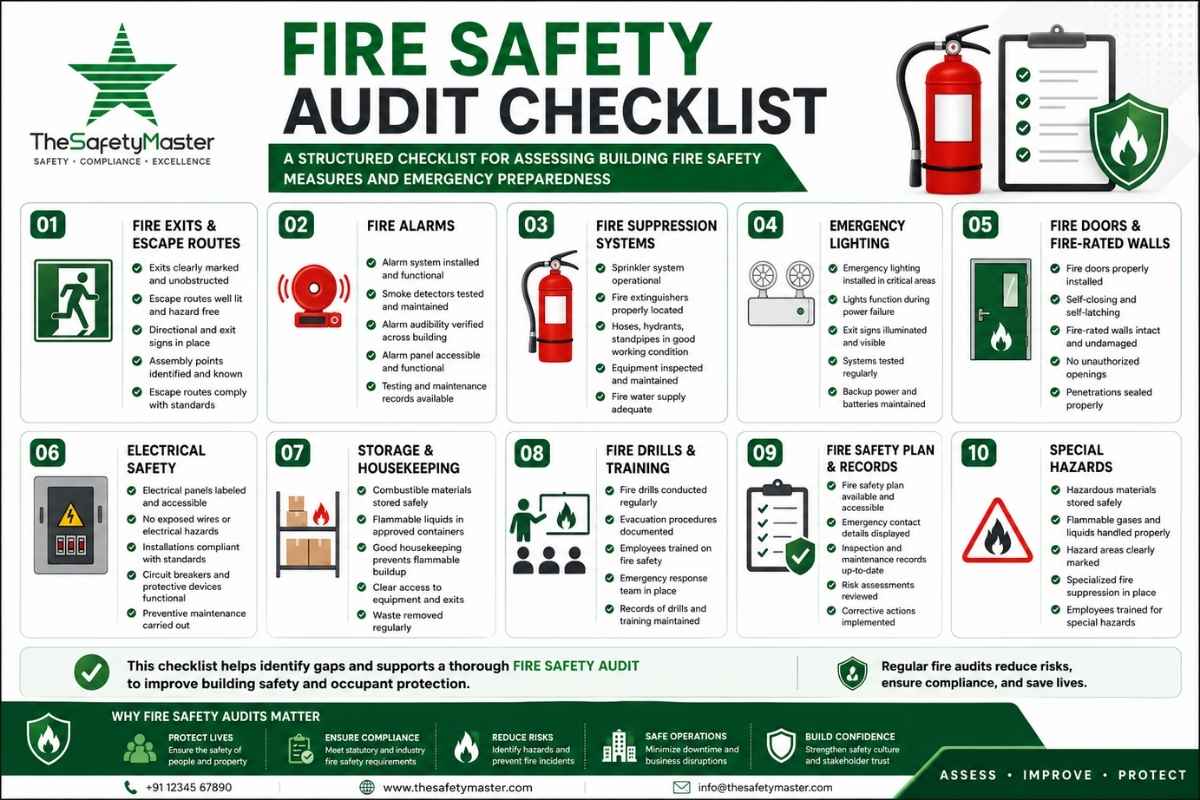
Fire Safety Audit Checklist
At The Safety Master, our comprehensive Fire Safety Audit process helps identify fire risks, evaluate existing fire protection systems, and ensure compliance with applicable safety regulations. A professional Fire Audit is essential for offices, factories, warehouses, hospitals, educational institutions, hotels, residential complexes, and commercial buildings to safeguard people, property, and business operations.
Fire Exits and Emergency Escape Routes
A safe and efficient evacuation system is one of the most critical aspects of any Fire Safety Audit.
Checklist:
- Are all fire exits clearly marked with visible signage?
- Are fire exits free from obstructions and easily accessible?
- Are emergency escape routes clearly identified throughout the premises?
- Are escape pathways adequately illuminated during normal and emergency conditions?
- Are directional signs installed to guide occupants toward the nearest exit?
- Are assembly points clearly designated and communicated to occupants?
- Do escape routes comply with applicable fire safety standards and building regulations?
Fire Detection and Alarm Systems
Early fire detection significantly reduces the risk of injuries, fatalities, and property damage.
Checklist:
- Are fire alarm systems installed throughout the building?
- Are smoke detectors, heat detectors, and alarm devices functioning properly?
- Are fire alarm panels accessible and maintained regularly?
- Is the fire alarm system tested at scheduled intervals?
- Can alarm signals be clearly heard throughout all occupied areas?
- Are alarm monitoring and emergency notification systems operational?
- Are maintenance and testing records available for verification?
Fire Suppression and Firefighting Systems
A Fire Audit evaluates whether fire suppression equipment is capable of controlling or extinguishing a fire during an emergency.
Checklist:
- Is an automatic sprinkler system installed and operational?
- Are fire extinguishers provided as per hazard classification?
- Are extinguishers strategically located and easily accessible?
- Are fire extinguishers inspected and serviced regularly?
- Are fire hydrants functioning correctly and adequately maintained?
- Are fire hose reels and standpipes in good working condition?
- Is the fire water storage capacity sufficient for emergency requirements?
- Are firefighting pumps tested and maintained periodically?
Emergency Lighting Systems
Emergency lighting is essential for safe evacuation during power outages or fire emergencies.
Checklist:
- Is emergency lighting installed in critical areas and escape routes?
- Are emergency lights functional during power failures?
- Are exit signs illuminated and clearly visible?
- Are batteries and backup power systems maintained regularly?
- Is emergency lighting tested according to the maintenance schedule?
Fire Doors and Fire-Rated Barriers
Proper compartmentation helps prevent the spread of fire and smoke within a building.
Checklist:
- Are fire doors properly installed and certified?
- Do fire doors close automatically and seal effectively?
- Are fire doors free from damage and unauthorized modifications?
- Are fire-rated walls, partitions, and ceilings intact?
- Are penetrations through fire-rated barriers properly sealed?
- Are fire compartmentation systems maintained as required?
Electrical Fire Safety
Electrical faults are among the leading causes of workplace and building fires.
Checklist:
- Are electrical panels properly labeled and accessible?
- Are electrical installations compliant with safety standards?
- Are there any exposed wires, damaged cables, or loose connections?
- Are circuit breakers and protective devices functioning properly?
- Is preventive maintenance carried out on electrical systems?
- Are temporary electrical connections controlled and monitored?
- Are electrical rooms free from combustible materials?
Storage and Housekeeping Practices
Good housekeeping significantly reduces fire risks and improves workplace safety.
Checklist:
- Are combustible materials stored safely away from ignition sources?
- Are storage areas organized and properly maintained?
- Are waste materials removed regularly?
- Is there adequate clearance around electrical panels and firefighting equipment?
- Are flammable liquids stored in approved containers and designated areas?
- Are storage practices compliant with fire safety requirements?
Fire Drills and Emergency Preparedness
A Fire Safety Audit also assesses the preparedness of occupants and employees during emergencies.
Checklist:
- Are fire drills conducted at regular intervals?
- Are evacuation procedures clearly documented?
- Are records of fire drills maintained?
- Do employees understand emergency evacuation procedures?
- Are emergency response teams identified and trained?
- Are first responders trained in the use of firefighting equipment?
- Are visitors and contractors informed about emergency procedures?
Fire Safety Documentation and Compliance
Proper documentation demonstrates compliance and helps maintain a safe working environment.
Checklist:
- Is a comprehensive fire safety plan available?
- Are emergency contact details displayed prominently?
- Are inspection and maintenance records up to date?
- Are fire safety certificates and approvals available?
- Are risk assessments reviewed periodically?
- Are corrective actions from previous Fire Audits implemented and documented?
Special Hazards Assessment
Buildings with specialized operations require additional fire safety controls.
Checklist:
- Are hazardous chemicals stored according to safety guidelines?
- Are flammable gases and liquids handled safely?
- Are hazardous material storage areas clearly marked?
- Are explosion protection measures implemented where required?
- Are specialized fire suppression systems installed for high-risk areas?
- Are employees trained in handling hazardous materials and emergency response procedures?
Why Conduct a Fire Safety Audit?
A professional Fire Safety Audit helps organizations identify fire hazards, evaluate the effectiveness of fire protection systems, improve emergency preparedness, and maintain compliance with statutory requirements. Regular Fire Audits not only reduce the risk of fire incidents but also protect lives, assets, and business continuity.
At The Safety Master, we provide detailed Fire Safety Audit and Fire Audit services that help businesses create safer workplaces through systematic inspections, risk assessments, and actionable recommendations. Our experts ensure that your fire safety measures meet industry standards and are ready to perform when needed most.
Fire Audit Report
After completing a fire audit, The Safety Master provides a comprehensive fire audit report This report details the findings of the audit, including any deficiencies and recommendations for improvement. The fire audit report serves as a critical document for ensuring ongoing fire safety and compliance.
Benefits of a Fire Safety Audit Checklist
Using a fire safety audit checklist offers several benefits:
- Thorough Evaluation: Ensures that no aspect of fire safety is overlooked.
- Compliance: Helps meet regulatory requirements.
- Risk Reduction: Identifies and mitigates potential fire hazards.
The Safety Master utilizes a detailed fire safety audit checklist to provide a thorough and effective fire audit.
Steps in Conducting a Fire Audit
Conducting a fire audit involves several steps:
- Preparation: Gathering necessary documents and previous audit reports.
- Inspection: Physical inspection of the premises using the fire safety audit checklist.
- Documentation: Recording findings and observations.
- Report Generation: Compiling the fire audit report.
- Follow-up: Addressing any issues identified in the fire audit report.
The Safety Master follows these steps meticulously to ensure a comprehensive fire audit.
Key Features of The Safety Master’s Fire Audit
The Safety Master offers several unique features in their fire audit services:
- Expertise: Highly trained professionals with extensive experience in fire safety.
- Comprehensive Checklists: Detailed fire safety audit checklists covering all aspects of fire safety.
- Thorough Reports: Detailed fire audit reports with actionable recommendations.
- Regular Follow-ups: Ensuring all identified issues are addressed promptly.
Common Findings in a Fire Audit
During a fire audit, common findings may include:
- Faulty Fire Alarms: Non-functional or poorly maintained fire alarms.
- Blocked Emergency Exits: Obstructed or locked exits.
- Inadequate Training: Staff not adequately trained in fire safety procedures.
- Insufficient Fire Equipment: Lack of or poorly maintained fire extinguishers and sprinklers.
The Safety Master identifies and addresses these common issues through their comprehensive fire audits.
Importance of Regular Fire Audits
Regular fire audits are crucial for maintaining fire safety. The Safety Master recommends conducting a fire safety audit at least once a year to ensure ongoing compliance and safety.
How to Prepare for a Fire Audit
Preparation for a Fire audit involves several steps:
- Gather Documentation: Collect all relevant fire safety documents and previous fire audit reports.
- Review Procedures: Ensure all fire safety procedures are up to date.
- Conduct Internal Checks: Perform preliminary checks using a fire safety audit checklist.
The Safety Master provides guidance on how to effectively prepare for a fire audit.
Fire Audit Checklist for Different Industries
Different industries have unique fire safety requirements. The Safety Master tailors their fire safety audit checklists to meet the specific needs of various industries, including:
- Healthcare: Ensuring fire safety in hospitals and clinics.
- Education: Fire safety in schools and universities.
- Manufacturing: Addressing fire hazards in factories and warehouses.
The Role of Fire Audit Reports in Compliance
Fire audit reports play a vital role in ensuring compliance with fire safety regulations. The Safety Master provides detailed reports that help organizations meet all regulatory requirements.
General Fire Safety Audit Guidelines
A systematic assessment of a building's fire prevention, protection, and emergency preparedness measures helps identify potential risks, ensure regulatory compliance, and improve the overall safety of occupants and assets.
1. Define Audit Objectives and Scope
Before initiating the assessment, establish clear objectives such as regulatory compliance, hazard identification, risk reduction, or evaluation of emergency response systems. The scope should clearly specify the buildings, departments, processes, and fire protection systems to be assessed.
2. Review Relevant Information
Collect and examine all relevant documents, including:
- Building layouts and floor plans
- Fire safety policies and procedures
- Maintenance and inspection records
- Previous assessment reports
- Emergency response plans
- Applicable fire safety regulations and standards
A thorough document review helps auditors understand existing fire safety arrangements before conducting physical inspections.
3. Assemble a Qualified Audit Team
The assessment should be conducted by competent professionals with expertise in fire prevention, fire protection systems, and safety compliance. The audit team may include fire safety consultants, facility managers, maintenance personnel, and key stakeholders responsible for safety management.
4. Conduct a Comprehensive Site Inspection
The physical inspection is a critical part of the assessment process. Auditors should evaluate:
- Fire exits and escape routes
- Emergency evacuation arrangements
- Fire alarm and detection systems
- Fire suppression systems
- Emergency lighting
- Fire doors and compartmentation
- Electrical installations
- Housekeeping and storage practices
The inspection should identify conditions that could contribute to fire incidents or hinder emergency evacuation.
5. Evaluate Fire Protection Systems
All active and passive fire protection measures should be inspected to verify functionality and compliance.
This includes:
- Fire alarm systems
- Smoke and heat detectors
- Automatic sprinkler systems
- Fire extinguishers
- Fire hydrants and hose reels
- Fire pumps and water storage facilities
- Fire-rated doors and barriers
Regular maintenance and testing records should also be reviewed.
6. Assess Emergency Preparedness
An effective emergency response system can significantly reduce the impact of a fire incident.
The assessment should evaluate:
- Fire evacuation procedures
- Emergency response plans
- Assembly point arrangements
- Drill frequency and effectiveness
- Employee awareness and training programs
- Emergency communication systems
7. Review Housekeeping and Storage Practices
Poor housekeeping is a common cause of workplace fires.
The assessment should verify:
- Safe storage of combustible materials
- Proper handling of flammable liquids and chemicals
- Waste management practices
- Adequate clearance around electrical equipment and firefighting systems
- Compliance with storage safety requirements
8. Verify Documentation and Compliance Records
Proper documentation demonstrates ongoing commitment to fire safety.
Auditors should review:
- Equipment inspection records
- Maintenance schedules
- Drill reports
- Incident investigation reports
- Training records
- Regulatory approvals and certifications
9. Identify Hazards and Non-Compliance Issues
All observed deficiencies, unsafe practices, and non-compliance issues should be documented. Risk levels should be assessed to prioritize corrective actions and improve overall safety performance.
10. Prepare the Final Report
The final report should include:
- Assessment findings
- Identified fire hazards
- Areas of non-compliance
- Risk assessments
- Corrective action recommendations
- Improvement opportunities
A detailed report serves as a roadmap for enhancing safety and regulatory compliance.
11. Implement Corrective Actions and Follow-Up
Organizations should promptly address identified deficiencies and implement recommended improvements. Follow-up inspections should be conducted to verify the effectiveness of corrective actions.
12. Conduct Periodic Assessments
Fire risks and operational conditions change over time. Regular assessments help organizations maintain compliance, improve safety performance, and ensure continuous improvement in fire risk management.
Understanding the Fire Tetrahedron
Effective fire prevention begins with understanding the Fire Tetrahedron, which represents the four essential elements required for a fire to start and continue burning.
Fuel
Fuel refers to any combustible material capable of burning, including paper, wood, textiles, fuels, gases, and chemicals. Proper storage and handling of combustible materials help reduce fire risks.
Oxygen
Oxygen supports combustion and allows a fire to continue burning. Controlling ventilation and preventing the accumulation of combustible gases can help limit fire growth.
Heat
Heat provides the energy necessary to ignite fuel. Common heat sources include electrical faults, machinery, hot surfaces, welding operations, and cooking equipment. Managing ignition sources is essential for fire prevention.
Chain Reaction
Once combustion begins, a self-sustaining chemical chain reaction develops, allowing the fire to spread. Fire suppression systems are designed to interrupt this reaction and extinguish the fire.
Removing any one of these four elements can prevent a fire from starting or stop an existing fire from spreading.
Fire Safety Codes and Standards
Compliance with recognized fire safety standards is a key objective of every assessment.
Key Fire Safety Standards Include:
- NFPA (National Fire Protection Association) Codes
- International Building Code (IBC)
- International Fire Code (IFC)
- Local Building and Fire Safety Regulations
- Occupational Safety and Health Requirements
These standards provide guidelines for fire prevention, detection, suppression, emergency planning, and occupant safety. Adhering to applicable codes helps organizations minimize risks, protect assets, and maintain legal compliance.
Importance of Professional Assessments
A professional assessment provides a structured approach to evaluating fire risks, improving emergency preparedness, and ensuring compliance with safety regulations. By identifying hazards before they become incidents, organizations can protect lives, reduce property damage, avoid operational disruptions, and create a safer working environment for everyone.
Fire Safety Audit Methodology
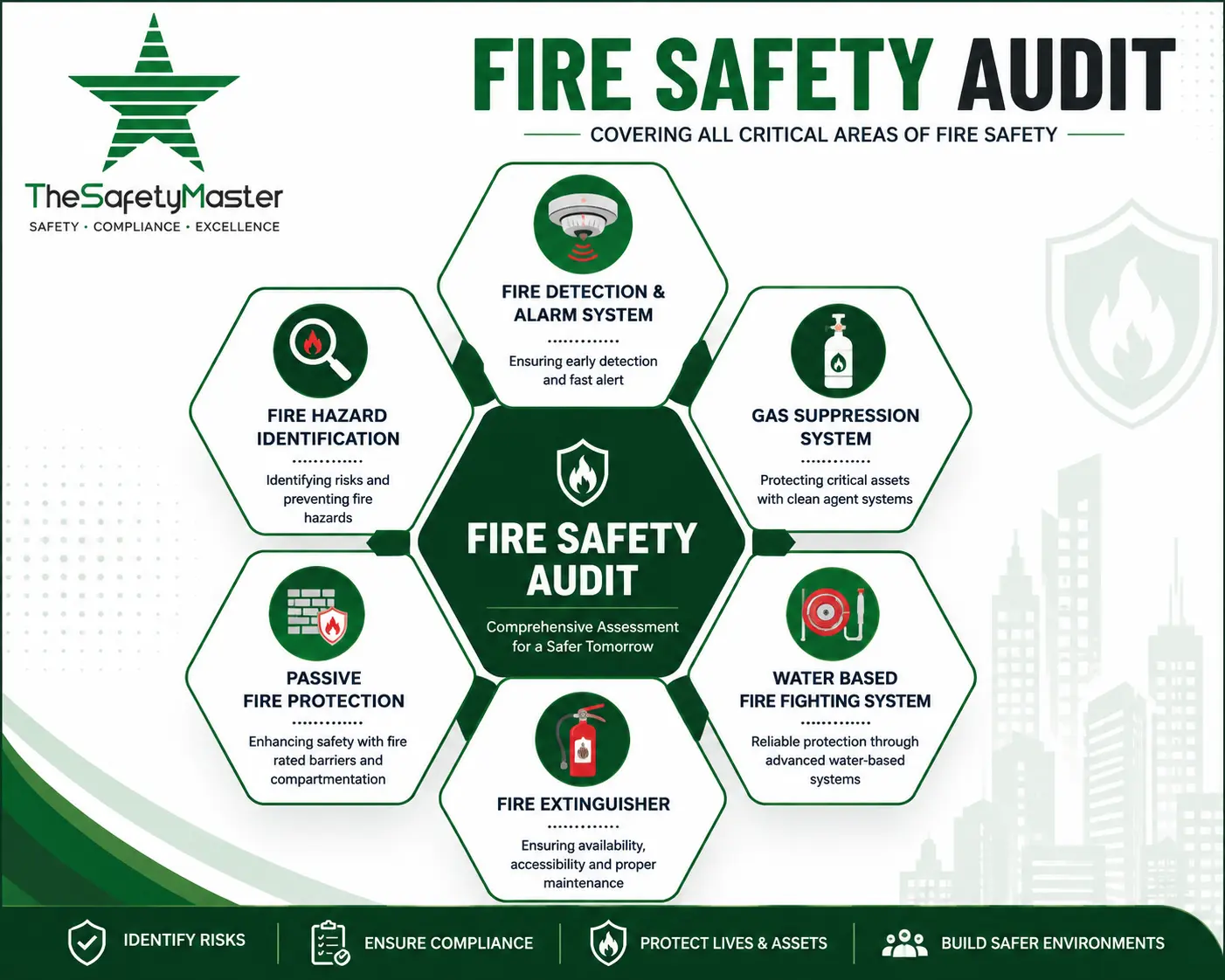
Conducting a Fire Safety Audit requires a structured and systematic approach to evaluate fire risks, verify compliance, and assess the effectiveness of fire protection measures within a facility. A well-executed assessment helps organizations identify potential hazards, strengthen emergency preparedness, and improve overall fire safety performance.
The process covers all critical aspects of fire safety, including fire detection and alarm systems, gas suppression systems, water-based firefighting systems, fire extinguishers, passive fire protection measures, emergency response arrangements, and fire hazard identification.
Our Methodology
Our comprehensive process typically includes:
- Defining the audit objectives, scope, and applicable standards
- Collection and review of fire safety policies, drawings, and documentation
- Detailed site inspection and physical walkthrough of the facility
- Evaluation of fire detection and alarm systems
- Assessment of fire suppression and firefighting systems
- Inspection of passive fire protection measures and fire compartmentation
- Identification of fire hazards, unsafe conditions, and compliance gaps
- Review of emergency preparedness, evacuation plans, and fire drills
- Assessment of fire safety management practices and training programs
- Documentation of observations, findings, and risk levels
- Preparation of a detailed assessment report
- Recommendations for corrective, preventive, and improvement actions
This systematic methodology enables organizations to identify weaknesses in existing fire safety arrangements and implement practical solutions to reduce risks and enhance safety.
Importance of Fire Safety Audits
A Fire Safety Audit is a proactive risk management tool that helps organizations prevent fire incidents before they occur. By identifying hazards and evaluating fire protection systems, businesses can improve emergency response capabilities, protect valuable assets, and ensure the safety of employees, visitors, and occupants.
Regular assessments also help organizations maintain compliance with applicable fire safety regulations, industry standards, and insurance requirements while supporting business continuity and operational resilience.
Key Deliverables
Upon completion of the assessment, The Safety Master provides a comprehensive report detailing observations, compliance status, identified hazards, and recommendations for improvement.
Typical Deliverables Include:
- Comprehensive assessment report
- Fire hazard identification and risk assessment findings
- Compliance gap assessment against applicable standards and regulations
- Evaluation of fire detection, alarm, and suppression systems
- Assessment of passive fire protection measures
- Emergency preparedness and evacuation review
- Fire safety management system evaluation
- Recommendations for risk reduction and compliance improvement
- Corrective and preventive action plan
- Prioritized action items based on risk levels
- Photographic observations and supporting documentation
Our detailed reporting helps organizations take informed actions to strengthen fire safety measures, improve compliance, and create a safer environment for people, property, and business operations.