
Fire Audit Services: Complete Fire Safety Inspection, Checklist & Report | The Safety Master
A Fire Audit is a systematic examination of a building, workplace, industrial facility, hotel, hospital, warehouse, school, or commercial property to identify fire hazards and evaluate the effectiveness of fire prevention and protection systems. It helps organizations identify safety gaps, improve emergency preparedness, and take corrective action before a fire incident occurs.
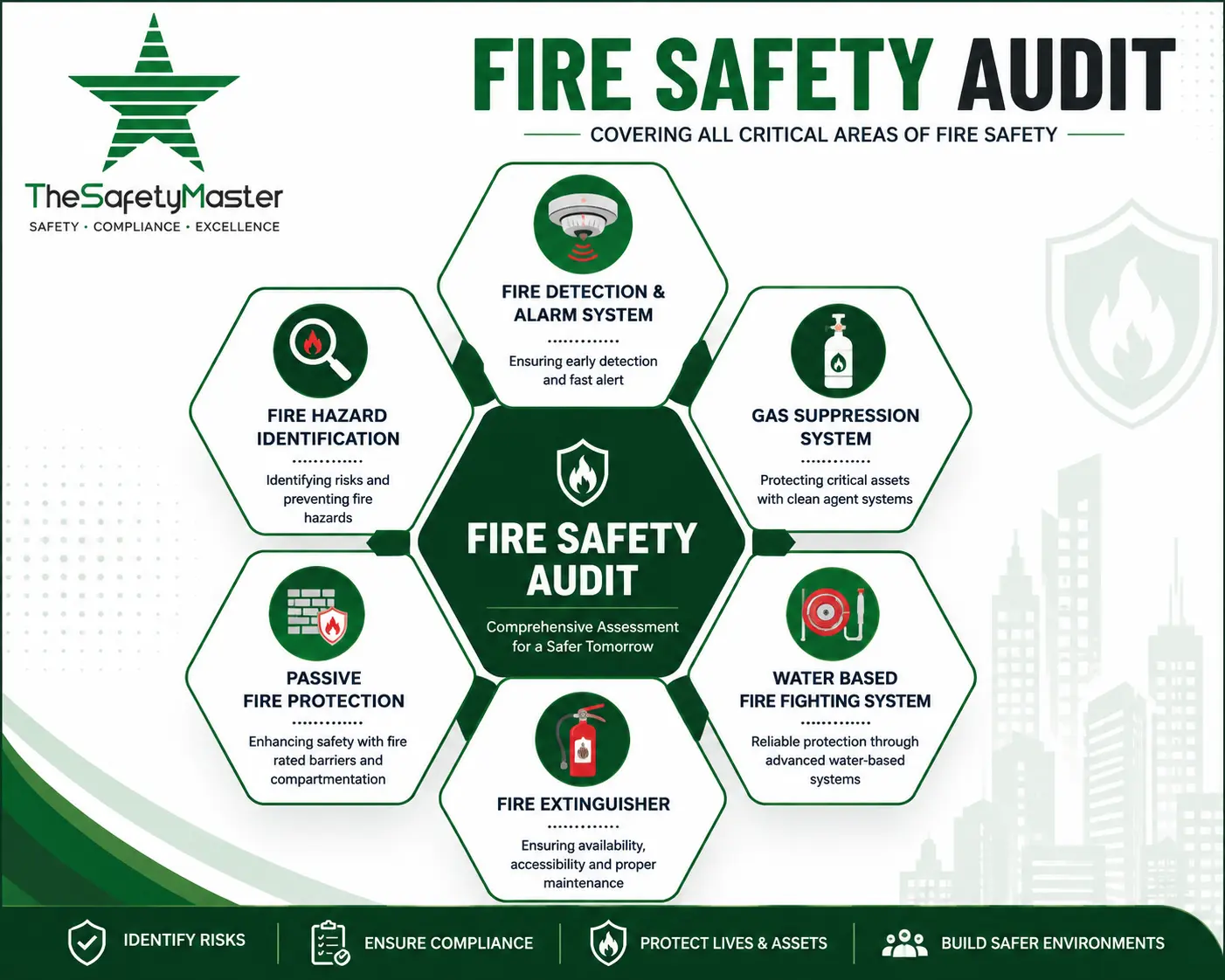
The Safety Master provides professional fire safety audit services for different types of facilities. The audit covers fire detection, firefighting systems, emergency exits, electrical safety, fire doors, evacuation arrangements, housekeeping, documentation, training, and other important fire safety controls
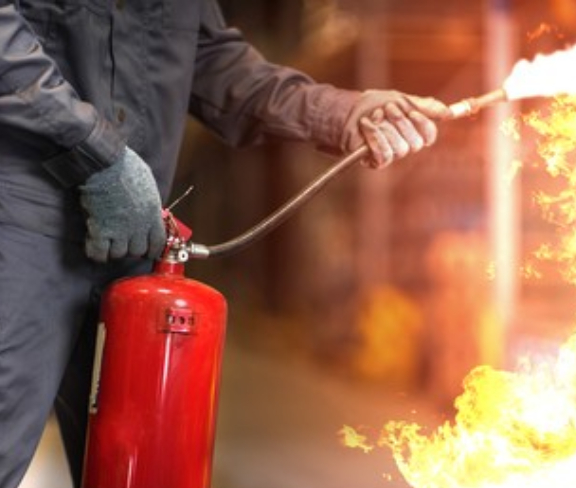
What Is a Fire Audit?
A Fire Audit is a detailed inspection of fire safety arrangements within a facility. The purpose is to identify hazards, check whether fire protection systems are working properly, review emergency procedures, and identify gaps that require corrective action.
A professional audit generally includes:
- Fire detection and alarm systems
- Fire extinguishers
- Fire hydrants and hose reels
- Sprinkler systems
- Fire pumps
- Fire water storage
- Emergency exits
- Emergency lighting
- Fire doors and compartmentation
- Electrical installations
- Flammable material storage
- Housekeeping
- Fire drills and training
- Emergency response plans
- Fire safety documentation
The audit findings are documented in a structured Fire Audit Report with observations, risk levels, photographs, recommendations, and corrective actions.
Fire Audit Services by The Safety Master
The Safety Master conducts fire safety assessments for a wide range of facilities and industries, including:
- Manufacturing plants
- Chemical industries
- Oil and gas facilities
- Warehouses
- Hotels
- Hospitals
- Schools and colleges
- Offices
- Shopping malls
- Residential buildings
- Commercial buildings
- FMCG facilities
- Power plants
- Mines
The scope of an audit is adjusted according to the building type, occupancy, processes, fire hazards, applicable requirements, and existing fire protection systems.
Fire Audit Checklist: What Is Checked?
A Fire Audit Checklist provides a structured method for checking important fire safety arrangements. It helps the auditor systematically inspect the facility and reduces the possibility of missing important safety points.
Fire Extinguisher Checklist
The auditor checks:
- Correct type of extinguisher for the hazard
- Number and location of extinguishers
- Accessibility
- Physical condition
- Pressure indication
- Inspection and servicing status
- Expiry/service records
- Proper identification and signage
- Unobstructed access
Fire Alarm and Detection Checklist
The audit should verify:
- Fire alarm panel condition
- Smoke detectors
- Heat detectors
- Manual call points
- Audible alarms
- Visual alarm indicators where applicable
- Detector coverage
- Testing records
- Maintenance records
- Emergency notification arrangements
Fire Hydrant and Sprinkler Checklist
Important inspection points include:
- Hydrant system condition
- Hose reels
- Hydrant valves
- Fire hoses
- Sprinkler heads
- Control valves
- Fire pumps
- Jockey pump
- Main fire pump
- Fire water tank
- Pump testing records
- Accessibility of firefighting equipment
Emergency Exit Checklist
The auditor checks whether:
- Emergency exits are clearly identified
- Exit routes are free from obstruction
- Exit doors can be opened when required
- Exit signage is visible
- Emergency lighting is available
- Stairways are accessible
- Assembly points are identified
- Evacuation routes are communicated to occupants
Electrical Fire Safety Checklist
The inspection may include:
- Electrical panels
- Cable condition
- Overloaded circuits
- Temporary connections
- Earthing arrangements
- Circuit protection
- Electrical room housekeeping
- Clearance around electrical panels
- Preventive maintenance
- Thermographic inspection records where applicable
Housekeeping and Storage Checklist
The audit also reviews:
- Combustible material storage
- Waste accumulation
- Flammable liquid storage
- Chemical storage
- Storage near electrical equipment
- Clear access to fire equipment
- Hot work controls
- Smoking controls
- General housekeeping
A comprehensive checklist should be adapted to the actual hazards and occupancy of the facility rather than used as a generic tick-box exercise.
Fire Safety Audit Methodology: A Step-by-Step Approach
A Fire Safety Audit Methodology is a systematic process used to identify fire hazards, evaluate fire prevention and protection measures, assess emergency preparedness, and recommend corrective actions. A structured methodology ensures that the audit covers critical areas of a facility and provides management with clear, practical recommendations for improving fire safety.
1. Pre-Audit Planning
The process begins with collecting basic information about the facility, including building layout, occupancy, industrial processes, fire load, hazardous materials, previous incidents, and existing fire protection systems. The auditor also reviews available fire safety policies, emergency plans, inspection records, maintenance reports, and training records.
Fire Audit Report: What Does It Contain?
After the physical inspection, the auditor prepares a Fire Audit Report that records the condition of fire safety arrangements and identifies areas requiring improvement.
A professional report can include:
1. Executive Summary
A brief overview of the facility and the overall fire safety condition.
2. Audit Scope
The buildings, departments, systems, locations, and activities covered by the audit.
3. Site Information
Typical information includes:
- Organization name
- Site address
- Building type
- Occupancy
- Number of floors
- Audit date
- Auditor details
- Previous audit information
4. Fire Safety Observations
Each finding should clearly explain:
- What was observed
- Where it was observed
- Why it is a concern
- Potential consequence
- Recommended corrective action
5. Risk Classification
Findings can be prioritized according to their risk or urgency.
For example:
- Critical
- High
- Medium
- Low
The exact classification system should be defined by the audit methodology being used.
6. Photographic Evidence
Photographs can help management understand the actual condition and location of important findings.
7. Recommendations
Each significant observation should have a practical recommendation.
8. Corrective Action Plan
A corrective action table can include:
| Observation | Risk | Recommendation | Responsible Person | Target Date | Status |
|---|---|---|---|---|---|
| Exit route obstructed | High | Remove obstruction | Facility Team | Immediate | Open |
| Fire extinguisher inaccessible | Medium | Relocate and mark location | Maintenance | 7 Days | Open |
| Alarm testing overdue | High | Conduct system testing | Fire Team | 3 Days | Open |
This type of structure makes the Fire Audit Report useful not only for documentation but also for closing safety gaps.
Fire Audit Report Format
A practical Fire Audit Report Format can follow this structure:
Cover Page
- Company name
- Facility name
- Location
- Audit date
- Auditor/consultant
- Report number
Executive Summary
Summarize the overall findings and major risks.
Scope of Audit
Mention the areas, buildings, processes, and fire safety systems inspected.
Applicable Standards and Requirements
List the applicable codes, standards, statutory requirements, and site-specific requirements considered during the assessment.
Detailed Findings
Document observations related to:
- Fire protection systems
- Emergency evacuation
- Electrical safety
- Fire prevention
- Passive fire protection
- Housekeeping
- Emergency preparedness
- Training and drills
Recommendations
Provide specific actions for each important finding.
Action Plan
Assign responsibility and target dates for corrective actions.
Conclusion
Provide an overall assessment and priority areas for improvement.
This structure is consistent with the general report approach recommended for third-party fire safety assessments.
Fire Audit Checklist PDF: What Should It Include?
A Fire Audit Checklist PDF can be useful for auditors, facility managers, EHS professionals, and maintenance teams who want a printable inspection document.
A useful PDF checklist can contain sections for:
- Building information
- Fire exits
- Emergency evacuation
- Fire extinguishers
- Fire alarm system
- Smoke and heat detection
- Hydrant system
- Sprinkler system
- Fire pumps
- Fire water storage
- Emergency lighting
- Fire doors
- Electrical safety
- Flammable materials
- Housekeeping
- Fire drills
- Employee training
- Documentation
- Observations
- Corrective actions
For actual audits, the checklist should be customized according to the facility and applicable requirements.
Fire Audit PDF: How It Can Help
A Fire Audit PDF can be used as a reference or working document during an inspection.
It can help the audit team:
- Record observations
- Check fire equipment
- Identify hazards
- Record deficiencies
- Capture recommendations
- Track corrective actions
- Maintain audit records
However, a generic PDF should not be treated as proof of compliance by itself. The checklist needs to be applied by competent personnel and adapted to the facility's actual hazards and requirements.
Fire Safety Audit Report PDF Free Download
Organizations often search for a Fire Safety Audit Report PDF free download to understand how a professional report is structured.
A sample report can help explain the format of:
- Audit observations
- Risk ratings
- Photographs
- Recommendations
- Corrective action plans
- Compliance gaps
- Management summaries
For professional use, however, the report should be based on an actual site inspection rather than simply downloading and reusing a generic report.
The Safety Master can prepare detailed fire safety audit reports based on site-specific observations, identified hazards, applicable requirements, and recommended corrective actions.
Fire Safety Audit Checklist Excel
A Fire Safety Audit Checklist Excel format can be particularly useful when multiple findings need to be tracked and updated.
A useful Excel sheet can include these columns:
| Sr. No. | Audit Area | Check Point | Observation | Risk Level | Recommendation | Responsibility | Target Date | Status |
|---|---|---|---|---|---|---|---|---|
| 1 | Fire Extinguisher | Accessibility | Obstructed | High | Clear access | Facility | Immediate | Open |
| 2 | Fire Alarm | Testing | Record unavailable | Medium | Verify testing | Maintenance | 7 Days | Open |
| 3 | Emergency Exit | Signage | Sign damaged | Medium | Replace signage | Facility | 7 Days | Open |
An Excel-based checklist makes it easier to filter high-risk observations, assign responsibilities, monitor deadlines, and track closure.
Fire Audit Bihar: Fire Safety Assessment and Compliance
A Fire Audit Bihar should consider the applicable Bihar fire safety requirements along with the building's occupancy, construction characteristics, fire protection systems, and site-specific hazards.
Bihar's official fire safety framework includes prescribed fire-audit checkpoints for different categories of buildings. The Bihar Fire Service Rules, 2021 include a Form-D-I covering information such as building identification, construction year, fire NOC details, previous fire audit, occupancy, building height, covered area, floors, and other characteristics.
Therefore, organizations in Bihar should not rely only on a generic national checklist. The audit scope should be reviewed against the requirements applicable to the particular building and occupancy.
Why Choose The Safety Master for Fire Audit?
The Safety Master provides professional fire safety audit services focused on identifying hazards, evaluating protection systems, and providing practical recommendations.
Our Fire Audit Approach
- Experienced safety professionals
- Systematic site inspection
- Detailed Fire Audit Checklist
- Fire protection system review
- Hazard identification
- Compliance gap assessment
- Photographic observations
- Risk-based recommendations
- Detailed Fire Audit Report
- Corrective action tracking
The objective is not simply to complete a checklist. The objective is to identify weaknesses and help the organization improve its overall fire safety performance.
Benefits of Regular Fire Audits
Regular Fire Audits can help organizations:
- Identify fire hazards early
- Improve emergency preparedness
- Check firefighting equipment
- Identify blocked evacuation routes
- Improve fire safety awareness
- Strengthen maintenance practices
- Identify compliance gaps
- Reduce potential fire losses
- Protect people and property
- Improve business continuity
Recent fire-safety inspections in India also demonstrate the importance of checking firefighting equipment, evacuation routes, and compliance conditions proactively rather than waiting for an incident.
Fire Audit Checklist for Different Industries
Different facilities have different fire hazards, so the checklist should be customized.
Manufacturing Industries
Focus on:
- Machinery
- Electrical systems
- Flammable materials
- Process hazards
- Hot work
- Firewater systems
- Emergency shutdown arrangements
Hotels
Focus on:
- Guest rooms
- Kitchens
- Emergency exits
- Fire alarm systems
- Kitchen suppression
- Evacuation plans
- Staff training
Hospitals
Focus on:
- Patient evacuation
- Medical gases
- Electrical systems
- Emergency power
- Fire compartments
- Fire detection
- Critical care areas
Warehouses
Focus on:
- Storage height
- Combustible materials
- Storage arrangement
- Fire detection
- Sprinkler coverage
- Aisles and access
- Emergency exits
Conclusion
A professional Fire Audit is an important tool for identifying fire hazards, checking fire protection systems, reviewing emergency preparedness, and improving safety performance.
A well-prepared Fire Audit Checklist, detailed Fire Audit Report, structured Fire Audit Report Format, and properly maintained Fire Safety Audit Checklist Excel can help organizations identify deficiencies and track corrective actions effectively.
For locations such as Bihar, the audit should also consider applicable state-specific fire safety requirements rather than relying only on a generic checklist.
The Safety Master provides comprehensive Fire Audit and fire safety assessment services to help organizations identify risks, strengthen fire protection measures, improve emergency preparedness, and create safer workplaces.