iTSM HIRA – Digital Hazard Identification and Risk Assessment Software
iTSM HIRA is a digital Hazard Identification and Risk Assessment solution designed to help organizations identify workplace hazards, evaluate risks, define control measures, and monitor corrective actions from one centralized platform. Traditional HIRA processes often depend on spreadsheets, paperwork, and manual follow-ups, which can make risk tracking difficult. iTSM HIRA helps safety teams digitize the process and improve visibility across departments, projects, and operational locations.
What Is iTSM HIRA?
iTSM HIRA is a digital safety management solution that supports the complete HIRA workflow, from hazard identification to risk assessment, control implementation, and monitoring.
The platform helps safety professionals create a structured approach to workplace risk management. Instead of maintaining separate paper records or spreadsheets, organizations can maintain risk information in a centralized digital system.
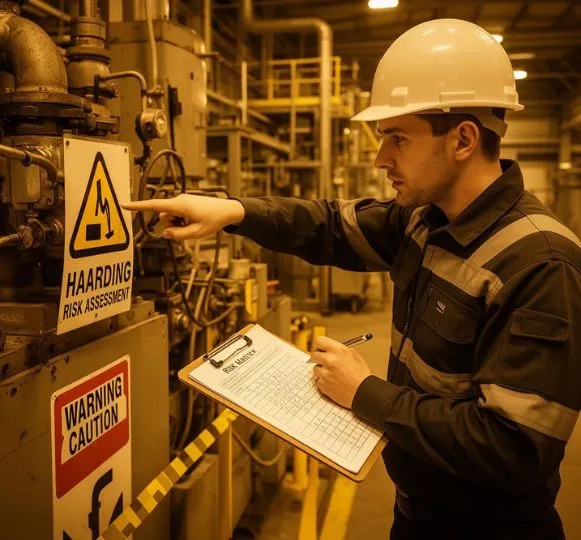
How iTSM HIRA Supports Risk Management
The system helps organizations:
- Identify workplace hazards
- Assess likelihood and severity of risks
- Prioritize high-risk activities
- Define preventive and control measures
- Assign corrective actions
- Monitor action closure
- Maintain digital HIRA records
- Track risk trends
- Generate safety reports
- Improve audit readiness
Why Digital HIRA Is Important for Modern Workplaces
Workplace hazards can change when processes, equipment, materials, manpower, or working conditions change. A manual HIRA system can make it difficult to maintain updated information and follow up on outstanding actions.
A digital HIRA platform provides better visibility and enables safety teams to manage risk information more systematically.
With iTSM HIRA, organizations can move from reactive risk management toward a proactive approach where hazards are identified, evaluated, controlled, and continuously reviewed.
Key Features of iTSM HIRA
Digital Hazard Identification
Employees, supervisors, and safety professionals can record hazards digitally. Hazard information can include the activity, location, unsafe condition, potential consequence, existing controls, and recommended actions.
This creates a structured record of workplace hazards and makes information easier to review.
Risk Assessment and Risk Scoring
iTSM HIRA supports systematic risk evaluation using defined risk assessment methodologies.
Safety teams can evaluate factors such as:
- Likelihood of occurrence
- Severity of consequences
- Existing control measures
- Initial risk level
- Additional controls required
- Residual risk
This helps organizations prioritize their most significant risks.
Centralized HIRA Risk Register
All identified hazards and risk assessments can be maintained in a centralized digital risk register.
The risk register provides safety teams and management with better visibility of:
- Open risks
- High-risk activities
- Existing controls
- Recommended controls
- Responsible persons
- Action deadlines
- Residual risks
- Closure status
Corrective and Preventive Action Tracking
Identifying a hazard is only the first step. Effective risk management also requires timely implementation of control measures.
iTSM HIRA enables organizations to assign actions to responsible persons, define target dates, monitor progress, and track closure.
This improves accountability and reduces the possibility of important safety actions being forgotten.
Real-Time Safety Dashboards
Management needs clear information to understand the organization's current risk position.
Digital dashboards can help display information such as:
- Number of identified hazards
- Risk categories
- High-risk activities
- Open corrective actions
- Overdue actions
- Completed assessments
- Risk trends
This allows management and safety teams to make more informed decisions.
Mobile-Based Hazard Reporting
Safety teams often work across plants, construction sites, warehouses, projects, and other operational areas.
Mobile accessibility makes it easier to capture hazard information directly from the workplace rather than waiting until the team returns to the office.
Benefits of Using iTSM HIRA
Faster HIRA Process
Digital workflows can reduce the time spent preparing, updating, searching, and sharing HIRA documentation.
Better Risk Visibility
A centralized system provides a clearer view of workplace risks across departments and locations.
Improved Accountability
Assigning actions to responsible persons with defined deadlines helps improve corrective-action follow-up.
Reduced Manual Documentation
Organizations can reduce dependence on paper-based HIRA records and disconnected spreadsheets.
Better Audit Readiness
Digital records make it easier to retrieve risk assessments, action records, and historical information during internal or external audits.
Data-Driven Safety Decisions
Management can use dashboards and reports to identify recurring hazards, high-risk areas, and areas requiring additional controls.
iTSM HIRA Workflow
Step 1: Identify Activities
Identify the activities, processes, tasks, equipment, and operations that need to be assessed.
Step 2: Identify Hazards
Identify potential hazards associated with each activity. These may include mechanical, electrical, chemical, fire, ergonomic, environmental, process, or other workplace hazards.
Step 3: Assess the Risk
Evaluate the likelihood and severity associated with each identified hazard and determine the overall risk level.
Step 4: Define Control Measures
Determine appropriate controls using a systematic risk-control approach. Controls should focus on eliminating or reducing the risk as far as reasonably practicable.
Step 5: Assign Corrective Actions
Assign responsibilities and target dates for implementing additional control measures.
Step 6: Monitor Residual Risk
After controls are implemented, review the remaining risk and determine whether additional measures are required.
Step 7: Review and Improve
HIRA should be reviewed when processes, equipment, materials, workplace conditions, or other significant factors change, and after incidents or near misses where appropriate.
Industries That Can Use iTSM HIRA
iTSM HIRA can support risk management across multiple industries and operational environments, including:
Manufacturing
Identify and assess risks associated with machinery, production operations, maintenance, material handling, and workplace activities.
Chemical and Petrochemical
Support systematic identification and assessment of process, chemical, operational, and workplace hazards.
Oil and Gas
Help teams manage risks associated with process operations, maintenance, storage, transportation, and field activities.
Pharmaceuticals
Support risk assessment across manufacturing, utilities, maintenance, laboratories, and other operational activities.
Construction
Help identify risks associated with work at height, excavation, lifting, electrical work, machinery, and site activities.
Power and Utilities
Support systematic assessment of electrical, mechanical, operational, maintenance, and process-related risks.
Warehousing and Logistics
Help organizations assess risks related to material handling, forklifts, storage systems, loading and unloading, and workplace movement.
iTSM HIRA for Proactive Safety Management
A strong safety management system requires organizations to identify risks before they become incidents. HIRA provides a structured methodology for understanding workplace hazards and determining appropriate controls.
iTSM HIRA digitizes this process by bringing hazard identification, risk assessment, corrective actions, records, and reporting into a centralized platform.
It can also complement other digital safety processes such as safety audits, permit-to-work management, incident investigation, contractor management, and management of change.
Why Choose The Safety Master for Digital HIRA?
The Safety Master combines industrial safety expertise, risk management knowledge, training capabilities, and digital safety solutions. Its safety technology portfolio includes digital solutions for areas such as BBS, Permit to Work, Safety Audit, HAZOP Study, Accident Investigation, MOC, PSSR, Training, Contractor Management, and HIRA.
With iTSM HIRA, organizations can establish a more structured and transparent approach to workplace risk management while improving the way safety information is captured, monitored, and reported.