Prevent One Incident. Save Crores

Safety Strategy for Leaders Who Think Long Term
March 10, 2026
Your Annual Safety Partner — Not Just an Auditor
March 14, 2026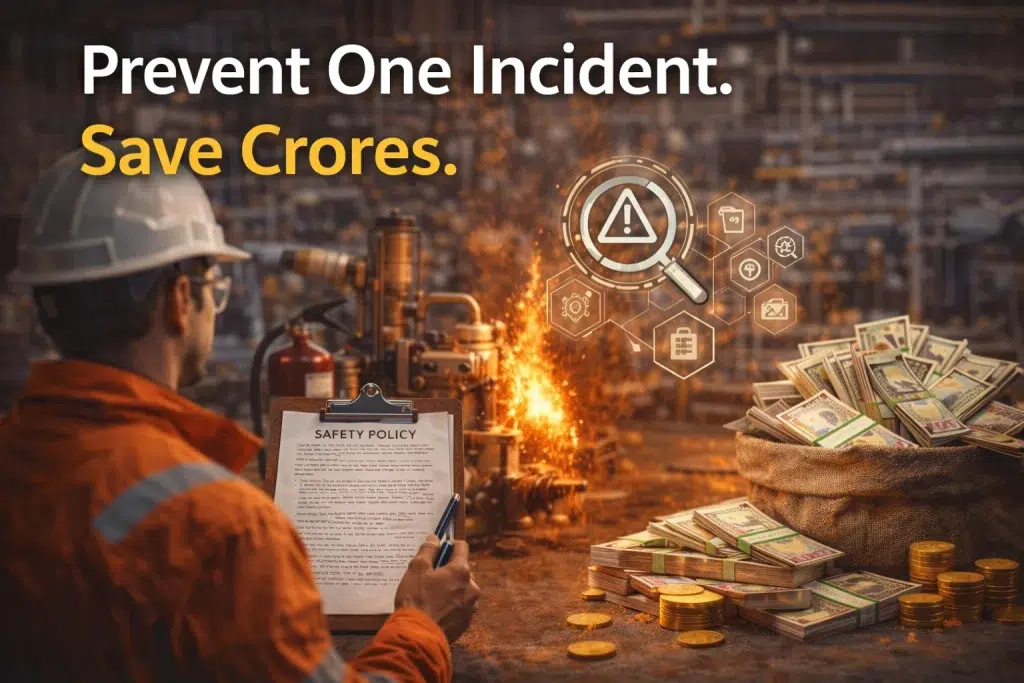
The Hidden Financial Impact of Workplace Incidents
Workplace incidents are often measured in terms of injuries, equipment damage, or production interruptions. However, the true cost of an incident goes far beyond the immediate damage. Industrial accidents can lead to operational shutdowns, regulatory penalties, legal liabilities, environmental damage, and long-term reputational harm. When these factors are combined, the financial impact can easily reach crores.
Many organizations focus on managing incidents after they occur, investing heavily in recovery and damage control. However, the more effective approach is prevention. By identifying hazards early and implementing strong safety systems, organizations can avoid incidents that could otherwise lead to significant financial and operational losses.
Preventing one major incident can protect not only physical assets but also business continuity and workforce well-being.
Direct Costs vs Indirect Costs of Accidents
The financial consequences of an industrial accident typically fall into two categories: direct costs and indirect costs.
Direct costs include medical expenses, compensation payments, equipment repairs, and regulatory penalties. These costs are usually visible and immediately measurable.
Indirect costs, however, often exceed the direct ones. These may include production delays, loss of client trust, increased insurance premiums, investigation expenses, and workforce productivity decline. Additionally, incidents can affect employee morale and create long-term operational disruptions.
Preventing incidents reduces both categories of costs and helps organizations maintain stable operations.
Why Prevention Is More Effective Than Reaction
Many organizations treat safety improvements as a response to incidents. After an accident occurs, investigations are conducted, procedures are revised, and training programs are strengthened. While these actions are necessary, they often come after significant losses have already occurred.
A preventive approach focuses on identifying risks before incidents happen. Hazard identification, routine inspections, and structured safety evaluations allow organizations to address potential problems early. This approach reduces the likelihood of accidents and protects both employees and assets.
Investing in prevention is significantly less expensive than managing the consequences of a major industrial incident.
Identifying Process Risks Before They Escalate
Industrial operations often involve complex systems where small deviations can lead to serious hazards. Equipment malfunctions, temperature fluctuations, pressure changes, or chemical reactions can escalate quickly if not identified early.
Structured risk analysis techniques help organizations evaluate these potential hazards. One commonly used method is a Hazop Study, which examines process deviations to identify potential failures that could lead to accidents. By analyzing process parameters systematically, organizations can detect vulnerabilities and implement corrective measures before incidents occur.
This proactive approach significantly reduces the likelihood of costly disruptions.
Preventing Fire-Related Losses
Fire incidents remain one of the most expensive types of industrial accidents. Fires can destroy infrastructure, damage equipment, and halt production for extended periods. In addition to financial losses, fire incidents can also result in injuries and environmental damage.
Regular evaluation of fire prevention systems helps organizations identify vulnerabilities early. Conducting a structured Fire Audit allows organizations to review fire detection systems, emergency exits, suppression equipment, and evacuation procedures.
Ensuring that these systems are functional and properly maintained helps reduce the risk of fire-related incidents that could result in massive financial losses.
Systematic Safety Evaluations Reduce Risk
Organizations that prioritize prevention often implement structured evaluations to assess workplace safety regularly. These evaluations examine operational practices, equipment conditions, and compliance with safety procedures.
A comprehensive Safety Audit helps identify weaknesses in workplace safety systems. By reviewing procedures, infrastructure, and employee practices, organizations can detect hazards before they lead to accidents.
These evaluations support continuous improvement by ensuring that safety measures remain effective as operations evolve.
Managing High-Risk Industrial Processes
Many industries involve processes that require strict operational control. Chemical manufacturing, energy production, and heavy engineering operations often involve hazardous materials or high-pressure systems.
Managing these environments requires structured frameworks that address operational risks systematically. One widely used framework is Process Safety Management, which focuses on hazard identification, operational discipline, and incident prevention.
By implementing such frameworks, organizations can maintain control over complex processes and reduce the likelihood of incidents that could cause large-scale financial damage.
Employee Awareness and Participation
Incident prevention is not limited to management systems or technical controls. Employees play an important role in identifying and reporting hazards. Workers who operate equipment daily often notice irregularities before they develop into serious problems.
Encouraging employees to report near misses, unsafe conditions, and procedural concerns increases hazard visibility. Training programs also help employees understand how to identify potential risks and respond effectively.
When employees actively participate in safety programs, organizations gain valuable insights into operational risks and can address issues more quickly.
Technology and Modern Safety Monitoring
Advancements in technology have improved the ability to detect workplace hazards early. Sensors, automated monitoring systems, and digital dashboards provide real-time insights into equipment performance and environmental conditions.
These technologies help identify abnormal operating conditions before they escalate into accidents. For example, temperature sensors may detect overheating equipment, while gas detection systems can identify hazardous leaks.
However, technology alone is not enough. Effective safety management requires trained personnel who can interpret data and respond appropriately.
Building a Culture of Prevention
Preventing incidents requires more than procedures and inspections. It requires a workplace culture where safety is prioritized at every level of the organization.
Leadership commitment plays a crucial role in establishing this culture. When management demonstrates that safety is a priority, employees are more likely to follow procedures and report hazards.
Open communication, regular training, and consistent enforcement of safety standards contribute to a proactive safety culture. Over time, this culture helps organizations prevent incidents before they occur.
Long-Term Benefits of Incident Prevention
Preventing incidents provides benefits that extend beyond financial savings. Safe workplaces experience higher employee morale, improved productivity, and stronger stakeholder confidence.
Organizations with strong safety performance often gain a competitive advantage because clients and partners prefer working with companies that prioritize safety and reliability.
In addition, effective safety management reduces regulatory risks and improves long-term operational stability.
Conclusion: Prevention Protects People and Profits
Preventing a single incident can save crores in financial losses while protecting employees and maintaining operational continuity. Organizations that invest in hazard identification, structured safety evaluations, and employee awareness build stronger defenses against workplace accidents.
Safety should not be viewed as an expense but as an investment in stability, resilience, and long-term success. By focusing on prevention rather than reaction, organizations protect their workforce, infrastructure, and reputation.
One well-prevented incident can safeguard lives, preserve valuable resources, and ensure that operations continue safely and efficiently.