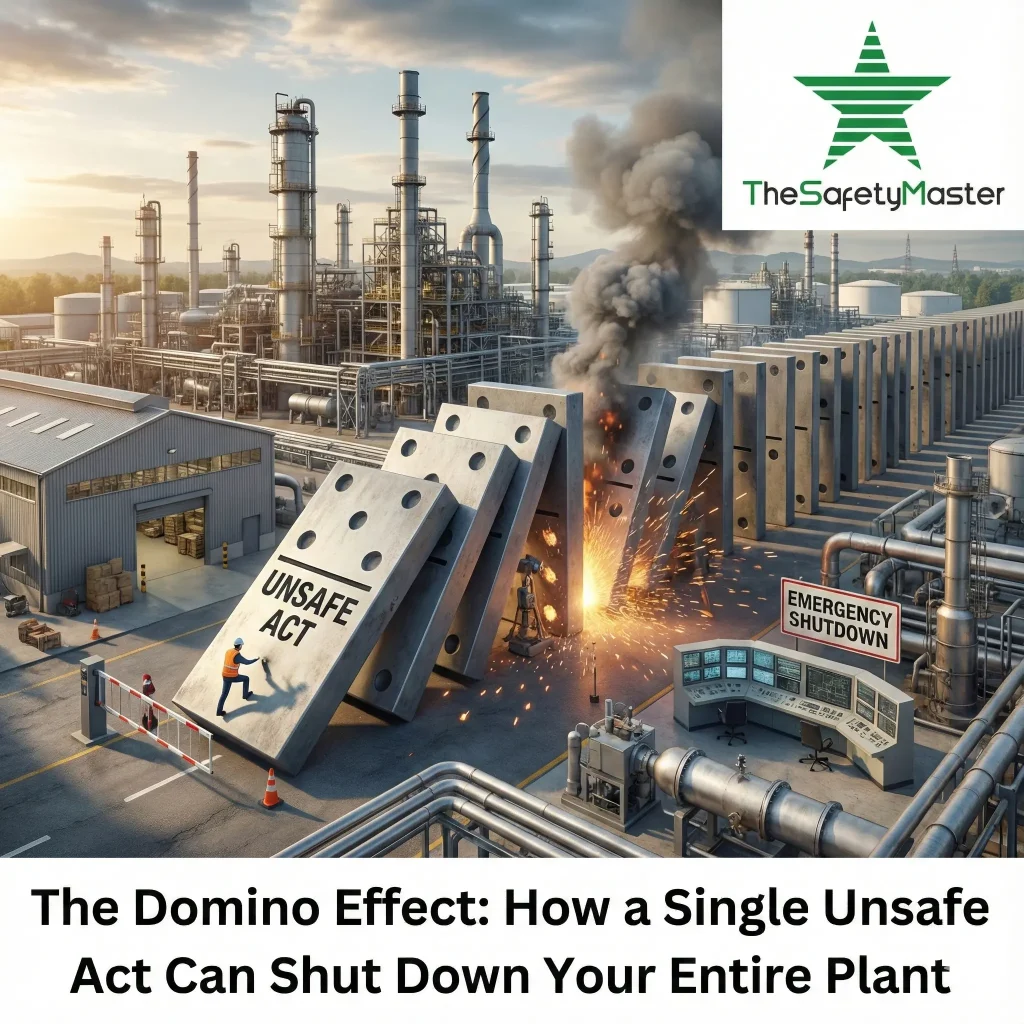
Safety Is Not a Cost. It’s Business Continuity.

From Compliance to Control: How Modern Factories in Delhi NCR Are Rethinking Safety
January 3, 2026
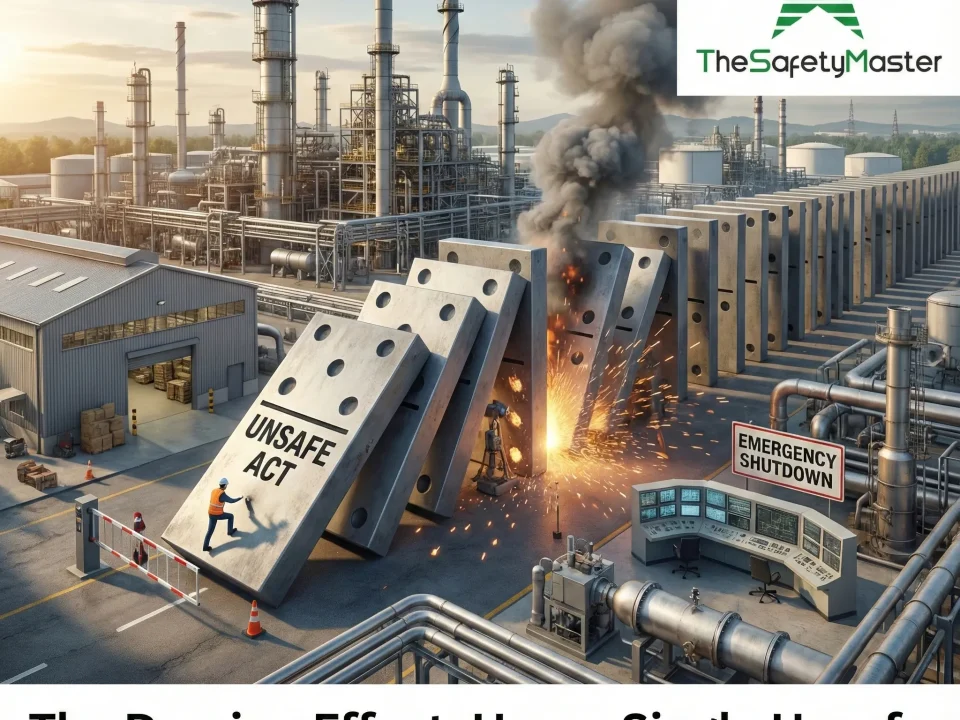
The Domino Effect: How a Single Unsafe Act Can Shut Down Your Entire Plant
January 6, 2026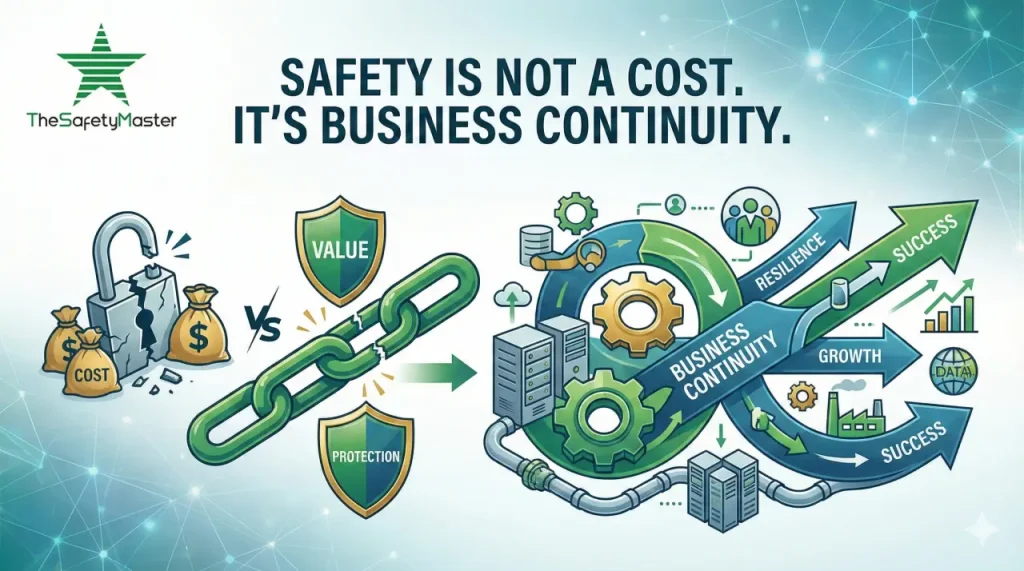
In the fast-paced world of modern industry, the balance sheet often dictates decision-making. When executives review their annual budgets, “Health, Safety, and Environment” (HSE) is frequently categorized as a cost center—a necessary expenditure to satisfy regulators, but an expenditure nonetheless. This traditional mindset is not only outdated; it is dangerous. It frames safety as a hurdle to profitability rather than a pillar of stability.
The reality, proven time and again by market leaders and resilient organizations, is that safety is not a line item to be minimized. Safety is business continuity. It is the strategic framework that ensures an organization can withstand shocks, prevent disruptions, and maintain its promise to customers and stakeholders. When we shift the narrative from “cost of compliance” to “investment in continuity,” the entire operational philosophy changes.
The Illusion of Savings: The “Cost” Mindset
To understand why safety is an investment, we must first dismantle the argument that cutting safety corners saves money. It is easy to look at the price tag of high-quality PPE, advanced monitoring systems, or comprehensive training programs and see “lost” capital. However, this view suffers from a critical blind spot: it ignores the Iceberg Theory of Accident Costs.
When an incident occurs, the direct costs are visible and often insured: medical expenses, compensation, and immediate repair of damaged equipment. But lurking beneath the surface are the indirect costs, which typically outweigh direct costs by a factor of 4 to 10. These include:
- Production Downtime: The immediate halt of operations, often extending far beyond the accident site.
- Legal Fees and Fines: Regulatory bodies are increasingly imposing severe penalties for negligence.
- Reputation Damage: In the age of social media, news of a safety failure spreads instantly, eroding brand trust that took decades to build.
- Loss of Morale: Employees do not work efficiently or loyally in environments where they feel expendable.
- Investigation Time: The administrative burden of root cause analysis and reporting.
When you view safety through this lens, the “cost” of safety measures pales in comparison to the “cost” of a single significant incident. A preventative approach is effectively an insurance policy against catastrophic operational failure.
Business Continuity: Beyond Disaster Recovery
Business Continuity Planning (BCP) is often associated with IT systems—ensuring servers stay up during a power outage or that data is backed up. However, true business continuity covers the entire operational capability of the firm. If your factory burns down, your server backups are irrelevant. If a critical process fails and releases toxic chemicals, your ability to email clients won’t save your market share.
Operational safety is the bedrock of BCP. It ensures that the physical assets, the human capital, and the industrial processes remain viable and productive. This requires a systematic approach to identifying vulnerabilities before they manifest as disasters.
The Role of the Safety Audit
The first step in aligning safety with business continuity is establishing a baseline. You cannot manage risks you do not see. This is where a professional Safety Audit becomes the most valuable tool in a manager’s arsenal.
A comprehensive safety audit is not merely a checklist exercise to satisfy a government inspector. It is a deep-dive diagnostic tool that evaluates the health of your safety management system. It identifies gaps between your written procedures and the reality on the shop floor. Are your emergency stops accessible? Is the lockout/tagout procedure actually being followed, or just signed off?
By conducting regular audits, organizations move from a reactive posture (fixing things after they break/injure) to a proactive posture (identifying weakness before failure). In the context of business continuity, the audit is your early warning system. It detects the tremors before the earthquake, allowing you to reinforce your foundations.
Protecting Assets: The Fire Threat
Among the myriad risks that threaten business continuity, fire remains one of the most devastating. A mechanical failure might stop a production line for a day; a fire can erase a facility permanently. According to insurance data, a staggering percentage of businesses that suffer a major fire never reopen, and of those that do, many fail within three years. The loss of infrastructure, inventory, and momentum is simply too great.
This makes the Fire Audit a critical component of continuity planning. A fire audit goes beyond checking if extinguishers are present. It analyzes the entire fire safety ecosystem: active protection (sprinklers, alarms), passive protection (fire doors, compartmentation), and human response (evacuation drills, warden training).
Furthermore, a fire audit assesses the ignition sources relative to the fuel load. In modern manufacturing, where chemical storage, high-voltage electrical systems, and combustible dust often coexist, the risk profile is complex. A rigorous audit ensures that these elements are segregated and managed. By investing in this level of scrutiny, you are not just preventing a fire; you are securing the very existence of your business infrastructure.
Process Integrity: Mastering Complexity
As industries evolve, processes become more complex. In sectors like pharmaceuticals, oil and gas, power generation, and chemical manufacturing, safety is not just about “trips and falls”—it is about maintaining the integrity of high-pressure, high-temperature, and hazardous systems.
In these environments, a minor deviation in temperature or flow can escalate into a catastrophe. To ensure continuity here, we rely on specialized methodologies like the Hazop Study (Hazard and Operability Study).
A Hazop Study is a structured, team-based examination of a process to identify and evaluate problems that may represent risks to personnel or equipment. It uses a rigorous brainstorming technique with “guide words” (such as No Flow, More Pressure, Reverse Flow) to challenge the design.
For example, what happens to business continuity if a cooling pump fails? Does the system shut down safely, or does it runaway? A Hazop Study answers these questions before the plant is even built or modified. It is the ultimate tool for “designing out” downtime. By identifying operability issues—not just safety hazards—Hazop directly contributes to efficiency. A process that is safe and stable is also a process that yields consistent quality and higher uptime.
The Framework: Process Safety Management (PSM)
While specific tools like audits and studies are vital, they must be housed within a cohesive framework. This framework is Process Safety Management. PSM is the application of management principles to the identification, understanding, and control of process hazards.
PSM is the “operating system” of a safe company. It integrates various elements—from employee participation and trade secret protection to mechanical integrity and hot work permits—into a unified strategy.
For business continuity, PSM is non-negotiable. It ensures that safety is not dependent on a specific individual’s knowledge but is institutionalized in the company’s DNA. It manages the subtle changes—staff turnover, equipment replacement, updated chemicals—that can slowly degrade safety margins over time.
A robust PSM system ensures that when a crisis hits, there is a procedure for it. It ensures that when a new piece of equipment is installed, the management of change (MOC) protocol triggers a safety review. This systematic approach eliminates the chaos that usually accompanies disruptions, allowing the business to maintain operations or resume them with minimal delay.
The ROI of Safety Culture
Beyond the technical aspects of Hazop studies and audits, there is the human element. Viewing safety as business continuity transforms the company culture.
When leadership invests in safety, they send a powerful message to the workforce: “We value your lives more than short-term profit.” This psychological contract yields tangible business returns:
- Retention and Recruitment: Top talent prefers to work in safe, professional environments. High turnover is a massive disruption to business continuity; safety helps stem that tide.
- Productivity: Safe workers are confident workers. They do not hesitate or work tentatively out of fear. A well-organized, safe workplace is invariably a more productive one.
- Client Confidence: In B2B relationships, your safety record is part of your resume. Clients want to know that their supply chain is secure. If you are a high-risk vendor, you are a liability to their business continuity. Proving you are a “Safety Master” gives you a competitive edge.
Conclusion: The Strategic Pivot
It is time to retire the notion that safety is a “sunk cost.” In the modern economic landscape, volatility is the norm. Supply chains are fragile, regulations are tightening, and public scrutiny is at an all-time high. In this environment, resilience is the most valuable currency.
Safety is the architecture of resilience. It is the discipline that keeps the lights on, the assembly lines moving, and the workers returning home to their families.
By engaging in proactive measures—conducting a thorough Safety Audit, securing assets through a Fire Audit, analyzing risks via a Hazop Study, and managing the whole system with Process Safety Management—organizations do more than comply with the law. They future-proof their business.
At The Safety Master, we understand that your goal is not just to be safe, but to be successful. We believe that these two goals are inextricably linked. Do not wait for an accident to reveal the true cost of safety. Invest in continuity today, and secure your business for tomorrow.