Strong Governance Is Invisible Until It’s Missing

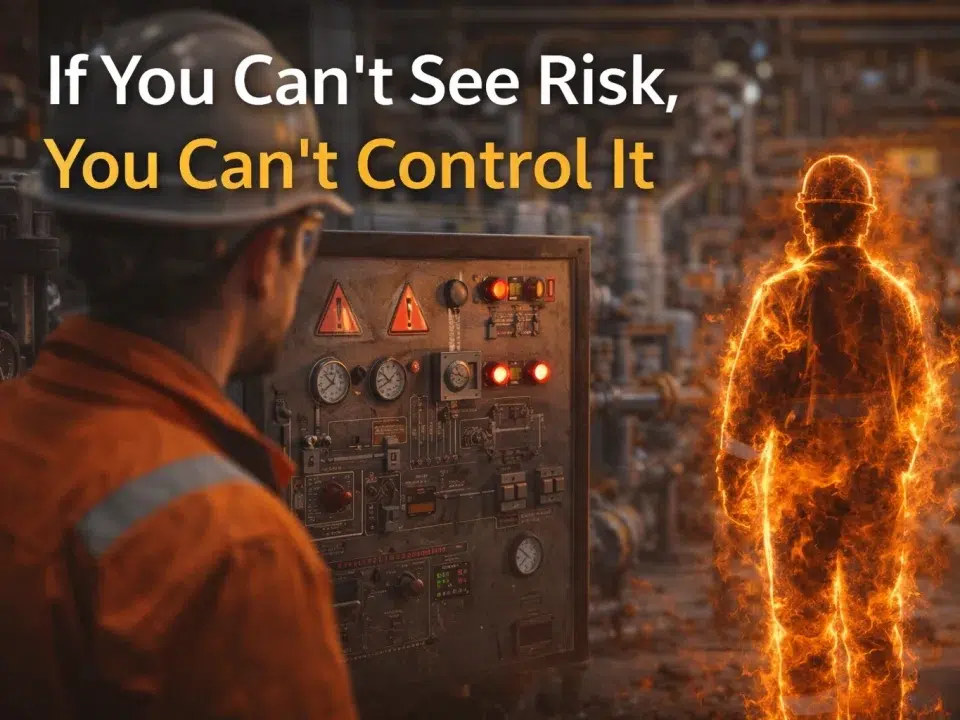
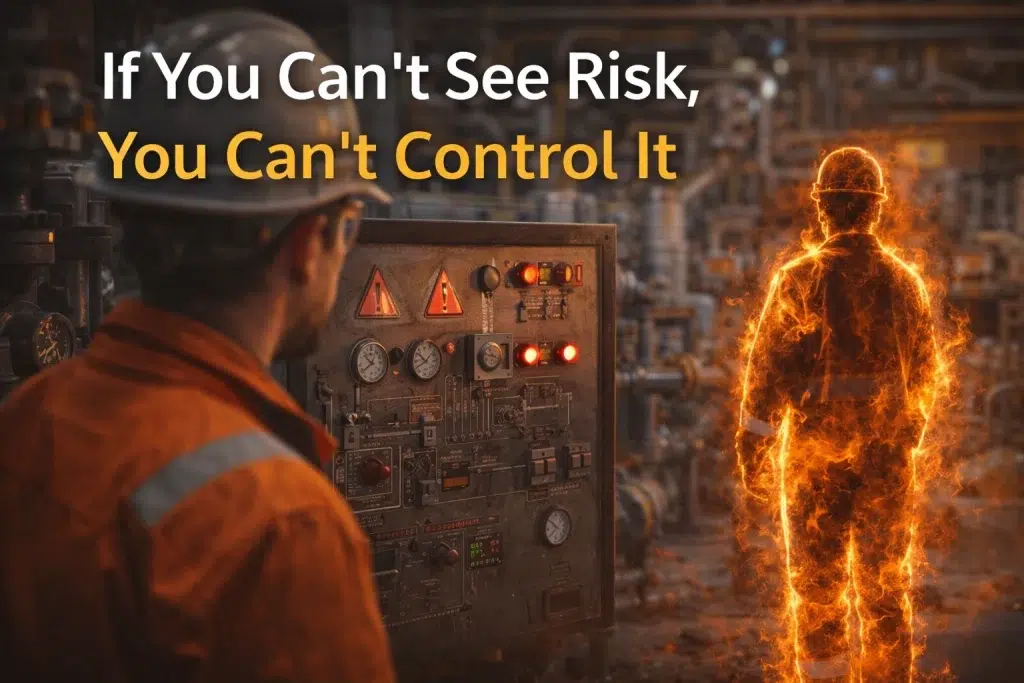
If You Can’t See Risk, You Can’t Control It
March 6, 2026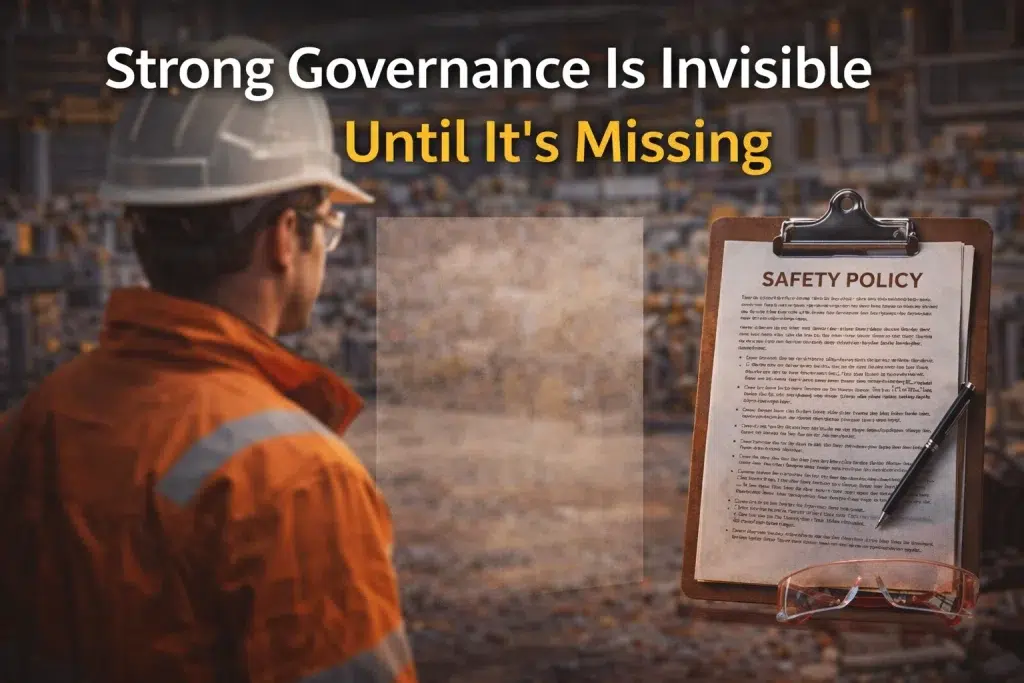
Why Safety Governance Often Goes Unnoticed
In well-managed organizations, safety systems operate quietly in the background. Policies are followed, risks are monitored, and employees understand their responsibilities. Because these systems function smoothly, their importance is rarely noticed during daily operations. However, the moment governance weakens, its absence becomes immediately visible through rising incidents, operational disruptions, and regulatory concerns.
Strong safety governance refers to the framework of leadership, accountability, policies, and monitoring systems that guide how safety is managed within an organization. It ensures that safety decisions are consistent, risks are evaluated systematically, and corrective actions are implemented effectively. When governance structures are strong, safety becomes part of routine operations rather than a reactive response.
The Role of Leadership in Safety Governance
Leadership plays a crucial role in establishing and maintaining governance systems. Senior management sets the tone by defining safety priorities, allocating resources, and ensuring that safety responsibilities are clearly assigned. Without leadership commitment, safety programs often remain incomplete or poorly enforced.
Governance begins with clear direction. Policies must define expectations for hazard identification, risk management, and emergency preparedness. These policies should be supported by measurable objectives and regular performance reviews. When leaders actively review safety metrics and address concerns promptly, they reinforce accountability across the organization.
Governance Creates Structure in Risk Management
Safety governance ensures that risk management processes follow a structured and consistent approach. Rather than responding only to visible hazards, organizations with strong governance systems analyze operational processes in detail.
For example, structured analytical tools such as a Hazop Study help organizations evaluate process deviations that could lead to hazardous situations. By examining parameters such as pressure, temperature, and material flow, this method identifies potential risks before they escalate. Governance frameworks ensure that findings from such analyses are documented, reviewed, and implemented through clear action plans.
Fire Safety and Organizational Oversight
Fire safety provides a clear example of how governance influences operational safety. Fire prevention systems require regular inspections, equipment maintenance, and employee training. Without clear governance structures, these activities may become irregular or poorly documented.
A comprehensive Fire Audit helps organizations review fire detection systems, emergency exits, evacuation procedures, and suppression equipment. However, governance ensures that the audit results are translated into real improvements rather than remaining as reports. Oversight mechanisms track corrective actions, verify completion, and monitor long-term compliance.
Accountability and Responsibility in Governance
One of the primary objectives of governance is defining accountability. Every employee within an organization should understand their role in maintaining safety. Supervisors monitor daily activities, maintenance teams ensure equipment reliability, and safety professionals evaluate risks and recommend improvements.
Governance frameworks clarify these responsibilities and prevent confusion regarding who is responsible for specific safety tasks. This clarity reduces delays in corrective actions and ensures that safety concerns receive prompt attention.
The Importance of Regular Evaluation
Governance systems rely on continuous evaluation to remain effective. Safety programs must be reviewed regularly to identify gaps, monitor performance, and adjust strategies as conditions change.
Structured reviews such as a Safety Audit provide a systematic assessment of workplace practices, safety procedures, and infrastructure conditions. These evaluations reveal weaknesses that might otherwise remain unnoticed. Governance frameworks ensure that audit findings are addressed through documented corrective actions and follow-up monitoring.
Integrating Process Safety into Governance
In industries involving complex processes, governance must extend beyond basic workplace safety. Chemical reactions, mechanical operations, and high-pressure systems introduce additional risks that require specialized oversight.
Frameworks such as Process Safety Management support governance by establishing structured procedures for hazard identification, operational control, and incident investigation. Integrating these frameworks into governance systems ensures that high-risk operations remain within safe limits.
When process safety measures are incorporated into organizational governance, decision-making becomes more disciplined and risk-aware.
Governance and Safety Culture
While policies and procedures are important, governance also influences workplace culture. Employees observe how leaders respond to safety concerns and whether safety rules are applied consistently. When management prioritizes safety and addresses hazards quickly, employees are more likely to follow procedures and report risks.
Conversely, weak governance can lead to inconsistent enforcement of safety rules. Employees may become uncertain about expectations or hesitant to report hazards. Over time, this uncertainty weakens the overall safety culture.
Strong governance promotes transparency, accountability, and open communication, all of which contribute to a safer working environment.
Data and Monitoring in Governance Systems
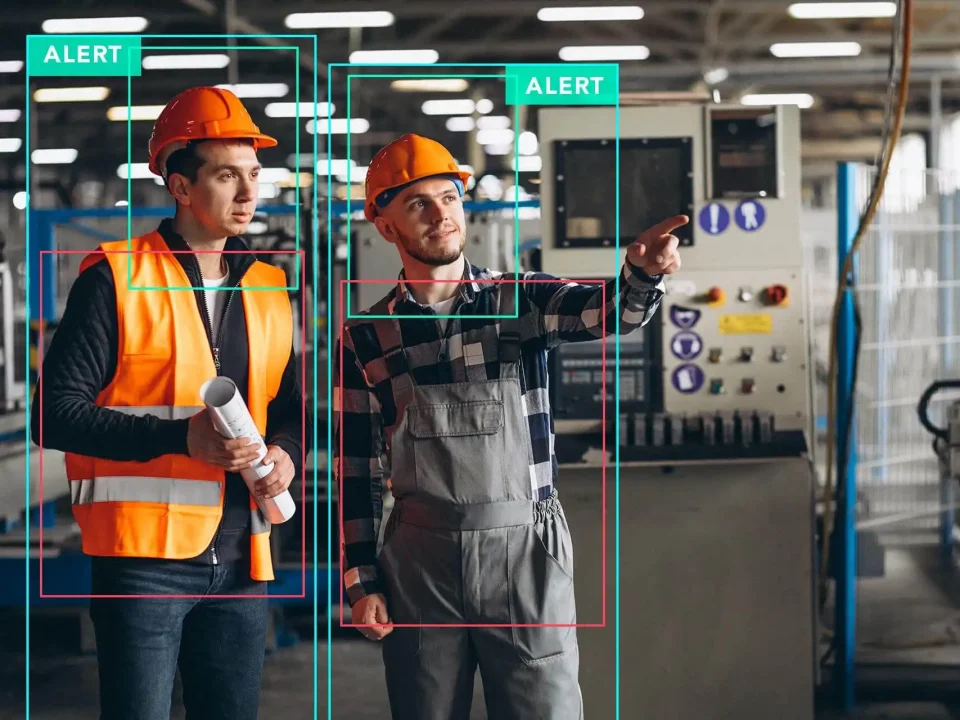
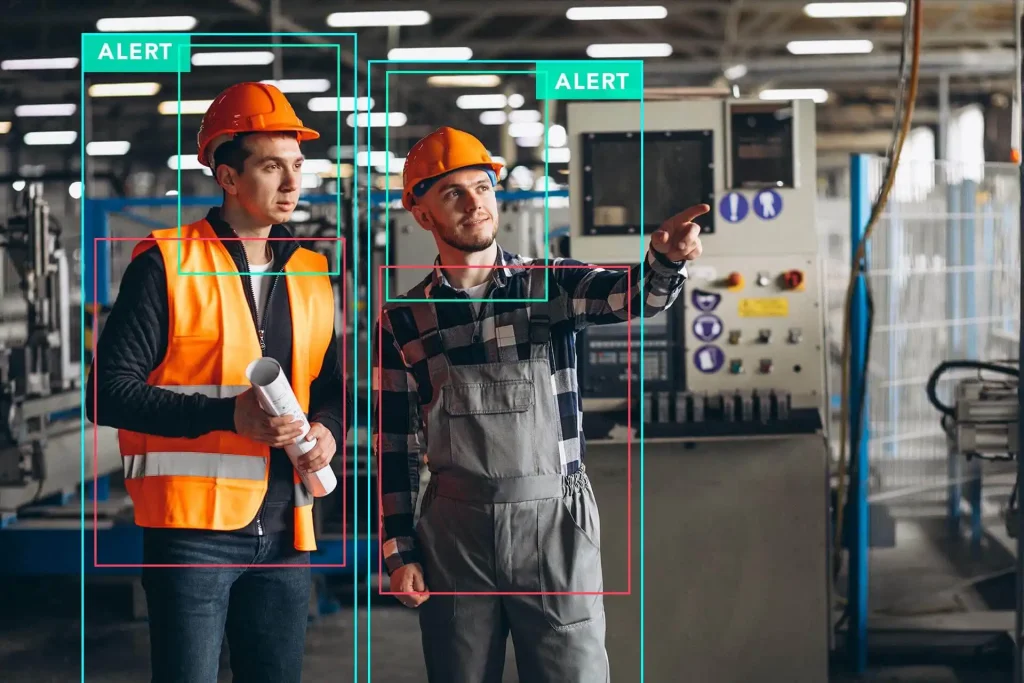
Modern governance systems rely on data to evaluate safety performance. Incident reports, maintenance records, inspection findings, and training participation rates provide valuable insights into operational conditions.
Analyzing this data allows organizations to identify patterns and trends that might otherwise remain hidden. For example, repeated equipment failures may indicate maintenance gaps, while frequent near misses may highlight procedural weaknesses.
Governance frameworks ensure that such data is reviewed regularly and used to guide safety improvements.
The Consequences of Weak Governance
The impact of weak governance often becomes apparent only after an incident occurs. Without clear oversight, risks may accumulate unnoticed. Safety procedures may become outdated, equipment maintenance may be delayed, and employees may lose confidence in reporting hazards.
When governance systems fail, organizations often face increased operational risks, regulatory scrutiny, and financial consequences. Recovering from such failures requires rebuilding trust, improving oversight, and strengthening safety processes.
Strengthening Governance Through Continuous Improvement
Effective governance is not static. As organizations evolve, safety risks change and governance systems must adapt accordingly. Continuous improvement ensures that policies, procedures, and monitoring systems remain relevant.
Organizations can strengthen governance by reviewing safety performance regularly, updating procedures when operational changes occur, and investing in employee training. Clear communication and leadership engagement further reinforce governance frameworks.
Conclusion: The Value of Invisible Systems
Strong governance often goes unnoticed because it functions quietly in the background. When policies are clear, responsibilities are defined, and risks are monitored consistently, safety becomes part of everyday operations.
However, when governance is absent or ineffective, its importance becomes immediately visible through operational failures and safety incidents. Recognizing the value of these invisible systems helps organizations maintain discipline, accountability, and long-term safety performance.
By establishing clear governance structures and continuously monitoring their effectiveness, organizations can ensure that safety remains stable, reliable, and resilient—even when it is not immediately visible.