HIRA Training & Certification – Hazard Identification and Risk Assessment
safety and risk management. The Safety Master provides practical HIRA training and certification designed to help professionals identify workplace hazards, evaluate risks, and select suitable control measures before incidents occur. Our training focuses on practical industrial applications, including work at height, material handling, confined spaces, permit-to-work activities, machinery, chemicals, and other high-risk operations. The objective is not simply to complete a risk assessment document but to develop the ability to recognize hazards and take effective preventive action.
At The Safety Master, HIRA training combines safety concepts with practical risk assessment methods so participants can understand hazards, consequences, likelihood, severity, risk ranking, and control measures. The 1–2 day certification program is suitable for organizations that want to strengthen their safety culture and for safety professionals who need practical skills for workplace risk assessment.
What Is HIRA?
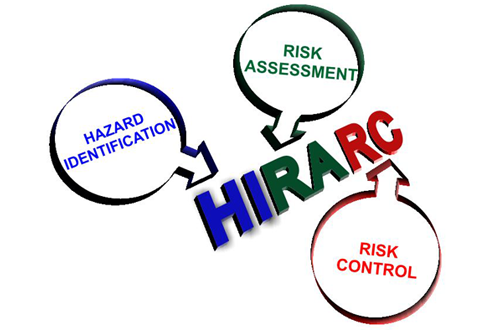
HIRA stands for Hazard Identification and Risk Assessment. It is a systematic process used to identify hazards, understand how they can cause harm, evaluate the likelihood and severity of possible consequences, and determine suitable control measures.
A good HIRA does not stop at identifying a hazard. It connects the hazard with its potential consequence, existing safeguards, risk level, and additional actions required to control the risk.
HIRA Full Form and Meaning
- H – Hazard
- I – Identification
- R – Risk
- A – Assessment
HIRA helps organizations move from reactive safety management to proactive risk prevention.
Why Is HIRA Important?
HIRA helps organizations identify hazards before they result in injuries, equipment damage, environmental incidents, or operational losses. It also helps safety teams prioritize risks and focus resources on hazards that require greater attention.
Key Benefits of HIRA
- Identifies existing and potential workplace hazards
- Evaluates risk based on likelihood and severity
- Helps prioritize corrective actions
- Supports safer work procedures
- Improves employee hazard awareness
- Strengthens workplace safety culture
- Supports documented risk management
- Helps organizations maintain effective safety controls
Where Is HIRA Used?
HIRA can be applied across many industries and activities, including:
| Industry / Activity | Typical Hazards |
|---|---|
| Manufacturing | Machinery, chemicals, fire |
| Construction | Work at height, lifting, excavation |
| Oil & Gas | Fire, explosion, hazardous substances |
| Chemical Industry | Toxic exposure, process hazards |
| Warehousing | Material handling, vehicle movement |
| Maintenance | Electrical, mechanical, confined space |
HIRA Process: Step-by-Step
A practical HIRA process normally follows a structured sequence of identifying hazards, evaluating risk, and implementing controls.
1. Identify the Activity
Understand the job, process, equipment, materials, workplace conditions, and people involved.
2. Identify Hazards
Identify physical, chemical, electrical, biological, ergonomic, mechanical, fire, environmental, and other relevant hazards.
3. Assess the Risk
Evaluate the likelihood of an incident and the severity of its potential consequence.
4. Determine the Risk Level
Use a suitable HIRA risk matrix to classify risks as low, medium, high, or extreme according to the organization's defined criteria.
5. Identify Existing Controls
Review safeguards already in place, such as engineering controls, procedures, alarms, guarding, training, supervision, and PPE.
6. Recommend Additional Controls
Where risk is not adequately controlled, identify further actions using the Hierarchy of Controls.
HIRA Risk Matrix
A HIRA matrix generally combines likelihood and severity to determine the level of risk. The exact scoring system should be selected according to the organization's risk criteria and activity.
Suggested image: Add a professionally designed HIRA risk matrix here with Likelihood × Severity.
HIRA Risk Matrix
A HIRA matrix generally combines likelihood and severity to determine the level of risk. The exact scoring system should be selected according to the organization's risk criteria and activity.
Suggested image: Add a professionally designed HIRA risk matrix here with Likelihood × Severity.
Hierarchy of Controls in HIRA
Elimination
Remove the hazard completely where reasonably practicable.
Substitution
Replace a hazardous material, process, or method with a safer alternative.
Engineering Controls
Use physical safeguards, guarding, isolation, ventilation, automation, or other engineered solutions.
Administrative Controls
Use procedures, training, permits, warning signs, supervision, and scheduling.
Personal Protective Equipment
Use appropriate PPE as the final layer of protection when hazards cannot be adequately controlled through higher-level measures.
HIRA Training and Certification by The Safety Master
The Safety Master provides practical HIRA training designed to help safety professionals and employees understand hazard identification, risk assessment, risk ranking, and control measures. The existing program is positioned as a 1–2 day training and certification program.
Who Should Attend HIRA Training?
HIRA training is useful for:
- HSE and safety professionals
- Safety officers and supervisors
- Engineers and plant personnel
- EHS managers
- Auditors and consultants
- Maintenance and operations teams
- Professionals responsible for workplace risk assessment
What Will You Learn?
Participants can learn how to identify workplace hazards, evaluate likelihood and severity, use a risk matrix, review existing safeguards, recommend controls, and document findings in a practical HIRA format.
Why Choose The Safety Master for HIRA Training?
The Safety Master combines safety training with practical industrial risk-management knowledge. Its broader safety portfolio includes HIRA, process safety, HAZOP, workplace safety, fire safety, and other professional safety services.
The objective is simple: help professionals make better risk-based decisions and support organizations in building safer workplaces.
Start Your HIRA Training
A properly conducted HIRA can help your organization identify hazards early, prioritize risks, and implement stronger controls. Contact The Safety Master to discuss HIRA training and certification for your employees or organization.