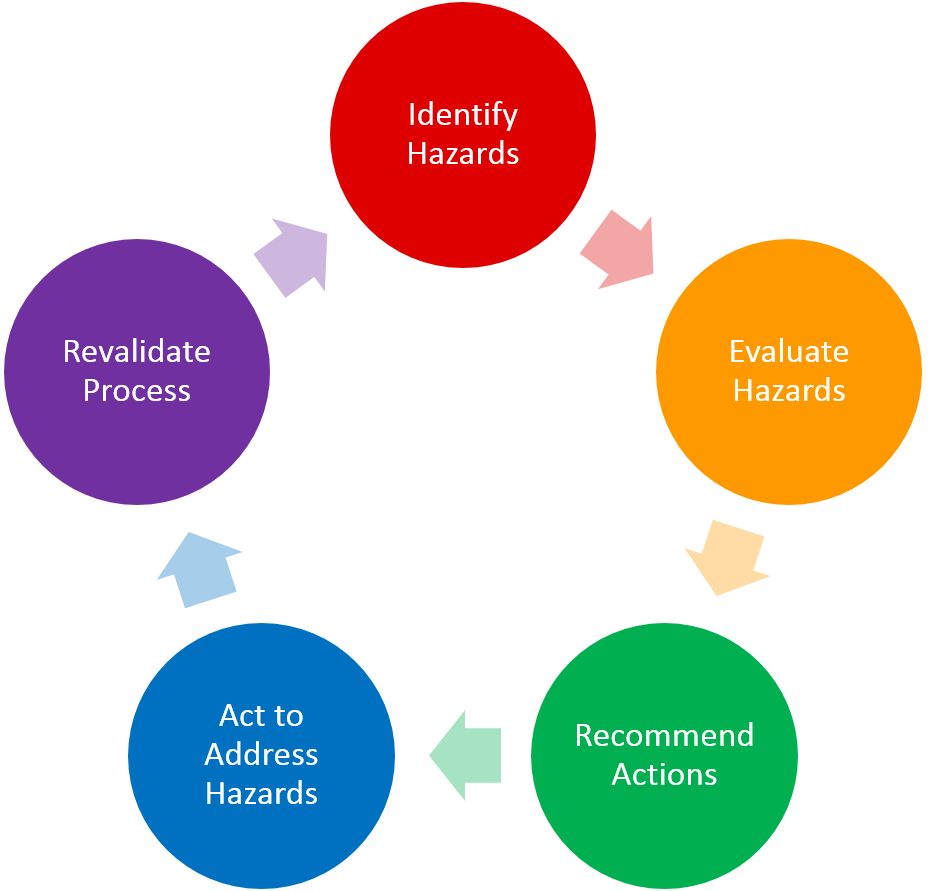
Process Hazards Analysis: Complete Guide to Industrial Risk Identification
Process Hazards Analysis (PHA) is a systematic approach used to identify, evaluate, and control hazards associated with industrial processes, equipment, chemicals, and operations. The Safety Master provides professional Process Hazards Analysis services to help organizations identify potential risks, prevent major accidents, improve process safety, and strengthen regulatory compliance. Our approach can be applied across chemical, petrochemical, pharmaceutical, oil & gas, manufacturing, energy, and other high-hazard industries.
A properly conducted PHA helps organizations understand what can go wrong, why an incident could occur, what consequences may result, and which safeguards are required to reduce the risk to an acceptable level.

What Is Process Hazards Analysis?
Process Hazards Analysis is a structured and organized method for identifying hazards associated with industrial processes and evaluating the risks created by those hazards.
PHA examines process conditions, equipment, operating procedures, human factors, safety systems, chemicals, and potential process deviations. The objective is to identify credible accident scenarios before they result in injury, fire, explosion, toxic release, environmental damage, equipment loss, or production interruption.
A comprehensive Process Hazards Analysis may consider:
- Hazardous chemicals and materials
- Process deviations
- Equipment failures
- Pressure and temperature conditions
- Flammable and toxic substances
- Human errors
- Instrumentation and control systems
- Emergency shutdown systems
- Existing safety safeguards
- Maintenance and inspection practices
- Previous incidents and near misses
Why Is Process Hazards Analysis Important?
Industrial processes can involve complex equipment, hazardous chemicals, high pressures, high temperatures, and multiple interacting systems. A small process deviation can sometimes develop into a serious incident if appropriate safeguards are not available.
Process Hazards Analysis helps organizations identify these scenarios and take preventive action before an incident occurs.
Major Benefits of Process Hazards Analysis
1. Identifies Process Hazards
PHA provides a structured way to identify hazards that may not be obvious during normal plant operations.
2. Reduces Major Accident Risks
Identifying potential fire, explosion, toxic release, overpressure, and equipment failure scenarios helps organizations develop effective preventive and protective measures.
3. Improves Process Safety
PHA strengthens the overall Process Safety Management system by connecting hazard identification with operating procedures, engineering controls, emergency response, and corrective actions.
4. Supports Regulatory Compliance
A properly documented PHA can support compliance with applicable process safety requirements and recognized industry practices.
5. Protects People, Assets, and the Environment
Effective hazard analysis reduces the possibility of serious injuries, fatalities, equipment damage, environmental releases, and business interruption.
Process Hazards Analysis Methods
Different processes require different analytical techniques. The selection of a PHA method depends on the process complexity, hazards, available information, and objectives of the study. The Safety Master uses structured techniques suited to the specific requirements of the facility.
HAZOP Study
Hazard and Operability Study (HAZOP) is one of the most widely used PHA techniques. It systematically examines process deviations using guide words such as No, More, Less, Reverse, Other Than, and As Well As.
A HAZOP study can identify:
- Causes of process deviations
- Potential consequences
- Existing safeguards
- Risk levels
- Recommendations for additional controls
What-If Analysis
What-If Analysis uses structured questions to identify possible abnormal situations.
Examples include:
- What if the cooling system fails?
- What if the pressure becomes too high?
- What if the operator enters the wrong process parameter?
- What if a control valve remains open?
This method is particularly useful for identifying potential scenarios in a practical and flexible way.
Failure Mode and Effects Analysis (FMEA)
FMEA evaluates potential equipment or component failure modes and determines their effects on the process.
It can help organizations understand:
- What can fail?
- Why can it fail?
- What happens if it fails?
- How can the failure be detected?
- What controls can prevent or reduce its consequences?
Fault Tree Analysis (FTA)
Fault Tree Analysis is a logical, top-down technique used to identify combinations of events that can lead to a major unwanted event.
It is useful for studying scenarios such as:
- Fire
- Explosion
- Loss of containment
- Equipment failure
- Emergency system failure
Checklist Analysis
Checklist Analysis uses predefined questions and requirements to review process hazards and safety controls.
It can be useful for verifying whether important safety requirements have been considered and whether known hazards have been properly addressed.
Layer of Protection Analysis (LOPA)
LOPA is a semi-quantitative risk assessment technique used to determine whether independent protection layers are sufficient to control a specific hazardous scenario.
LOPA can be particularly useful when organizations need to evaluate the adequacy of safeguards and determine whether additional risk reduction may be necessary.
Process Hazards Analysis Process
A successful PHA should follow a systematic process so that hazards, causes, consequences, safeguards, and recommendations are properly documented.
Step 1: Define the Scope
The study team first defines the process units, equipment, systems, operating conditions, and study boundaries.
Step 2: Collect Process Safety Information
Relevant technical information is collected before the analysis, including:
- Process flow diagrams
- Piping and instrumentation diagrams
- Equipment specifications
- Chemical information
- Operating procedures
- Design information
- Safety system information
- Previous incident records
Step 3: Identify Hazards
The team identifies hazardous materials, process conditions, equipment hazards, human factors, and potential deviations.
Step 4: Evaluate Causes and Consequences
For each identified deviation or hazardous scenario, the team evaluates possible causes and consequences.
Step 5: Review Existing Safeguards
Existing preventive and mitigation measures are reviewed to determine whether they are adequate and reliable.
Step 6: Evaluate Risk
The identified scenarios can be evaluated using an organization's approved risk-ranking methodology.
Step 7: Develop Recommendations
Where additional controls are required, the PHA team develops practical recommendations.
Step 8: Document and Track Actions
All findings and recommendations should be documented, assigned to responsible persons, and tracked through completion.
Process Hazard Assessment vs Process Hazards Analysis
Process Hazard Assessment and Process Hazards Analysis are closely related terms and are sometimes used interchangeably. Both focus on identifying and evaluating hazards associated with industrial processes.
However, a PHA generally refers to the structured methodology or study used to identify and analyze process hazards, while a process hazard assessment can refer more broadly to the evaluation of process risks and safeguards.
The appropriate terminology and methodology should be selected according to the applicable regulatory requirements, industry standards, and organizational procedures.
Process Hazards Analysis Example
Consider a chemical storage tank containing a flammable liquid.
Hazard
Excessive pressure develops inside the storage tank.
Possible Causes
- Blocked vent
- Excessive filling
- Temperature increase
- Failure of pressure-control equipment
Possible Consequences
- Tank damage
- Loss of containment
- Flammable vapor release
- Fire or explosion
- Personnel exposure
Existing Safeguards
- Pressure monitoring
- Pressure relief system
- High-level alarm
- Operating procedures
- Inspection and maintenance program
Recommended Actions
The PHA team may recommend additional monitoring, improved procedures, equipment inspection, operator training, or other engineering and administrative controls based on the specific risk evaluation.
This example demonstrates how PHA moves from hazard identification → cause analysis → consequence evaluation → safeguard review → risk reduction.
Industries That Need Process Hazards Analysis
Process Hazards Analysis can provide significant value to industries where hazardous materials, complex processes, or high-energy systems are present.
Chemical Industry
Chemical plants often handle toxic, flammable, reactive, or corrosive substances. PHA helps identify potential loss-of-containment and process deviation scenarios.
Oil and Gas Industry
Refineries, terminals, gas processing facilities, and petrochemical plants involve significant fire, explosion, pressure, and toxic-release hazards.
Pharmaceutical Industry
PHA can help evaluate chemical processing, solvent handling, utilities, storage systems, and other process-related risks.
Manufacturing Industry
Manufacturing facilities can use PHA to evaluate process equipment, hazardous materials, pressure systems, and complex production operations.
Power and Energy Industry
Power generation and energy facilities can use systematic hazard analysis to evaluate process equipment, fuel systems, pressure systems, and emergency protection systems.
Role of The Safety Master in Process Hazards Analysis
The Safety Master provides process safety and risk management expertise to help organizations identify hazards and strengthen their safety systems. The company's service portfolio includes process safety consultancy, HAZOP, QRA, SIL, LOPA, and other process risk management solutions.
Our PHA approach can include:
- Process hazard identification
- HAZOP facilitation
- What-If analysis
- Checklist analysis
- FMEA support
- LOPA studies
- Risk evaluation
- Safeguard review
- Recommendation development
- PHA documentation
- Action tracking
- Process safety improvement support
The objective is not simply to produce a report but to help organizations understand their major process risks and implement practical improvements.
Why Choose The Safety Master for PHA Services?
Experienced Safety Professionals
PHA requires technical understanding of processes, equipment, hazards, and risk management. The Safety Master brings multidisciplinary safety and process-safety expertise to industrial projects.
Industry-Focused Approach
PHA studies are tailored to the process, facility, hazards, and operational requirements of the client.
Practical Recommendations
Recommendations should be technically meaningful and practical to implement. The study focuses on identifying controls that can effectively reduce risk.
Comprehensive Documentation
Clear documentation helps organizations understand identified scenarios, safeguards, recommendations, responsibilities, and follow-up actions.
Integration With Process Safety Management
PHA can be integrated with wider process safety activities such as HAZOP, LOPA, QRA, PSSR, Management of Change, and safety management systems.
Conclusion
Process Hazards Analysis is an important component of effective industrial process safety. By systematically identifying hazards, analyzing causes and consequences, reviewing safeguards, and implementing risk-reduction measures, organizations can better protect people, equipment, the environment, and business continuity.
A strong PHA should be treated as a continuous process-safety improvement activity rather than simply a compliance exercise. With appropriate methodologies, competent multidisciplinary teams, accurate process information, and effective action tracking, organizations can build safer and more reliable operations.
The Safety Master supports organizations with professional Process Hazards Analysis and wider process safety solutions designed to identify risks, strengthen safeguards, and improve industrial safety performance.