Real-Time Safety Visibility for Real-World Risks

From Paper to Predictive Safety – The Safety Master
February 21, 2026
Safety Software Built by Safety Professionals – The Safety Master
March 5, 2026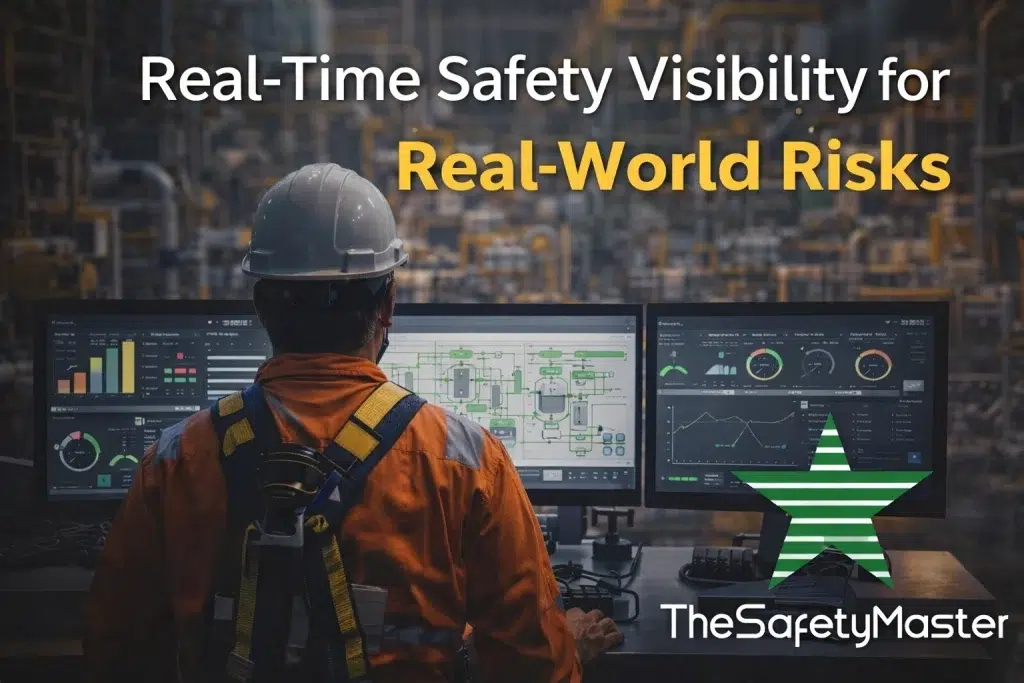
Why Delayed Safety Information Creates Exposure
In fast-moving industrial environments, risks do not wait for monthly reports. Equipment conditions shift, human fatigue increases, environmental factors change, and process parameters fluctuate throughout the day. When safety data is reviewed only after incidents or during periodic evaluations, organizations operate with delayed awareness. This gap between hazard development and response can allow minor deviations to escalate into major failures.
Real-time safety visibility closes that gap. It provides immediate insight into operational conditions, enabling faster and more informed decision-making.
The Dynamic Nature of Industrial Risk
Industrial risk is rarely static. Temperature, pressure, flow rates, electrical loads, and chemical reactions are constantly evolving. A system operating safely at one moment may cross safe thresholds the next. Real-time monitoring helps identify early warning signals before they become critical.
Structured analytical tools such as a Hazop Study help organizations understand potential deviations during the design and review stages. When these structured risk assessments are combined with live operational monitoring, companies strengthen both prevention and response capabilities.
Moving from Periodic Review to Continuous Awareness
Traditional safety oversight often depends on inspections and scheduled evaluations. While these are important, they provide only snapshots of conditions. Continuous awareness requires systems that track key parameters in real time and generate alerts when deviations occur.
A comprehensive Safety Audit identifies structural gaps in policies, procedures, and practices. However, sustained improvement depends on monitoring how those procedures are followed daily. Real-time dashboards, sensor integrations, and digital reporting tools allow organizations to observe safety performance as it unfolds.
Real-Time Monitoring in Process Industries
In chemical, manufacturing, and energy operations, small parameter deviations can lead to severe consequences. Real-time visibility ensures that abnormal conditions are identified early. Operators can intervene before safety margins are exceeded.
Integrating real-time data with a broader Process Safety Management framework strengthens hazard control. Management of change, incident investigation, operating procedures, and mechanical integrity programs all benefit from immediate data access. Instead of reacting after incidents, organizations can adjust proactively when leading indicators show instability.
Fire Risk and Immediate Detection
Fire hazards often develop silently. Electrical overheating, improper storage of flammable materials, and equipment friction can create ignition risks before visible signs appear. Real-time detection systems such as heat sensors, smoke alarms, and integrated control panels provide critical early warnings.
A detailed Fire Audit evaluates structural vulnerabilities, suppression systems, evacuation readiness, and emergency response plans. When audit findings are supported by continuous monitoring and routine maintenance tracking, organizations maintain readiness beyond inspection periods.
Behavioral Indicators in Real Time
Safety visibility is not limited to machinery. Human behavior significantly influences outcomes. Near-miss reports, unsafe condition observations, training participation rates, and corrective action closures are leading indicators of safety health.
Monitoring these indicators regularly reveals trends that may not be obvious during periodic reviews. For example, a decline in reporting activity could indicate reduced employee engagement rather than improved conditions. Immediate visibility allows leadership to address concerns promptly.
Data-Driven Decision Making
Real-time safety data transforms discussions from assumptions to measurable facts. If temperature readings in a particular unit show recurring spikes, maintenance can investigate before failure occurs. If incident trends increase during specific shifts, workload distribution and supervision strategies can be reviewed quickly.
This proactive approach reduces downtime, improves reliability, and protects employees by addressing root causes before they escalate.
Technology Must Be Matched with Accountability
Technology enhances visibility, but human response determines effectiveness. Alerts must be acknowledged promptly, corrective actions implemented, and follow-ups documented. Without accountability, even the most advanced monitoring systems lose value.
Training ensures employees understand alarm thresholds, escalation procedures, and reporting expectations. Clear communication channels help teams respond efficiently when risks appear.
Building a Culture of Continuous Vigilance
Real-time safety visibility supports a culture of vigilance. When employees see that hazards are identified and addressed immediately, confidence grows. Leadership commitment reinforces the message that safety signals are treated seriously.
Consistency is critical. If warnings are ignored due to production pressure, trust in the system weakens. Organizations that prioritize timely response demonstrate that safety remains central to operational integrity.
Leading Indicators Over Lagging Metrics
Traditional lagging indicators such as injury rates measure past outcomes. Real-time systems emphasize leading indicators that predict potential issues. Maintenance delays, equipment performance deviations, unsafe act observations, and training completion rates offer insight into emerging risks.
By tracking these measures continuously, organizations move from reactive correction to proactive control.
Practical Implementation Considerations
Implementing real-time visibility requires careful planning. Data accuracy, cybersecurity, system reliability, and user training must be addressed. Organizations should begin with high-risk areas and critical parameters, gradually expanding coverage as systems stabilize.
Regular reviews ensure monitoring tools remain aligned with operational needs and evolving risk profiles.
Conclusion: Anticipating Risk Before It Escalates
Real-time safety visibility for real-world risks is about anticipation, not surveillance. When organizations combine structured risk assessment, disciplined operational controls, and continuous monitoring, they reduce uncertainty and strengthen resilience.
Modern industrial environments are dynamic. Risks change quickly and require equally responsive systems. By integrating analytical methods, continuous oversight, and strong accountability, organizations shift from delayed reaction to active prevention, protecting both people and operations in measurable ways.