From Paper to Predictive Safety – The Safety Master

Because Real Safety Happens When No One Is Watching
February 18, 2026
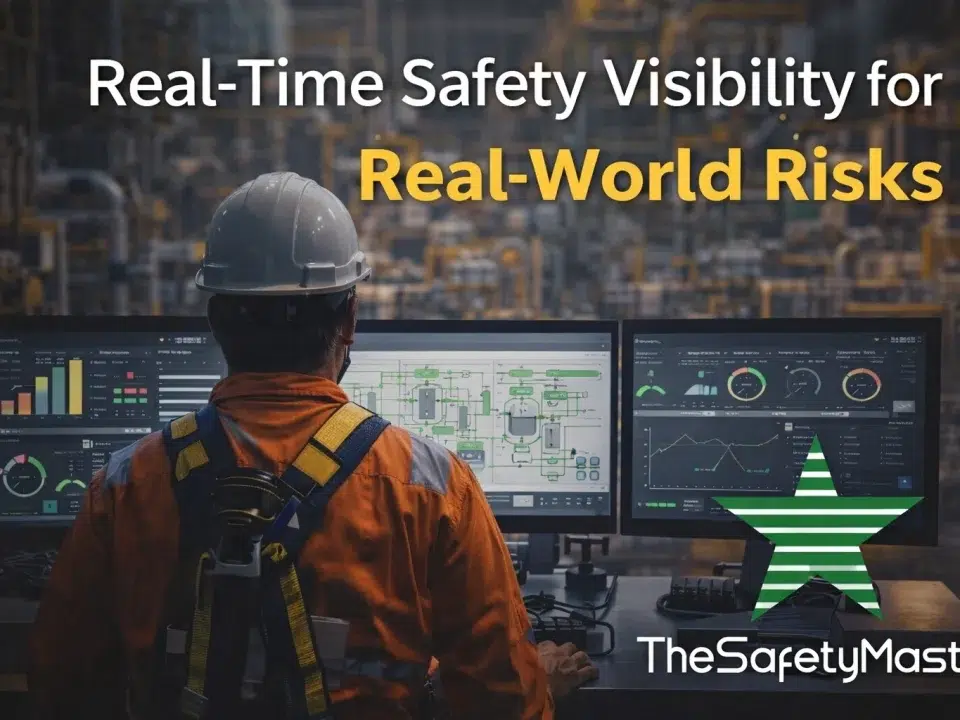
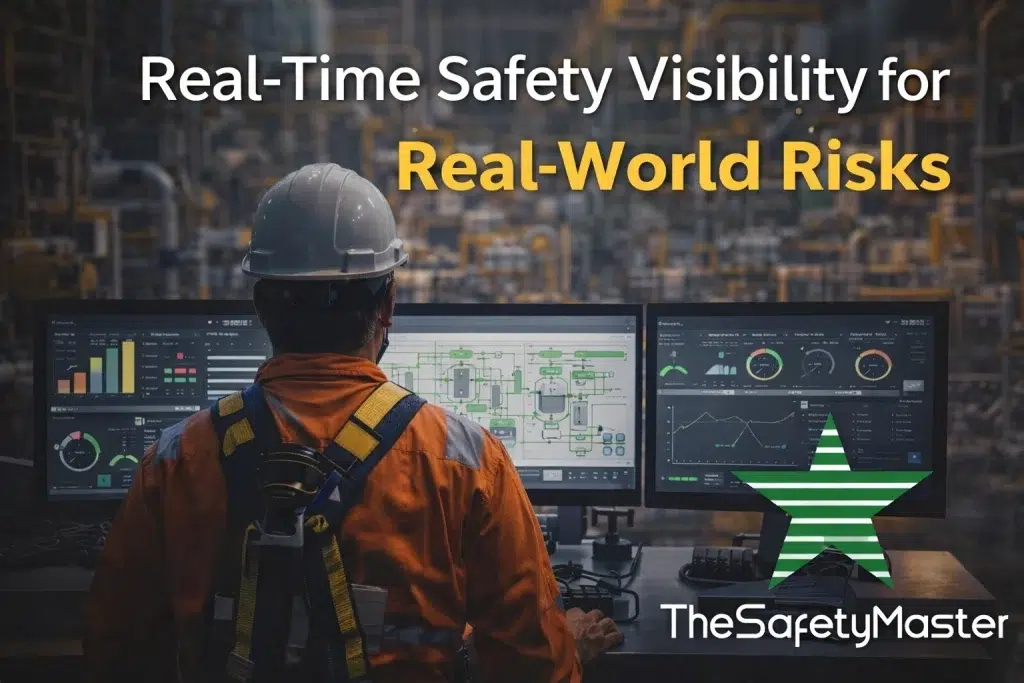
Real-Time Safety Visibility for Real-World Risks
February 24, 2026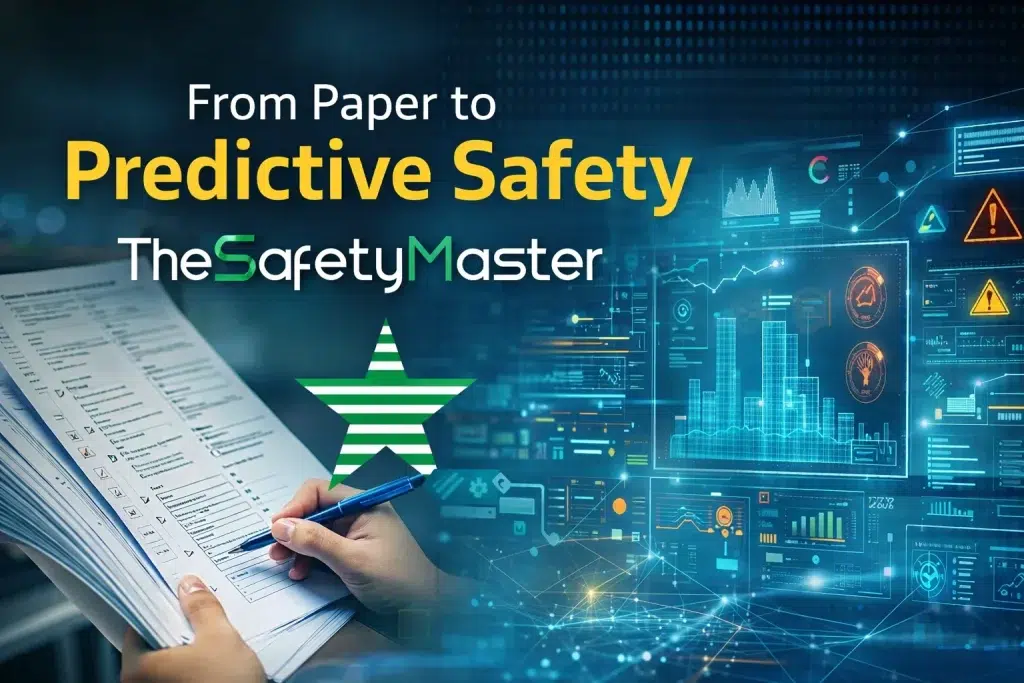
For years, safety management in many industries has relied heavily on paperwork. Checklists were printed. Observations were handwritten. Reports were filed in cabinets. Audits were documented in thick folders that often gathered dust after submission. While this approach served its time, it had one serious limitation: it was reactive.
Incidents happened first. Documentation followed later.
Today, the landscape has changed. With digital tools, analytics, and real-time monitoring, organizations are moving from paper-based compliance to predictive safety systems. At The Safety Master, we help businesses make this transition smoothly and effectively. The goal is simple: prevent incidents before they occur, not just document them afterward.
The Limitations of Paper-Based Safety
Paper systems create delays. When observations are written manually, it takes time to compile, review, and analyze data. By the time patterns are noticed, risks may already have escalated.
Paper-based processes also suffer from:
- Data fragmentation
- Limited traceability
- Human error in documentation
- Lack of real-time visibility
- Difficulty in trend analysis
For example, if multiple minor incidents occur across different departments, paper reports may sit in separate files. Without centralized analysis, early warning signals remain unnoticed.
Safety should not depend on how quickly someone flips through a file.
The Shift Toward Predictive Safety
Predictive safety is about using data intelligently. It combines inspections, audits, incident reports, near-miss data, and compliance records into a centralized digital ecosystem. When properly structured, this system identifies patterns, recurring hazards, and risk indicators.
Instead of asking, “What went wrong?” the better question becomes, “What is likely to go wrong next?”
Predictive safety systems allow organizations to:
- Monitor compliance in real time
- Track recurring unsafe behaviors
- Identify high-risk zones
- Detect equipment performance trends
- Automate corrective action follow-ups
This approach transforms safety from a compliance obligation into a strategic advantage.
Digital Audits: The Foundation of Predictive Systems
Audits remain a critical component of safety management. However, the way audits are conducted has evolved.
A structured Safety Audit conducted through digital platforms allows instant documentation, photographic evidence, automated scoring, and dashboard reporting. Instead of static reports, management receives live insights.
Similarly, a Fire Audit supported by digital checklists ensures that deficiencies in extinguishers, hydrant systems, alarm systems, or evacuation routes are recorded instantly and tracked until closure. Automated reminders prevent corrective actions from being ignored.
When audit findings are digitally mapped across multiple facilities, patterns emerge. If the same fire safety gap appears across different locations, management can address it systemically rather than individually.
This is how predictive safety begins.
Integrating Risk Assessment with Real-Time Insights
Risk assessments like a Hazop Study are traditionally detailed and structured exercises. They identify potential deviations in processes and recommend safeguards.
But imagine combining HAZOP outputs with live operational data.
When digital platforms integrate risk registers with inspection findings and incident trends, organizations can continuously validate whether safeguards are effective. If a control measure frequently appears in non-compliance reports, it signals a potential weakness in implementation.
This integration bridges the gap between theory and practice.
Risk assessment should not be a one-time activity. It should be a living framework supported by ongoing data.
Process Safety Management in the Predictive Era
Industries handling hazardous chemicals, high-pressure systems, or complex manufacturing operations require structured Process Safety Management. Traditionally, this involved documentation-heavy compliance systems.
In a predictive model, PSM elements such as mechanical integrity, management of change, operating procedures, and incident investigations are digitally interconnected.
For example:
- Maintenance delays can trigger automated alerts.
- Changes in operating parameters can be tracked against approved procedures.
- Training records can be linked to incident patterns.
- Near-miss reports can be analyzed to predict potential major incidents.
When these elements function in isolation, risk increases. When they are integrated into a predictive dashboard, management gains clarity and control.
Predictive safety is not about replacing PSM. It is about strengthening it with data-driven visibility.
The Role of Technology
Technology is the enabler, but not the solution by itself. The real transformation happens when organizations align technology with culture and leadership commitment.
Key technological enablers include:
- Cloud-based safety management systems
- Mobile inspection applications
- AI-driven trend analysis
- IoT-enabled monitoring sensors
- Centralized compliance dashboards
Real-time reporting eliminates delays. Automated workflows ensure accountability. Data visualization makes complex risk patterns understandable.
However, technology must be implemented thoughtfully. Systems should be user-friendly, practical, and aligned with operational realities. Overcomplicated platforms create resistance instead of improvement.
At The Safety Master, we focus on practical implementation rather than theoretical sophistication.
From Compliance to Culture
Paper systems often promote a compliance mindset. Employees fill forms because they are required to. Predictive systems encourage proactive participation.
When workers can report hazards instantly through mobile applications, near-miss reporting increases. When management responds quickly to digital alerts, trust builds. When trends are shared transparently, employees understand the bigger picture.
Predictive safety supports:
- Faster corrective action closure
- Greater transparency
- Improved accountability
- Increased employee engagement
- Reduced incident rates
Culture shifts when employees see that reporting leads to action.
Data-Driven Decision Making
Leadership decisions should not rely on assumptions. Predictive dashboards provide measurable indicators such as:
- Repeat non-conformities
- High-risk equipment categories
- Departments with frequent near misses
- Delayed corrective actions
- Seasonal risk variations
Instead of reacting to major incidents, management can allocate resources strategically. Training programs can target specific gaps. Maintenance budgets can prioritize vulnerable equipment.
Predictive safety turns safety data into a business intelligence tool.
Reducing Costs Through Prevention
Incidents carry direct and indirect costs. Medical expenses, downtime, equipment damage, regulatory penalties, and reputational harm can severely impact operations.
Predictive safety reduces these costs by:
- Preventing accidents before escalation
- Identifying systemic weaknesses early
- Ensuring timely maintenance
- Improving compliance consistency
Investment in predictive systems often pays for itself through incident reduction and operational efficiency.
Prevention is always more cost-effective than recovery.
The Safety Master Approach
At The Safety Master, we help organizations move step by step from manual systems to intelligent safety ecosystems. Our approach includes:
- Evaluating existing documentation processes
- Digitizing audits and inspections
- Integrating risk assessments with operational data
- Implementing centralized dashboards
- Training teams for digital adoption
- Continuously reviewing data trends
We believe safety should be measurable, transparent, and actionable.
Predictive safety does not eliminate human judgment. It strengthens it with evidence.
The Future of Safety Management
The future belongs to organizations that anticipate risk instead of reacting to it. Regulatory compliance will always remain essential, but compliance alone is not enough.
The shift from paper to predictive safety is not just about technology. It is about mindset. It is about recognizing that data holds insights capable of saving lives, protecting assets, and sustaining business continuity.
Companies that embrace predictive systems gain:
- Greater operational stability
- Improved stakeholder confidence
- Stronger regulatory standing
- Safer working environments
Safety is no longer a static checklist. It is a dynamic system powered by information.
Conclusion
The transition from paper-based documentation to predictive safety systems marks a significant evolution in industrial risk management. Traditional methods documented the past. Predictive systems protect the future.
By combining digital audits, structured risk assessments, integrated Process Safety Management, and real-time data analysis, organizations can move beyond reactive compliance toward proactive protection.
At The Safety Master, we are committed to guiding businesses through this transformation. Because real safety is not about filling forms. It is about foreseeing risk, acting early, and building systems that prevent harm before it happens.
From paper to predictive safety is not just a technological upgrade. It is a strategic shift toward smarter, safer operations.