Built for Real Operations, Not Just Audits

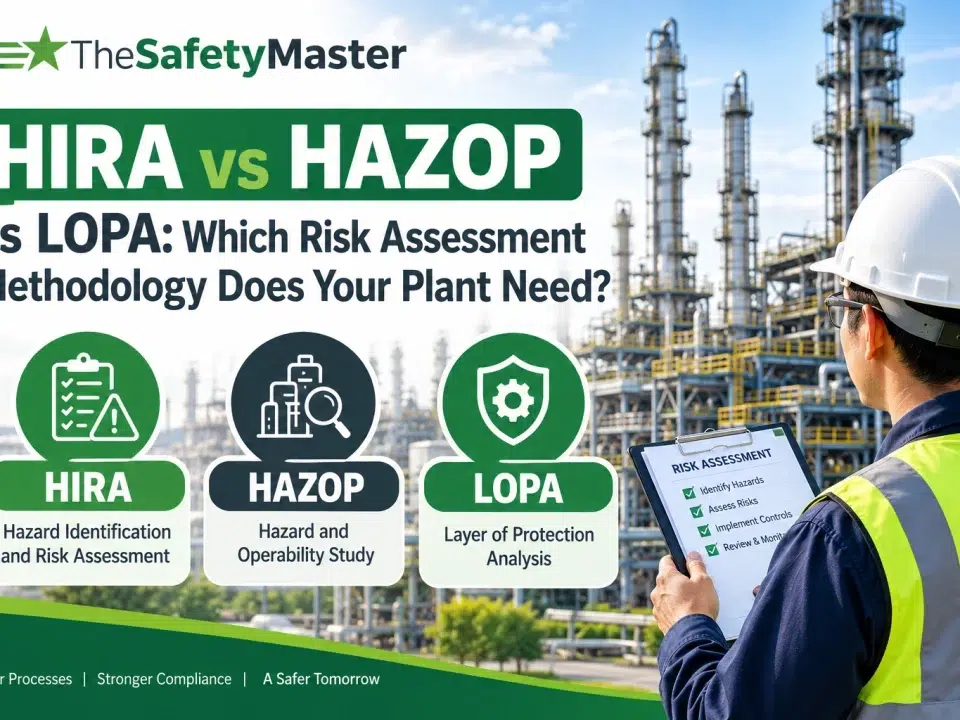
Practical Tools and Techniques Used in Hazard Identification and Risk Assessment (HIRA)
May 2, 2026
Compliance Is Easy. Consistency Is Hard — Why Most Safety Systems Fail After the Audit
May 6, 2026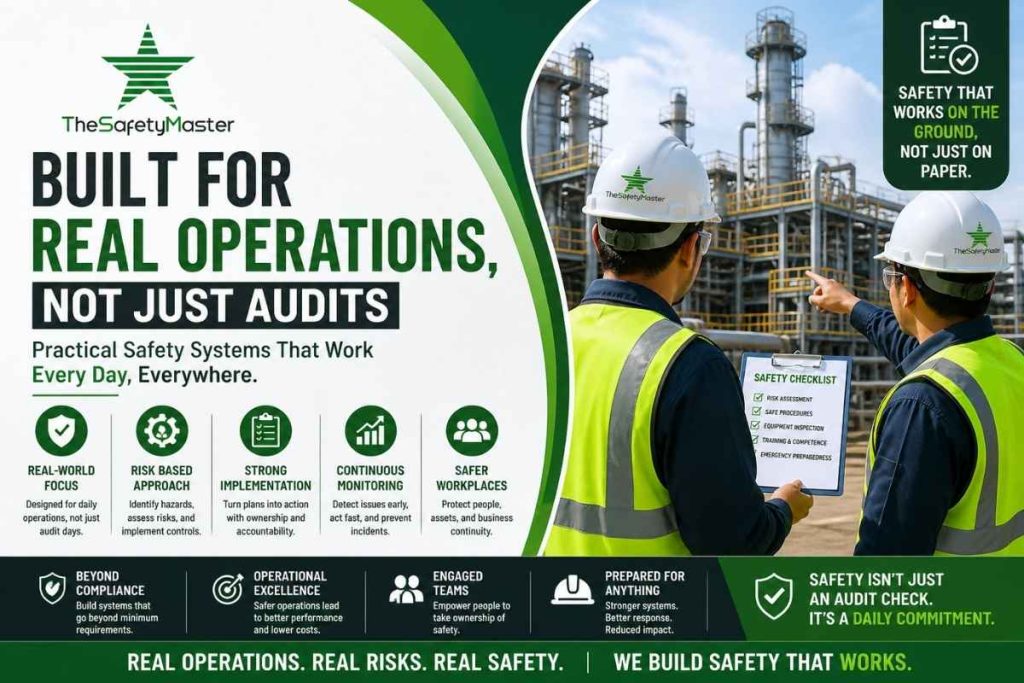
Let’s be honest. Most safety systems are built for audits, not for actual operations.
They look perfect on paper. Documentation is complete. Checklists are filled. Compliance boxes are ticked. But when you step onto the shop floor, things tell a different story.
People take shortcuts. Processes are skipped. Controls exist, but they are not followed.
That gap between documentation and reality is where most safety failures happen.
If your safety system only works during audits, it is not a system. It is a performance.
The Audit Trap Most Companies Fall Into
Audits are important. But they are not the goal.
The problem is that many organizations treat audits as the finish line instead of a checkpoint. They prepare before inspections, fix visible issues, and then relax once the audit is over.
This creates a pattern:
- Short-term compliance
- Long-term inconsistency
- Repeated safety gaps
- Increased risk exposure
Even a detailed Fire Audit can only show what exists at that moment. It cannot guarantee that systems will continue to work after the audit is done.
That’s where most companies misunderstand safety.
Real Operations Don’t Follow Audit Schedules
Operations run every day. Risks don’t wait for inspections.
Machines operate continuously. People work across shifts. Conditions change without notice. New hazards appear as processes evolve.
If your safety system is designed around periodic audits, it will always lag behind real risks.
A system built for real operations focuses on:
- Daily execution
- Continuous monitoring
- Immediate correction
- Clear accountability
That’s the difference between being compliant and being safe.
What “Built for Real Operations” Actually Means
This is not about adding more rules or creating more documents. It’s about designing systems that people can actually follow in real working conditions.
A practical safety system should be:
- Simple enough to follow under pressure
- Clear enough to remove confusion
- Integrated into daily tasks
- Consistent across all teams
If a process is too complicated, people will bypass it. That’s reality.
Moving Beyond Surface-Level Safety
Most organizations focus on visible safety elements like PPE, signage, and housekeeping. These are necessary, but they only address basic risks.
Serious incidents usually come from deeper process failures.
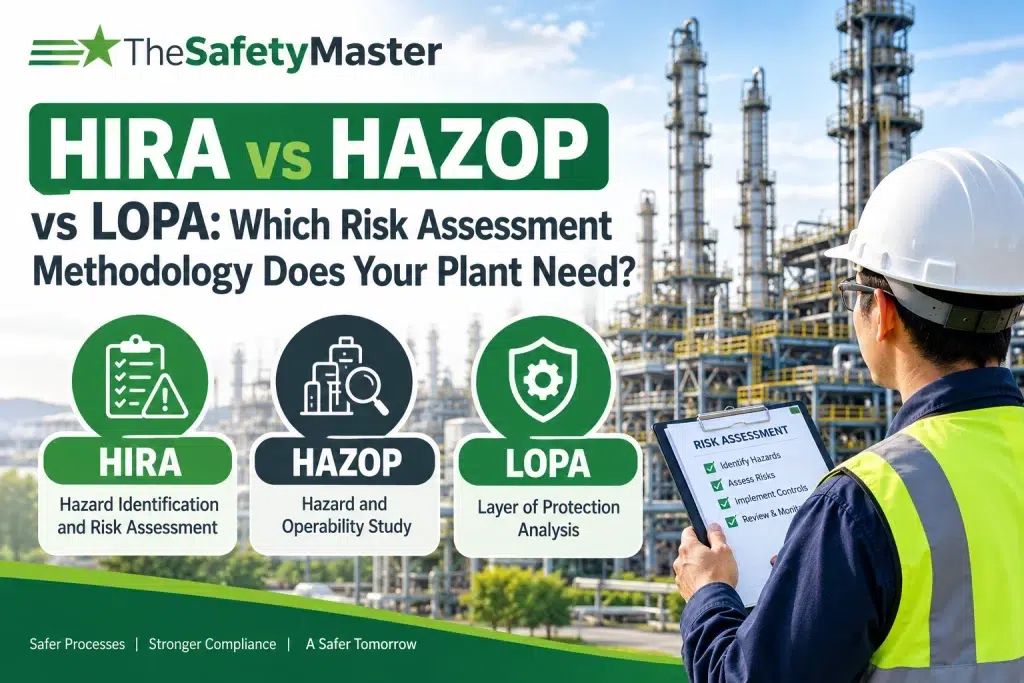
That’s why structured methods like HIRA are essential. They help identify hazards and assess risks systematically, not just based on observation.
But again, doing it once is not enough. It needs to be part of your operations, not just part of your reports.
Understanding Process-Level Risks
If your safety system only looks at visible issues, you are missing the bigger picture.
Many high-risk industries require deeper analysis of processes, not just activities.
This is where HAZOP Training becomes critical. It helps teams identify hidden risks within systems, equipment, and workflows that are not obvious during routine inspections.
Without this level of understanding, you are relying on luck more than control.
Why Implementation Matters More Than Planning
Most companies don’t fail in planning. They fail in execution.
You can have:
- Detailed risk assessments
- Well-written SOPs
- Comprehensive audit reports
But if they are not implemented properly, they are useless.
Common execution gaps include:
- Delayed corrective actions
- Lack of follow-up
- Poor communication between teams
- No accountability for outcomes
A safety system built for real operations focuses heavily on execution, not just planning.
The Role of Accountability in Real Safety
Here’s a hard truth.
If safety is everyone’s responsibility, it becomes no one’s responsibility.
Without clear ownership:
- Tasks get ignored
- Issues remain unresolved
- Systems become inconsistent
A strong operational safety system defines:
- Who is responsible for what
- What actions are expected
- How performance is measured
Accountability is what keeps systems running without constant supervision.
Safety That Works Even When No One Is Watching
This is the real test of a safety system.
Does it work when:
- There is no audit scheduled?
- No external consultant is present?
- No one is reminding the team?
If the answer is no, your system is dependent, not reliable.
A system built for real operations ensures:
- Teams follow processes naturally
- Risks are controlled proactively
- Safety becomes part of daily work
That’s when safety shifts from effort to habit.
Continuous Monitoring vs Periodic Checking
Periodic checks create blind spots.
Continuous monitoring eliminates them.
Instead of waiting for audits, you need:
- Regular inspections built into workflows
- Real-time reporting of issues
- Immediate corrective actions
This approach ensures that problems are addressed early, not after they escalate.
Training That Reflects Real Conditions
Training often fails because it is too theoretical.
Real operations are unpredictable. Teams need training that prepares them for actual situations, not just ideal scenarios.
Effective training should:
- Focus on real risks
- Include practical exercises
- Be repeated regularly
When people understand how safety applies to their daily work, they follow it without being forced.
The Business Impact of Operational Safety
When safety systems are built for real operations, the benefits are clear:
Fewer Incidents
Risks are identified and controlled before they lead to accidents.
Better Productivity
Safe processes reduce disruptions and downtime.
Stronger Compliance
You stay ready for audits without last-minute preparation.
Higher Team Engagement
People take ownership instead of waiting for instructions.
Common Mistakes That Keep Systems Weak
Even companies that invest in safety make these mistakes:
- Treating audits as the main goal
- Focusing only on documentation
- Ignoring process-level risks
- Lack of consistent follow-through
- Overcomplicating procedures
These issues prevent systems from working in real conditions.
The Bottom Line
Safety systems should not be built to impress auditors. They should be built to protect operations.
A system that works only during audits is fragile.
A system that works every day is reliable.
If you want real safety, focus on:
- Practical implementation
- Continuous monitoring
- Clear accountability
- Process-level understanding
Because in the end, safety is not tested during audits.
It is tested in real operations, every single day.