Practical Tools and Techniques Used in Hazard Identification and Risk Assessment (HIRA)

Annual Safety That Runs Without Reminders
April 28, 2026
Built for Real Operations, Not Just Audits
May 4, 2026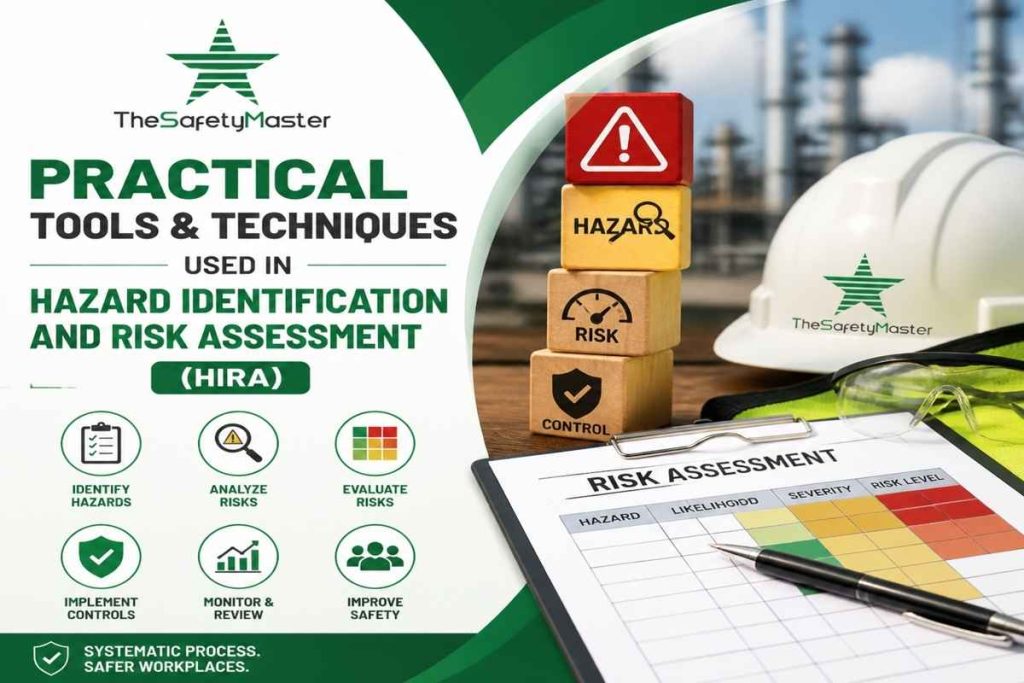
Hazard identification and risk assessment are not abstract safety concepts; they are practical, decision-making tools used daily in high-risk environments. When applied correctly, they help organizations detect weak points before they turn into incidents. The effectiveness of this process depends heavily on the tools and techniques used to identify hazards, evaluate risks, and implement control measures. A structured approach ensures consistency, improves accuracy, and supports better safety outcomes across industries.
Understanding the Role of Structured Risk Assessment
A systematic process like HIRA provides a clear framework to identify hazards, analyze their impact, and prioritize actions. Instead of relying on assumptions or past habits, structured assessments use data, observation, and predefined criteria to evaluate risks. This approach reduces subjectivity and ensures that critical hazards are not overlooked. It also creates a documented trail, which helps in audits, compliance, and continuous improvement.
Job Safety Analysis (JSA)
Job Safety Analysis is one of the most widely used techniques for breaking down tasks into smaller steps and identifying associated hazards. Each step of a job is examined to determine what could go wrong and what controls are needed.
For example, in a maintenance task involving electrical equipment, JSA would identify hazards such as electric shock, arc flash, or accidental startup. Controls like lockout/tagout procedures, insulated tools, and proper PPE are then defined. The strength of JSA lies in its simplicity and its ability to involve workers directly, making it practical for everyday operations.
Hazard and Operability Study (HAZOP)
HAZOP is a structured and detailed technique used mainly in process industries such as oil, gas, and chemicals. It focuses on identifying deviations from normal operating conditions and analyzing their consequences.
Using guide words like “more,” “less,” or “no,” teams systematically examine process parameters such as pressure, temperature, and flow. This method helps uncover hidden risks that may not be obvious during routine inspections. Professionals trained through HAZOP Training are equipped to conduct these studies effectively, ensuring that complex systems are evaluated with precision and depth.
Risk Matrix for Prioritization
Once hazards are identified, they need to be evaluated based on their likelihood and severity. A risk matrix is a practical tool used to categorize risks into levels such as low, medium, high, or critical.
This visual representation helps decision-makers prioritize actions. For instance, a hazard with high severity but low likelihood may still require immediate attention, while a low-severity hazard with frequent occurrence might need operational controls. The matrix ensures that resources are allocated where they are needed most, rather than based on assumptions.
Checklists and Inspection Tools
Checklists are simple but highly effective tools for hazard identification. They ensure that no critical aspect is missed during inspections or audits. Industry-specific checklists are often developed based on past incidents, regulatory requirements, and operational experience.
For example, a manufacturing unit may use a checklist to verify machine guarding, emergency stops, and housekeeping conditions. While checklists may seem basic, their consistency and repeatability make them valuable for maintaining safety standards over time.
Failure Mode and Effects Analysis (FMEA)
FMEA is a proactive technique used to identify potential failure points in a system and evaluate their impact. It focuses on understanding how components can fail and what consequences those failures may have.
Each failure mode is assigned a risk priority number based on severity, occurrence, and detection. This helps teams prioritize corrective actions. FMEA is particularly useful in industries where equipment reliability is critical, such as aviation, automotive, and manufacturing.
Bowtie Analysis
Bowtie analysis is a visual risk assessment tool that connects hazards, causes, consequences, and control measures in a single diagram. It provides a clear picture of how a hazard can lead to an incident and what barriers are in place to prevent or mitigate it.
For example, in a fuel storage facility, the central hazard could be a fuel leak. The left side of the bowtie identifies causes such as equipment failure or human error, while the right side outlines consequences like fire or environmental damage. Preventive and mitigative controls are mapped on both sides, making it easier to understand and manage risks.
Incident and Near-Miss Analysis
Learning from past events is one of the most practical ways to improve hazard identification. Incident and near-miss analysis helps organizations understand what went wrong and why.
Instead of focusing only on major accidents, analyzing near-misses provides valuable insights without the cost of failure. Root cause analysis techniques such as the “5 Whys” or fishbone diagrams are often used to identify underlying issues. This information is then used to update risk assessments and prevent recurrence.
Fire Risk Assessment Techniques
Fire hazards are present in almost every industry, but they are often underestimated. Practical techniques involve identifying ignition sources, fuel availability, and potential pathways for fire spread.
A structured Fire Audit helps evaluate fire risks comprehensively, including detection systems, suppression measures, and evacuation planning. This process ensures that fire safety is not treated as a checklist activity but as an integrated part of risk management.
Behavioral Observation and Safety Walks
Technical tools alone are not enough. Human behavior plays a significant role in workplace safety. Behavioral observation involves monitoring how tasks are performed and identifying unsafe practices.
Safety walks conducted by supervisors or safety professionals provide real-time insights into workplace conditions. These observations help identify gaps that may not be captured in formal assessments, such as shortcuts, fatigue, or lack of awareness.
Integrating Tools for Better Outcomes
No single tool can address all types of hazards. The most effective approach is to combine multiple techniques based on the nature of the operation. For example, a construction site may use JSA for daily tasks, checklists for inspections, and incident analysis for continuous improvement.
Integration also means aligning these tools with organizational processes, training programs, and safety culture. When hazard identification becomes part of routine operations rather than a separate activity, its impact increases significantly.
The Importance of Practical Application
The real value of these tools lies in how they are applied. A well-designed system can still fail if it is treated as a formality. Practical application requires involvement from all levels of the organization, from frontline workers to management.
Clear communication, regular training, and continuous monitoring are essential to ensure that risk assessments remain relevant and effective. As industries evolve, so do the risks, making it necessary to review and update assessment techniques regularly.
Conclusion
Practical tools and techniques in hazard identification and risk assessment provide a structured way to manage uncertainty and prevent incidents. From simple checklists to advanced analytical methods, each tool plays a specific role in identifying and controlling risks. The key is not just selecting the right tools, but using them consistently and effectively. Organizations that focus on practical implementation, continuous learning, and integration of these techniques are better positioned to maintain safe and reliable operations.