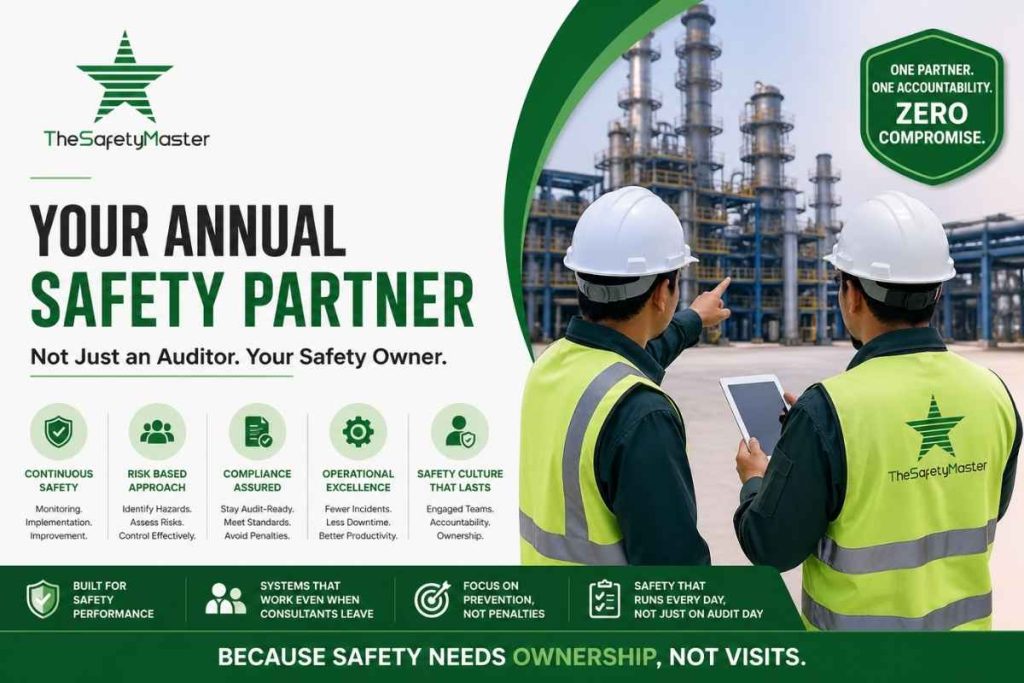
Annual Safety That Runs Without Reminders

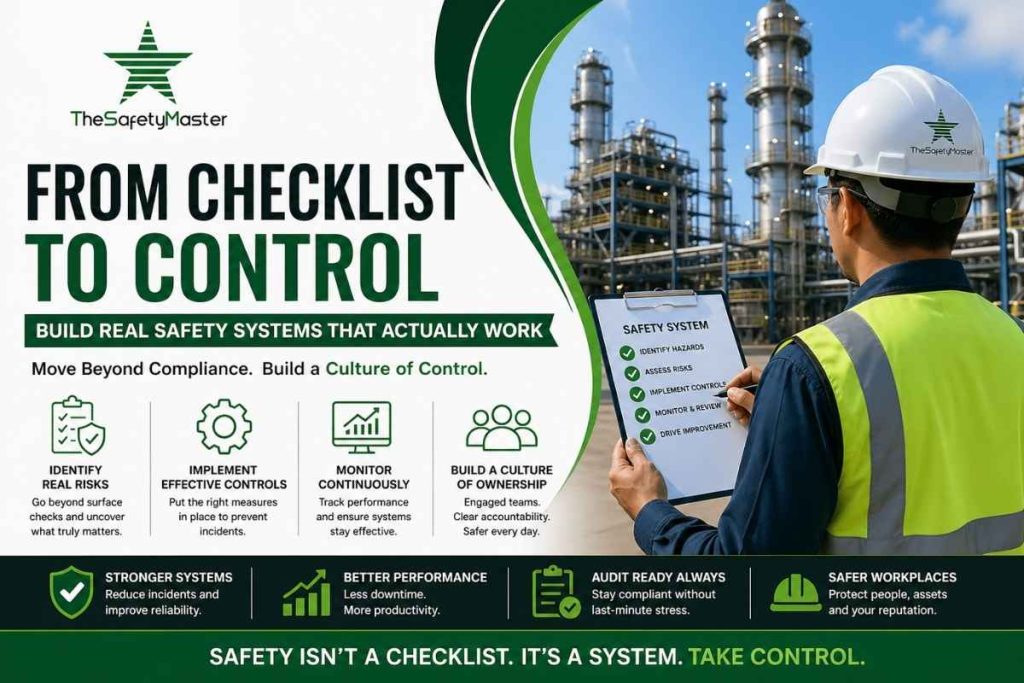
From Checklist to Control — Building Real Safety Systems That Actually Work
April 27, 2026
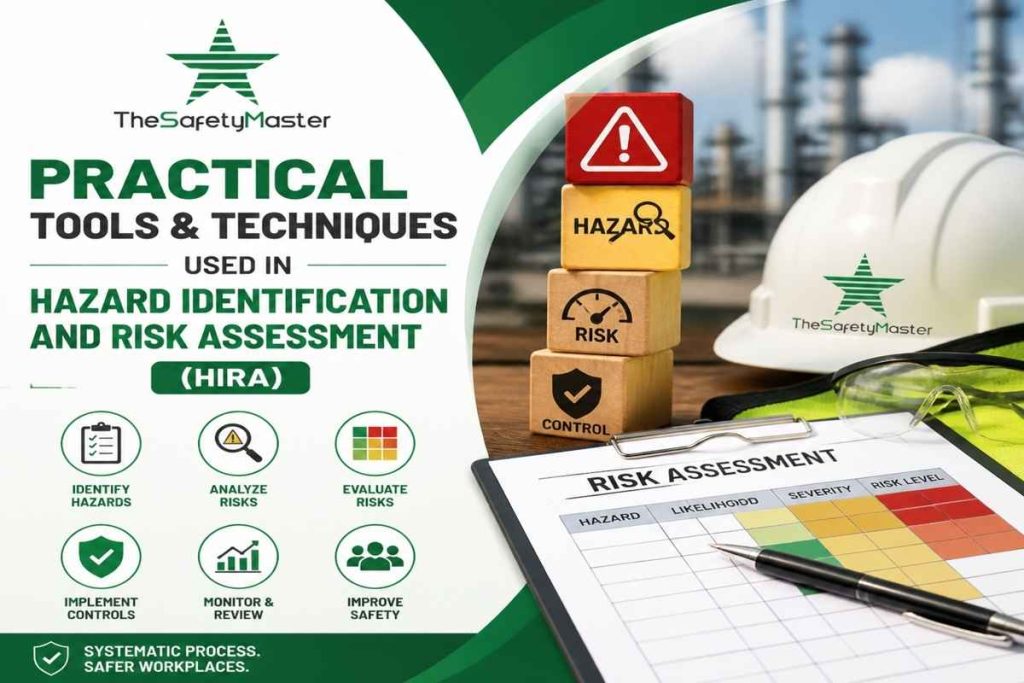
Practical Tools and Techniques Used in Hazard Identification and Risk Assessment (HIRA)
May 2, 2026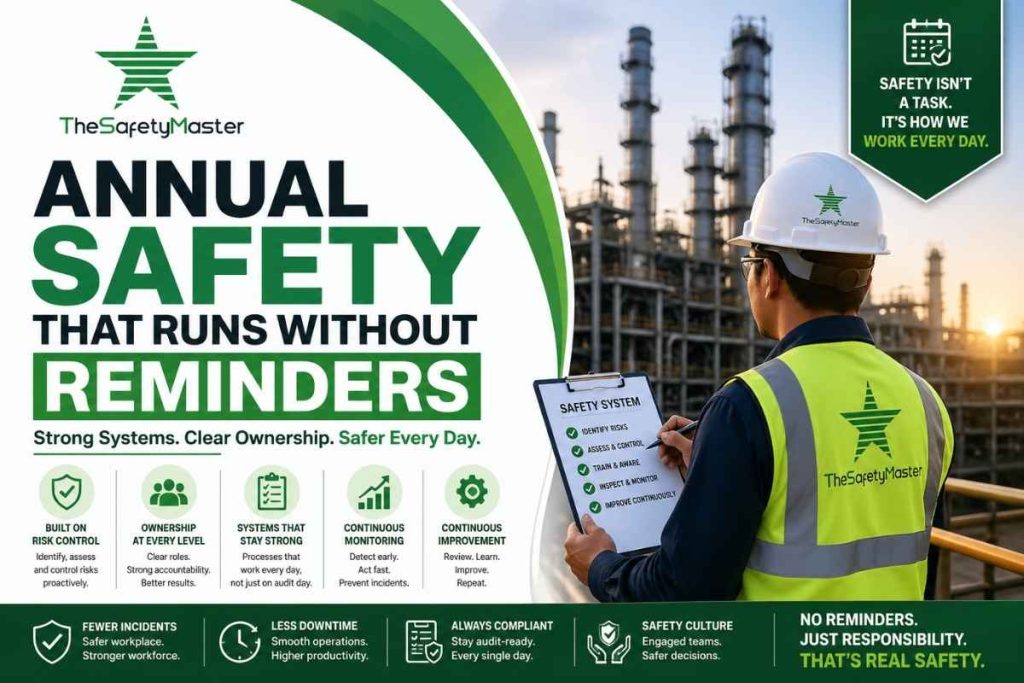
Most safety systems don’t fail because of lack of knowledge. They fail because they depend on reminders.
Someone has to follow up. Someone has to check. Someone has to push teams to comply. And the moment that pressure disappears, things start slipping. Procedures get ignored, documentation gets outdated, and small risks quietly build up.
If your safety depends on reminders, it’s not a system. It’s a dependency.
Real safety should run on its own.
Why Reminder-Based Safety Breaks Down
Let’s be direct. Reminder-driven safety looks functional on the surface but collapses under real conditions.
Here’s what usually happens:
- Teams act only when audits are near
- Safety checks become rushed and incomplete
- Responsibility gets passed around instead of owned
- Unsafe shortcuts become normal over time
This creates a cycle where safety is always reactive. You’re constantly fixing issues instead of preventing them.
And the biggest problem? You don’t see the risk building until something goes wrong.
What Does “Safety Without Reminders” Actually Mean?
It doesn’t mean removing oversight. It means building systems that don’t rely on constant follow-ups.
A safety system that runs without reminders is:
- Structured enough to guide daily operations
- Clear enough that teams know exactly what to do
- Monitored in a way that highlights gaps instantly
- Owned by people, not dependent on external pressure
In simple terms, safety becomes part of how work is done, not something extra that needs to be remembered.
The Shift from Activity to System
Most organizations treat safety as an activity:
- Conduct an audit
- Fix issues
- Move on
That approach is temporary.
A system-based approach focuses on:
- Continuous risk identification
- Built-in control measures
- Regular monitoring without manual chasing
- Defined accountability
This is the difference between managing safety and controlling it.
Why Systems Work Better Than Supervision
Supervision has limits. You cannot watch every task, every shift, every process.
Systems, on the other hand, create consistency.
When done right:
- Tasks are performed correctly even without supervision
- Risks are identified early, not after incidents
- Teams follow processes because they are clear and practical
This is not about making things complicated. It’s about making them reliable.
Building Blocks of a Self-Sustaining Safety System
If you want safety that runs without reminders, you need to focus on structure, not just effort.
1. Clear Process Integration
Safety should not sit outside operations. It should be part of them.
Every task should have:
- Defined safety steps
- Clear risk controls
- Simple instructions that teams can follow without confusion
When safety is integrated, it stops feeling like an extra burden.
2. Strong Risk Identification Framework
You cannot prevent what you don’t identify.
A structured approach like HIRA helps map hazards and assess risks systematically. But the key is consistency.
It should not be a one-time exercise. It should evolve with your operations.
3. Advanced Process Understanding
For industries dealing with complex systems, surface-level safety is not enough.
This is where HAZOP Training becomes critical. It enables teams to analyze processes deeply and identify hidden risks that are not obvious during routine checks.
Without this level of understanding, major risks often go unnoticed.
4. Continuous Monitoring Mechanisms
Monitoring should not depend on manual follow-ups.
You need:
- Regular inspections built into workflows
- Simple reporting systems
- Immediate action on deviations
The goal is to detect issues early, not document them later.
5. Fire Safety That Actually Works
Fire safety is often treated as compliance, not control.
A proper Fire Audit ensures that:
- Systems are functional, not just installed
- Teams know how to respond during emergencies
- Evacuation plans are practical and tested
Again, the audit itself is not the solution. The implementation is.
The Role of Accountability
Let’s address the biggest gap.
Most safety failures happen because no one truly owns the outcome.
When responsibility is shared vaguely:
- Tasks get delayed
- Issues remain unresolved
- Follow-ups become necessary
Ownership changes everything.
When roles are clearly defined:
- Actions happen faster
- Gaps are identified quickly
- Systems stay consistent
Safety without reminders is only possible when accountability is clear.
Training That Sticks
Training is often treated as a checkbox activity. That’s a mistake.
One-time sessions don’t create lasting impact.
Effective training should:
- Be practical and scenario-based
- Be repeated at intervals
- Focus on real risks, not generic content
When teams understand why something matters, they are more likely to follow it without being told.
What Happens When Safety Runs on Its Own
When your safety system is strong, you start seeing real changes:
Fewer Incidents
Risks are controlled before they escalate.
Less Dependency on Audits
You don’t rely on external checks to stay compliant.
Better Operational Flow
Safe processes reduce disruptions and delays.
Higher Team Accountability
People take responsibility instead of waiting for instructions.
This is where safety stops being a burden and starts becoming an advantage.
Common Mistakes That Keep You Stuck
Even organizations that invest in safety make these mistakes:
- Treating audits as solutions instead of tools
- Focusing only on documentation
- Ignoring process-level risks
- Relying too much on external consultants
- Lack of follow-through after identifying issues
If these are not addressed, systems never mature.
The Reality Most Companies Avoid
Here’s the blunt truth:
If your safety system needs constant reminders, it is not working.
You are managing symptoms, not solving the problem.
A strong system:
- Reduces the need for follow-ups
- Works consistently across teams
- Prevents issues instead of reacting to them
That’s the standard you should aim for.
The Bottom Line
Safety that runs without reminders is not about doing more. It’s about doing things differently.
It requires:
- Structured processes
- Clear accountability
- Continuous monitoring
- Practical training
When these elements come together, safety becomes part of your operations, not something separate.
And that’s when you stop chasing compliance and start controlling risk.
Because in the end, the goal isn’t to remind people to be safe.
The goal is to build a system where safety happens automatically.