From Checklist to Control — Building Real Safety Systems That Actually Work

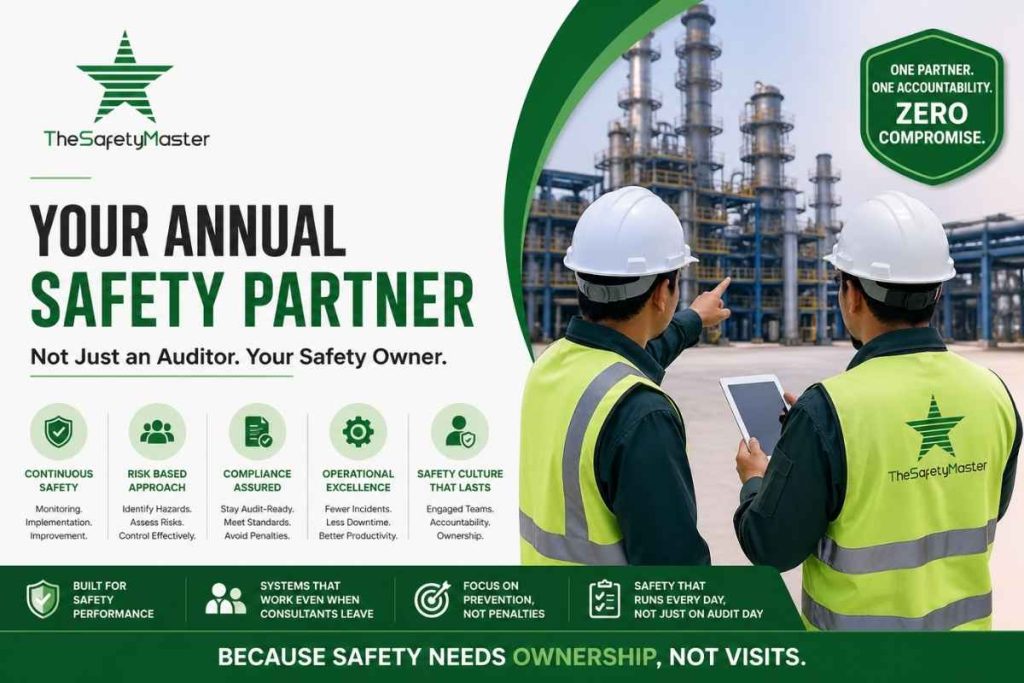
Why Annual Safety Partnerships Are Replacing One-Time Audits
April 25, 2026
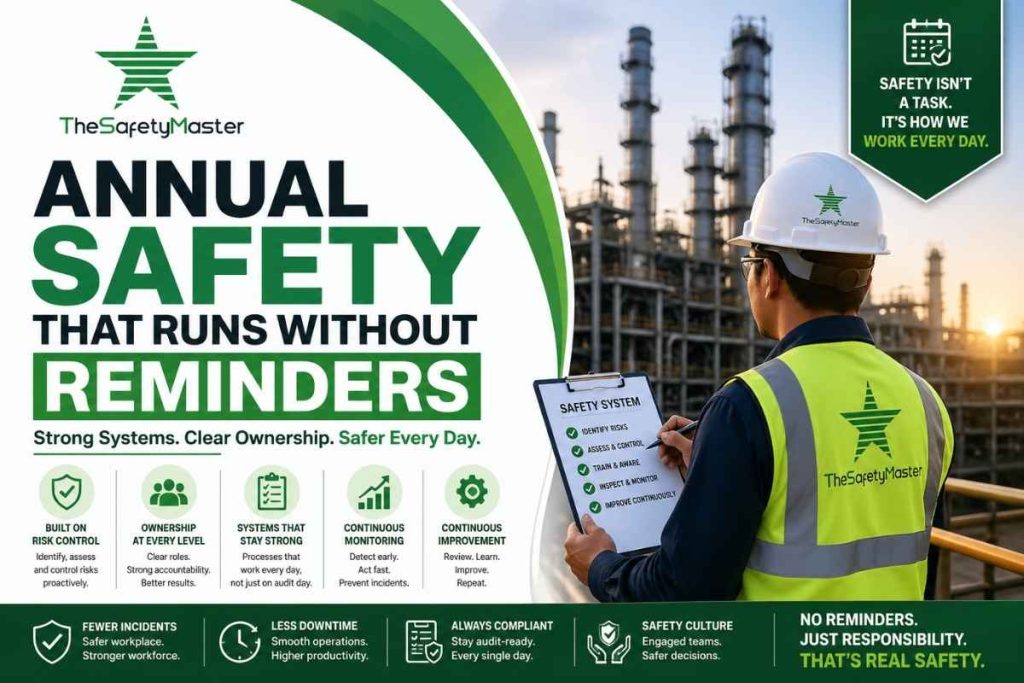
Annual Safety That Runs Without Reminders
April 28, 2026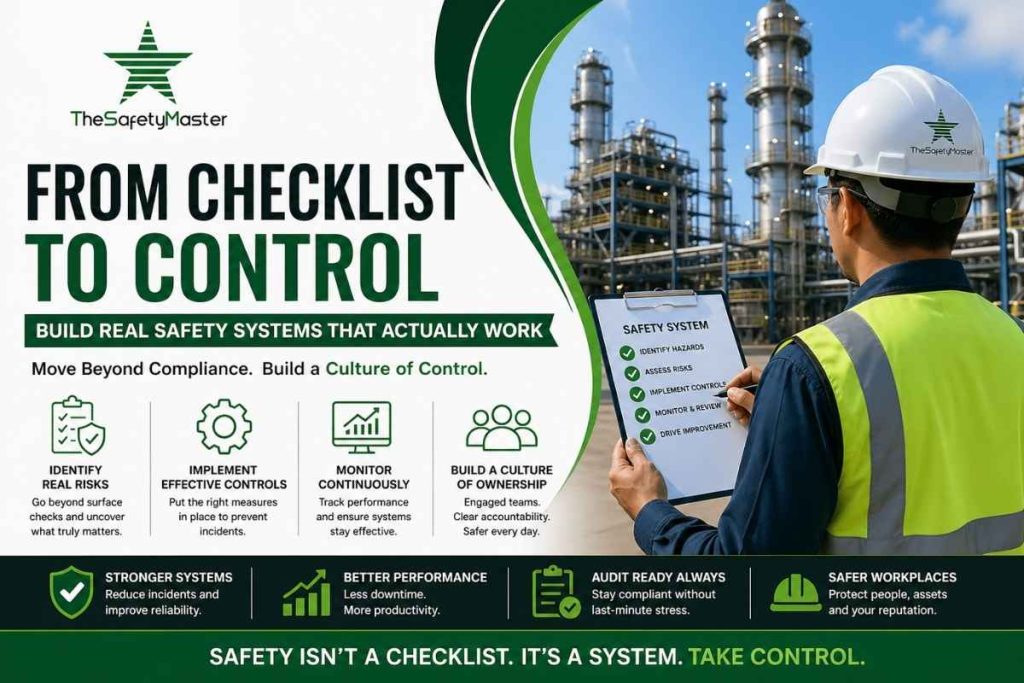
Most companies believe they have a safety system in place. They have checklists, audits, SOPs, and documentation. On paper, everything looks fine. But when something goes wrong, the gap becomes obvious.
That’s because checklists don’t create safety. Control does.
If your safety approach depends on inspections, reminders, or external pressure, it is not a system. It is a temporary setup that works only when someone is watching. Real safety systems operate consistently, even without supervision.
This is where the shift from checklist-based safety to control-based systems becomes critical.
Why Checklist-Based Safety Fails in Real Operations
Checklists are useful, but they are often misunderstood. They are tools, not solutions.
Here’s the problem:
- Teams complete checklists without fully understanding the risks
- Documentation becomes a formality rather than a control mechanism
- Unsafe practices continue despite “completed” reports
- Accountability is unclear or missing
In many organizations, safety becomes a tick-box activity. The focus shifts from preventing incidents to proving compliance. That’s a dangerous mindset.
Because incidents don’t happen due to missing checklists. They happen due to lack of control.
What Does “Control” Actually Mean in Safety?
Control in safety means your systems actively prevent risks, not just identify them.
It involves:
- Identifying hazards before they escalate
- Implementing clear preventive measures
- Monitoring whether those measures are actually working
- Ensuring accountability at every level
Control is not reactive. It is structured, continuous, and measurable.
This is where most organizations struggle. They know what needs to be done, but they don’t have a system to ensure it actually happens.
Moving Beyond Surface-Level Safety
Many companies focus on visible safety measures like PPE, signage, and housekeeping. These are important, but they only address basic risks.
Serious incidents usually come from deeper process failures.
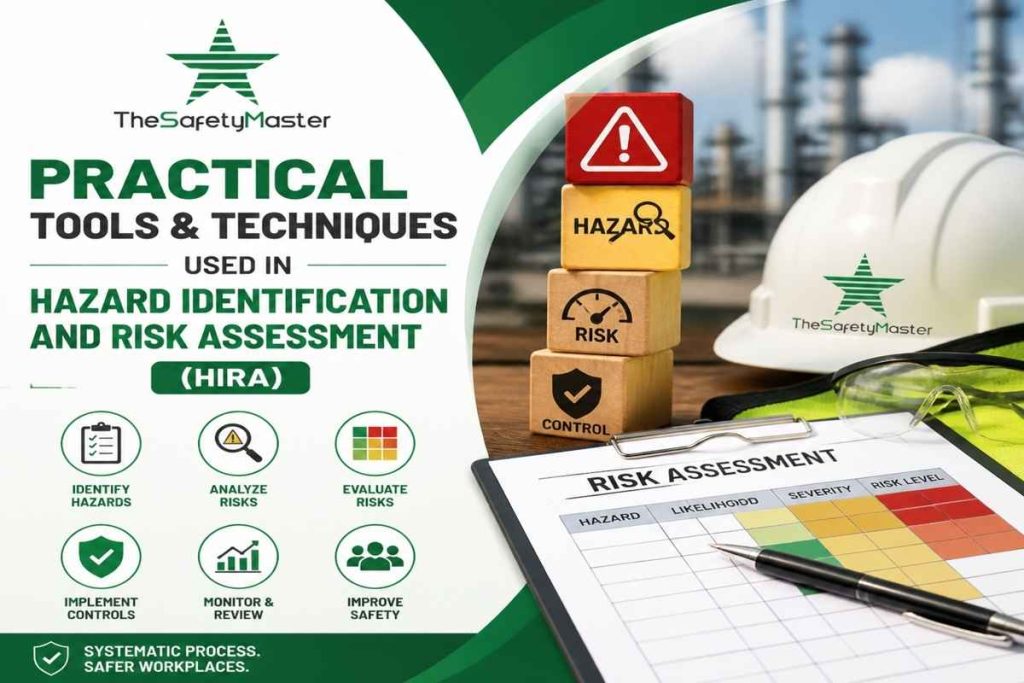
To address this, structured methods like HIRA help identify hazards and assess risks in a systematic way. But again, doing it once is not enough. It needs to be integrated into daily operations.
Similarly, advanced training like HAZOP Training equips teams to analyze process-level risks, especially in complex industries where small failures can lead to major consequences.
Without these deeper layers, safety remains superficial.
The Role of Fire Safety in System-Based Control
Fire risks are often underestimated until an incident occurs. Many organizations rely on basic compliance checks without ensuring real preparedness.
A structured Fire Audit evaluates not just equipment, but the entire fire safety system:
- Detection mechanisms
- Response readiness
- Evacuation planning
- Maintenance of fire protection systems
But like everything else, its effectiveness depends on follow-through. If audit findings are not implemented and monitored, the risk remains.
Building a Safety System That Runs Daily
A real safety system is not an event. It is a process that runs every day.
To build such a system, you need:
1. Clear Risk Visibility
You cannot control what you do not understand.
This means:
- Identifying all operational risks
- Prioritizing them based on severity
- Defining clear control measures
Risk visibility should not be limited to reports. It should be accessible and actionable for teams on the ground.
2. Defined Responsibilities
One of the biggest failures in safety systems is unclear ownership.
When everyone is responsible, no one is responsible.
Each role must have:
- Defined safety responsibilities
- Clear expectations
- Measurable outcomes
Accountability drives consistency.
3. Continuous Monitoring
Most companies check safety periodically. That’s not enough.
You need:
- Regular inspections
- Real-time reporting
- Immediate corrective actions
Monitoring ensures that safety measures are not just implemented, but sustained.
4. Practical Training
Training is often treated as a one-time activity. That approach does not work.
Teams need:
- Regular refresher sessions
- Scenario-based learning
- Hands-on practice
Training should focus on real situations, not just theory.
Why Implementation Is the Real Challenge
Let’s be honest. Most organizations already know what needs to be done.
The real issue is execution.
Common gaps include:
- Delayed corrective actions
- Lack of follow-up
- Poor communication between teams
- Over-reliance on external consultants
A safety system fails not because of lack of knowledge, but because of lack of consistent implementation.
Safety Culture Is Built Through Systems, Not Slogans
Posters, campaigns, and slogans do not create a safety culture. Systems do.
A strong safety culture exists when:
- Teams follow procedures without supervision
- Leaders prioritize safety in decision-making
- Unsafe behavior is corrected immediately
- Safety becomes part of daily operations
Culture is the outcome of consistent systems, not the starting point.
The Business Impact of Real Safety Systems
When safety is controlled properly, the impact goes beyond compliance.
Fewer Incidents
Reduced accidents mean lower costs, fewer disruptions, and better workforce confidence.
Improved Efficiency
Safe operations run smoother. There is less downtime and fewer unexpected interruptions.
Stronger Compliance
You don’t prepare for audits. You stay prepared.
Better Decision-Making
When risks are clearly understood, decisions become more informed and effective.
Stop Managing Safety. Start Controlling It.
Here’s the reality most people avoid:
Managing safety is not enough anymore.
If your system depends on:
- Periodic audits
- Manual follow-ups
- External pressure
then it is not strong enough.
You need control. And control comes from structured systems, continuous monitoring, and clear accountability.
The Bottom Line
Checklists are a starting point, not a solution.
Real safety systems:
- Operate continuously
- Prevent risks proactively
- Ensure accountability
- Deliver measurable results
If you want safety that actually works on the ground, you need to move beyond ticking boxes.
You need to build control into your operations.
Because in safety, what you control is what you protect.