The Importance of Electrical Safety Audits: Protecting Your Employees and Business

The Ultimate Guide to Implementing BIS14489 Safety Audit Standards
June 6, 2023
Scaffolding Erector and Inspector Training
June 7, 2023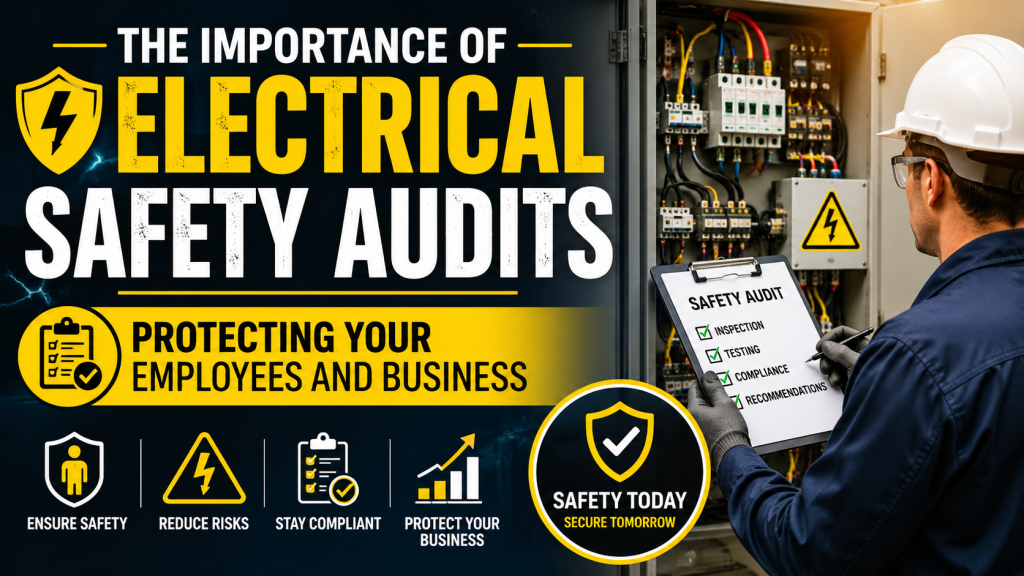
Electricity is essential for modern businesses, but electrical systems can also create serious risks when they are poorly maintained or improperly managed. Regular safety inspections help organizations identify hazards before they lead to shocks, fires, equipment damage, injuries, or costly operational disruptions. Companies such as the safety master can help organizations understand the importance of systematic safety assessments and preventive measures. A well-planned audit not only supports employee safety but can also strengthen compliance, improve operational reliability, and reduce financial risks.
What Is an Electrical Safety Audit?
An electrical safety audit is a systematic inspection of an organization’s electrical infrastructure to identify unsafe conditions, potential hazards, and areas requiring corrective action. It generally involves examining electrical panels, wiring, circuit breakers, switches, outlets, grounding systems, protection devices, and other components.
The objective is to determine whether electrical installations are operating safely and whether appropriate preventive measures are in place. Audits can also identify issues such as overloaded circuits, damaged cables, inadequate grounding, insulation problems, loose connections, and abnormal electrical conditions.
Early identification of these problems allows businesses to take corrective action before a minor defect develops into a major incident.
Why Electrical Safety Audits Are Important
Employee safety should be a priority in every workplace, particularly in manufacturing plants, industrial facilities, warehouses, commercial buildings, and locations where workers operate electrical equipment or machinery.
Electrical hazards can result in electric shocks, burns, electrocution, fires, explosions, and serious property damage. A detailed audit helps identify these risks and provides organizations with practical recommendations for controlling them.
Regular audits can also support compliance with applicable safety requirements and internal procedures. Demonstrating that electrical systems are inspected and maintained can help businesses reduce liability and establish a stronger safety culture.
Beyond safety, audits may reveal opportunities to improve energy efficiency. Faulty equipment, inefficient systems, and unnecessary energy consumption can increase operating expenses. Addressing these issues can improve both safety and overall business performance.
Benefits of Hiring a Professional Auditor
Electrical safety audits require technical knowledge, appropriate testing equipment, and an understanding of applicable standards. For this reason, organizations can benefit from engaging qualified professionals rather than relying solely on routine internal inspections.
Professionals can use specialized instruments to evaluate conditions such as grounding effectiveness, insulation resistance, leakage current, voltage variations, and other electrical parameters. They can also identify issues that may not be visible during a basic visual inspection.
An independent professional assessment can provide an objective evaluation of existing safety practices. It also allows employees to concentrate on their regular responsibilities while qualified personnel conduct the technical assessment.
Most importantly, professional audits can help organizations prioritize corrective actions based on the severity and potential consequences of identified hazards.
Common Electrical Safety Problems
Several electrical problems are frequently found in workplaces. Overloaded circuits are one example. Connecting too many devices to a single circuit can generate excessive heat and increase the possibility of equipment failure or fire.
Damaged cables, exposed conductors, loose electrical connections, defective switches, and poorly maintained panels can also create serious hazards. Improper grounding is another concern because it can increase the risk of electric shock and prevent protective devices from operating correctly.
In industrial environments, inadequate maintenance of electrical equipment can be particularly dangerous. A small fault or loose connection may produce heat, sparks, or an electrical arc, potentially causing significant damage.
Regular inspections and timely corrective action can help organizations address these problems before they escalate.
Understanding BIS 14489 Safety Audit Standards
BIS 14489 provides guidance related to safety auditing and is intended to support systematic assessment of workplace safety practices. A safety audit generally examines hazards, existing controls, procedures, compliance, and opportunities for improvement.
Organizations seeking to implement a structured safety audit process should first understand the applicable requirements and establish clear responsibilities. The audit should cover relevant workplace activities, equipment, procedures, emergency arrangements, and safety management practices.
The purpose is not simply to identify deficiencies but to create a structured approach for reducing risks and improving safety performance.
Preparing for a Safety Audit
Effective preparation can make a safety audit more useful and efficient. Organizations should gather relevant policies, procedures, inspection records, maintenance documents, training records, incident reports, and previous audit findings.
An appropriate audit team should include people with sufficient knowledge of workplace operations and applicable safety requirements. Employees should also be informed about the audit so they understand its purpose and cooperate with the assessment.
A checklist can help ensure that important areas are reviewed consistently. However, auditors should also remain alert to conditions that may not appear on a standard checklist.
Conducting the Audit and Creating an Action Plan
During the audit, the organization’s existing safety systems and workplace conditions are compared with applicable requirements and established best practices. Auditors may identify unsafe conditions, gaps in procedures, inadequate controls, or areas requiring additional training.
After the assessment, findings should be categorized according to their risk and importance. A corrective action plan should then be developed.
The plan should identify the required corrective measures, responsible personnel, deadlines, resources, and methods for verifying completion. High-risk issues should receive immediate attention, while lower-risk improvements can be addressed according to a defined schedule.
Regular follow-up is essential because an audit has limited value if identified problems are never corrected.
Maintaining Safety Compliance
Safety compliance should be treated as an ongoing process rather than a one-time activity. Regular inspections, preventive maintenance, employee training, emergency drills, and periodic audits can help maintain safe working conditions.
Organizations should also review previous audit findings and verify whether corrective actions remain effective. Changes in equipment, processes, building layouts, or regulations may create new risks and should trigger appropriate reassessment.
Creating a workplace culture where employees are encouraged to report hazards can further strengthen safety performance.
Consequences of Ignoring Safety Audits
Ignoring electrical and workplace safety audits can expose businesses to serious consequences. Electrical incidents may cause injuries, fatalities, fires, equipment damage, production interruptions, and financial losses.
Organizations may also face regulatory action, legal claims, repair costs, insurance complications, and reputational damage following a serious safety incident. Employees who believe that workplace risks are being ignored may also experience reduced confidence in management.
By contrast, proactive safety management demonstrates that employee well-being is taken seriously and can contribute to improved morale, productivity, and operational continuity.
Key Benefits of Regular Safety Audits
Regular safety audits can provide several important benefits:
- Identification of electrical and workplace hazards before incidents occur
- Improved employee and workplace safety
- Better monitoring of safety procedures and controls
- Reduced likelihood of accidents, equipment damage, and downtime
- Improved awareness of regulatory and standard-related requirements
- Identification of maintenance and corrective-action priorities
- Stronger safety culture and employee confidence
- Better protection of business assets and operations
Conclusion
Electrical safety and workplace safety audits are important tools for identifying risks, improving controls, and protecting employees and business assets. Electrical inspections can uncover hazardous conditions such as faulty wiring, overloaded circuits, grounding problems, and defective equipment, while structured safety audits can provide a broader assessment of workplace safety practices.
Organizations should approach auditing as a continuous improvement process. Proper preparation, professional assessment, corrective action, employee involvement, and regular follow-up can help create a safer and more reliable workplace.
For organizations seeking professional safety-related assessments, services may include Residual Life Assessment Studies, Power Load Studies, Thermography Studies, Arc Flash Assessments, Fire Audits, Electrical Safety Audits, and broader Safety Audits.
TSM TheSafetyMaster® Private Limited
Unit No. 221-451-452, SPL1/J, 2nd & 4th Floor, Sunsquare Plaza Complex, RIICO Chowk, Bhiwadi 301019, Rajasthan, India
Phone: +91 1493 22 0093
Mobile: +91 7665231743 / 9413882016
Email: info@thesafetymaster.com