HIRA Full Form in Safety: Meaning, Process & Risk Assessment Explained

One Partner. Zero Excuses. Total Safety Ownership
April 21, 2026
Why Annual Safety Partnerships Are Replacing One-Time Audits
April 25, 2026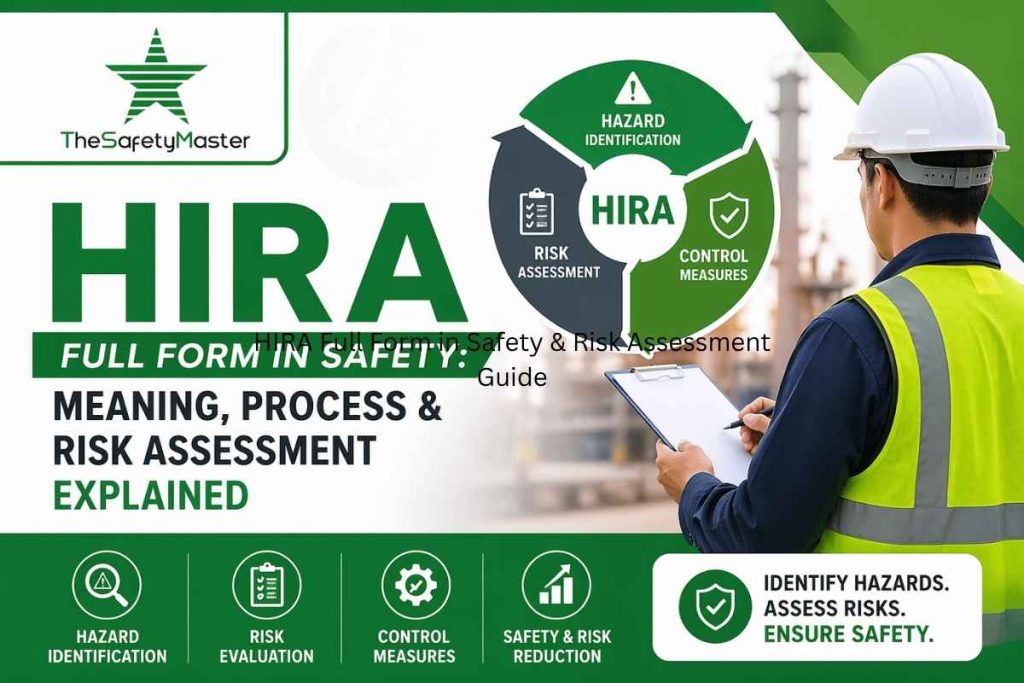
What is HIRA in Safety?
HIRA stands for Hazard Identification and Risk Assessment. It is a basic safety process used to find possible dangers in a workplace and understand how likely they are to cause harm.
In simple terms, HIRA helps answer two questions:
- What can go wrong?
- How serious could it be?
Every workplace—whether it’s a factory, construction site, or office—has risks. These could be anything from slippery floors and faulty machines to chemical exposure or poor ergonomics. HIRA is used to spot these hazards before they turn into accidents.
Industries rely on HIRA because reacting after an incident is costly and often avoidable. By identifying risks early, companies can take preventive actions like improving equipment, setting safety procedures, or training workers properly. This not only reduces accidents but also improves productivity, ensures legal compliance, and creates a safer working environment for everyone.
Without HIRA, safety becomes guesswork. With it, safety becomes planned and controlled.
HIRA Full Form and Meaning
HIRA stands for Hazard Identification and Risk Assessment. In safety management, this is one of the most important processes used to identify potential dangers in the workplace and evaluate how serious those risks are.
When people search for HIRA full form in safety or what is HIRA, they are essentially trying to understand how industries prevent accidents before they happen. HIRA is not just a theory—it is a practical approach used daily in construction sites, factories, oil & gas industries, and even offices.
Breaking Down the Meaning of HIRA
To understand the real HIRA meaning, you need to look at each part separately:
Hazard
A hazard is anything that has the potential to cause harm. This could be:
- Unsafe machinery
- Slippery floors
- Exposure to chemicals
- Working at heights
In simple terms, a hazard is a source of danger.
Risk
Risk is the chance or probability that the hazard will actually cause harm. It considers:
- How likely the incident is
- How severe the consequences could be
For example, a wet floor is a hazard, but the risk depends on how many people walk over it and how likely someone is to slip.
Assessment
Assessment means evaluating the risk in a structured way so that proper safety measures can be applied. This step helps in deciding:
- Which risks are critical
- What actions are needed
- How to control or eliminate hazards
HIRA Meaning in Safety Context
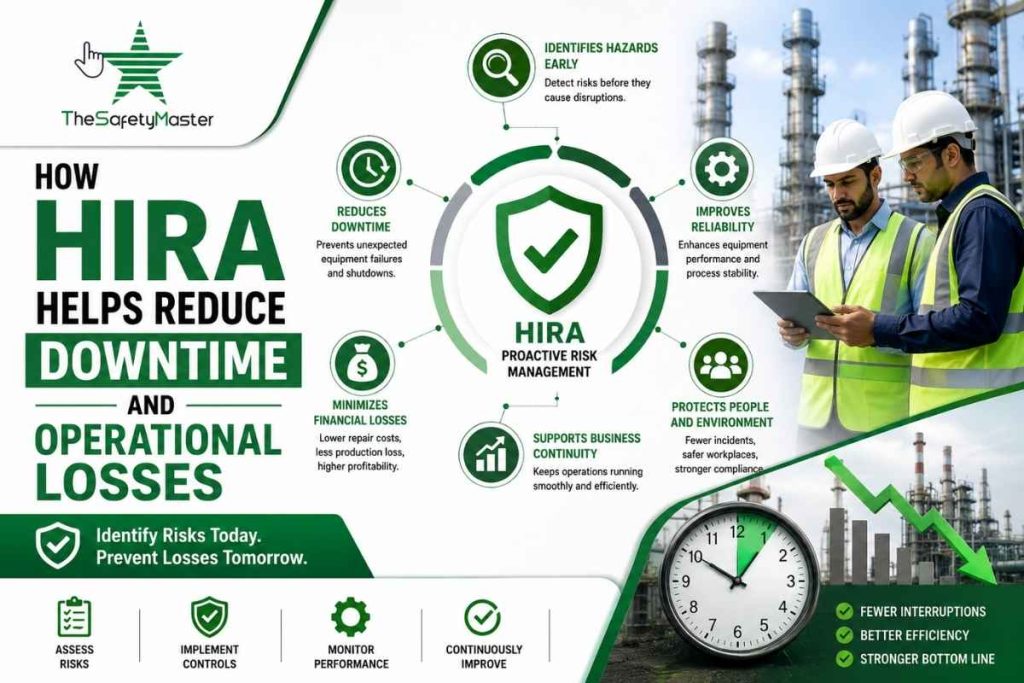
In safety terms, HIRA is a systematic process used to:
- Identify hazards
- Analyze associated risks
- Implement control measures
So when we say HIRA stands for Hazard Identification and Risk Assessment, it directly refers to a method that helps organizations reduce accidents, protect workers, and maintain a safe working environment.
This is why HIRA safety is considered a core part of any effective safety management system. Without proper hazard identification and risk assessment, safety measures become guesswork—and that’s where most organizations fail.
Why is HIRA Important in Safety Management?
HIRA is not just a checklist exercise—it’s the foundation of any effective safety system. Without it, risks stay hidden until something goes wrong.
Accident Prevention
The biggest value of HIRA is that it helps prevent accidents before they happen. By identifying hazards early and assessing their risk level, organizations can put control measures in place. This reduces injuries, equipment damage, and unexpected downtime. It shifts safety from reactive to proactive.
Legal Compliance
Most safety regulations require proper risk assessment at the workplace. HIRA helps companies meet these legal requirements by documenting hazards and showing what actions are taken to control them. Ignoring this isn’t just risky—it can lead to penalties, shutdowns, or legal action.
Workplace Safety Culture
When HIRA is done regularly and seriously, it builds awareness among employees. Workers start thinking about safety in their daily tasks instead of treating it as a rule forced from the top. Over time, this creates a culture where safety becomes everyone’s responsibility, not just the safety officer’s job.
Real-Life Impact
This isn’t theoretical. A simple HIRA can prevent major incidents—like identifying a loose electrical connection before it causes a fire, or spotting a fall hazard on a construction site before someone gets injured. These small actions make a real difference in protecting lives and avoiding losses.
At its core, HIRA turns safety into a planned system rather than leaving it to chance.
HIRA Risk Assessment Process (Step-by-Step)
The HIRA risk assessment process is practical, not theoretical. It gives you a clear way to identify dangers, evaluate them, and control them before they turn into incidents.
1. Identify Hazards
Start by spotting anything that can cause harm. This could be unsafe machinery, chemical exposure, poor lighting, manual handling, or even human error. Walk through the workplace, observe tasks, and talk to workers. If you miss hazards at this stage, the rest of the process becomes weak.
2. Evaluate Risks
Once hazards are identified, assess the risk linked to each one. Ask: how likely is this hazard to cause harm? And who could be affected? This step helps you understand which risks need immediate attention.
3. Analyze Severity & Likelihood
Now go deeper. Measure how serious the impact could be (severity) and how often it might happen (likelihood). For example, a minor cut and a fatal accident are not equal. This analysis helps prioritize risks so you focus on what matters most.
4. Implement Control Measures
After prioritizing risks, take action. Controls can include:
- Eliminating the hazard
- Replacing it with something safer
- Adding safety guards or systems
- Providing PPE (Personal Protective Equipment)
- Training employees
The goal is to reduce or eliminate the risk as much as possible.
5. Monitor and Review
HIRA is not a one-time task. Work environments change, new hazards appear, and controls may fail over time. Regular monitoring and review ensure that your safety measures remain effective and updated.
A proper HIRA risk assessment creates a system where risks are identified, controlled, and continuously improved—not ignored until an accident happens.
Key Components of HIRA
To make HIRA actually effective, you need to understand its core components. These are not optional steps—they define whether your risk assessment works or fails.
Hazard Identification
This is where everything starts. You identify anything that can cause harm during routine and non-routine activities. Hazards can be physical (machines, noise), chemical (toxic substances), biological (bacteria, viruses), or ergonomic (poor posture, repetitive work). If hazards are missed here, the entire HIRA becomes weak.
Risk Assessment
Once hazards are identified, the next step is to evaluate the risk associated with each one. This means understanding how likely the hazard is to cause harm and how severe the impact could be. This step helps prioritize which risks need immediate attention.
Risk Control
After assessing risks, you implement control measures to reduce or eliminate them. This usually follows the hierarchy of controls:
- Elimination (remove the hazard)
- Substitution (replace with safer option)
- Engineering controls (guards, systems)
- Administrative controls (procedures, training)
- PPE (last line of defense)
Steps to Conduct HIRA
A structured approach ensures consistency and accuracy in the HIRA process.
Define Activities
Break down the workplace into specific tasks, equipment, and locations. This makes hazard identification more precise.
Identify Hazards
List all possible hazards related to each activity. Don’t rely on assumptions—observe actual working conditions.
Assess Risk
Evaluate the level of risk based on likelihood and severity. This helps in prioritizing actions.
Implement Controls
Apply suitable control measures to minimize or eliminate risks.
Review and Update
HIRA is not a one-time activity. Regular reviews are essential to ensure controls remain effective and relevant.
Benefits of HIRA
When done properly, HIRA delivers real, measurable impact—not just compliance on paper.
Prevents Accidents
It identifies risks before they turn into incidents, reducing injuries and fatalities.
Regulatory Compliance
Helps organizations meet safety laws and standards, avoiding penalties and legal issues.
Reduces Costs
Fewer accidents mean lower costs related to damage, downtime, and compensation.
Fosters Safety Culture
Encourages employees to stay aware, responsible, and proactive about safety.
HIRA is a core part of any serious safety management system. Without it, safety remains reactive. With it, safety becomes planned, controlled, and continuously improved.
Types of Hazards in HIRA
Understanding different types of hazards is a key part of any HIRA process. If you don’t classify hazards properly, you’ll miss risks or apply the wrong controls. Here are the main categories you need to focus on:
Physical Hazards
These are the most visible and common hazards in any workplace. They include noise, vibration, extreme temperatures, radiation, moving machinery, and slip or fall risks. Physical hazards often cause immediate injuries, which is why regular inspections and a proper Safety Audit are critical to keep them under control.
Chemical Hazards
These arise from exposure to harmful substances like gases, fumes, liquids, or dust. Workers in industries like manufacturing, construction, or laboratories are at higher risk. Without proper handling, storage, and ventilation, chemical hazards can lead to serious health issues. Structured learning like HAZOP Training helps professionals understand and manage such risks more effectively.
Biological Hazards
These include exposure to bacteria, viruses, fungi, or other microorganisms. Common in healthcare, food processing, and waste management sectors, biological hazards can spread infections and diseases. Proper hygiene practices, PPE, and monitoring systems are essential to control them.
Ergonomic Hazards
These hazards come from poor workplace design or repetitive movements. Examples include incorrect posture, heavy lifting, or long hours at a workstation. Over time, they lead to musculoskeletal disorders and reduced productivity. Addressing ergonomic risks improves both safety and employee comfort.
Psychological Hazards
Often ignored, psychological hazards include stress, fatigue, workplace pressure, and harassment. These may not cause immediate physical harm but can significantly impact mental health and job performance. A strong safety system, supported by processes like Process Safety Management, helps in identifying and reducing such risks.
To ensure all hazard types are properly identified and controlled, organizations should also conduct periodic Fire Audit alongside their overall safety assessments.
Example of HIRA in Workplace Safety
Understanding HIRA becomes easier when you see how it works in real situations. Here are simple, practical examples from different workplaces:
Construction Site
On a construction site, one common hazard is working at height. Workers may be exposed to fall risks from scaffolding or ladders.
- Hazard: Falling from height
- Risk: Serious injury or fatality
- Assessment: High severity, medium to high likelihood
- Control Measures: Use of safety harnesses, guardrails, proper scaffolding, and worker training
A basic HIRA here can prevent one of the most common causes of accidents in construction.
Factory Floor
In a manufacturing unit, machines with moving parts are a major hazard.
- Hazard: Contact with rotating machinery
- Risk: Cuts, crush injuries, or amputations
- Assessment: High severity, medium likelihood
- Control Measures: Machine guards, emergency stop systems, regular maintenance, and operator training
Without proper HIRA, these risks are often underestimated until an accident occurs.
Office Setup
Even offices are not risk-free. Long working hours and poor workstation setup create ergonomic hazards.
- Hazard: Improper sitting posture and screen positioning
- Risk: Back pain, eye strain, reduced productivity
- Assessment: Low severity, high likelihood over time
- Control Measures: Ergonomic chairs, proper desk height, screen alignment, and regular breaks
These examples show that HIRA is not limited to heavy industries. It applies everywhere. The difference is not whether risks exist, but whether you identify and control them in time.
Common Mistakes in HIRA Safety
Most companies say they “do HIRA,” but in reality, they just go through the motions. That’s where problems start. Here are the mistakes that quietly make HIRA ineffective:
Ignoring Minor Hazards
Small hazards are often dismissed because they don’t look serious. Loose cables, minor leaks, or cluttered walkways get ignored. But these are exactly the issues that lead to frequent incidents over time. Safety failures rarely come from one big risk—they build up from small ones that were overlooked.
Poor Documentation
If your HIRA records are incomplete, outdated, or copied from old reports, they’re useless. Many teams treat documentation as a formality instead of a working tool. Clear, updated records are essential for tracking risks and proving compliance. Without that, you’re just guessing.
No Follow-Up
Identifying risks is only half the job. A common mistake is stopping after the assessment and not checking whether control measures were actually implemented or are still working. Without regular review, even good HIRA becomes irrelevant.
Lack of Training
If the people involved don’t understand hazards or risk assessment, the entire process breaks down. HIRA is only as strong as the people doing it. Untrained staff tend to miss risks, underestimate severity, or apply weak controls.
If you’re making any of these mistakes, your HIRA isn’t protecting anyone—it’s just paperwork. Real safety comes from doing it properly, consistently, and with accountability.
How The Safety Master Helps in HIRA Training
The Safety Master focuses on making HIRA practical, not just theoretical. Their training programs are designed to match real industry conditions, so learners understand how risk assessment actually works on-site.
The training covers step-by-step HIRA methods, hazard identification, risk evaluation, and control implementation. Instead of only classroom explanations, there is a strong focus on practical learning through case studies, real scenarios, and industry-based examples. This helps participants apply HIRA confidently in their workplace.
Participants also receive certification after completing the training, which adds credibility and supports career growth in the safety field. More importantly, the programs are aligned with current industry requirements, making them relevant for sectors like construction, manufacturing, oil & gas, and more.
Conclusion
HIRA is not optional if you’re serious about safety. It helps identify risks early, prevent accidents, and create a controlled work environment. Done properly, it saves lives, reduces losses, and builds a stronger safety culture.