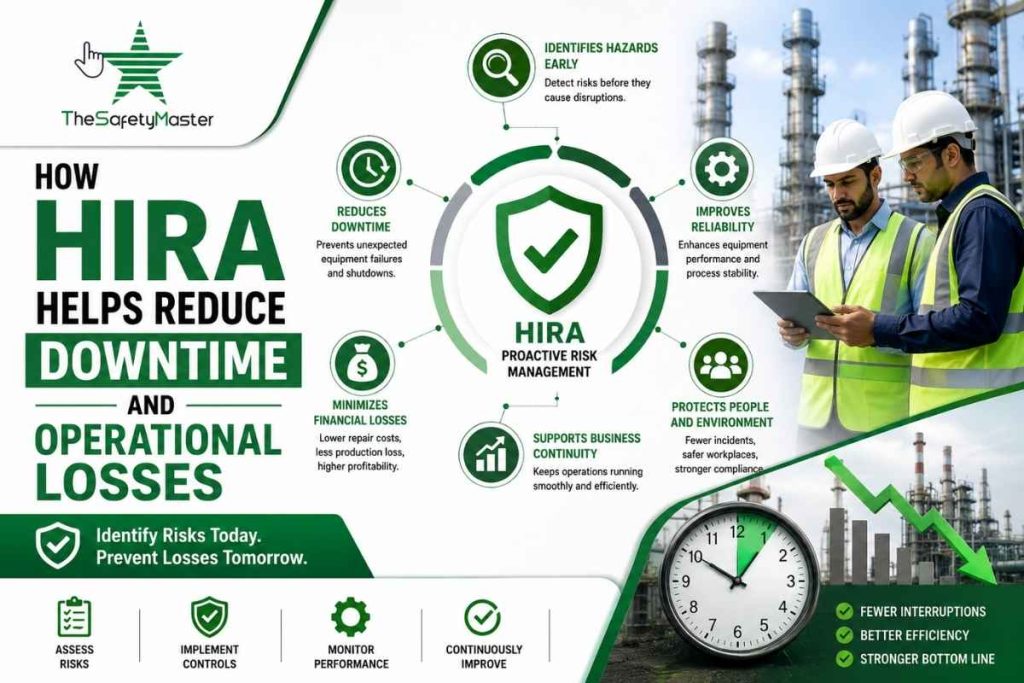
HIRA & Risk Assessment Best Practices for Punjab-Based Food-Processing Plants

Why Safety Audits Are Essential for Thailand’s Growing Industries in 2025
November 6, 2025
Building a Safety Culture in Punjab Manufacturing Sites: A 12-Month Roadmap
November 11, 2025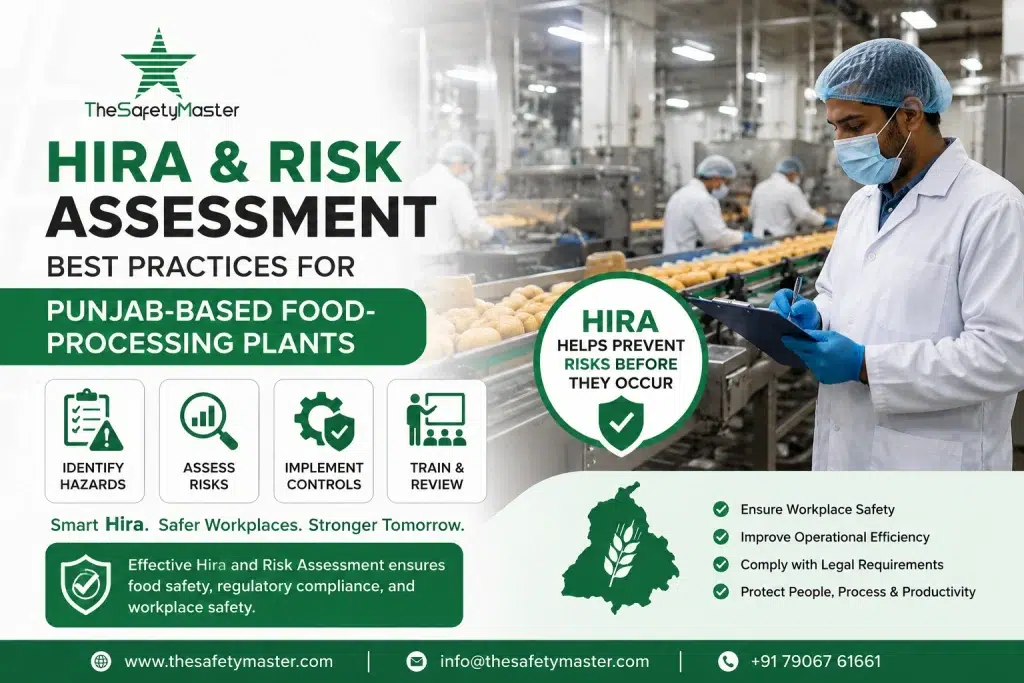
Hira is an essential part of workplace safety in food-processing plants, where employees may face risks from machinery, chemicals, heat, electrical systems, confined spaces, and material handling. For Punjab-based food-processing facilities, a structured risk assessment helps identify hazards before they result in injuries, equipment damage, contamination, or production losses. The Safety Master supports organizations in developing practical safety and risk-management approaches suited to industrial operations.
Why HIRA Is Important for Food-Processing Plants
Food-processing plants involve multiple activities, including raw-material handling, washing, cutting, processing, cooking, packaging, cold storage, and dispatch. Each activity can introduce different workplace hazards.
A proper HIRA helps organizations:
- Identify workplace hazards systematically.
- Assess the likelihood and severity of risks.
- Establish suitable control measures.
- Reduce workplace accidents and unsafe conditions.
- Improve employee awareness.
- Support compliance with applicable safety requirements.
- Protect machinery, products, and production operations.
For plants operating in Punjab, risk assessment should consider the specific processes, equipment, workforce, plant layout, and environmental conditions of the facility.
Common Hazards in Punjab Food-Processing Plants
Machinery and Mechanical Hazards
Food-processing machinery such as mixers, conveyors, cutters, grinders, slicers, packaging machines, and filling equipment can create serious mechanical hazards.
Common risks include:
- Entanglement
- Crushing
- Cutting
- Shearing
- Pinch points
- Unexpected machine start-up
- Contact with moving parts
Electrical Hazards
Electrical equipment is widely used in food-processing facilities. Damaged cables, overloaded circuits, poor grounding, wet conditions, and improper maintenance can increase the possibility of electric shock, short circuits, and fires.
Regular inspection and suitable electrical protection should therefore form part of the risk-control strategy.
Chemical Hazards
Cleaning and sanitation operations may involve detergents, disinfectants, acids, alkalis, and other chemicals.
A HIRA should evaluate:
- Chemical exposure
- Incorrect chemical storage
- Chemical mixing
- Splashing
- Inhalation
- Inadequate PPE
- Chemical spills
Safety Data Sheets (SDS), proper labeling, storage arrangements, emergency showers where required, and employee training can help reduce these risks.
Heat and Thermal Hazards
Boilers, ovens, steam lines, hot-water systems, cooking equipment, and heated surfaces can expose workers to burns and heat stress.
Insulation, guarding, warning signs, safe operating procedures, and appropriate PPE should be considered during risk assessment.
Step-by-Step HIRA Process for Food-Processing Plants
Step 1 – Identify the Activities
Begin by listing all activities carried out within the plant.
These may include:
- Raw-material unloading
- Material storage
- Production
- Machine operation
- Cleaning
- Maintenance
- Packaging
- Loading and unloading
- Waste handling
- Boiler operations
- Cold-storage activities
Step 2 – Identify Hazards
Identify hazards associated with each activity.
For example, while operating a cutting machine, possible hazards may include contact with blades, entanglement, unexpected start-up, and improper guarding.
Step 3 – Determine Who May Be Harmed
The assessment should identify everyone who could be affected, including:
- Machine operators
- Maintenance personnel
- Supervisors
- Contractors
- Visitors
- Cleaning staff
- Temporary workers
Step 4 – Evaluate the Risk
Risk evaluation normally considers two important factors:
Risk = Likelihood × Severity
The organization can use a suitable risk matrix to categorize hazards as low, medium, high, or critical, depending on its established methodology.
Step 5 – Establish Control Measures
Controls should follow the Hierarchy of Controls.
Elimination
Remove the hazard wherever reasonably possible.
Substitution
Replace a hazardous process, material, or chemical with a safer alternative.
Engineering Controls
Use machine guarding, interlocks, ventilation, barriers, automation, and other physical safeguards.
Administrative Controls
Develop SOPs, work permits, training programs, inspection schedules, and safe-work procedures.
Personal Protective Equipment
Use suitable PPE such as gloves, safety shoes, goggles, face shields, hearing protection, respiratory protection, or protective clothing based on the identified hazard.
HIRA Checklist for Food-Processing Operations
A practical HIRA checklist should cover the complete plant rather than focusing only on production machinery.
Important areas include:
| Area | Key Risk Factors |
|---|---|
| Production | Moving machinery, cutting, crushing, heat |
| Electrical | Shock, short circuit, damaged cables |
| Boiler Area | Steam, pressure, heat, burns |
| Chemical Storage | Exposure, leakage, incompatible storage |
| Warehouse | Falling materials, forklifts, manual handling |
| Cold Storage | Low temperature, slips, restricted access |
| Cleaning | Chemicals, wet floors, biological hazards |
| Maintenance | Hot work, isolation, stored energy |
| Packaging | Repetitive work, conveyors, pinch points |
| Emergency Response | Fire, evacuation, first aid |
Importance of Housekeeping and Slip Prevention
Wet floors are a common concern in food-processing environments because washing and cleaning activities can leave surfaces slippery.
Plants should consider:
- Proper floor drainage
- Regular cleaning
- Immediate spill removal
- Anti-slip flooring where appropriate
- Clearly marked walkways
- Suitable safety footwear
- Adequate lighting
Good housekeeping should be included as a continuous part of the risk-management program.
Machine Safety and Lockout/Tagout
Machine maintenance can expose workers to electrical, mechanical, hydraulic, pneumatic, thermal, and other forms of stored energy.
A suitable isolation procedure should include:
- Identify the equipment.
- Shut down the machine.
- Isolate energy sources.
- Apply locks and tags.
- Release or control stored energy.
- Verify zero-energy condition.
- Perform the maintenance activity.
- Restore the equipment safely after work completion.
Employees involved in maintenance should receive appropriate training before performing energy-isolation activities.
Emergency Preparedness Based on HIRA Findings
HIRA should not stop after identifying hazards. The findings should be connected with emergency planning.
Food-processing plants should evaluate scenarios such as:
- Fire
- Chemical leakage
- Electrical incidents
- Boiler-related emergencies
- Machinery accidents
- Gas leakage where applicable
- Medical emergencies
- Major spills
- Evacuation situations
Emergency exits, alarms, firefighting equipment, first-aid arrangements, assembly points, emergency contacts, and drills should be reviewed periodically.
Training and Employee Awareness
Employees play an important role in maintaining workplace safety. Even well-designed controls can fail if workers do not understand the hazards.
Training can cover:
- Hazard identification
- Safe machine operation
- PPE use
- Chemical handling
- Emergency procedures
- Fire safety
- Manual handling
- Electrical safety
- Lockout/Tagout
- Incident reporting
- Safe cleaning procedures
Regular toolbox talks can reinforce important safety practices.
Review and Continuous Improvement of HIRA
HIRA should be treated as a living document, not a one-time exercise.
The assessment should be reviewed when:
- New machinery is introduced.
- Production processes change.
- New chemicals are used.
- An accident or near miss occurs.
- Plant layout changes.
- New legal or safety requirements become applicable.
- Inspection findings identify new hazards.
- Workers report previously unidentified risks.
Periodic review helps ensure that risk controls remain effective.
Benefits of Effective HIRA for Food-Processing Plants
A properly implemented HIRA program can provide several benefits:
- Fewer workplace accidents
- Better hazard awareness
- Improved machine safety
- Stronger emergency preparedness
- Better employee involvement
- Reduced operational disruptions
- Improved safety compliance
- Better documentation and accountability
- Continuous improvement of workplace safety
For food-processing businesses, effective risk assessment can also support operational reliability by identifying hazards that could lead to equipment damage, downtime, or major incidents.
How The Safety Master Can Support Risk Assessment
A professional safety approach can help food-processing organizations identify hazards systematically and develop practical controls.
The Safety Master focuses on safety and risk-management solutions that can help organizations strengthen their workplace safety systems. A structured HIRA approach can assist management teams in understanding significant hazards, prioritizing risks, and implementing appropriate preventive measures.
FAQs About HIRA in Food-Processing Plants
1. What is HIRA in a food-processing plant?
HIRA stands for Hazard Identification and Risk Assessment. It is a systematic process used to identify workplace hazards, evaluate associated risks, and determine appropriate control measures.
2. What are the major hazards covered by HIRA in food-processing facilities?
Major hazards can include machinery, electrical systems, chemicals, heat, boilers, manual handling, forklifts, slips and falls, cold storage, maintenance activities, and fire or emergency situations.
3. How often should HIRA be reviewed?
HIRA should be reviewed periodically and whenever significant changes occur, such as new equipment, process modifications, accidents, near misses, new chemicals, or changes in workplace conditions.
4. Who should participate in a HIRA assessment?
A HIRA team may include safety professionals, production personnel, maintenance staff, supervisors, operators, and other competent people familiar with the relevant process and hazards.
5. Why is HIRA important for Punjab-based food-processing plants?
HIRA helps Punjab-based food-processing plants systematically understand their workplace hazards and prioritize controls according to the specific operations, equipment, workforce, and working conditions of each facility.
Conclusion
Effective Hira and risk assessment practices can help Punjab-based food-processing plants create safer working environments while protecting employees, equipment, production, and business continuity. From machinery and electrical hazards to chemicals, boilers, housekeeping, and emergency preparedness, every significant risk should be identified, evaluated, controlled, and periodically reviewed. With a structured approach and professional guidance from The Safety Master, organizations can strengthen their overall workplace risk-management system.