How HIRA Helps Reduce Downtime and Operational Losses

Signs Your Workplace Needs an Updated Risk Assessment
May 18, 2026
Fire Safety in Hospitals in India: Guidelines, Training & Safety Plan
May 22, 2026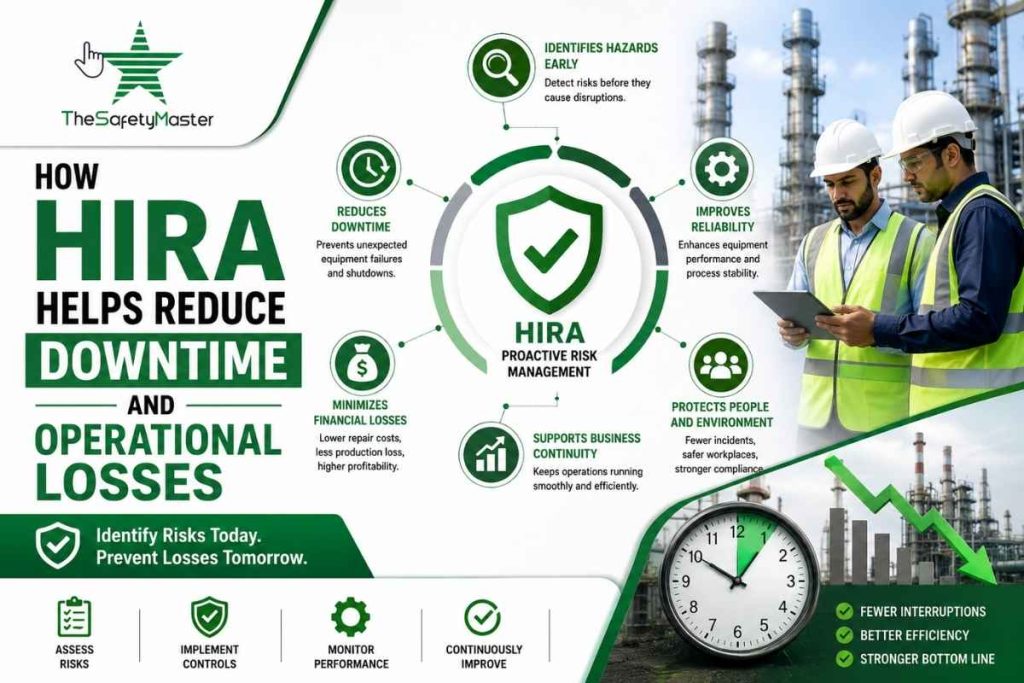
Operational downtime is one of the biggest hidden costs in any industry. Whether it is manufacturing, oil and gas, logistics, chemical processing, construction, or warehousing, unexpected shutdowns can directly impact productivity, revenue, equipment life, worker safety, and customer commitments. Many businesses focus only on equipment maintenance or productivity planning to reduce losses, but one major factor often overlooked is workplace risk management.
Unsafe conditions, unrecognized hazards, process failures, and weak control systems can all contribute to downtime and financial loss. A strong hazard identification and risk assessment process helps organizations identify these operational weaknesses before they escalate into accidents, breakdowns, or disruptions.
A structured approach like HIRA supports both workplace safety and operational reliability by helping organizations manage risks proactively instead of reacting after failures occur.
Understanding the Link Between Safety and Operational Losses
Downtime is not always caused by machine failure alone. In many cases, operational interruptions are linked to preventable workplace risks.
Common causes include:
- Equipment breakdown
- Fire incidents
- Human error
- Unsafe work practices
- Process deviations
- Chemical leaks
- Electrical failures
- Mechanical damage
- Worker injury
- Emergency shutdowns
When these issues occur, operations may stop completely or run at reduced capacity.
Risk assessment helps identify where such failures may originate and what controls are needed to reduce their impact.
Safety and productivity are closely connected. A safer workplace often means more stable operations.
Identifying Hidden Risks Before Failure Happens
One of the biggest advantages of risk assessment is early hazard recognition.
Many losses happen because organizations respond only after incidents occur.
Hazards that often go unnoticed include:
- Worn-out components
- Poor ventilation
- Overloaded electrical systems
- Unsafe storage practices
- Inadequate machine guarding
- Weak emergency planning
- Repetitive unsafe behavior
These risks may not create immediate damage but can gradually lead to operational failures.
By identifying hazards early, organizations can take preventive action before costly disruptions happen.
Early intervention often costs far less than emergency recovery.
Reducing Equipment Failure and Maintenance-Related Downtime
Machinery and equipment are critical to operational continuity. Unexpected breakdowns can halt production, delay delivery schedules, and increase repair expenses.
Risk assessments often identify mechanical issues such as:
- Improper lubrication
- Excessive vibration
- Overheating systems
- Misaligned parts
- Faulty electrical connections
- Pressure buildup
- Weak safety interlocks
When these risks are recognized early, maintenance teams can schedule corrective action before failure occurs.
This reduces:
- Emergency repairs
- Replacement costs
- Production stoppage
- Worker exposure during unsafe breakdowns
Preventive safety planning improves equipment reliability and reduces unplanned downtime significantly.
Preventing Workplace Accidents That Interrupt Operations
Accidents do not only affect injured workers. They often disrupt entire operations.
A single workplace incident may lead to:
- Production shutdown
- Investigation delays
- Equipment isolation
- Legal review
- Loss of manpower
- Repair costs
- Insurance complications
For example, a worker injury near critical machinery may stop an entire process line.
Hazard assessments help reduce such events by improving controls around:
- Machine safety
- Traffic movement
- Material handling
- Fall protection
- Confined spaces
- Electrical work
Fewer incidents mean smoother workflow and reduced operational interruption.
Improving Process Stability in High-Risk Industries
In process-driven industries such as chemicals, oil and gas, and manufacturing, small deviations can create major losses.
Examples include:
- Pressure imbalance
- Temperature variation
- Flow blockage
- Chemical incompatibility
- Valve failure
- Control system malfunction
These failures can trigger shutdowns, environmental release, or major process instability.
Professionals with structured HAZOP Training are better equipped to identify process-related hazards, abnormal operating conditions, and weak system barriers.
Understanding process deviations helps organizations reduce both safety incidents and costly operational interruptions.
This is especially important in industries where downtime directly impacts large-scale production.
Reducing Fire-Related Operational Damage
Fire incidents are among the most expensive operational disruptions in industrial settings.
Even small fire events can cause:
- Production shutdown
- Equipment destruction
- Structural damage
- Inventory loss
- Worker evacuation
- Compliance investigations
- Long-term recovery costs
Common fire-related risks include:
- Electrical overload
- Flammable storage issues
- Hot work exposure
- Gas leakage
- Poor housekeeping
- Dust accumulation
A structured Fire Audit helps identify ignition risks, evaluate suppression readiness, inspect fire protection systems, and improve emergency response capabilities.
Reducing fire hazards directly lowers both downtime and large-scale financial loss.
Improving Workforce Productivity and Reducing Human Error
Operational losses are often linked to unsafe behavior and poor task execution.
Human error may result from:
- Fatigue
- Inadequate training
- Poor supervision
- Confusing procedures
- Unsafe shortcuts
- Lack of hazard awareness
Risk assessments help identify areas where worker behavior increases operational vulnerability.
This allows organizations to improve:
- Training systems
- Standard operating procedures
- Task planning
- Communication methods
- Supervision quality
Workers who understand risks clearly tend to operate more efficiently and make fewer costly mistakes.
Reduced human error supports smoother workflow and better output consistency.
Supporting Preventive Maintenance Planning
Many organizations separate maintenance and safety, but in reality, they overlap heavily.
Hazard reviews often reveal risks tied directly to equipment deterioration.
This supports preventive maintenance planning by identifying:
- Repeated overheating
- Structural wear
- Leakage
- Abnormal vibration
- Electrical instability
- Corrosion
- Weak protective barriers
Scheduled maintenance based on risk exposure helps avoid unexpected failure.
This improves:
- Asset lifespan
- Operational consistency
- Repair cost control
- Maintenance efficiency
Preventive planning is always less expensive than emergency response.
Strengthening Emergency Preparedness
Some operational losses occur because organizations are not prepared when incidents happen.
Poor emergency response can increase:
- Downtime duration
- Damage severity
- Worker confusion
- Equipment loss
- Recovery cost
Risk assessments often recommend stronger emergency controls such as:
- Shutdown systems
- Evacuation plans
- Spill response kits
- Rescue procedures
- Fire drills
- Communication systems
When emergencies are managed effectively, downtime is shorter and recovery becomes faster.
Preparedness reduces both direct and indirect operational losses.
Supporting Compliance and Business Continuity
Regulatory failures can also create major downtime.
Safety-related non-compliance may lead to:
- Inspection stoppages
- Operational restrictions
- Penalties
- Forced shutdowns
- Reputation damage
A structured Safety Audit helps identify compliance gaps, ineffective controls, and weak safety systems before they create larger operational problems.
Organizations with stronger compliance systems usually face fewer disruptions and better long-term continuity.
Compliance should be viewed not only as a legal requirement but also as operational protection.
Improving Decision-Making Through Risk Prioritization
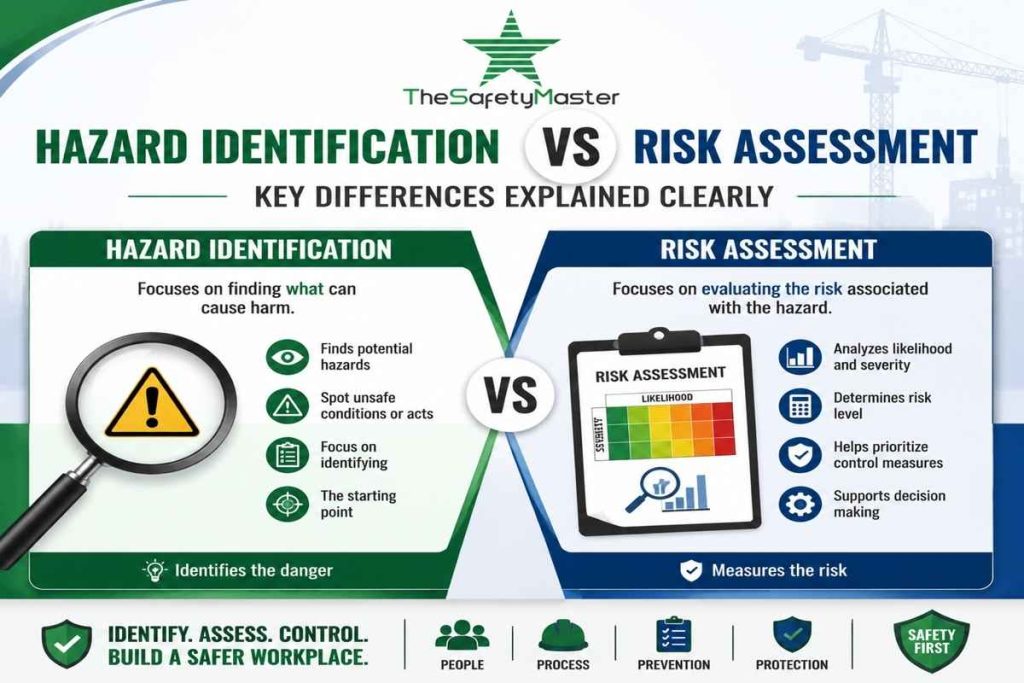
Not all risks have equal impact. Some hazards create minor inconvenience, while others can cause severe financial loss.
Risk assessment helps prioritize actions based on:
- Likelihood
- Severity
- Exposure level
- Operational dependency
This prevents organizations from wasting resources on low-impact issues while ignoring high-risk failures.
Prioritization improves decision-making in:
- Maintenance planning
- Capital investment
- Safety upgrades
- Training focus
- Emergency readiness
Better decisions reduce avoidable losses over time.
Building Long-Term Operational Reliability
Downtime reduction is not achieved through isolated fixes. It requires consistent risk control and system improvement.
Organizations that review workplace risks regularly often achieve:
- More stable operations
- Fewer shutdowns
- Lower repair costs
- Better workforce confidence
- Reduced accident rates
- Improved equipment reliability
- Stronger productivity
Operational reliability is closely tied to proactive hazard management.
The earlier risks are identified, the easier and less expensive they are to control.
Conclusion
Hazard identification and risk assessment play a major role in reducing downtime and operational losses across industries. By identifying hidden risks, improving equipment reliability, strengthening emergency preparedness, reducing accidents, and improving worker performance, organizations can prevent many disruptions before they occur.
The value of safety assessments goes beyond compliance. They support long-term productivity, business continuity, and financial stability. Organizations that treat risk management as an operational strategy rather than a reactive safety task are better positioned to reduce losses and maintain stronger, safer, and more reliable operations.