Fire Safety in Hospitals in India: Guidelines, Training & Safety Plan

How HIRA Helps Reduce Downtime and Operational Losses
May 20, 2026
How Process Safety Management Training Builds Safer Industrial Operations in India
May 25, 2026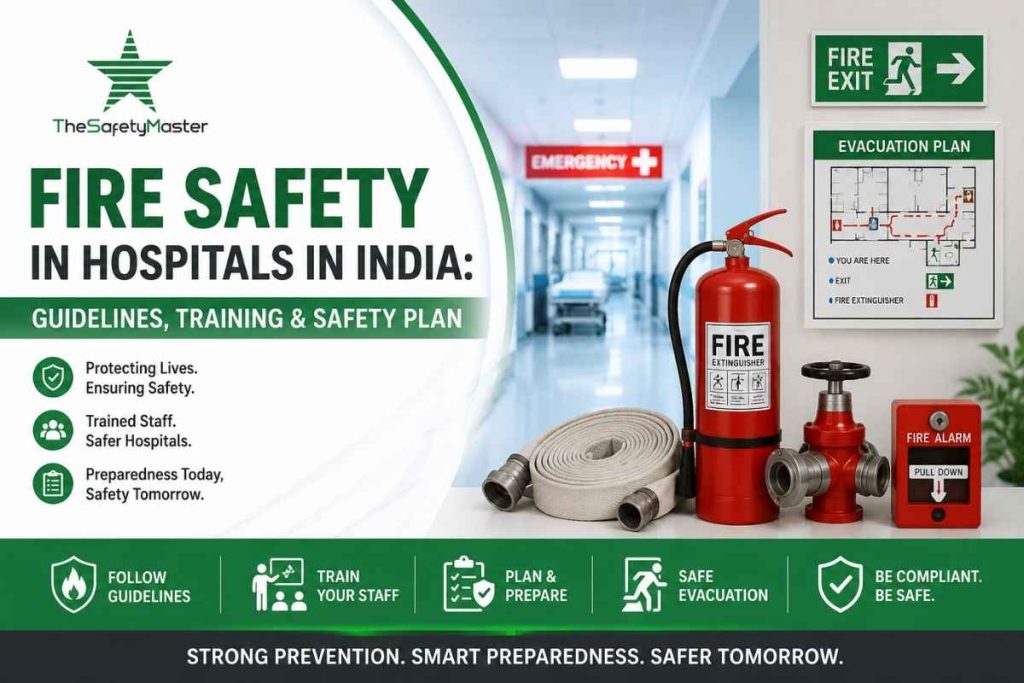
Introduction
Fire safety in hospitals is critical because healthcare facilities operate 24/7 and house vulnerable patients, medical staff, visitors, and life-saving equipment. A fire incident can quickly become dangerous due to oxygen-rich environments, electrical systems, and limited mobility of patients in ICUs, wards, and emergency units.
With the increasing number of healthcare facilities, the need for strong fire safety in hospitals in India has become more important than ever. Hospitals must follow strict safety measures, maintain emergency systems, and ensure staff are prepared to respond during emergencies.
A proper fire audit helps identify hidden hazards, check compliance gaps, and improve emergency preparedness. By detecting risks early, hospitals can prevent fire accidents, protect lives, reduce operational losses, and create a safer environment for patients and healthcare workers.
Understanding Fire and Safety in Hospital
Hospital fire safety refers to the systems, procedures, and preventive measures used to protect patients, staff, visitors, and hospital infrastructure from fire-related risks. Since hospitals operate continuously and contain sensitive medical equipment, fire prevention and emergency preparedness are essential.
Common fire hazards in hospitals include electrical faults, which may occur due to overloaded circuits, damaged wiring, or poorly maintained equipment. Oxygen-rich environments can increase fire intensity and make small sparks more dangerous. Medical gas pipelines require regular monitoring, as leaks or poor handling can create serious fire hazards. Areas like kitchens and laundry rooms are also high-risk due to heat-generating equipment, flammable materials, and continuous operations. Additionally, ICUs and equipment-heavy departments often face electrical overload risks because of life-support systems, monitors, and other critical devices running 24/7. Proper safety checks and preventive measures are vital to reduce these risks.
Why Hospital Fire Safety Matters
Hospital fire safety is essential to protect patients, visitors, staff, and critical medical assets from fire-related emergencies. Since hospitals care for vulnerable patients and operate life-saving equipment around the clock, even a small fire can lead to serious consequences.
A strong fire safety system also helps in reducing downtime and operational disruption. Fire incidents can damage infrastructure, interrupt patient care, and impact essential hospital services, leading to financial and operational losses.
In addition, hospitals must follow legal and compliance requirements related to fire prevention, emergency exits, alarm systems, and safety protocols. Meeting these standards not only improves preparedness but also helps hospitals avoid penalties, liabilities, and safety risks. Proper fire safety planning ensures a safer and more reliable healthcare environment.
Fire Safety Guidelines for Hospitals in India
Hospitals must follow strict fire safety guidelines to protect lives, critical infrastructure, and medical operations. A strong fire protection system begins with fire detection and alarm systems, which help identify fire risks early and alert staff for immediate response.
Proper installation and maintenance of fire extinguishers and hydrant systems are essential for controlling fire incidents before they spread. Hospitals should also ensure clear emergency exits and evacuation routes so patients, visitors, and staff can move safely during emergencies, especially in high-risk areas like ICUs and wards.
Effective smoke control and fire suppression systems, such as sprinklers and ventilation controls, help reduce fire spread and improve evacuation safety. In addition, regular routine inspections and compliance checks are necessary to identify faults, maintain equipment, and ensure hospitals meet fire safety standards and emergency preparedness requirements in India.
Hospital Fire Safety Plan
A well-structured hospital fire safety plan helps hospitals respond quickly and effectively during fire emergencies while protecting patients, staff, and critical infrastructure. It starts with risk assessment and hazard mapping, where high-risk areas such as ICUs, electrical rooms, oxygen storage zones, kitchens, and medical gas lines are identified for better prevention and control.
Strong emergency preparedness planning ensures hospitals have clear procedures to manage fire incidents without disrupting essential medical services. This includes proper communication systems, fire response equipment, and coordination between departments.
Clear evacuation procedures for patients and staff are critical, especially for immobile patients in wards, ICUs, and emergency care units. Hospitals must also define roles and responsibilities during fire emergencies, so staff know how to respond, guide evacuations, and manage safety measures.
An effective incident reporting and response system helps track fire-related risks, report hazards, investigate incidents, and improve future safety planning. A proactive fire safety plan reduces risk, improves response time, and strengthens overall hospital safety.
Hospital Fire Safety Training
Regular hospital fire safety training is essential to ensure staff can respond quickly and effectively during emergencies. Since hospitals operate in high-risk environments with vulnerable patients and critical equipment, trained staff play a key role in reducing fire-related risks.
Fire drills and evacuation mock exercises help hospital teams practice emergency response, improve coordination, and identify gaps in evacuation procedures. These drills are especially important for areas like ICUs, wards, and emergency units where patient movement can be challenging.
Staff awareness and emergency response training educate employees on fire hazards, alarm systems, reporting procedures, and immediate actions during a fire incident. Hospitals should also train staff on the safe use of fire extinguishers to control small fires before they escalate.
In addition, proper training on handling oxygen cylinders and flammable materials safely is critical, as these can significantly increase fire hazards if stored or managed incorrectly. Continuous training improves preparedness, response time, and overall hospital safety.
How The Safety Master Conducts Fire Safety Audit in Hospitals
The Safety Master follows a structured approach to improve hospital safety, reduce fire risks, and strengthen emergency preparedness. Our process begins with an initial consultation to understand the hospital’s size, departments, operations, and high-risk zones.
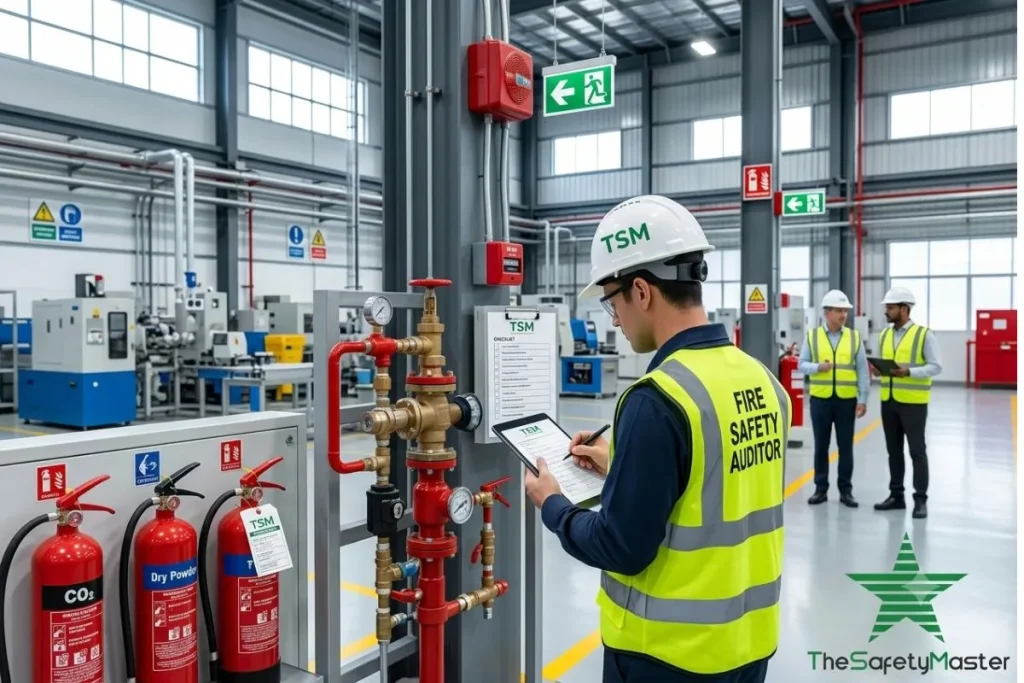
A complete on-site inspection is then conducted to assess electrical panels, fire alarms, hydrants, extinguishers, emergency exits, ICUs, gas pipelines, oxygen storage, and other critical areas. Through a detailed Fire Audit, we identify hidden hazards, system weaknesses, and compliance gaps that may impact hospital safety.
We also review emergency response readiness, evacuation systems, and the effectiveness of existing safety procedures. Staff awareness and current fire safety training levels are assessed to identify improvement areas.
Based on the findings, The Safety Master provides a detailed audit report that highlights risks, compliance observations, and practical corrective action recommendations. This helps hospitals improve fire safety performance, protect lives, and maintain safer healthcare operations.
If Hospitals Hire The Safety Master, How We Deliver Best Results
Step 1: Site Assessment & Risk Mapping
Our process starts with a detailed hospital site assessment to identify fire-prone zones, vulnerable departments, high-risk equipment areas, and operational hazards.
Step 2: Compliance & Safety Audit
We conduct a thorough Safety Audit to evaluate fire protection systems, emergency infrastructure, and compliance with hospital fire safety guidelines and industry requirements.
Step 3: Customized Fire Safety Plan
Based on the audit findings, we create a practical hospital fire safety plan tailored to the hospital’s layout, operations, and emergency response needs.
Step 4: Training & Mock Drills
Our team provides hospital fire safety training, emergency response guidance, and mock evacuation drills to improve staff preparedness and coordination.
Step 5: Corrective Action Support
We recommend necessary improvements in alarms, extinguishers, hydrants, signage, emergency exits, and fire suppression systems to reduce risks and strengthen safety.
Step 6: Continuous Improvement
To ensure long-term protection, we offer follow-up audits, re-evaluation, and continuous safety enhancement support for better fire preparedness and compliance.
Best Practices for Fire Safety in Hospitals in India
Maintaining strong fire safety in hospitals in India requires a proactive approach, regular monitoring, and well-defined emergency systems. Since hospitals operate continuously with vulnerable patients and high-risk equipment, following best practices can significantly reduce fire hazards and improve emergency preparedness.
Key best practices include:
- Regular inspection of fire protection systems to ensure alarms, extinguishers, hydrants, and suppression systems are fully functional.
- Safe storage of oxygen and hazardous materials to reduce the risk of leaks, combustion, and accidental fire spread.
- Electrical load monitoring to prevent overload, faulty wiring, and equipment-related fire incidents.
- Clear emergency signage across departments, staircases, and exits for quick identification during emergencies.
- Unblocked evacuation routes to ensure patients, staff, and visitors can move safely without delays.
By following these practices, hospitals can strengthen safety standards, reduce operational risks, and create a safer healthcare environment.
Why Choose The Safety Master for Hospital Fire Safety Audits
The Safety Master follows a practical and industry-focused approach to help hospitals improve fire safety, compliance, and emergency preparedness. Through a detailed Fire Safety Audit, we identify hidden hazards, assess critical systems, and provide actionable recommendations tailored to healthcare facilities.
Why hospitals choose The Safety Master:
- Industry-focused risk assessment approach to identify fire-prone zones and operational vulnerabilities.
- Practical compliance-driven audits aligned with hospital safety requirements and fire prevention standards.
- Customized training and fire preparedness support for hospital staff and emergency teams.
- End-to-end safety improvement recommendations covering systems, procedures, and long-term risk reduction.
Our goal is to help hospitals build stronger fire prevention systems and safer healthcare operations.
Conclusion
Strong hospital fire safety begins with prevention, regular inspections, staff training, and expert evaluation. Hospitals must stay prepared to handle fire risks while protecting patients, employees, visitors, and critical infrastructure.
A structured audit, proper planning, and continuous safety improvements can significantly enhance compliance, reduce operational disruption, and create a safer environment for long-term healthcare operations.