Fire Safety Audit Checklist: Key Areas Every Facility Must Inspect

What Makes the Top Safety Consultants Stand Out in Industrial Safety?
June 26, 2026
Process Safety Management Implementation Guide
July 1, 2026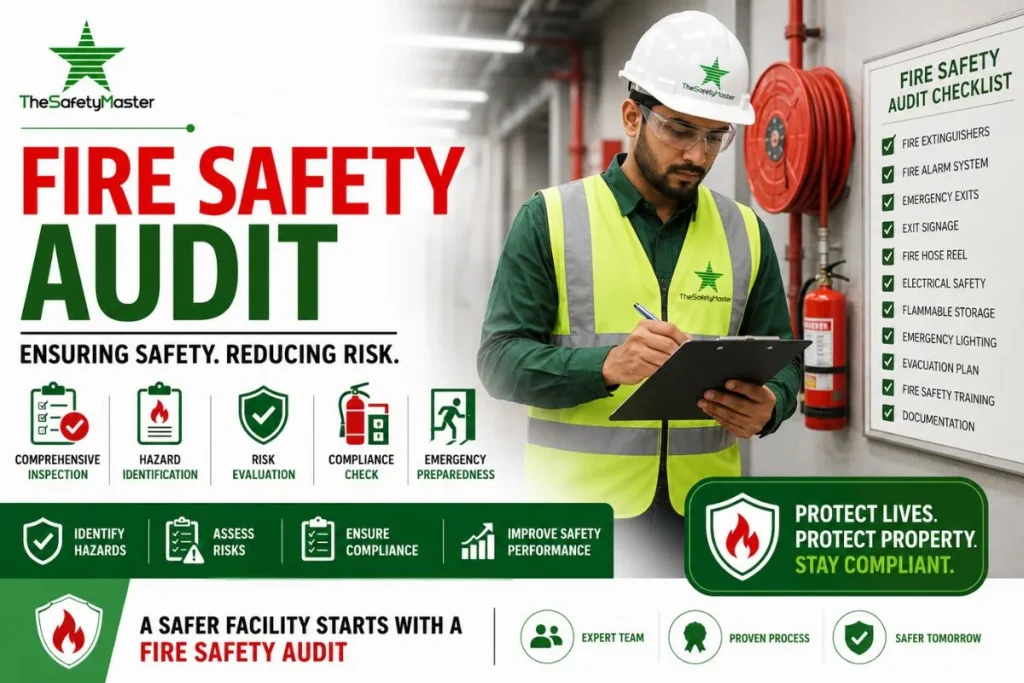
A Fire Safety Audit is one of the most important processes for protecting people, property, and business operations from fire-related risks. Every organization, whether it is a manufacturing plant, warehouse, office building, hospital, shopping mall, educational institution, or residential complex, must conduct regular fire safety audits to identify hazards and ensure compliance with safety regulations.
Fire incidents can lead to severe injuries, loss of life, operational disruptions, legal penalties, and significant financial losses. A well-executed fire safety audit helps organizations assess existing fire protection measures, identify weaknesses, and implement corrective actions before an emergency occurs.
This comprehensive checklist outlines the key areas every facility must inspect during a fire safety audit to maintain a safe and compliant environment.
Why Is a Fire Safety Audit Important?
A fire safety audit is a systematic examination of a facility’s fire prevention, detection, protection, and emergency response systems. The purpose is to evaluate whether the facility can effectively prevent fires and respond appropriately if a fire occurs.
Benefits of conducting regular fire safety audits include:
- Improved workplace safety
- Compliance with fire safety regulations
- Reduced fire risks and hazards
- Protection of valuable assets
- Better emergency preparedness
- Lower insurance risks and liabilities
- Enhanced business continuity
Regular audits also help organizations maintain compliance with local fire safety laws and industry standards.
1. Fire Detection and Alarm Systems
The first area that should be inspected during a fire safety audit is the fire detection and alarm system.
Checklist
- Verify proper installation of smoke detectors.
- Check heat detectors in high-temperature areas.
- Inspect manual call points.
- Test fire alarm control panels.
- Verify alarm audibility throughout the facility.
- Ensure emergency notification systems are functioning.
- Review maintenance and testing records.
Questions to Ask:
- Are all detectors operational?
- Is the alarm system tested regularly?
- Are faults recorded and corrected promptly?
A reliable fire alarm system is essential for early detection and rapid response.
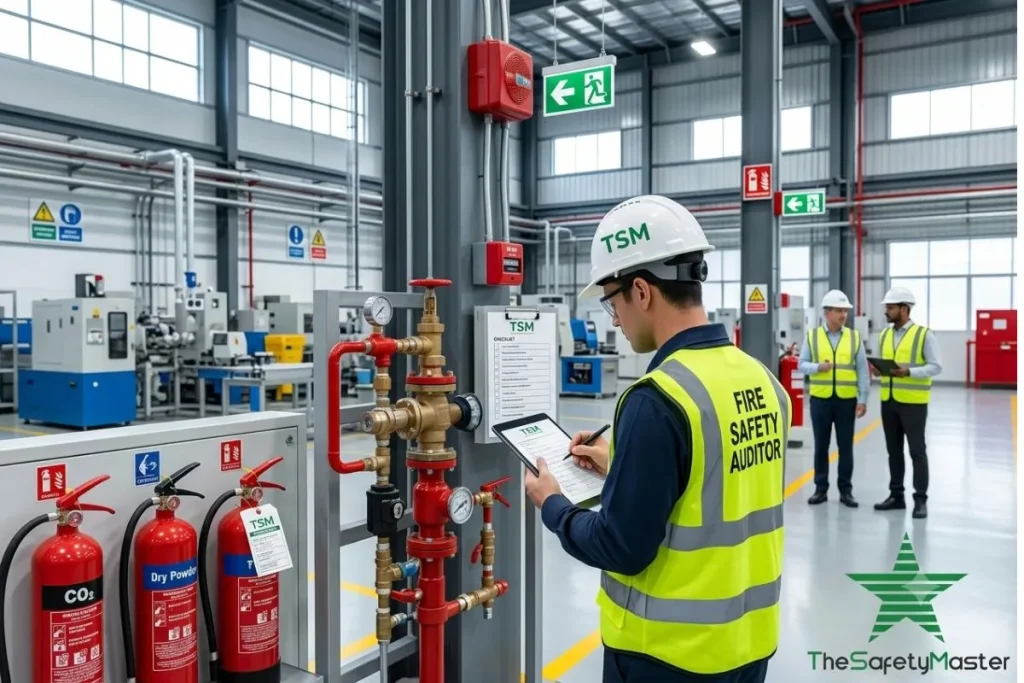
2. Fire Extinguishers and Firefighting Equipment
Portable firefighting equipment plays a critical role in controlling small fires before they spread.
Checklist
- Inspect extinguisher locations.
- Verify accessibility and visibility.
- Check pressure gauge readings.
- Ensure proper mounting and labeling.
- Confirm annual maintenance inspections.
- Verify suitability for specific fire classes.
- Inspect hose reels and firefighting accessories.
Common Types of Fire Extinguishers
- Water Extinguishers
- Foam Extinguishers
- CO₂ Extinguishers
- Dry Chemical Powder Extinguishers
- Clean Agent Extinguishers
Every employee should know how to use firefighting equipment safely.
3. Emergency Exit Routes and Evacuation Systems
Safe evacuation is essential during a fire emergency.
Checklist
- Verify emergency exits remain unobstructed.
- Check exit signage visibility.
- Ensure emergency lighting functions properly.
- Inspect evacuation maps.
- Verify assembly point locations.
- Check stairwells for accessibility.
- Confirm doors open in the direction of evacuation.
Questions to Ask
- Can occupants evacuate quickly?
- Are emergency exits clearly marked?
- Are evacuation drills conducted regularly?
Proper evacuation planning can significantly reduce casualties during emergencies.
4. Electrical Safety Inspection
Electrical faults are among the leading causes of workplace fires.
Checklist
- Inspect electrical panels.
- Check wiring conditions.
- Identify overloaded circuits.
- Verify grounding and earthing systems.
- Examine extension cord usage.
- Inspect electrical equipment maintenance records.
- Check for unauthorized electrical modifications.
Common Electrical Hazards
- Loose connections
- Damaged insulation
- Overloaded outlets
- Improper cable management
- Defective equipment
Electrical safety should always be a major focus during any fire prevention program.
5. Fire Suppression Systems
Automatic fire suppression systems help control fires before they become catastrophic.
Checklist
- Inspect sprinkler systems.
- Verify water supply adequacy.
- Check sprinkler heads for damage.
- Test control valves.
- Inspect fire pumps.
- Verify pressure levels.
- Review maintenance records.
Facilities with higher fire risks may require specialized suppression systems such as:
- Foam systems
- Gas suppression systems
- Water mist systems
- Deluge systems
Routine inspection ensures these systems function effectively when needed.
6. Storage and Handling of Flammable Materials
Improper storage of combustible and flammable materials significantly increases fire risk.
Checklist
- Inspect storage areas.
- Verify labeling of hazardous materials.
- Check segregation practices.
- Ensure adequate ventilation.
- Review inventory control procedures.
- Verify spill response arrangements.
- Inspect storage cabinets.
Common Flammable Materials
- Solvents
- Fuels
- Paints
- Chemicals
- Gases
Facilities should establish strict controls for storage and handling activities.
7. Housekeeping and Fire Prevention Practices
Good housekeeping is one of the simplest yet most effective fire prevention measures.
Checklist
- Remove combustible waste regularly.
- Maintain clean work areas.
- Control dust accumulation.
- Store materials properly.
- Keep access routes clear.
- Manage waste disposal procedures.
Poor housekeeping can rapidly increase fire load and contribute to fire spread.
8. Emergency Response Planning
An effective emergency response plan ensures personnel know how to react during a fire.
Checklist
- Review emergency response procedures.
- Verify emergency contact information.
- Inspect communication systems.
- Confirm responsibilities of emergency teams.
- Review incident reporting procedures.
- Conduct mock drills regularly.
The plan should clearly define:
- Evacuation procedures
- Firefighting responsibilities
- Emergency communication
- Rescue arrangements
- Medical response
Training and drills help employees respond confidently during emergencies.
9. Employee Training and Awareness
Employees are the first line of defense against workplace fires.
Checklist
- Verify fire safety induction programs.
- Review training records.
- Conduct awareness sessions.
- Train employees on extinguisher use.
- Educate staff on emergency procedures.
- Conduct evacuation drills.
Training Topics
- Fire hazards
- Emergency reporting
- Alarm response
- Safe evacuation
- Fire extinguisher operation
Well-trained employees can significantly reduce the impact of fire incidents.
10. Regulatory Compliance and Documentation
Documentation is a critical component of fire safety management.
Checklist
- Review fire safety policies.
- Verify inspection records.
- Check maintenance logs.
- Review training documentation.
- Verify permit compliance.
- Review audit reports and corrective actions.
Important Documents Include
- Fire risk assessments
- Equipment maintenance records
- Emergency plans
- Training records
- Fire drill reports
- Compliance certificates
Accurate documentation demonstrates compliance and supports continuous improvement.
Common Findings During Fire Safety Audits
Organizations frequently encounter issues such as:
- Blocked emergency exits
- Expired fire extinguishers
- Faulty alarm systems
- Inadequate employee training
- Poor housekeeping
- Missing emergency signage
- Electrical hazards
- Incomplete documentation
Addressing these findings promptly can greatly improve overall safety performance.
Best Practices for Conducting Fire Safety Audits
To maximize effectiveness:
- Conduct audits at regular intervals.
- Use qualified fire safety professionals.
- Document findings thoroughly.
- Prioritize corrective actions.
- Track improvement measures.
- Train employees continuously.
- Review compliance requirements regularly.
A proactive approach helps organizations stay prepared for potential emergencies.
Conclusion
A comprehensive Fire Safety Audit is essential for identifying hazards, ensuring regulatory compliance, and protecting people and assets from fire-related risks. By carefully inspecting fire detection systems, firefighting equipment, evacuation routes, electrical installations, suppression systems, hazardous material storage, housekeeping practices, emergency preparedness, employee training, and documentation, organizations can significantly reduce the likelihood and impact of fire incidents.
Regular audits should not be viewed merely as a compliance requirement but as an investment in workplace safety and business continuity. Implementing the checklist outlined above will help facilities strengthen their fire prevention strategies and maintain a safer environment for everyone. A well-planned Fire Safety Audit can make the difference between a minor incident and a major disaster.