Fire Safety Audit vs Fire Audit Service: Understanding the Key Differences

Behavior-Based Safety Consultant: The Key to Reducing Workplace Accidents
July 17, 2026
HAZOP Training for Engineers: Improve Process Safety and Risk Assessment Skills
July 20, 2026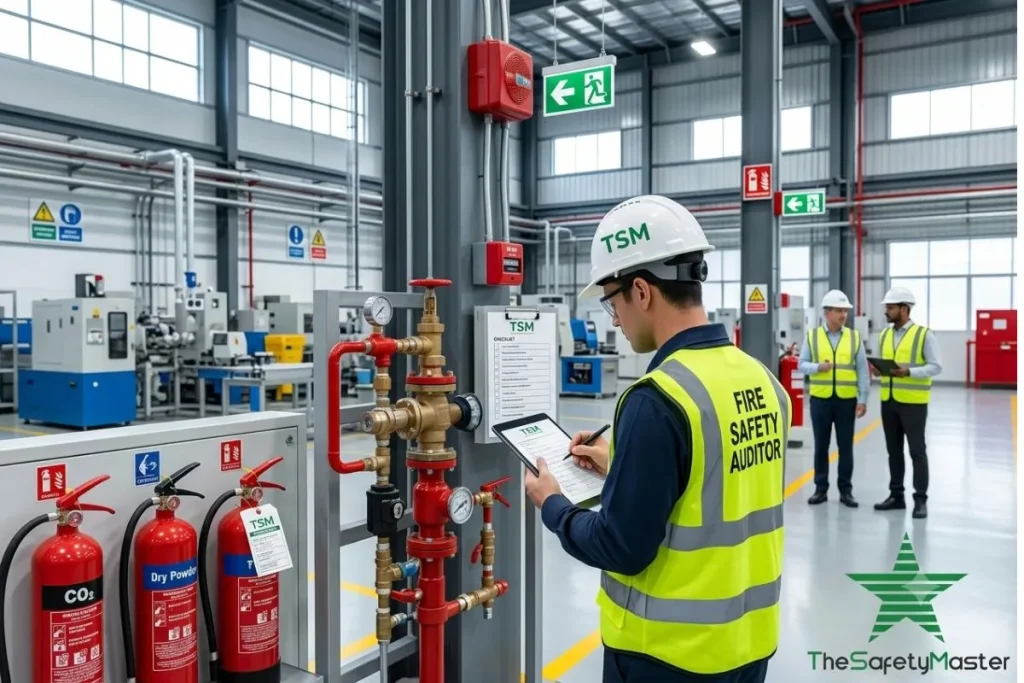
Fire incidents can cause severe damage to people, property, business operations, and the environment. Whether it is a manufacturing plant, commercial building, hospital, warehouse, or educational institution, fire safety should always be a top priority. Organizations often come across two commonly used terms: Fire Safety Audit and Fire Audit Service. While these terms are closely related, they serve different purposes and involve different approaches.
Understanding the difference between a Fire Safety Audit and a Fire Audit Service helps organizations improve compliance, reduce risks, and ensure the effectiveness of fire protection systems. This guide explains the key differences, benefits, audit requirements, checklists, templates, qualifications, and industry best practices.
What is a Fire Safety Audit?
A Fire Safety Audit is a systematic evaluation of a facility’s fire prevention measures, fire protection systems, emergency preparedness plans, and compliance with applicable fire safety regulations.
The primary objective of a Fire Safety Audit is to identify fire hazards, assess risks, verify compliance, and recommend corrective actions to improve safety.
A fire safety audit typically examines:
- Fire detection systems
- Fire alarm systems
- Fire extinguishers
- Fire hydrant systems
- Emergency exits
- Evacuation procedures
- Fire suppression systems
- Electrical safety measures
- Employee training records
- Emergency response plans
The audit provides a detailed assessment of how well an organization is prepared to prevent and respond to fire emergencies.
What is a Fire Audit Service?
A Fire Audit Service is a professional service provided by specialized fire safety consultants or auditing firms. It includes conducting inspections, risk assessments, compliance evaluations, and preparing audit reports.
A Fire Audit Service generally covers:
- Site inspections
- Fire risk assessment
- Compliance verification
- System testing
- Gap analysis
- Recommendations for improvements
- Preparation of audit reports
The service is performed by experienced fire safety professionals who evaluate the overall effectiveness of fire protection and emergency response systems.
Why Fire Safety Audits Are Important
Organizations benefit significantly from regular fire safety audits.
Improved Compliance
Audits help ensure compliance with:
- National Building Code (NBC)
- Factory Act requirements
- Local fire authority regulations
- Occupational health and safety standards
Reduced Fire Risks
Regular assessments identify:
- Potential ignition sources
- Unsafe practices
- Equipment deficiencies
- Emergency response weaknesses
Better Emergency Preparedness
Audits improve:
- Evacuation planning
- Emergency communication
- Employee awareness
- Fire response readiness
Asset Protection
Fire audits help protect:
- Human life
- Business operations
- Infrastructure
- Critical equipment
Fire Safety Audit Checklist for Industry
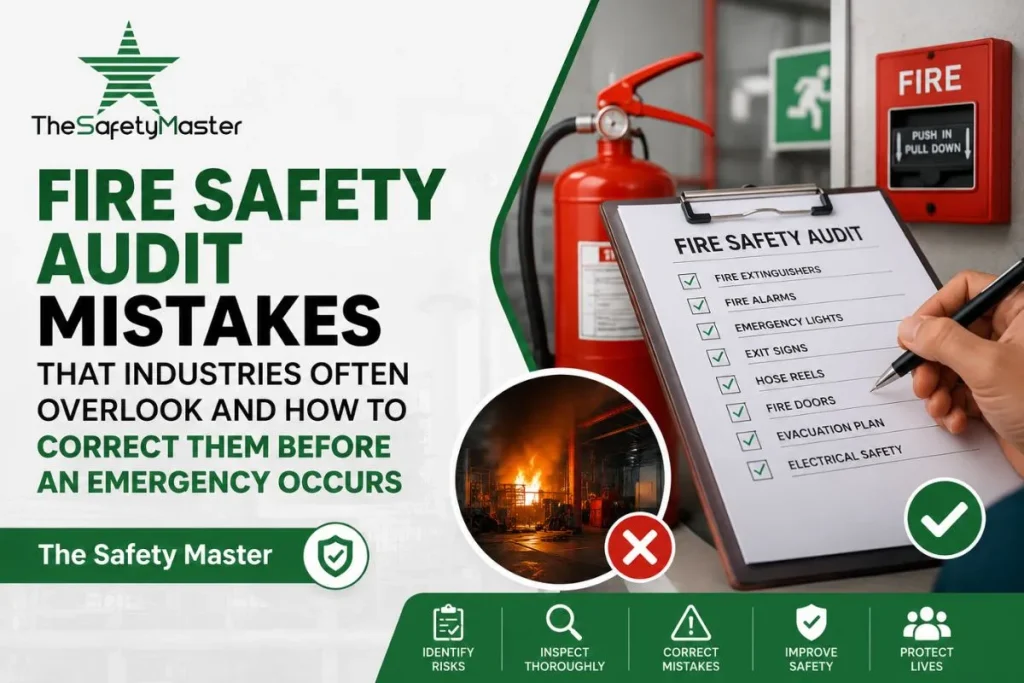
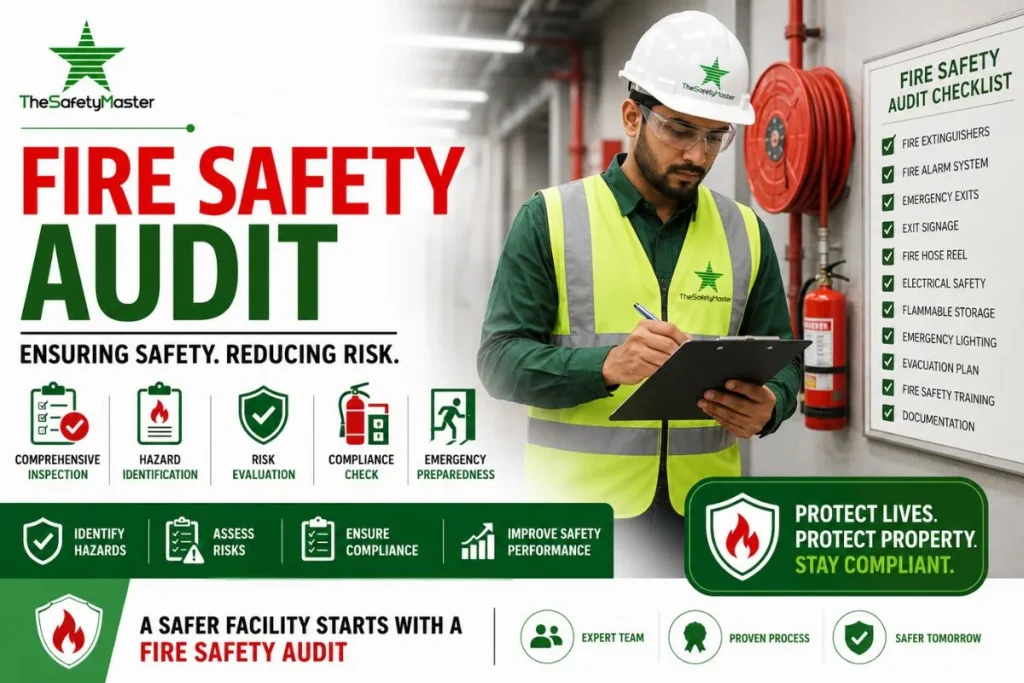
A comprehensive Fire safety audit checklist for industry should include the following elements:
Fire Protection Systems
- Fire extinguishers installed and maintained
- Fire hydrant systems operational
- Automatic sprinkler systems functional
- Fire pumps tested regularly
Fire Detection Systems
- Smoke detectors functioning properly
- Heat detectors operational
- Fire alarm systems tested periodically
Emergency Preparedness
- Emergency exits clearly marked
- Evacuation routes accessible
- Assembly points identified
- Emergency contact numbers displayed
Electrical Safety
- Electrical panels maintained
- Proper cable management
- Overload protection available
- Regular inspections conducted
Employee Training
- Fire safety training records maintained
- Mock drills conducted
- Emergency response teams trained
Documentation
- Fire safety procedures available
- Maintenance records updated
- Inspection logs maintained
Fire Safety Audit Template
A standard Fire safety audit template generally contains the following sections.
1. Facility Information
- Facility name
- Location
- Industry type
- Audit date
2. Audit Scope
- Areas inspected
- Systems evaluated
- Applicable standards
3. Findings
- Observations
- Compliance status
- Risk ratings
4. Recommendations
- Corrective actions
- Improvement opportunities
- Compliance measures
5. Conclusion
- Overall fire safety performance
- Priority actions
- Management recommendations
Using a standardized template helps maintain consistency and ensures all critical aspects are covered during the audit.
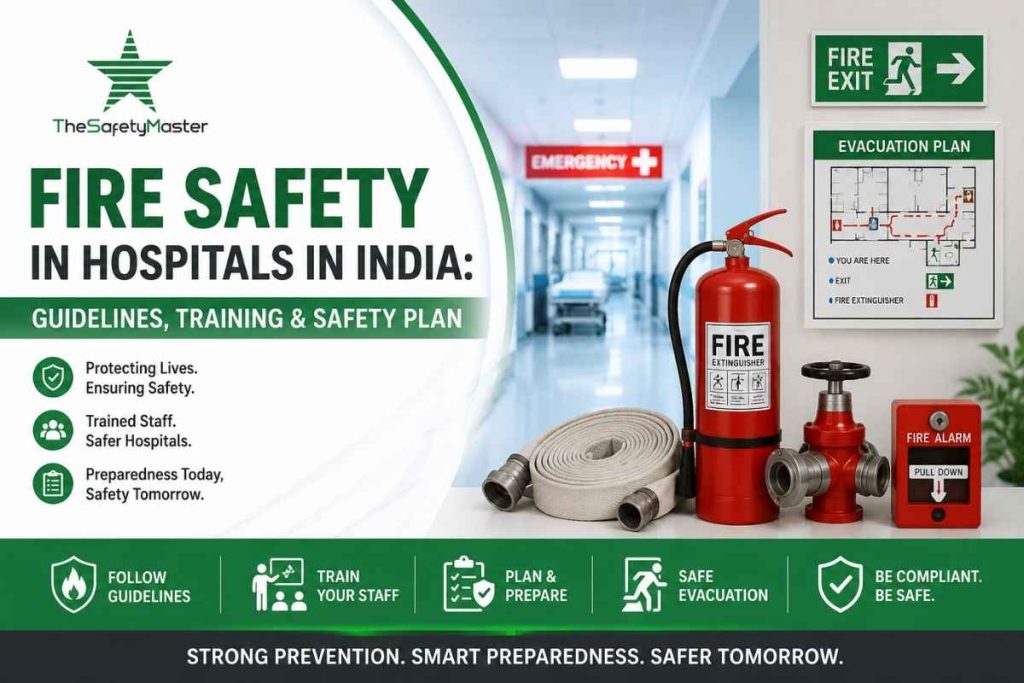
Fire Safety Audit Report for Hospital
Hospitals present unique fire safety challenges because of vulnerable occupants, critical medical equipment, and continuous operations.
A comprehensive Fire safety audit report for hospital should assess:
Patient Safety Measures
- Emergency evacuation procedures
- ICU and critical care evacuation plans
- Patient transport arrangements
Fire Protection Systems
- Sprinkler systems
- Smoke detectors
- Fire alarms
- Fire doors
Electrical and Medical Equipment Safety
- Medical gas systems
- Electrical installations
- Backup power systems
Staff Preparedness
- Fire response training
- Mock drill participation
- Emergency communication systems
The audit report should clearly identify risks and recommend improvements to ensure patient and staff safety.
Fire Safety Auditor Qualifications
Selecting qualified auditors is essential for conducting effective fire audits.
Educational Background
Most fire safety auditors possess qualifications in:
- Fire Engineering
- Safety Engineering
- Mechanical Engineering
- Industrial Safety
Professional Certifications
Common certifications include:
- Fire Safety Management
- NEBOSH
- IOSH
- Industrial Safety Certifications
Experience Requirements
Qualified auditors should have:
- Fire protection system knowledge
- Regulatory compliance expertise
- Risk assessment experience
- Industry-specific auditing experience
Understanding Fire safety auditor qualifications helps organizations select competent professionals for audits.
Fire Safety Audit Companies in India
Several organizations offer specialized fire safety auditing services across industries.
When evaluating Fire safety audit companies in India, consider:
Technical Expertise
- Industry experience
- Qualified auditors
- Knowledge of fire regulations
Service Scope
- Fire risk assessment
- Compliance audits
- Emergency preparedness evaluations
- Training services
Reporting Quality
- Detailed audit findings
- Practical recommendations
- Compliance guidance
Industry Reputation
- Client references
- Successful projects
- Professional credentials
Choosing the right audit company ensures accurate assessments and effective risk reduction strategies.
Common Fire Safety Audit Findings
Organizations frequently encounter the following issues during audits:
Equipment Deficiencies
- Expired fire extinguishers
- Non-functional detectors
- Poor maintenance practices
Emergency Exit Issues
- Blocked exits
- Missing signage
- Inadequate lighting
Documentation Gaps
- Missing inspection records
- Outdated emergency plans
- Incomplete training records
Training Deficiencies
- Lack of fire drills
- Inadequate employee awareness
- Poor emergency response planning
Addressing these issues significantly improves fire safety performance.
Best Practices for Effective Fire Safety Audits
Conduct Audits Regularly
Annual or periodic audits help maintain compliance and identify emerging risks.
Follow Standardized Procedures
Use approved checklists and templates for consistency.
Involve Key Stakeholders
Include management, safety teams, maintenance personnel, and emergency response teams.
Implement Corrective Actions
Audit findings should lead to measurable improvements and follow-up reviews.
Maintain Documentation
Accurate records demonstrate compliance and support continuous improvement.
Conclusion
A Fire Safety Audit and a Fire Audit Service are closely connected but serve different roles in fire risk management. A Fire Safety Audit focuses on evaluating fire protection systems, compliance, and emergency preparedness, while a Fire Audit Service refers to the professional service used to conduct that evaluation.
Organizations across industries, hospitals, commercial buildings, and manufacturing facilities should conduct regular audits using a proper Fire safety audit checklist for industry and standardized Fire safety audit template to ensure compliance and safety. Working with qualified professionals possessing the right Fire safety auditor qualifications and partnering with reputable Fire safety audit companies in India can significantly improve fire prevention and emergency preparedness efforts.
For professional Fire Safety Audit and Fire Audit Service solutions, organizations can rely on The Safety Master to identify risks, strengthen compliance, and create safer workplaces through comprehensive fire safety assessments and expert recommendations.
FAQs
What is the difference between a Fire Safety Audit and a Fire Audit Service?
A Fire Safety Audit is the evaluation process, while a Fire Audit Service refers to the professional service used to conduct the audit and provide recommendations.
How often should a Fire Safety Audit be conducted?
Most organizations should conduct audits annually or as required by regulatory authorities and industry standards.
What is included in a Fire Safety Audit Checklist for Industry?
It typically includes fire protection systems, emergency exits, fire alarms, hydrants, electrical safety, training records, and emergency preparedness measures.
Who can perform a Fire Safety Audit?
Qualified fire safety professionals, certified auditors, safety consultants, and experienced fire engineers can perform fire safety audits.
Why is a Fire Safety Audit Report important for hospitals?
Hospitals have unique fire risks due to patient care operations. Audit reports help ensure patient safety, regulatory compliance, and emergency preparedness.
How do I choose the best Fire Safety Audit Company in India?
Look for qualified auditors, industry experience, strong technical expertise, comprehensive reporting, and a proven track record of successful fire safety projects.