Behavior-Based Safety Consultant: The Key to Reducing Workplace Accidents

Fire Safety Audit Mistakes That Industries Often Overlook and How to Correct Them Before an Emergency Occurs
July 16, 2026
Fire Safety Audit vs Fire Audit Service: Understanding the Key Differences
July 18, 2026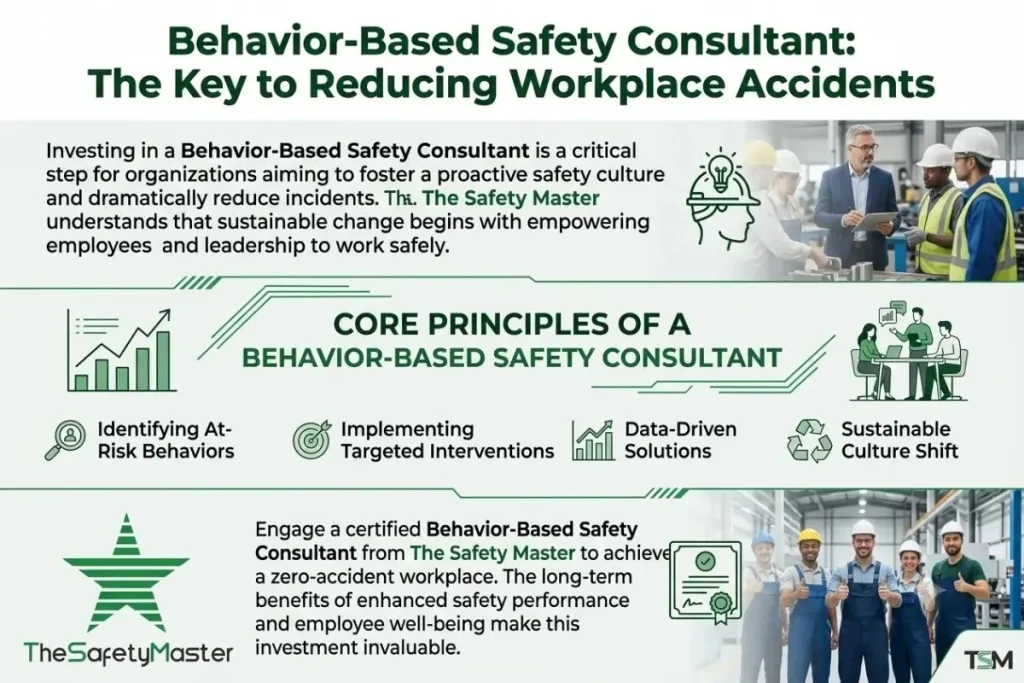
Workplace safety is often viewed through the lens of compliance checklists, protective gear, and engineering controls. However, statistics consistently reveal that the vast majority of industrial accidents are rooted in human behavior rather than equipment failure. To bridge this critical gap, organizations are shifting their focus from reactive measures to proactive behavioral changes. Partnering with a specialized Behavior-Based Safety Consultant has emerged as the most effective strategy to foster a sustainable, zero-harm culture.
At The Safety Master, we help organizations look beyond physical hazards to analyze, understand, and transform the daily habits of their workforce.
The Safety Master – Pioneering Industrial Safety Solutions. Source: www.thesafetymaster.com
Understanding Behavior-Based Safety (BBS)
Behavior-Based Safety (BBS) is a systematic approach that focuses on what people do, analyzes why they do it, and applies a research-backed intervention strategy to improve safety behaviors.
What is the Core Philosophy of BBS?
Rather than waiting for an incident to occur and assigning blame, BBS seeks to observe everyday actions, identify safe versus unsafe habits, and reinforce positive behaviors. It relies heavily on peer-to-peer feedback and active worker participation.
Why Modern Industries Need a Behavior-Based Safety Consultant
Developing and implementing a successful BBS program is not a DIY project. It requires deep psychological insight, data-driven methodologies, and unbiased external observation.
Unbiased Safety Appraisals
Internal teams often develop “safety blindness” to routine hazards. An external Behavior-Based Safety Consultant brings fresh, highly trained eyes to your facility, identifying subtle behavioral risks that your team might overlook daily.
Why Modern Industries Need a Behavior-Based Safety Consultant
Developing and implementing a successful BBS program is not a DIY project. It requires deep psychological insight, data-driven methodologies, and unbiased external observation.
Unbiased Safety Appraisals
Internal teams often develop “safety blindness” to routine hazards. An external Behavior-Based Safety Consultant brings fresh, highly trained eyes to your facility, identifying subtle behavioral risks that your team might overlook daily.
Custom-Tailored BBS Frameworks
No two industrial facilities operate the same way. A consultant doesn’t offer a cookie-cutter template; they design custom observation checklists and feedback loops that align perfectly with your operational workflow.
Overcoming “Us vs. Them” Dynamics
A common roadblock to safety initiatives is the friction between frontline workers and management. Consultants act as neutral facilitators, building trust with workers and ensuring that the BBS program is viewed as a supportive tool rather than a disciplinary mechanism.
How The Safety Master Implements BBS in Your Workplace
Our approach at The Safety Master focuses on creating sustainable, long-term safety habits through a structured process:
1. The Assessment and Baseline Phase
We start by studying your existing safety protocols, incident history, and overall organizational culture. This helps us pinpoint high-risk behaviors and the underlying triggers that cause them.
2. Observer Training and Workforce Engagement
We train select frontline employees to become peer observers. They learn how to conduct non-threatening, anonymous observations and deliver constructive, positive feedback to their colleagues.
3. Data-Driven Intervention and Continuous Feedback
Observations are logged and analyzed to track trends. If the data shows a spike in a specific unsafe behavior (like bypassing lockout-tagout procedures to save time), we work together to eliminate the systemic barriers driving that decision.
The Tangible Benefits of Behavioral Safety
Investing in a behavioral safety framework yields substantial returns for both your workforce and your bottom line:
- Drastic Reduction in Incident Rates: Shifting focus to leading indicators (behaviors) stops accidents before they can materialize.
- Enhanced Employee Morale: When workers feel actively involved in designing their own safety practices, ownership and job satisfaction rise.
- Reduced Insurance and Compliance Costs: Fewer accidents mean lower workers’ compensation claims and zero regulatory fines.
Choosing the Right Safety Partner
Ultimately, working with a certified Behavior-Based Safety Consultant is the single most impactful decision you can make to guarantee that your employees return home safely at the end of every shift.
At The Safety Master, we combine decades of industrial safety expertise with cutting-edge psychological strategies to deliver programs that stick. Let us help you transition from a culture of compliance to a culture of genuine care.
Frequently Asked Questions (FAQs)
What is the main difference between traditional safety and Behavior-Based Safety?
Traditional safety focuses primarily on engineering controls, policies, and reactive discipline after an accident. Behavior-Based Safety (BBS) is proactive, focusing on observing daily employee habits, understanding the “why” behind unsafe acts, and encouraging positive reinforcement.
Does a BBS program replace standard safety audits?
No. BBS is designed to complement your existing safety protocols. While audits ensure your physical environment and equipment are compliant, BBS ensures that your workforce is actively engaging with those systems safely.
How long does it take to see results from a BBS program?
While initial improvements in safety awareness can be observed within the first few weeks, establishing a fully mature, self-sustaining behavioral safety culture typically takes six to twelve months of consistent implementation.