HIRA in Safety: Complete Guide to Hazard Identification, Risk Assessment, Process and Best Practices

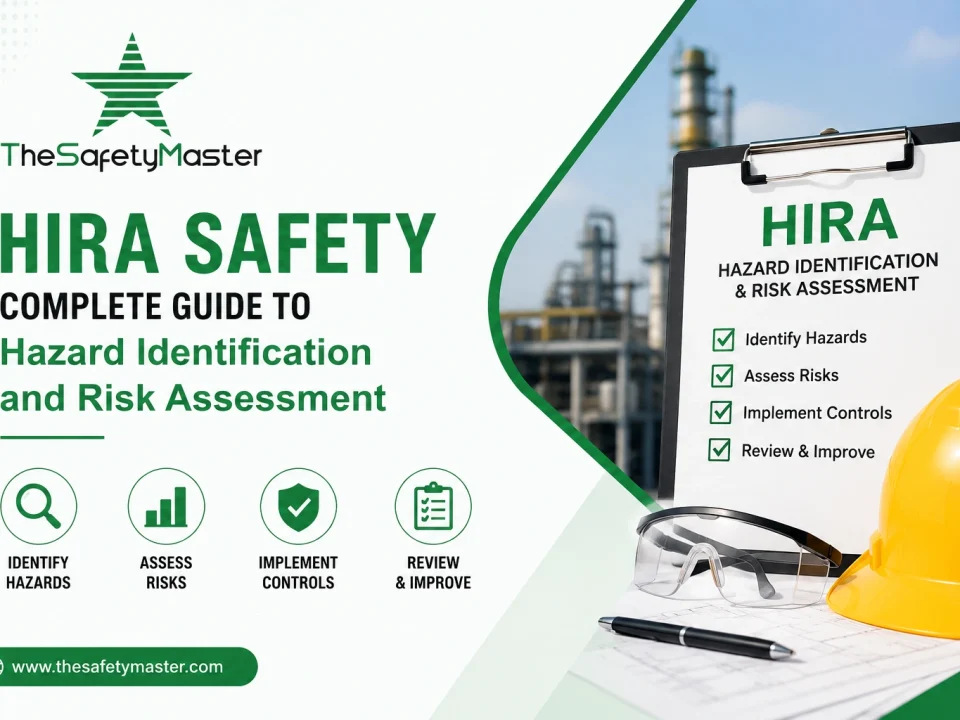
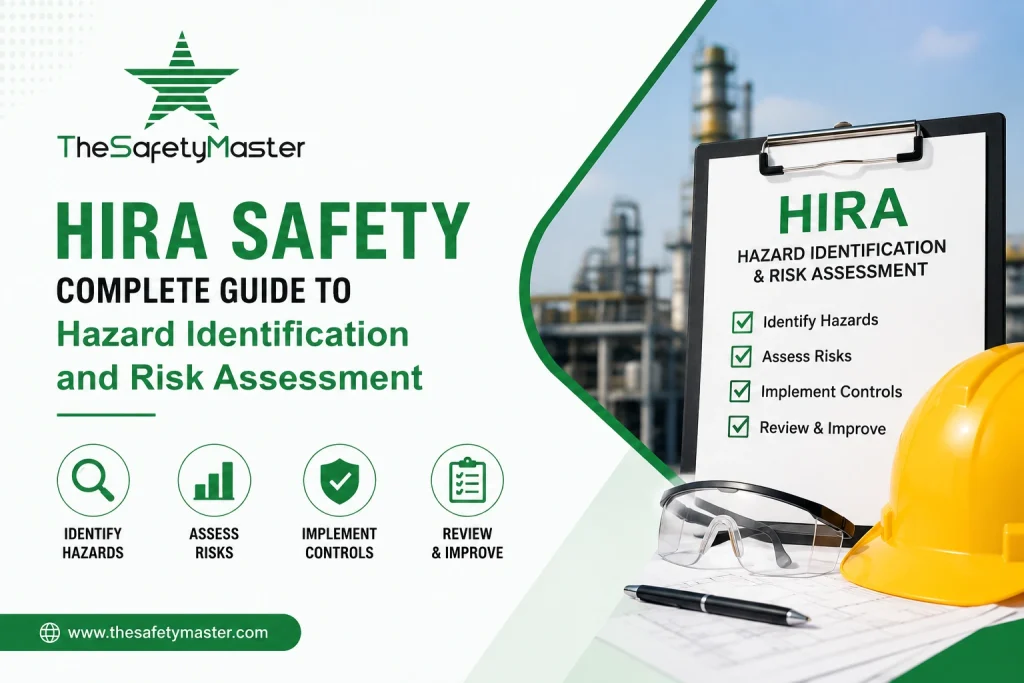
HIRA Safety: Complete Guide to Hazard Identification and Risk Assessment
August 24, 2026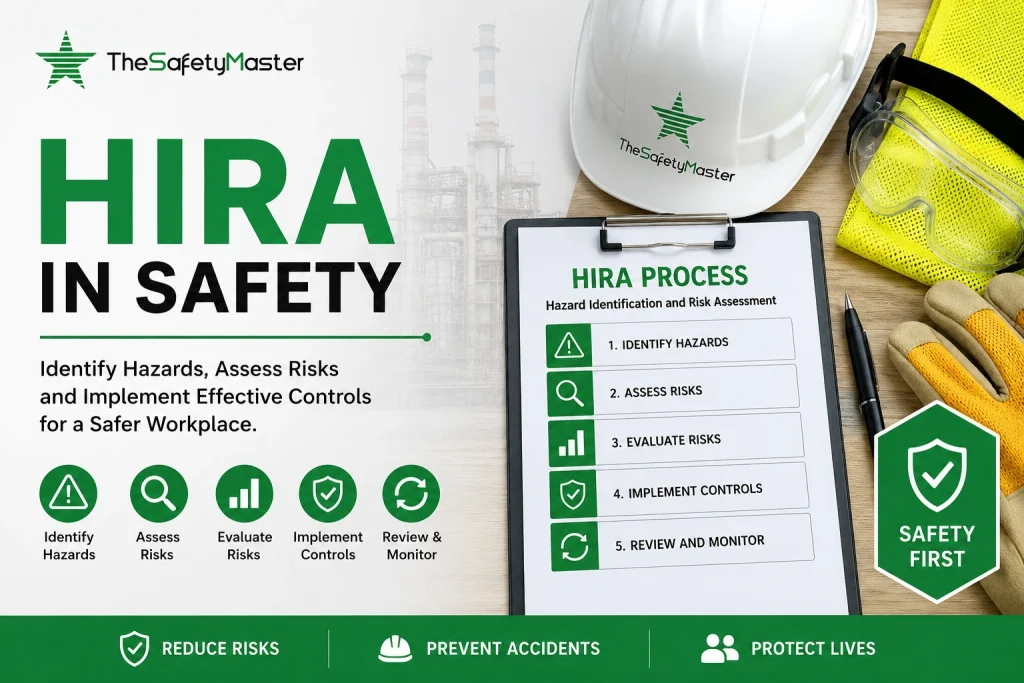
HIRA (Hazard Identification and Risk Assessment) is a systematic approach used to identify workplace hazards, evaluate the risks associated with them, and determine suitable control measures. HIRA helps organizations prevent accidents, protect employees, improve safety performance, and create a safer working environment.
Whether you work in manufacturing, construction, oil and gas, chemicals, power plants, or other high-risk industries, an effective HIRA process is an important part of workplace safety management.
What Is HIRA in Safety?
HIRA stands for Hazard Identification and Risk Assessment. It is a structured process for identifying potential hazards before they cause an incident and assessing the level of risk associated with those hazards.
The process generally involves:
- Identifying hazards
- Identifying people who may be exposed
- Assessing the likelihood and severity of harm
- Determining the risk level
- Implementing appropriate control measures
- Monitoring and reviewing the controls
The main purpose of HIRA is to reduce workplace risks to an acceptable level through planned and effective safety controls.
Why Is HIRA Important in Workplace Safety?
A workplace can contain many hazards, including electrical, mechanical, chemical, physical, ergonomic, fire, and environmental hazards. Without proper assessment, these hazards can lead to injuries, property damage, production losses, or environmental incidents.
Major Benefits of HIRA
1. Identifies Workplace Hazards
HIRA helps safety teams identify existing and potential hazards associated with workplace activities, equipment, materials, and processes.
2. Helps Prevent Accidents
By identifying hazards before an incident occurs, organizations can introduce preventive measures and reduce the likelihood of accidents.
3. Supports Better Risk Control
HIRA helps organizations prioritize risks and focus resources on hazards that require immediate attention.
4. Improves Safety Awareness
The HIRA process encourages employees and supervisors to understand the hazards associated with their work and follow appropriate precautions.
5. Supports Legal and Organizational Compliance
A documented risk assessment can help organizations demonstrate that workplace hazards are being systematically identified and controlled.
HIRA Process: Step-by-Step Guide
An effective HIRA process should be systematic and documented.
Step 1: Define the Activity or Work Area
Start by clearly defining the activity, process, equipment, workplace, or task that needs to be assessed.
For example, the assessment may cover:
- Welding operations
- Working at height
- Material handling
- Chemical handling
- Electrical maintenance
- Confined space entry
- Machine operation
Step 2: Identify Hazards
Identify anything that has the potential to cause harm.
Common Types of Hazards
- Physical hazards
- Chemical hazards
- Electrical hazards
- Mechanical hazards
- Biological hazards
- Fire and explosion hazards
- Ergonomic hazards
- Environmental hazards
- Work-at-height hazards
- Confined-space hazards
Step 3: Identify People at Risk
Determine who could be affected by each hazard.
This may include:
- Employees
- Contractors
- Visitors
- Maintenance personnel
- Operators
- Supervisors
- Nearby members of the public
Step 4: Assess the Risk
Once hazards are identified, assess the associated risk by considering factors such as likelihood and severity.
A commonly used approach is:
Risk = Likelihood × Severity
For example, if a hazard has a likelihood rating of 4 and a severity rating of 5:
Risk Score = 4 × 5 = 20
The organization can then classify the risk according to its approved risk matrix.
Step 5: Determine Risk Controls
After assessing the risk, determine appropriate control measures.
The Hierarchy of Controls is commonly used to select effective controls.
Elimination
Remove the hazard completely where possible.
Substitution
Replace a hazardous material, process, or activity with a safer alternative.
Engineering Controls
Use physical or technical solutions to isolate people from hazards.
Examples include machine guarding, ventilation systems, barriers, and interlocks.
Administrative Controls
Use procedures, training, warning signs, permits, job rotation, and safe work instructions.
Personal Protective Equipment
Use suitable PPE such as helmets, gloves, safety shoes, eye protection, hearing protection, and respiratory protection where required.
Step 6: Implement Control Measures
Controls identified during the assessment should be implemented within an agreed timeframe.
Responsibilities should be assigned to appropriate personnel, and completion should be monitored.
Step 7: Monitor and Review
HIRA should not be treated as a one-time activity.
Review the assessment when:
- A new process is introduced
- Equipment or machinery changes
- Materials change
- An accident or near miss occurs
- Workplace conditions change
- New hazards are identified
- Existing controls are found to be ineffective
HIRA Risk Assessment Matrix
A risk matrix can help organizations prioritize hazards.
A simple matrix may categorize risks as:
| Risk Level | Typical Action |
|---|---|
| Low | Monitor and maintain controls |
| Medium | Improve controls where necessary |
| High | Take corrective action promptly |
| Critical | Stop or restrict the activity until adequate controls are established |
Organizations should use a risk matrix appropriate to their operations and internal risk-management procedure.
HIRA Example
Consider a worker performing maintenance on an elevated platform.
Hazard
The worker could fall from height.
Possible Consequence
Serious injury or fatality.
Existing Controls
- Guardrails
- Safe access
- Work-at-height procedure
- Inspection of equipment
- Appropriate PPE
Additional Controls
- Verify anchorage points
- Use suitable fall protection
- Conduct pre-job briefing
- Ensure competent supervision
- Inspect the work area before starting
The HIRA should document the hazard, risk rating, existing controls, additional controls, responsible person, and target completion date.
Best Practices for Effective HIRA
Involve Employees
Workers who perform the task often understand practical hazards that may not be obvious during a desk-based assessment. Their participation can make HIRA more realistic and effective.
Focus on Significant Risks
Do not treat every hazard as having the same importance. Prioritize hazards that have the potential to cause serious injury, fatality, major property damage, or environmental impact.
Use Clear Descriptions
Avoid vague statements such as “unsafe condition.” Clearly describe the hazard, cause, potential consequence, and affected personnel.
Apply the Hierarchy of Controls
Do not rely only on PPE. Consider elimination, substitution, engineering controls, and administrative controls before depending on PPE as the primary control.
Keep HIRA Documents Updated
A HIRA should reflect current workplace conditions. Old assessments may become ineffective when processes, equipment, materials, or working conditions change.
Communicate the Findings
HIRA findings should be communicated to employees and contractors involved in the activity. Toolbox talks and pre-job briefings can help workers understand important controls.
Common HIRA Mistakes to Avoid
1. Identifying Hazards Without Assessing Risk
Simply listing hazards is not enough. Each significant hazard should be assessed and prioritized.
2. Using Generic HIRA Documents
A generic assessment may not reflect actual workplace conditions. HIRA should be task-specific and location-specific where appropriate.
3. Over-Reliance on PPE
PPE is important, but it should not automatically be the first or only control measure.
4. Ignoring Non-Routine Activities
Maintenance, emergency response, startup, shutdown, cleaning, and temporary work can introduce additional risks.
5. Failing to Review HIRA
A risk assessment can become outdated when workplace conditions change. Regular review is therefore essential.
HIRA vs Risk Assessment
HIRA and risk assessment are closely connected. HIRA focuses on identifying hazards and evaluating the risks associated with them, while risk assessment is the broader systematic process of evaluating and controlling risks.
In practice, organizations often use HIRA as an important component of their overall occupational health and safety risk-management system.
Who Should Conduct HIRA?
HIRA should be conducted by competent personnel who understand the work activity, hazards, and applicable safety requirements.
Depending on the organization, the HIRA team may include:
- Safety professionals
- Process engineers
- Maintenance personnel
- Operations personnel
- Supervisors
- Subject-matter experts
- Experienced workers
- Contractors, where relevant
A multidisciplinary team can provide a broader understanding of workplace hazards.
HIRA Documentation
A good HIRA document typically includes:
- Activity or task
- Hazard identification
- Potential consequences
- Persons exposed
- Existing controls
- Likelihood rating
- Severity rating
- Initial risk rating
- Additional control measures
- Residual risk rating
- Responsible person
- Target completion date
- Review information
Proper documentation makes it easier to track corrective actions and demonstrate that risks are being managed systematically.
Role of HIRA in a Safety Management System
HIRA can support several safety-management activities, including:
- Job safety planning
- Permit-to-work systems
- Emergency preparedness
- Contractor safety management
- Training and awareness
- Incident prevention
- Safety inspections
- Management of change
- Operational control
When HIRA is integrated into daily safety practices rather than treated as paperwork, it can become a powerful tool for proactive risk management.
Frequently Asked Questions About HIRA
Q-What is HIRA in safety?
HIRA means Hazard Identification and Risk Assessment. It is a systematic process used to identify workplace hazards, evaluate their risks, and establish suitable control measures.
Q-What are the 5 steps of HIRA?
The exact process can vary by organization, but a common approach is to identify hazards, identify people at risk, assess risks, determine controls, and monitor or review the controls.
Q-What is the formula for HIRA risk assessment?
A commonly used formula is:
Risk = Likelihood × Severity
Organizations may use different scoring systems and risk matrices depending on their procedures.
Q-What are the main types of hazards identified in HIRA?
HIRA may consider physical, chemical, electrical, mechanical, biological, ergonomic, fire, explosion, environmental, work-at-height, and confined-space hazards, among others.
Q-Is HIRA mandatory?
Requirements vary according to the country, industry, applicable legislation, and organizational standards. Organizations should identify the risk-assessment requirements applicable to their specific operations and legal framework.
Q-Who prepares a HIRA?
HIRA should be prepared by competent personnel with appropriate knowledge of the activity and its hazards. In higher-risk operations, a multidisciplinary team is often beneficial.
Q-How often should HIRA be reviewed?
There is no single review interval suitable for every workplace. HIRA should be reviewed periodically and whenever significant changes, incidents, new hazards, or ineffective controls require reassessment.
Q-What is the difference between HIRA and HAZOP?
HIRA is a broader hazard-identification and risk-assessment approach that can be applied to many workplace activities. HAZOP is a structured process hazard analysis technique commonly used to systematically examine process deviations in process industries.
Conclusion
HIRA is an essential part of proactive workplace risk management. By systematically identifying hazards, assessing risks, applying the hierarchy of controls, and continuously reviewing control measures, organizations can reduce the likelihood and severity of workplace incidents. An effective HIRA process should involve competent personnel, employee participation, clear documentation, and regular review so that risk controls remain relevant to actual working conditions.