Fire Risk Assessment: Complete Guide for Workplace Safety & Compliance
Process Safety Management: A Complete Guide to PSM, 14 Elements, Training & Industrial Safety
August 20, 2026
HAZOP Certification Course in India: Complete Guide to Training, Eligibility and Career Opportunities
August 31, 2026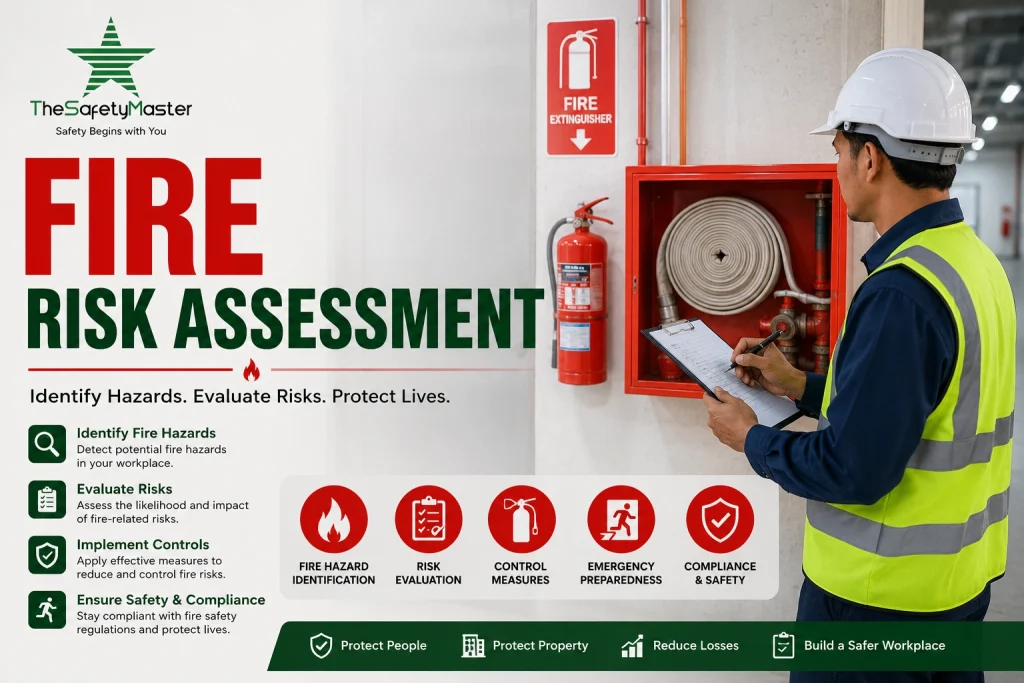
Fire Risk Assessment is an essential process for identifying fire hazards, evaluating risks, protecting employees and visitors, and maintaining a safe workplace. A well-planned assessment helps organizations understand where fires could start, who may be at risk, and what preventive and emergency measures are required. The Safety Master helps organizations strengthen fire prevention, risk control, emergency preparedness, and workplace safety through professional safety solutions.
A fire can spread rapidly and cause injuries, fatalities, property damage, production losses, and business interruption. For this reason, organizations should not treat fire safety as only an emergency-response activity. Fire prevention starts with identifying hazards, assessing the level of risk, implementing suitable controls, and regularly reviewing those controls.
This complete guide explains the importance of fire risk assessment, the assessment process, common workplace fire hazards, checklist requirements, industrial fire risks, and practical measures for improving fire safety and compliance.
What Is a Fire Risk Assessment?
A fire risk assessment is a systematic process used to identify potential fire hazards, determine who could be harmed, evaluate the likelihood and consequences of a fire, and establish measures to reduce the risk.
A typical assessment considers:
- Sources of ignition
- Flammable materials
- Electrical equipment
- Combustible waste
- Fire detection systems
- Fire extinguishing equipment
- Emergency exits
- Evacuation procedures
- Emergency lighting
- Employee awareness and training
- Maintenance of fire protection systems
The objective is not simply to identify hazards but to ensure that appropriate controls are implemented and maintained.
Why Is Fire Risk Assessment Important?
Fire risk assessment supports both workplace safety and organizational resilience. It can help businesses:
Protect Employees and Visitors
Identifying hazards and improving emergency arrangements can reduce the likelihood of fire-related injuries and fatalities.
Prevent Property and Equipment Damage
Early identification of ignition sources, combustible materials, and unsafe processes can reduce the probability of serious fire incidents.
Improve Emergency Preparedness
A good assessment identifies whether emergency exits, alarms, evacuation procedures, emergency lighting, and fire-fighting equipment are suitable.
Support Safety Compliance
Organizations need appropriate fire safety arrangements based on their workplace, activities, hazards, and applicable legal requirements.
Reduce Business Interruption
Fire incidents can stop production, damage critical equipment, destroy inventory, and affect customers. Effective prevention and preparedness can reduce these consequences.
Fire Risk Assessment Process
A structured assessment generally follows several important stages.
1. Identify Fire Hazards
Start by identifying anything that could cause or contribute to a fire.
Common ignition sources include:
- Electrical faults
- Hot surfaces
- Open flames
- Welding and hot work
- Smoking materials
- Static electricity
- Heating equipment
- Machinery
- Chemical reactions
Combustible materials may include paper, packaging, plastics, fuels, solvents, oils, gases, textiles, and other flammable substances.
2. Identify People at Risk
Determine who could be exposed if a fire occurs.
This may include:
- Employees
- Contractors
- Visitors
- Customers
- Maintenance personnel
- Security staff
- Cleaning workers
- People working alone
- People who may require additional assistance during evacuation
3. Evaluate Fire Risks
Assess the likelihood of a fire and the potential consequences.
A basic risk evaluation can consider:
Risk = Likelihood × Consequence
Organizations can use their established risk matrix to categorize risks as low, medium, high, or critical.
4. Implement Control Measures
Controls should focus on preventing fires and limiting their consequences.
Examples include:
- Removing unnecessary combustible materials
- Controlling ignition sources
- Maintaining electrical systems
- Storing flammable substances correctly
- Installing suitable fire detection systems
- Providing appropriate extinguishers
- Maintaining emergency exits
- Establishing emergency procedures
- Conducting employee training
5. Record Findings
Document significant hazards, existing controls, additional actions, responsible persons, and target completion dates.
6. Review and Update
A fire assessment should be reviewed periodically and whenever significant changes occur, such as:
- New machinery
- Building modifications
- Changes in production
- New chemicals
- Changes in occupancy
- Fire incidents or near misses
- Changes to emergency arrangements
Fire Safety Risk Assessment for Different Workplaces
A Fire Safety Risk Assessment should reflect the hazards and activities of each workplace rather than relying on a generic assessment.
Office Buildings
Important considerations include electrical equipment, kitchens, server rooms, paper storage, emergency exits, occupancy, and evacuation arrangements.
Warehouses
Warehouses may contain large quantities of combustible packaging, plastics, chemicals, pallets, and stored products. Storage height, aisle arrangements, ignition sources, and fire detection should be carefully evaluated.
Construction Sites
Construction activities can introduce temporary fire hazards through hot work, temporary electrical systems, fuel storage, combustible materials, and incomplete fire protection systems.
Commercial Buildings
Retail stores, hotels, restaurants, and other commercial premises should consider occupancy levels, kitchens, electrical systems, storage areas, emergency exits, and public evacuation.
Workplace Fire Risk Assessment
A Workplace Fire Risk Assessment should consider the complete work environment, including normal operations and non-routine activities.
Particular attention should be given to:
Electrical Safety
Damaged cables, overloaded sockets, faulty equipment, poor maintenance, and unsuitable electrical installations can create ignition sources.
Flammable Materials
Flammable liquids, gases, aerosols, and other combustible materials should be appropriately stored, handled, and controlled.
Housekeeping
Accumulated waste, packaging, dust, oily rags, and other combustible materials can increase fire risk.
Hot Work
Welding, cutting, grinding, brazing, and other hot-work activities can produce sparks and high temperatures. A suitable hot-work control process should be established.
Emergency Routes
Escape routes must remain accessible and suitable for the people using the facility.
Industrial Fire Risk Assessment
An Industrial Fire Risk Assessment requires additional attention because industrial facilities may involve complex processes, high-energy equipment, hazardous substances, pressure systems, storage areas, and large-scale production operations.
Important areas may include:
- Process equipment
- Boilers and furnaces
- Electrical substations
- Fuel storage
- Chemical storage
- LPG or other gas systems
- Flammable liquid handling
- Dust-generating processes
- Hot work
- Warehousing
- Loading and unloading areas
- Fire water systems
- Fire pumps
- Emergency shutdown systems
- Fire detection and alarm systems
Industrial assessments should consider both individual hazards and how different systems or activities could interact during an emergency.
Fire Hazard Assessment
A Fire Hazard Assessment focuses specifically on identifying conditions that could cause or support fire.
Common fire hazards include:
Ignition Sources
Electrical faults, hot surfaces, flames, sparks, welding, static electricity, and mechanical friction.
Fuel Sources
Paper, wood, plastics, packaging, oils, solvents, gases, chemicals, and other combustible materials.
Oxygen Sources
Normal atmospheric oxygen can support combustion, while oxygen-enriched environments can significantly increase fire severity.
Unsafe Work Practices
Poor housekeeping, unauthorized hot work, improper chemical handling, smoking in prohibited areas, and poor storage practices can increase fire risk.
The assessment should identify the hazard, determine its risk level, establish controls, and assign responsibility for corrective action.
Fire Risk Assessment Services
Professional Fire Risk Assessment Services can help organizations conduct structured assessments and identify practical improvements.
Depending on the workplace, services may include:
- Workplace fire risk assessment
- Industrial fire risk assessment
- Fire hazard identification
- Fire safety compliance review
- Emergency evacuation assessment
- Fire protection system review
- Fire safety documentation
- Fire safety training
- Corrective action recommendations
- Follow-up assessment
A professional assessment can be particularly valuable for complex industrial facilities, large commercial buildings, warehouses, and workplaces with hazardous materials or high fire loads.
How to Improve Fire Safety After an Assessment
Completing an assessment is only the beginning. Organizations should convert findings into practical actions.
Establish an Action Plan
Prioritize high-risk findings and assign responsibility for corrective actions.
Maintain Fire Protection Equipment
Fire alarms, extinguishers, fire doors, emergency lighting, fire pumps, suppression systems, and other equipment should be inspected and maintained according to applicable requirements.
Train Employees
Employees should understand:
- How to report a fire
- How to raise an alarm
- Emergency evacuation procedures
- Assembly-point arrangements
- Basic extinguisher awareness where appropriate
- How to prevent common workplace fire hazards
Conduct Emergency Drills
Regular drills can help identify problems with evacuation routes, communication, assembly arrangements, and employee response.
Monitor Corrective Actions
Safety teams should verify that identified deficiencies have been closed effectively rather than simply marked as completed.
Common Fire Risk Assessment Mistakes
Organizations often make avoidable mistakes during fire assessments.
Using a Generic Assessment
Every workplace has different processes, layouts, materials, and occupancy conditions. The assessment should be site-specific.
Ignoring Non-Routine Work
Maintenance, shutdowns, construction, hot work, and temporary activities can introduce significant fire hazards.
Focusing Only on Fire Extinguishers
Fire extinguishers are important, but fire safety also depends on prevention, detection, evacuation, emergency planning, and maintenance.
Not Updating the Assessment
Changes to equipment, processes, materials, building layouts, or occupancy can change fire risk.
Failing to Close Corrective Actions
Identifying a hazard without implementing corrective action does not adequately control the risk.
Benefits of a Regular Fire Risk Assessment
Regular assessment can help organizations:
- Identify fire hazards early.
- Reduce workplace fire risks.
- Improve emergency preparedness.
- Protect employees and visitors.
- Strengthen fire safety management.
- Improve maintenance of fire protection systems.
- Reduce potential property damage.
- Support applicable compliance requirements.
- Improve employee awareness.
- Reduce business interruption following incidents.
Frequently Asked Questions
What is a Fire Risk Assessment?
A Fire Risk Assessment is a systematic evaluation of fire hazards, people at risk, existing controls, and emergency arrangements. Its purpose is to identify and reduce the likelihood and consequences of workplace fires.
What are the 5 steps of a fire risk assessment?
The commonly used stages are identifying fire hazards, identifying people at risk, evaluating and controlling risks, recording findings and implementing actions, and reviewing the assessment regularly.
What should be included in a Fire Risk Assessment Checklist?
A checklist should cover ignition sources, combustible materials, electrical safety, flammable substances, fire detection, extinguishers, fire protection systems, emergency exits, evacuation procedures, emergency lighting, training, drills, and maintenance.
Who needs a Workplace Fire Risk Assessment?
Most workplaces can benefit from a documented fire risk assessment. The scope and level of assessment should reflect the building, activities, occupancy, fire hazards, and applicable local requirements.
What is an Industrial Fire Risk Assessment?
An Industrial Fire Risk Assessment evaluates fire hazards associated with industrial processes, machinery, chemicals, fuels, storage, hot work, electrical systems, and fire protection infrastructure.
What is the difference between fire hazard assessment and fire risk assessment?
Fire hazard assessment focuses on identifying potential sources of fire and combustible conditions. Fire risk assessment goes further by evaluating the likelihood and consequences of those hazards and determining suitable controls.
How often should a fire risk assessment be reviewed?
There is no single review interval suitable for every workplace. It should be reviewed periodically and whenever significant changes, incidents, near misses, process changes, building modifications, or new hazards occur.
Why use professional Fire Risk Assessment Services?
Professional services can provide a structured, site-specific assessment and help identify hazards, weaknesses in fire protection, emergency preparedness gaps, and corrective actions that may otherwise be overlooked.
Conclusion
A comprehensive Fire Risk Assessment is an important part of workplace safety and fire prevention. From identifying ignition sources and combustible materials to reviewing emergency exits, fire protection systems, employee training, and evacuation procedures, every element should be assessed according to the specific workplace. The Safety Master can support organizations in developing stronger fire safety practices through systematic risk assessment, professional safety solutions, and practical corrective actions. Regular review and continuous improvement can help organizations protect people, property, operations, and business continuity.