Why Is a Fire Safety Audit Important for Industrial and Commercial Buildings?

HAZOP Training Course Online: Certification, Cost, HAZID & Free Training Guide | The Safety Master
October 8, 2026Why Safety Reports Are Crucial to Workplace Safety: A Complete Guide
October 9, 2026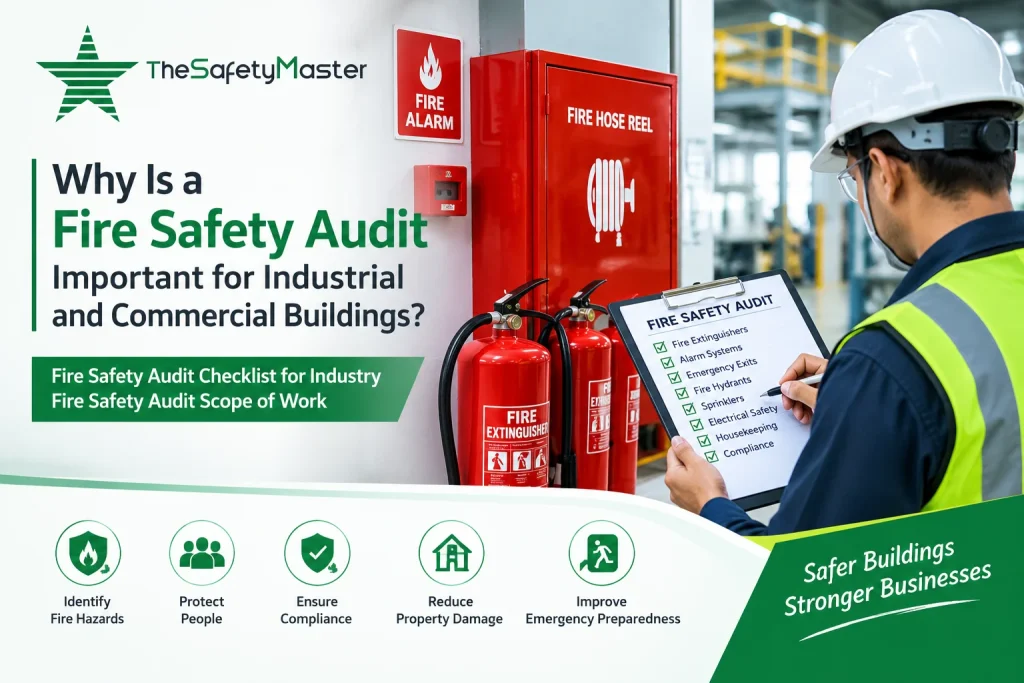
Fire safety is important for every industrial and commercial building. Factories, warehouses, offices, shopping malls, hospitals, hotels, and manufacturing plants may face fire risks due to electrical faults, flammable materials, gas leaks, overheating equipment, and unsafe working practices. A small fire can quickly become a serious emergency if proper safety measures are not in place.
A Fire Safety Audit helps identify fire hazards, check fire protection systems, review emergency arrangements, and improve workplace safety. It allows businesses to find safety gaps before an incident occurs. Regular fire safety inspections also help protect employees, visitors, equipment, buildings, and business operations.
The Safety Master provides professional safety audit and risk management services to help organisations identify hazards and improve their safety arrangements. A properly planned fire safety audit helps businesses understand their risks and take suitable corrective actions.
What Is a Fire Safety Audit?
A Fire Safety Audit is a systematic inspection and evaluation of fire prevention measures, fire protection equipment, emergency procedures, and safety arrangements in a building or industrial facility.
During an audit, safety professionals examine whether the building has suitable fire detection systems, fire extinguishers, hydrants, sprinklers, emergency exits, evacuation plans, and other necessary fire protection measures.
The audit also reviews electrical installations, storage practices, housekeeping, employee training, and emergency response arrangements. The exact requirements depend on the type of building, its occupancy, the activities performed, applicable regulations, and the fire risk level.
A professional fire safety audit report explains the hazards identified, the gaps in existing safety measures, and the corrective actions required to reduce fire risks.
Why Is a Fire Safety Audit Important for Industrial and Commercial Buildings?
1. Identifies Fire Hazards Before an Accident
Fire hazards may remain unnoticed during daily operations. Damaged electrical cables, overloaded circuits, hot work activities, flammable liquids, and poor housekeeping can increase the risk of fire.
A Fire Safety Audit helps identify these hazards through inspections and document reviews. Businesses can then take corrective action before a small problem becomes a major incident.
For example, a factory storing flammable chemicals near a heat source may require improved storage arrangements, suitable separation distances, and additional fire protection measures.
2. Protects Employees and Visitors
The safety of employees, contractors, customers, and visitors should be a priority in every building.
A fire safety audit checks whether people can recognise fire alarms, access emergency exits, follow evacuation procedures, and reach designated assembly points safely.
It also evaluates whether emergency arrangements consider people who may need assistance during evacuation.
3. Checks Fire Protection Equipment
Fire protection equipment must be suitable for the hazards present and maintained in working condition.
A Fire Safety Audit may examine:
- Portable fire extinguishers and their accessibility.
- Fire hydrant and hose reel systems.
- Automatic sprinkler systems.
- Fire alarm and smoke detection systems.
- Emergency lighting and exit signs.
- Fire pumps, water supplies, and related equipment.
- Fire doors and compartmentation.
The auditor reviews inspection records, maintenance documents, and equipment condition. Where required, authorised personnel should conduct functional tests according to applicable standards and manufacturer instructions.
4. Supports Legal and Regulatory Compliance
Industrial and commercial buildings may need to meet applicable building regulations, fire safety requirements, local fire authority conditions, and other relevant legal obligations.
A Fire Safety Audit helps organisations identify gaps in documentation, equipment maintenance, emergency planning, and fire protection arrangements.
However, completing an audit does not automatically guarantee legal compliance. Organisations must verify the specific requirements applicable to their building, industry, location, and occupancy.
The Safety Master can help businesses review fire safety arrangements and identify areas that require improvement.
5. Reduces Property Damage and Financial Loss
A major fire can damage machinery, raw materials, finished products, electrical installations, and buildings. It can also interrupt production, delay deliveries, and affect customer relationships.
A fire safety audit helps businesses identify weaknesses that may contribute to fire incidents or allow fires to spread.
Corrective actions, such as improving fire compartmentation, maintaining detection systems, and controlling ignition sources, can reduce potential losses and support business continuity.
6. Improves Emergency Preparedness
An emergency plan is effective only when employees understand their roles and know what to do.
A Fire Safety Audit reviews emergency contact information, evacuation routes, assembly points, alarm arrangements, firefighting responsibilities, and the availability of trained emergency personnel.
The audit may also recommend fire drills and training to test the effectiveness of emergency procedures.
7. Improves Safety Awareness
Employees play an important role in fire prevention. Unsafe electrical practices, improper chemical storage, blocked exits, and unauthorised hot work can increase fire risks.
Regular audits help identify training needs and encourage employees to follow safe working procedures.
Organisations can use audit findings to improve fire safety awareness, housekeeping, reporting practices, and accountability.
Fire Safety Audit Checklist for Industry
An industrial fire safety audit checklist helps auditors inspect important fire prevention and protection measures in factories, warehouses, workshops, and manufacturing plants.
The checklist should be adapted to the specific facility, its hazards, and the applicable safety requirements.
1. Fire Prevention and Housekeeping
- Check for combustible waste, paper, packaging, and other flammable materials.
- Verify that storage areas are clean and properly organised.
- Inspect areas where smoking or open flames could create a hazard.
- Check the control of hot work, including welding and cutting.
- Verify safe storage and handling of flammable liquids and gases.
- Ensure fire exits and access routes remain free from obstructions.
2. Electrical Safety
- Inspect electrical panels for visible damage and unsafe conditions.
- Check for overloaded sockets and unauthorised electrical connections.
- Review electrical inspection and maintenance records.
- Verify suitable protection for electrical installations.
- Check that electrical rooms are accessible only to authorised personnel where required.
- Review arrangements for isolation and shutdown during emergencies.
Electrical testing should be carried out by competent personnel using appropriate procedures and equipment.
3. Fire Detection and Alarm Systems
- Verify the presence and suitability of fire detection systems.
- Inspect manual call points and alarm devices for accessibility.
- Review fire alarm testing and maintenance records.
- Check whether alarms can be heard or otherwise perceived in relevant areas.
- Verify that alarm signals and emergency instructions are understood by occupants.
- Review arrangements for responding to alarms and reporting fire incidents.
4. Fire Extinguishers and Firefighting Equipment
- Confirm that suitable extinguishers are available for identified fire risks.
- Check that equipment is accessible and clearly identified.
- Review inspection, servicing, and maintenance records.
- Verify that trained employees know how to use extinguishers safely.
- Inspect hydrants, hose reels, and fire pumps where installed.
- Review the availability and condition of firefighting water supplies.
Employees should not attempt to fight a fire when doing so would expose them to danger. Evacuation and emergency notification take priority.
5. Emergency Exits and Evacuation Routes
- Ensure exits are clearly marked.
- Check that exit doors can be opened as required during an emergency.
- Inspect staircases, corridors, and escape routes.
- Verify that emergency lighting is provided where required.
- Check that assembly points are identified.
- Review evacuation plans and displayed emergency instructions.
- Consider evacuation arrangements for people requiring assistance.
6. Flammable Materials and Chemical Storage
- Check whether flammable substances are stored in suitable locations.
- Review chemical labels and safety data sheets.
- Verify suitable ventilation and ignition-source control.
- Inspect gas cylinder storage and handling arrangements.
- Check the segregation of incompatible substances.
- Review spill response arrangements and fire protection measures.
7. Fire Safety Training and Documentation
- Review fire safety training records.
- Check emergency response team responsibilities.
- Examine fire drill records and corrective actions.
- Review equipment maintenance certificates and inspection logs.
- Verify the availability of emergency contact information.
- Review applicable fire approvals, certificates, and compliance documents.
- Track previous audit findings and confirm that corrective actions have been completed.
A checklist is only one part of a professional audit. The auditor should also evaluate whether the fire protection arrangements are suitable for the actual hazards and building conditions.
Fire Safety Audit Scope of Work
The Fire Safety Audit scope of work defines the areas, systems, documents, and activities included in the audit. A clear scope helps the organisation and auditor understand the inspection requirements and expected deliverables.
1. Initial Assessment and Planning
The audit begins with a review of the building’s purpose, operations, occupancy, fire hazards, and existing fire safety arrangements.
The auditor may review building layouts, previous audit reports, fire incident records, equipment inventories, and available fire safety documentation.
The scope should identify the locations and systems to be inspected, along with any limitations.
2. Site Inspection and Hazard Identification
The auditor conducts a site inspection to identify fire hazards and evaluate the condition of existing controls.
Inspection areas may include production units, electrical rooms, storage areas, offices, workshops, utility rooms, boiler areas, loading bays, and other relevant locations.
The inspection also considers combustible materials, ignition sources, housekeeping, access for emergency responders, and potential fire spread.
3. Evaluation of Fire Protection Systems
The audit reviews the availability, suitability, accessibility, and maintenance of fire protection systems.
These may include fire alarms, smoke detectors, extinguishers, hydrants, sprinklers, fire pumps, emergency lighting, fire doors, and passive fire protection systems.
The scope should clearly state whether functional testing, engineering calculations, or specialist testing is included. Such work may require separate arrangements and competent personnel.
4. Review of Emergency Preparedness
The auditor evaluates emergency response procedures, evacuation plans, employee awareness, fire drills, emergency communication, and designated emergency responsibilities.
The review identifies gaps that could delay evacuation or emergency response.
5. Legal and Documentation Review
The audit includes a review of relevant fire safety requirements and available documentation, depending on the agreed scope.
Documents may include:
- Applicable fire approvals and certificates.
- Fire safety plans and emergency procedures.
- Fire alarm and firefighting equipment maintenance records.
- Fire drill and training records.
- Electrical inspection records.
- Previous audit reports and action plans.
- Records of fire incidents and corrective actions.
The applicable documents vary according to the building type, jurisdiction, and regulatory requirements.
6. Risk Assessment and Recommendations
Identified findings are assessed according to their potential consequences, likelihood, and the effectiveness of existing controls.
The auditor recommends corrective measures based on the risk level and applicable requirements. High-risk findings may require immediate attention.
Recommendations should identify the required action, responsible department, suggested completion date, and method for verifying closure.
7. Audit Report and Follow-Up
The final fire safety audit report typically includes:
- Audit objectives and scope.
- Areas and systems inspected.
- Documents reviewed.
- Fire hazards and safety gaps identified.
- Photographic evidence where appropriate.
- Risk ratings and recommended corrective actions.
- Applicable compliance observations.
- An action plan for improvement.
A follow-up review can confirm whether corrective actions have been completed and whether additional measures are needed.
What Are the 7 Layers of Fire Safety in Buildings?
The seven layers of fire safety can be understood as complementary measures that help prevent fires, detect them early, limit their spread, and protect people during an emergency. This is a practical framework rather than one universal regulatory classification.
1. Fire Prevention
Control ignition sources, maintain electrical installations, manage hot work, and store combustible materials safely.
2. Early Fire Detection
Use suitable smoke detectors, heat detectors, manual call points, and other detection devices based on the building’s risks.
3. Fire Alarm and Warning
Provide effective alarm systems that notify occupants and support prompt emergency action.
4. Fire Suppression
Use appropriate extinguishers, sprinklers, hydrants, and other firefighting systems where required.
5. Passive Fire Protection
Use suitable fire-rated walls, doors, floors, compartmentation, and fire stopping to restrict fire and smoke spread.
6. Safe Evacuation
Maintain clear escape routes, exit signs, emergency lighting, evacuation plans, and suitable assembly points.
7. Emergency Planning and Maintenance
Conduct fire drills, train employees, inspect equipment, maintain records, and correct identified safety gaps.
A professional Fire Safety Audit reviews these layers together to identify weaknesses and improve overall building safety.
What Are L1, L2, L3, and L4 Fire Alarm Systems?
L1, L2, L3, and L4 are categories commonly associated with fire detection and alarm system coverage under British standard BS 5839-1. They describe different approaches to detection coverage and should not be confused with fire alarm equipment grades or general building risk ratings.
L1: Maximum Detection Coverage
An L1 system provides automatic fire detection throughout nearly all areas of a building, subject to the standard’s provisions and applicable exclusions. It is commonly considered where comprehensive early detection is required.
L2: Additional Detection in Higher-Risk Areas
An L2 system includes detection in escape routes and specified additional areas that present particular fire risks. The precise coverage depends on the building and the applicable standard.
L3: Protection of Escape Routes
An L3 system is designed to provide early warning that helps occupants escape before fire or smoke makes escape routes unsafe. Detection is provided in relevant escape routes and rooms opening onto them, as specified by the standard.
L4: Escape Route Detection
An L4 system generally provides automatic fire detection in defined escape routes, such as corridors and stairways, according to the applicable design requirements.
The appropriate system depends on building use, occupancy, fire risk, layout, and applicable regulations. These categories are not a substitute for a competent fire alarm system design assessment.
How Often Should a Fire Safety Audit Be Conducted?
The required frequency depends on applicable regulations, local authority conditions, industry requirements, the building’s risk profile, and organisational policy.
High-risk facilities, such as chemical plants, manufacturing units, and warehouses storing flammable materials, may require more frequent reviews than lower-risk premises.
Organisations should also consider an additional audit or review after a major modification, change in occupancy, significant fire incident, change in process, or identification of serious safety gaps.
Routine equipment inspections and maintenance must continue between formal audits. An annual audit, where adopted as a company practice, does not replace ongoing fire safety checks or any legally prescribed inspection frequency.
Why Choose The Safety Master for a Fire Safety Audit?
The Safety Master supports organisations in identifying workplace hazards, reviewing safety arrangements, and developing practical recommendations to improve fire and occupational safety.
A professional audit can help businesses understand their existing fire safety gaps, review the condition of protection systems, strengthen emergency preparedness, and prioritise corrective actions.
When planning a Fire Safety Audit, organisations should select a competent service provider with relevant experience in the building type and industry. The scope, inspection methodology, deliverables, and applicable requirements should be agreed upon before the audit begins.
The aim is not simply to complete a checklist. It is to identify meaningful risks and support improvements that protect people, property, and business operations.
Conclusion
A Fire Safety Audit is an important part of managing fire risks in industrial and commercial buildings. It helps identify hazards, evaluate fire protection systems, review emergency arrangements, and highlight areas where corrective action is needed.
A well-planned audit also supports better employee awareness, property protection, and review of applicable compliance requirements. Businesses should maintain firefighting equipment, keep evacuation routes clear, conduct suitable fire drills, and close audit findings within appropriate time frames.
The Safety Master can help organisations assess their fire safety arrangements and identify practical improvements for safer workplaces. Regular inspections, competent risk assessment, and timely corrective action are essential to building a stronger fire safety culture.