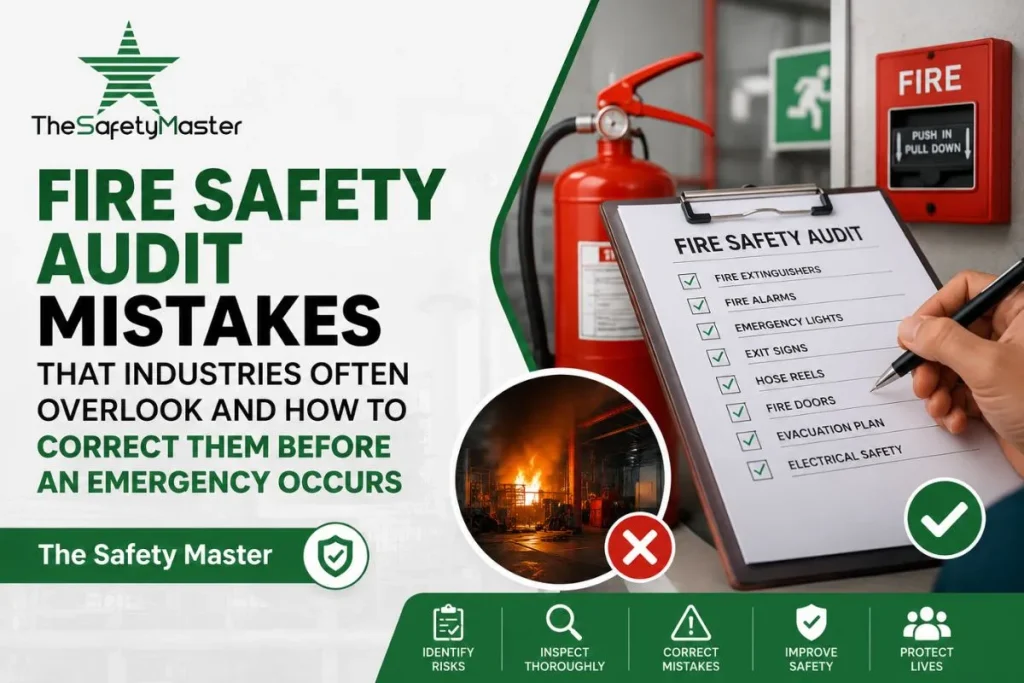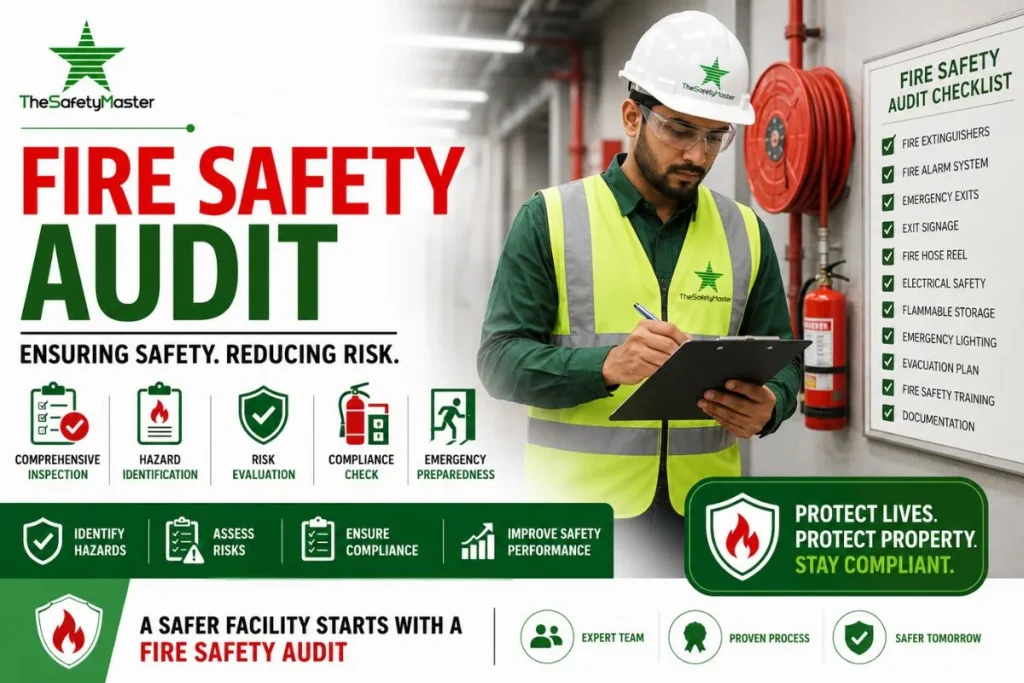
Fire Safety Audit in India: Complete Business Compliance & Risk Guide

Top 10 Essential Electrical Safety Rules and Tips for the Workplace
October 24, 2025
EHS Audit & Report: The Importance of Regular Audits for a Safe and Compliant Workplace
October 24, 2025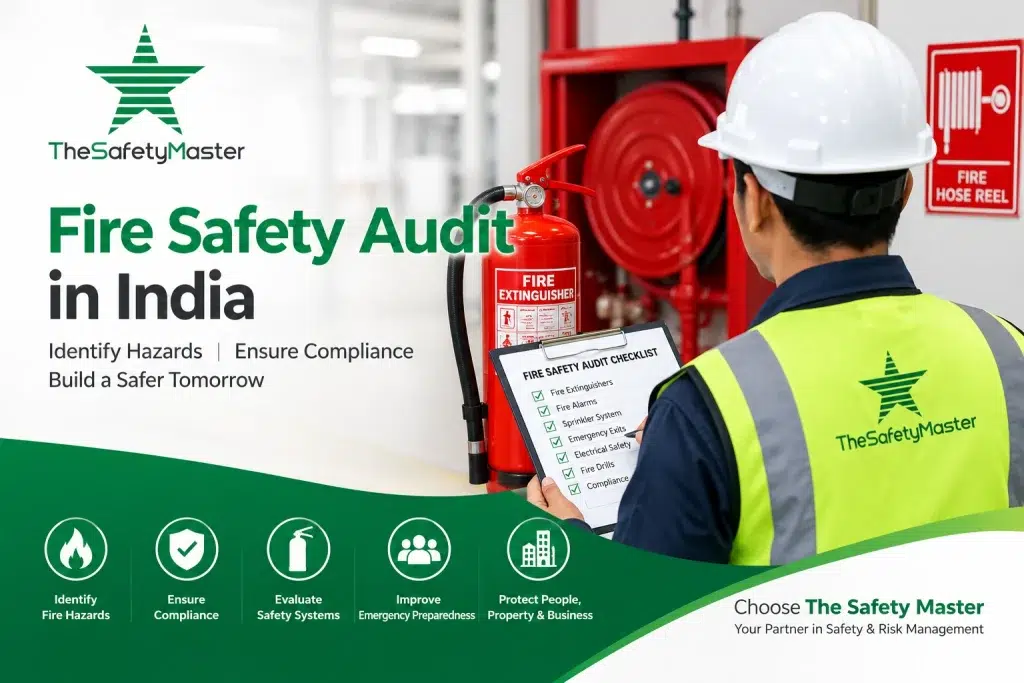
Fire safety is an essential part of protecting people, property, equipment, and business operations. A Fire Safety Audit in India helps organizations identify fire hazards, evaluate existing fire protection systems, check emergency preparedness, and find gaps in applicable safety requirements.
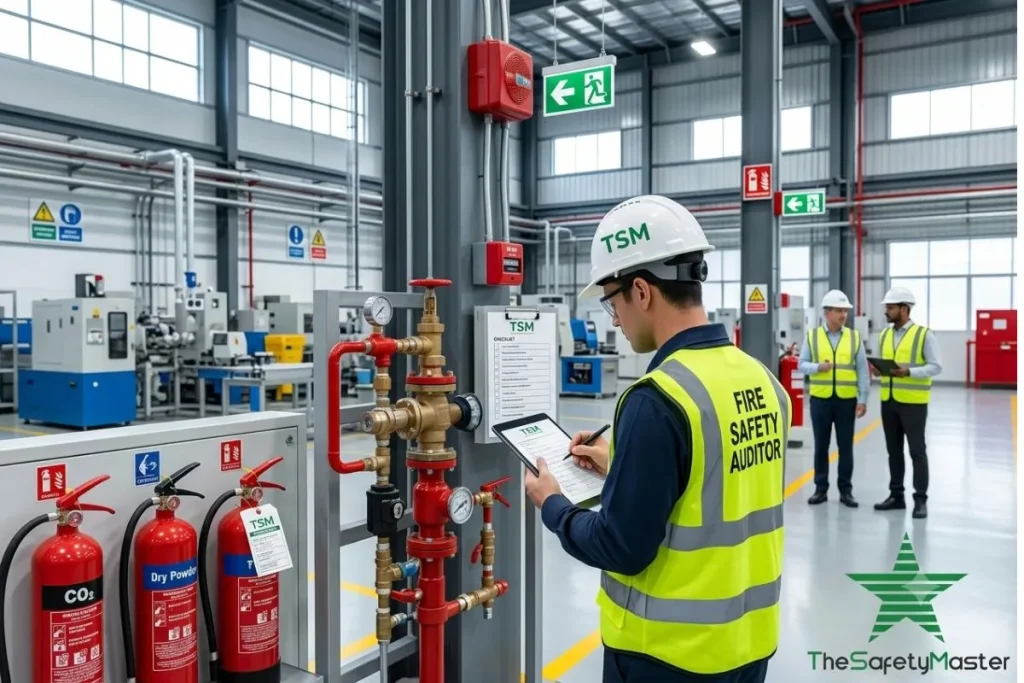
A professional fire audit goes beyond checking whether fire extinguishers are available. It examines fire detection and alarm systems, firefighting equipment, emergency exits, evacuation arrangements, electrical installations, storage of combustible materials, fire prevention practices, employee awareness, and emergency response procedures.
The Safety Master provides professional fire safety audit services to help organizations identify risks, improve fire protection measures, strengthen emergency preparedness, and maintain applicable compliance requirements.
What Is a Fire Safety Audit?
A Fire Safety Audit is a systematic examination of a building, workplace, industrial facility, or other premises to identify fire hazards and evaluate the effectiveness of existing fire prevention, detection, protection, and emergency response arrangements.
The purpose of a Fire Safety Audit is to answer important questions such as:
- What are the major fire hazards at the facility?
- Are fire detection and alarm systems working properly?
- Are fire extinguishers suitable and accessible?
- Are hydrants and sprinkler systems adequately maintained?
- Are emergency exits accessible and clearly marked?
- Can employees evacuate safely during an emergency?
- Are electrical installations creating potential fire risks?
- Are combustible and flammable materials stored safely?
- Are employees trained to respond to a fire emergency?
A professional audit converts these observations into practical corrective actions so that organizations can reduce fire risk rather than simply complete a checklist.
Why Is Fire Safety Audit Important in India?
Fire incidents can result in injuries, fatalities, property damage, equipment loss, production interruptions, environmental impacts, and significant financial losses.
A regular Fire Safety Audit helps organizations identify weaknesses before they become serious incidents.
Key Benefits of a Fire Safety Audit
- Identifies potential fire hazards
- Evaluates fire protection systems
- Improves emergency preparedness
- Supports safer evacuation
- Identifies electrical fire risks
- Checks firefighting equipment
- Improves employee awareness
- Helps identify compliance gaps
- Supports business continuity
- Reduces the potential impact of fire incidents
Fire safety should not be treated as a one-time compliance activity. Buildings, processes, equipment, occupancy, storage arrangements, and fire risks can change over time. Regular audits help ensure that fire protection measures remain suitable for the current conditions.
Fire Safety Laws and Compliance Requirements in India
Fire safety requirements in India can depend on the type of building, occupancy, industry, location, applicable state rules, and other statutory requirements.
National Building Code of India
The National Building Code provides important provisions relating to fire prevention, life safety, fire protection, means of escape, firefighting installations, and building safety.
A Fire Safety Audit can assess applicable fire safety arrangements against relevant provisions and standards.
State Fire Department Requirements
State and local authorities may have specific requirements relating to fire safety approvals, Fire NOC, inspections, firefighting installations, emergency exits, and other safety measures.
Organizations should identify the requirements applicable to their particular building and location.
Factory and Industrial Safety Requirements
Industrial facilities may have additional requirements because of manufacturing processes, machinery, chemicals, flammable materials, boilers, electrical installations, storage areas, and other hazards.
A professional audit helps identify fire risks associated with both the facility and its operations.
Insurance Requirements
Organizations should also review applicable insurance conditions and safety requirements. Maintaining appropriate fire protection systems, inspection records, testing records, and corrective-action documentation can support effective risk management.
What Does a Fire Safety Audit Check?
A comprehensive Fire Safety Audit examines several areas of a facility.
1. Fire Detection and Alarm Systems
The auditor checks fire detection and alarm arrangements, including:
- Smoke and heat detectors
- Manual call points
- Fire alarm panels
- Audible and visual alarms
- Detector locations
- Testing and maintenance records
- Emergency alarm functionality
The objective is to determine whether occupants can receive an early warning during a fire emergency.
2. Fire Extinguishers
The audit evaluates:
- Type and suitability of extinguishers
- Location and accessibility
- Identification and signage
- Inspection status
- Physical condition
- Maintenance records
- Obstruction around extinguishers
Extinguishers should be suitable for the fire risks present in the particular area.
3. Hydrant and Sprinkler Systems
Where applicable, the audit reviews:
- Fire hydrant systems
- Fire pumps
- Sprinkler systems
- Fire water tanks
- Hose reels
- Valves
- Pressure and accessibility
- Testing and maintenance records
4. Emergency Exits and Evacuation
Emergency evacuation is one of the most important parts of fire safety.
The audit may assess:
- Number and location of exits
- Exit signage
- Emergency lighting
- Escape routes
- Staircases
- Exit doors
- Obstructions
- Assembly points
- Evacuation plans
5. Electrical Fire Hazards
Electrical installations are carefully reviewed for potential fire risks such as:
- Overloaded circuits
- Damaged cables
- Improper connections
- Poor panel maintenance
- Temporary wiring
- Inadequate housekeeping around electrical panels
- Improper use of electrical equipment
Electrical safety is particularly important in facilities with high electrical loads or aging installations.
6. Storage of Flammable and Combustible Materials
The audit examines the storage and handling of combustible and flammable materials.
This may include:
- Flammable liquids
- Chemicals
- LPG or other gases
- Packaging materials
- Fuels
- Combustible waste
- Chemical storage areas
Storage arrangements should be evaluated according to the hazards and applicable requirements.
7. Emergency Preparedness and Fire Drills
A facility may have excellent fire protection equipment but still be unprepared if employees do not know how to respond.
The audit therefore reviews:
- Emergency response procedures
- Fire evacuation plans
- Fire drill arrangements
- Employee training
- Emergency contact information
- Roles and responsibilities
- Assembly-point arrangements
Fire Safety Audit Process
A professional Fire Safety Audit should follow a systematic process.
Step 1: Review of Documents
The auditor reviews relevant documents such as:
- Building plans
- Fire safety drawings
- Fire NOC and applicable approvals
- Fire system maintenance records
- Testing certificates
- Previous audit reports
- Fire drill records
- Emergency response procedures
Step 2: Site Inspection
A physical inspection is conducted throughout the facility.
The auditor observes fire hazards, firefighting equipment, escape routes, electrical installations, storage areas, emergency systems, and housekeeping conditions.
Step 3: Fire Risk Identification
Potential sources of ignition, combustible materials, fire spread pathways, and weaknesses in fire protection systems are identified.
Step 4: Compliance Gap Assessment
Existing arrangements are compared with applicable requirements and relevant standards.
Step 5: Risk Evaluation
Identified observations are evaluated according to their potential impact and priority.
Step 6: Corrective Action Recommendations
The audit report provides practical recommendations for addressing identified deficiencies.
Step 7: Fire Safety Audit Report
The final report generally includes:
- Executive summary
- Scope of audit
- Facility information
- Observations
- Photographic evidence, where applicable
- Fire risk findings
- Compliance gaps
- Recommendations
- Priority actions
- Corrective-action requirements
Fire Safety Audit Checklist
A Fire Safety Audit Checklist can help organizations systematically review important fire safety controls.
Basic Fire Safety Checklist
- Are fire extinguishers available at required locations?
- Are extinguishers accessible and properly identified?
- Are fire alarms functional?
- Are smoke and heat detectors maintained?
- Are emergency exits unobstructed?
- Is emergency lighting available?
- Are exit signs clearly visible?
- Are evacuation plans displayed?
- Are fire pumps and hydrants maintained?
- Are sprinkler systems inspected?
- Are fire water tanks adequately maintained?
- Are electrical panels properly maintained?
- Are combustible materials stored safely?
- Are emergency procedures documented?
- Are employees trained in fire response?
- Are fire drills conducted periodically?
- Are previous audit observations closed?
- Are maintenance and inspection records available?
A checklist is useful, but it should not replace professional judgment. The audit must consider the actual hazards, occupancy, processes, building configuration, and applicable requirements.
Industries That Need Fire Safety Audits
Fire Safety Audits are useful across a wide range of sectors.
Manufacturing Industries
Factories may have machinery, electrical systems, combustible materials, hot work, chemicals, and production processes that create significant fire risks.
Warehouses
Warehouses can contain large quantities of packaging, plastics, chemicals, textiles, or other combustible materials. Storage arrangements and fire protection systems are therefore particularly important.
Hospitals
Hospitals require special attention because patients may have limited mobility and may require continuous medical support during an emergency.
Hotels
Hotels have sleeping occupants, kitchens, electrical equipment, commercial areas, and high occupant movement, making effective fire detection and evacuation particularly important.
Commercial Buildings
Offices, malls, commercial complexes, and business premises should evaluate fire protection systems, electrical risks, emergency exits, and evacuation arrangements.
Schools and Educational Institutions
Schools require effective emergency evacuation plans because large numbers of students and staff may need to evacuate simultaneously.
Residential Buildings
High-rise residential buildings and housing complexes should regularly evaluate fire alarms, extinguishers, hydrants, emergency exits, evacuation arrangements, and other fire protection systems.
How Often Should a Fire Safety Audit Be Conducted?
There is no single frequency that is appropriate for every facility. Audit frequency should consider the building type, occupancy, fire risk, applicable legal requirements, changes to the facility, and previous findings.
As a practical risk-management approach:
- High-risk industrial facilities may require more frequent assessments.
- Hospitals, hotels, warehouses, and large commercial buildings should maintain regular fire safety reviews.
- Lower-risk offices should still conduct periodic fire safety inspections and ensure required systems are maintained.
A professional Fire Safety Consultant can help determine an appropriate audit schedule based on the facility’s risk profile.
Fire Safety Audit Report
A Fire Safety Audit Report documents the condition of fire safety arrangements and identifies areas requiring improvement.
A Good Audit Report Should Include
- Audit scope
- Facility details
- Inspection methodology
- Observations
- Photographs where appropriate
- Fire safety deficiencies
- Risk classification or priority
- Applicable requirements
- Corrective recommendations
- Responsible department
- Target completion date
- Follow-up requirements
The report should be practical and easy for management and responsible departments to use for corrective-action planning.
How Much Does a Fire Safety Audit Cost in India?
The cost of a Fire Safety Audit in India varies depending on the facility and scope of work.
Factors that can influence the cost include:
Facility Size
A large manufacturing plant or commercial complex requires more inspection time than a small office.
Type of Industry
Chemical plants, warehouses, factories, hospitals, and other high-risk facilities may require more detailed assessment.
Complexity of Fire Protection Systems
The number and complexity of fire alarms, hydrants, sprinklers, suppression systems, fire pumps, and other installations can influence the audit scope.
Location and Number of Sites
Multi-location organizations may require separate inspections and reports for each facility.
Therefore, a professional audit quotation should generally be prepared after understanding the facility, scope, and risk profile rather than using a fixed price for every organization.
Why Choose The Safety Master for Fire Safety Audit?
The Safety Master provides professional fire safety audit and fire safety consulting services for different types of buildings and industries.
Our approach focuses on more than checklist compliance. We help organizations identify practical fire hazards, evaluate existing protection systems, understand compliance gaps, and prioritize corrective actions.
The Safety Master has experience across areas including fire safety, safety audits, risk assessment, emergency preparedness, process safety, and workplace safety.
A professional Fire Safety Audit can help your organization move from reactive fire protection to proactive risk management.
Conclusion
A Fire Safety Audit in India is an important tool for identifying fire hazards, evaluating fire protection systems, improving emergency preparedness, and strengthening workplace and building safety.
Fire extinguishers, alarms, hydrants, sprinklers, emergency exits, and evacuation plans are only effective when they are properly selected, installed, maintained, tested, and supported by trained people.
Organizations should therefore treat fire safety as an ongoing responsibility rather than a one-time compliance activity.
With a systematic audit, practical recommendations, and timely corrective actions, businesses can reduce fire risk and create safer environments for employees, visitors, customers, and occupants.
The Safety Master can support organizations with professional Fire Safety Audit services designed to identify gaps, improve fire safety performance, and strengthen overall emergency preparedness.