Best HAZOP Consultant: How Expert Consultants Improve Process Safety

Behavior Safety Consultant: Building a Stronger Safety Culture
May 9, 2023
The Role of Workplace Safety Consultants in Building a Safety Culture in the Industry
May 9, 2023
What Is a HAZOP Consultant?
A HAZOP Consultant is a process safety professional who helps organizations systematically identify hazards, evaluate deviations from intended process conditions, and recommend safeguards to reduce risk. HAZOP, or Hazard and Operability Study, is a structured technique commonly used for identifying potential hazards and operability problems in industrial processes.
A qualified consultant brings technical knowledge, process experience, and an independent perspective to the HAZOP study. This is especially valuable for industries such as oil and gas, chemicals, petrochemicals, pharmaceuticals, power generation, and manufacturing.
The Safety Master provides process safety consultancy and supports organizations with HAZOP, Process Hazard Analysis, LOPA, QRA, SIL and other risk-management activities. Its process safety services are designed around systematic hazard identification and practical risk reduction.
Why Is HAZOP Important for Industrial Safety?
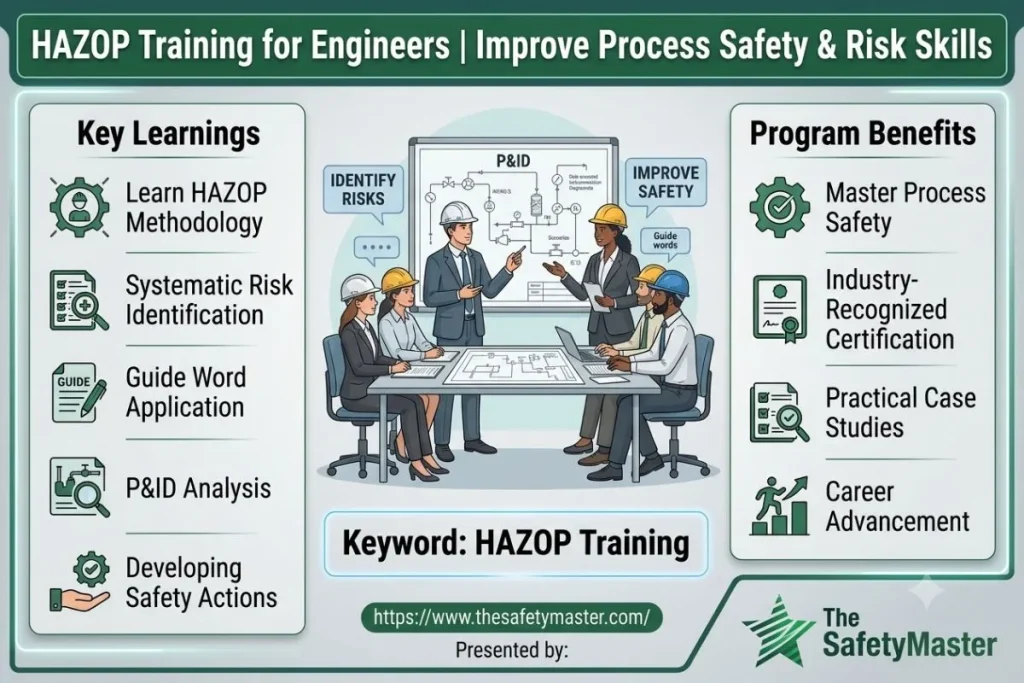
HAZOP helps organizations identify what could go wrong before an incident occurs. During a study, a multidisciplinary team examines process parameters such as flow, pressure, temperature, level and composition using guide words to identify possible deviations.
Early Identification of Process Hazards
A HAZOP study can reveal potential causes and consequences of process deviations that may not be obvious during routine operations.
Improvement of Existing Safeguards
The study examines existing protection systems and helps determine whether additional safeguards or recommendations are required.
Support for Process Safety Management
HAZOP is an important process hazard analysis technique and can support broader Process Safety Management programs. PHA methodologies can include HAZOP, What-If analysis, FMEA and other structured techniques.
Better Decision-Making
HAZOP recommendations provide engineering and management teams with documented information that can support safer design, operation and modification decisions.
What Does a HAZOP Consultant Do?
A professional HAZOP Consultant does much more than participate in a meeting. The consultant helps organize, facilitate, document and follow up the complete HAZOP process.
HAZOP Study Preparation
Before the workshop, the consultant reviews available process information and identifies the documents required for the study.
Typical Documents Reviewed
- Process Flow Diagrams (PFDs)
- Piping and Instrumentation Diagrams (P&IDs)
- Process descriptions
- Equipment specifications
- Operating procedures
- Design data
- Chemical information
- Control philosophy
- Existing safety systems
HAZOP Workshop Facilitation
The consultant facilitates structured discussions between process engineers, operations personnel, instrumentation engineers, maintenance professionals and other relevant specialists.
Hazard Identification
The team systematically examines deviations from design intent and evaluates their possible causes and consequences.
Recommendation Development
Where additional risk reduction is necessary, the team develops recommendations and assigns appropriate actions to responsible persons.
HAZOP Report Preparation
A detailed report records the study methodology, nodes, deviations, causes, consequences, safeguards, recommendations and action owners.
How Does a HAZOP Study Work?
A typical HAZOP study follows a systematic process.
1. Define the Study Scope
The first step is to determine which process units, systems or equipment will be reviewed.
2. Divide the Process Into Nodes
The process is divided into manageable sections called nodes. Each node has a defined design intent.
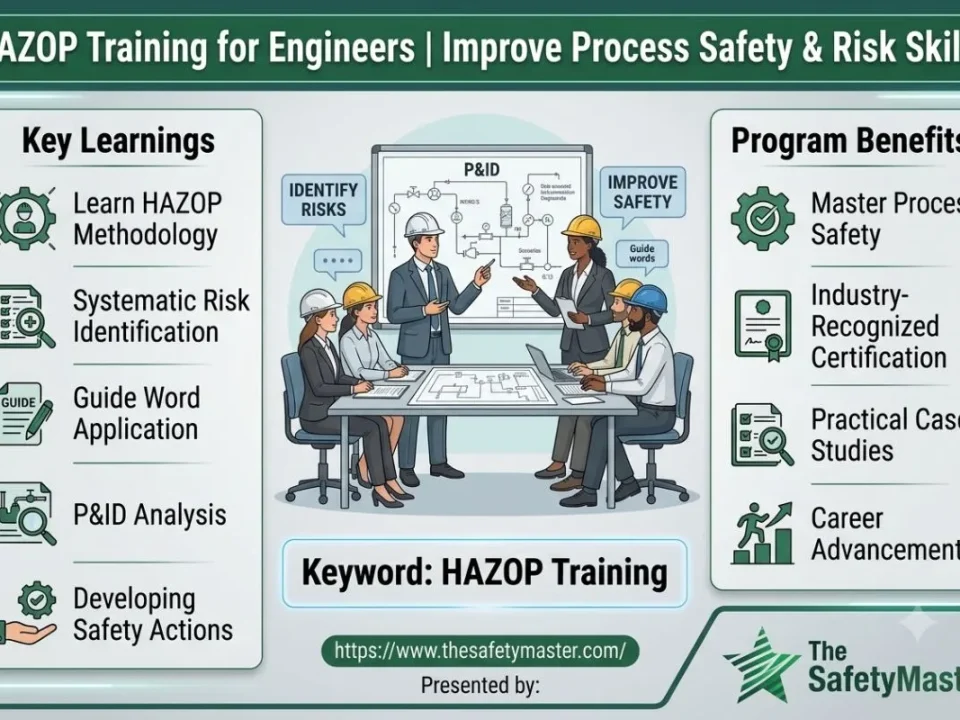
3. Apply HAZOP Guide Words
Common guide words include:
- No
- More
- Less
- As well as
- Part of
- Reverse
- Other than
These guide words are combined with process parameters to identify deviations.
4. Identify Causes and Consequences
The team discusses why a deviation could occur and what could happen if it occurs.
5. Review Existing Safeguards
Existing alarms, interlocks, relief devices, procedures and other safeguards are evaluated.
6. Develop Recommendations
Additional actions are recommended when existing safeguards do not adequately control the identified risk.
7. Document and Track Actions
The final recommendations should be assigned, tracked and closed through an appropriate action-management process.
What Makes the Best HAZOP Consultant?
Choosing the right consultant is important because the quality of a HAZOP study depends heavily on the competence of the facilitator and the experience of the participating team.
Industry Experience
Look for consultants with experience in your specific industry and process type.
Technical Knowledge
A strong consultant should understand process engineering, instrumentation, control systems, mechanical systems and process safety principles.
Experienced HAZOP Facilitator
The facilitator should be capable of managing technical discussions, challenging assumptions and keeping the team focused on meaningful risk scenarios.
Independent Perspective
An independent consultant can provide an objective review and identify issues that an internal team may overlook.
Strong Reporting and Follow-Up
A good HAZOP study should result in clear, practical and traceable recommendations rather than simply producing a lengthy report.
Industries That Need HAZOP Consultancy
HAZOP consultancy can be valuable wherever complex processes involve hazardous materials, energy or significant operational risks.
Oil and Gas
Refineries, terminals, pipelines and oil and gas processing facilities can use HAZOP to evaluate process deviations and safeguards.
Chemical and Petrochemical
Chemical processes can involve toxic, flammable, corrosive or reactive substances. HAZOP helps systematically assess these process hazards.
Pharmaceutical Industry
Pharmaceutical manufacturing involves complex processes, chemicals, utilities and operating conditions that may require structured hazard analysis.
Power and Energy
Power plants and energy facilities can use HAZOP for process systems, utilities, fuel systems and safety-critical operations.
Manufacturing
Manufacturing facilities with complex process systems can use HAZOP to identify potential equipment, operational and process-related hazards.
Benefits of Hiring a Professional HAZOP Consultant
Working with an experienced consultant can provide several advantages.
Better Hazard Identification
An experienced facilitator can help the team explore deviations systematically instead of relying only on individual experience.
Improved Risk Reduction
HAZOP recommendations can identify opportunities to strengthen engineering and administrative safeguards.
Regulatory and Industry Alignment
A structured study helps organizations demonstrate that process hazards have been systematically reviewed as part of their wider safety-management approach.
Cross-Functional Collaboration
HAZOP brings different technical disciplines together, allowing teams to evaluate hazards from multiple perspectives.
Improved Process Safety Culture
Regular process hazard analysis encourages organizations to think proactively about major accident prevention rather than reacting only after incidents.
HAZOP Consultant vs. Internal HAZOP Team
An internal team understands the facility and its operations, but an external consultant can provide specialized facilitation and an independent viewpoint.
The strongest approach is often a combination of both. Internal personnel contribute detailed knowledge of the process, while an experienced HAZOP Consultant provides methodology, facilitation skills and process safety expertise.
Why Choose The Safety Master for HAZOP Consultancy?
The Safety Master provides industrial risk and process safety solutions for organizations seeking to improve operational safety and manage process hazards. Its process safety consultancy portfolio includes HAZOP, LOPA, QRA, SIL, PHSER, PSSR and other specialized studies.
The company works with industries including chemical, petrochemical, pharmaceutical, manufacturing, oil and gas and other high-hazard sectors. Its approach focuses on identifying hazards, evaluating risk and developing practical recommendations that organizations can implement.
The Safety Master also provides HAZOP training and process hazard analysis training, helping organizations develop internal process safety capabilities.
How to Select the Right HAZOP Consultant
Before appointing a consultant, consider the following:
Check Technical Expertise
Review the consultant’s qualifications, process safety knowledge and relevant technical experience.
Review Industry Experience
Choose a consultant who understands the hazards and operating conditions associated with your industry.
Evaluate Previous Projects
Ask about previous HAZOP studies and the types of facilities or processes they have assessed.
Check Study Methodology
The consultant should follow a structured and recognized HAZOP methodology.
Evaluate Reporting
Make sure the final deliverables clearly document findings, safeguards, recommendations and action responsibilities.
Consider Follow-Up Support
HAZOP should not end when the workshop finishes. Recommendation tracking and closure are important parts of the overall process.
Conclusion
A well-executed HAZOP study can help organizations identify process hazards, evaluate existing safeguards and develop practical measures to reduce risk. Choosing an experienced HAZOP Consultant is therefore an important decision for organizations operating complex or hazardous processes.
The Safety Master combines process safety expertise with services such as HAZOP, LOPA, QRA, SIL and Process Hazard Analysis to help organizations strengthen process safety and operational reliability.
FAQs About HAZOP Consultant
Q-What is a HAZOP Consultant?
A HAZOP Consultant is a process safety professional who facilitates Hazard and Operability Studies to systematically identify process deviations, their causes, consequences and existing safeguards.
Q-Why should a company hire a HAZOP Consultant?
Companies hire a HAZOP Consultant to obtain specialized expertise, structured facilitation and an independent assessment of process hazards. Consultants can also help prepare reports and track recommendations.
Q-What industries use HAZOP studies?
HAZOP studies are commonly used in oil and gas, chemical, petrochemical, pharmaceutical, power, energy and manufacturing industries where process hazards can have significant consequences.
Q-What documents are required for a HAZOP study?
Typical documents include P&IDs, PFDs, process descriptions, equipment information, operating procedures, control philosophy and relevant safety-system documentation.
Q-How long does a HAZOP study take?
The duration depends on the complexity and size of the process, number of nodes, quality of available documentation and availability of the multidisciplinary team. Small studies may take a few days, while large facilities can require considerably longer.
Q-What is the difference between HAZOP and HIRA?
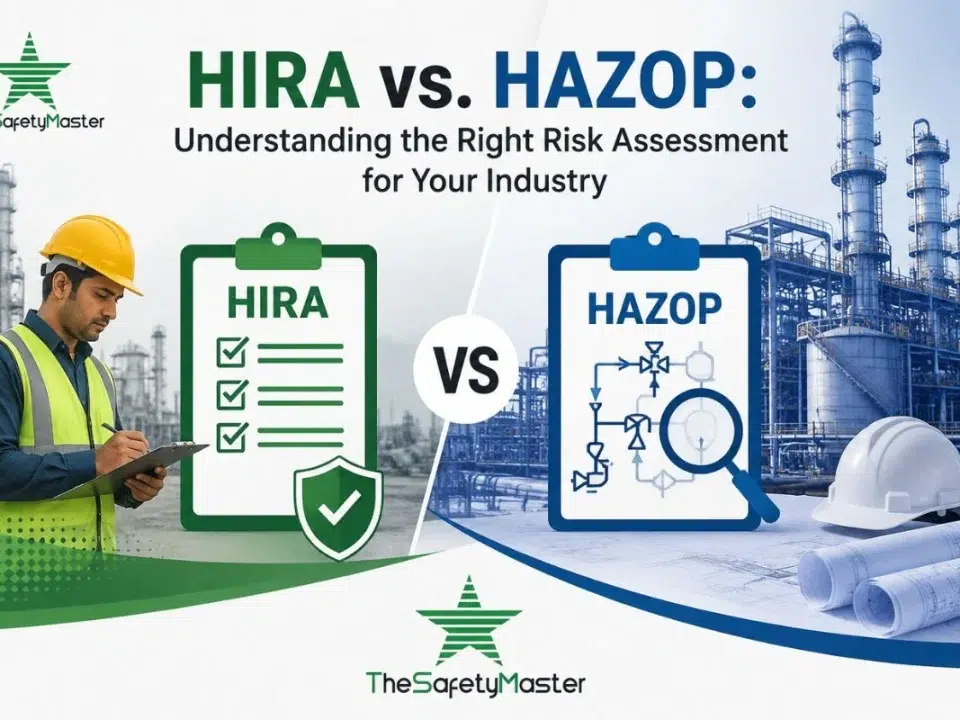
HAZOP is a structured process hazard analysis technique primarily focused on process deviations and their causes and consequences. HIRA is a broader hazard identification and risk assessment approach that can be applied to workplace activities, operations and processes.
Q-What qualifications should a HAZOP Consultant have?
A consultant should have relevant engineering or process safety knowledge, practical HAZOP facilitation experience, understanding of process systems and familiarity with applicable industry standards and risk-management methodologies.
Q-Can The Safety Master conduct HAZOP studies?
Yes. The Safety Master provides process safety consultancy services that include HAZOP and other process risk-management studies.
Q-What is the main objective of a HAZOP study?
The main objective is to systematically identify potential hazards and operability problems by examining deviations from the intended design or operating conditions and determining appropriate safeguards and recommendations.