Behavior Safety Consultant: Building a Stronger Safety Culture

Best safety consultant in India
May 9, 2023
Best HAZOP Consultant: How Expert Consultants Improve Process Safety
May 9, 2023
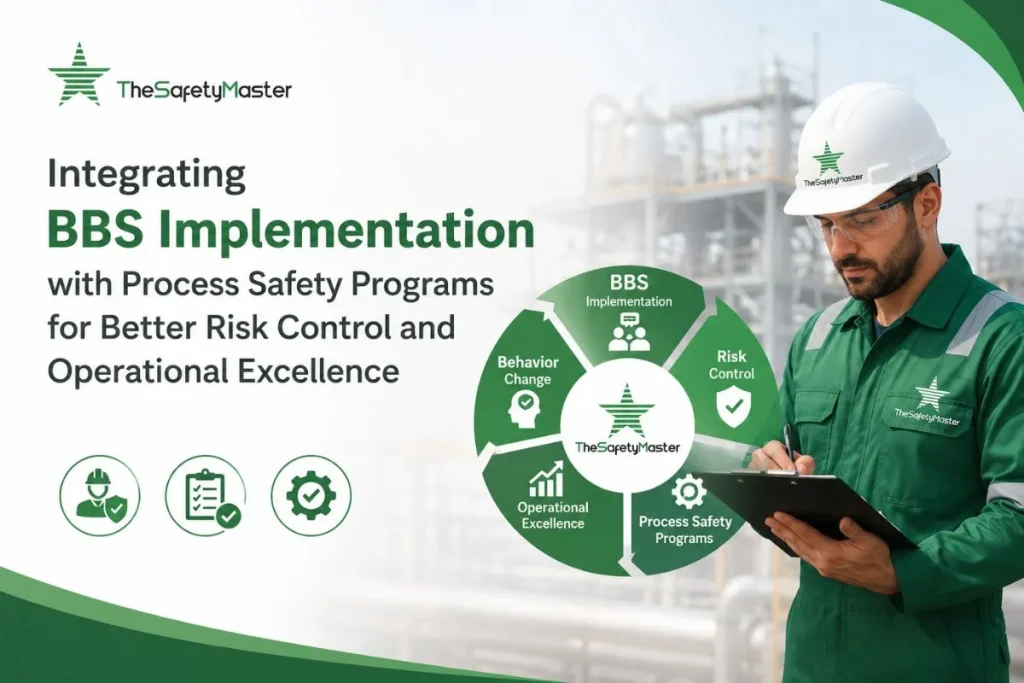
A Behavior Safety Consultant helps organizations improve workplace safety by identifying unsafe behaviors, encouraging safe work practices, and developing a proactive safety culture. Instead of focusing only on incidents after they happen, behavior-based safety focuses on employee actions and workplace conditions that can contribute to accidents.
The Safety Master provides behavior-based safety solutions designed to help organizations engage employees, identify at-risk behaviors, improve safety awareness, and build a stronger safety culture across the workplace.
What Is a Behavior Safety Consultant?
A Behavior Safety Consultant is a safety professional who specializes in understanding and improving employee behaviors related to workplace safety. The consultant studies how employees perform their daily tasks and identifies behaviors that could increase the likelihood of incidents.
Role of a Behavior Safety Consultant
A consultant can help organizations:
- Identify safe and unsafe work behaviors
- Develop Behavior-Based Safety (BBS) programs
- Conduct behavioral observations
- Improve employee safety awareness
- Encourage employee participation in safety
- Identify recurring unsafe practices
- Develop corrective and preventive actions
- Strengthen safety leadership
- Monitor behavioral safety performance
The goal is not to blame employees. Instead, the focus is on understanding why unsafe behaviors occur and developing practical ways to encourage safer actions.
Why Is Behavior-Based Safety Important?
Many workplace incidents are influenced by human behavior, work practices, communication, supervision, and organizational culture. A strong behavior-based safety program helps organizations identify these factors before they result in incidents.
Benefits of Behavior-Based Safety
A well-designed BBS program can help organizations:
- Reduce unsafe acts and behaviors
- Improve employee safety awareness
- Increase workforce participation
- Strengthen safety communication
- Improve supervisor involvement
- Identify potential risks early
- Encourage positive safety behaviors
- Support continuous safety improvement
- Build a proactive safety culture
Improving Employee Safety Participation
Employees are more likely to follow safe practices when they understand the reasons behind safety requirements and are actively involved in identifying hazards.
Behavior-based safety encourages workers to observe, discuss, and improve safety practices rather than treating safety as only a management responsibility.
How Does a Behavior Safety Consultant Work?
A Behavior Safety Consultant generally follows a systematic approach to understand workplace behaviors and improve safety performance.
1. Assess the Existing Safety Culture
The first step is understanding the organization’s existing safety culture, employee attitudes, leadership involvement, and current safety practices.
2. Identify Critical Behaviors
The consultant identifies behaviors that can have a significant impact on workplace safety.
Examples may include:
- Proper PPE usage
- Safe lifting practices
- Lockout/Tagout compliance
- Safe equipment operation
- Working at height practices
- Housekeeping
- Permit-to-work compliance
3. Conduct Behavioral Observations
Structured observations help identify both safe and at-risk behaviors during normal work activities.
4. Analyze the Findings
The collected observations are reviewed to identify patterns, common unsafe behaviors, and areas requiring improvement.
5. Implement Corrective Actions
The organization can then introduce targeted training, coaching, communication, procedural improvements, or engineering controls.
6. Monitor Continuous Improvement
Behavioral safety should be an ongoing process. Regular observations and performance reviews help determine whether safety behaviors are improving over time.
Key Services Provided by a Behavior Safety Consultant
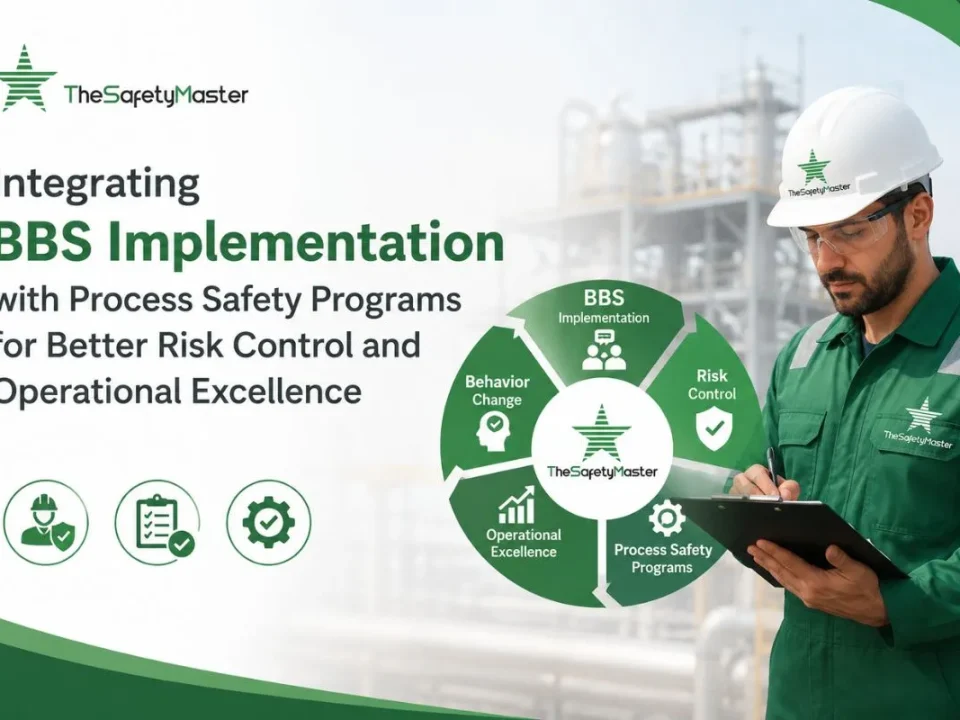
Behavior-Based Safety (BBS) Implementation
A consultant can help organizations establish and implement a structured BBS program covering behavioral observations, employee participation, feedback, reporting, and continuous improvement.
Behavioral Safety Training
Training helps employees and supervisors understand the relationship between behavior and workplace safety.
Training may cover:
- Safe and unsafe behaviors
- Behavioral observation techniques
- Positive feedback
- Safety communication
- Hazard recognition
- Employee engagement
- Safety leadership
Safety Culture Assessment
A safety culture assessment evaluates how employees and management perceive safety and how safety is integrated into daily operations.
Safety Perception Surveys
Safety perception surveys can provide valuable information about employee attitudes toward safety, management commitment, communication, reporting, and workplace practices.
Leadership Safety Programs
Safety leadership is essential for creating long-term behavioral change. Consultants can help managers and supervisors develop stronger safety leadership practices.
Behavior-Based Safety vs Traditional Safety
Traditional safety programs often focus heavily on procedures, compliance, inspections, and incident investigations. These elements remain important, but behavior-based safety adds another layer by examining how work is actually performed.
| Traditional Safety Approach | Behavior-Based Safety |
|---|---|
| Focuses on hazards and compliance | Focuses on behaviors and safety culture |
| Often reactive | More proactive |
| Relies heavily on inspections | Uses behavioral observations |
| Management-driven | Encourages employee participation |
| Focuses on correcting problems | Focuses on continuous improvement |
A strong workplace safety program can combine both approaches rather than relying on only one.
Major Elements of an Effective BBS Program
Employee Involvement
Employees should participate in identifying unsafe behaviors and suggesting practical improvements.
Management Commitment
Leadership must demonstrate that safety is a genuine organizational priority.
Behavioral Observation
Regular observations provide information about how safety procedures are followed during actual work.
Positive Feedback
Employees should receive constructive feedback when safe behaviors are observed. Positive reinforcement can help encourage consistent safe practices.
Data Analysis
Observation data should be analyzed to identify trends and recurring issues.
Continuous Improvement
BBS should not be treated as a one-time campaign. Organizations should continuously review results and improve their approach.
How The Safety Master Supports Behavior-Based Safety
The Safety Master helps organizations develop stronger safety cultures through Behavior-Based Safety training and implementation. Its current safety-culture offering includes BBS programs, safety perception surveys, psychological assessments, and leadership safety programs.
The approach can help organizations move from a reactive safety mindset toward proactive employee engagement and continuous safety improvement.
Why Choose The Safety Master?
Organizations can benefit from:
- Experienced safety professionals
- Industry-focused safety solutions
- Customized BBS programs
- Employee-focused training
- Safety culture improvement
- Behavioral observation programs
- Leadership safety development
- Data-driven safety improvement
Industries That Can Benefit From Behavior Safety Consulting
Behavior-based safety can be applied across different industries, including:
Manufacturing
BBS can help improve machine safety, PPE compliance, material handling, housekeeping, and operational discipline.
Chemical and Petrochemical
Behavioral safety can complement process safety by improving employee adherence to procedures and safe operating practices.
Construction
BBS can address behaviors involving work at height, lifting operations, PPE, tools, equipment, and site housekeeping.
Oil and Gas
Behavior-based safety can support safe work practices, permit compliance, operational discipline, and workforce engagement.
Power and Energy
BBS programs can help strengthen safe operating practices, electrical safety awareness, and employee participation.
How to Choose the Right Behavior Safety Consultant
Before selecting a consultant, organizations should consider:
Industry Experience
Choose a consultant with experience in your industry and understanding of its specific workplace risks.
BBS Expertise
The consultant should have practical experience in developing and implementing Behavior-Based Safety programs.
Customized Approach
Avoid one-size-fits-all programs. The BBS strategy should reflect the organization’s workforce, operations, hazards, and safety culture.
Measurement and Reporting
A good consultant should establish measurable indicators to track behavioral improvement.
Long-Term Support
Behavioral change requires continuous engagement, coaching, observation, and review.
Conclusion
A Behavior Safety Consultant can help organizations move beyond traditional compliance-focused safety and develop a more proactive safety culture. By identifying at-risk behaviors, encouraging employee participation, improving safety communication, and strengthening leadership involvement, organizations can create safer and more engaged workplaces.
The Safety Master provides Behavior-Based Safety solutions that can help organizations assess safety culture, implement BBS programs, train employees, and support long-term safety improvement.
Frequently Asked Questions
Q-What does a Behavior Safety Consultant do?
A Behavior Safety Consultant identifies safe and unsafe workplace behaviors and helps organizations develop strategies to encourage safer work practices. Their work can include behavioral observations, BBS implementation, employee training, safety culture assessment, and leadership development.
Q-What is Behavior-Based Safety?
Behavior-Based Safety (BBS) is a proactive approach that focuses on observing and improving workplace behaviors that influence safety performance. It encourages employee participation, positive feedback, behavioral observations, and continuous improvement.
Q-Why is Behavior-Based Safety important?
Behavior-Based Safety is important because it helps organizations identify unsafe behaviors before they contribute to incidents. It also encourages employees to actively participate in improving workplace safety.
Q-How can a Behavior Safety Consultant improve workplace safety?
A consultant can improve workplace safety by assessing safety culture, identifying critical behaviors, conducting observations, providing training, analyzing behavioral trends, and helping management implement corrective actions.
Q-What are examples of unsafe behaviors?
Examples can include failure to use required PPE, bypassing safety procedures, improper equipment operation, unsafe lifting, poor housekeeping, failure to follow LOTO procedures, and taking shortcuts during work.
Q-What is the difference between BBS and safety audits?
A safety audit generally evaluates workplace systems, procedures, controls, and compliance. BBS focuses more specifically on employee behaviors and how work is performed. Both approaches can complement each other.
Q-Can BBS be implemented in any industry?
Yes. BBS can be adapted for manufacturing, construction, oil and gas, chemicals, power, logistics, healthcare, and other industries. The program should be customized according to the organization’s hazards and work activities.
Q-How does The Safety Master provide Behavior-Based Safety services?
The Safety Master supports organizations with BBS training and implementation, safety perception surveys, psychological assessments, and leadership safety programs to help strengthen workplace safety culture.