Fire Safety Audit Services by The Safety Master
Electrical Safety Audit by TheSafetyMaster™
March 24, 2020Behavior based safety- Basics and Overview
January 9, 2021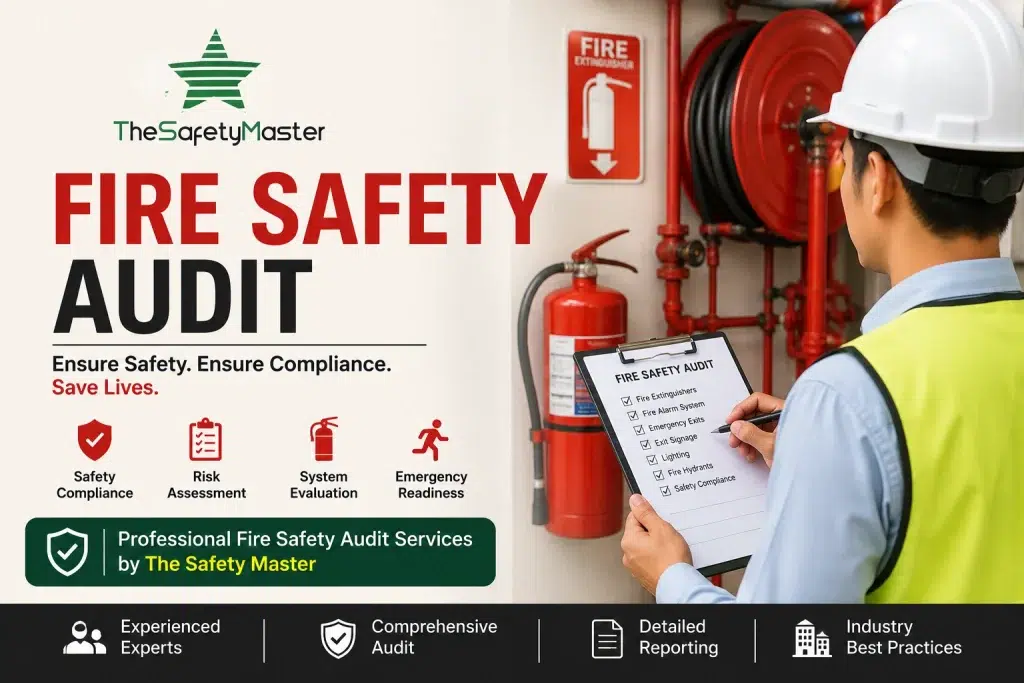
Fire Safety Audit: Professional Fire Safety Inspection and Risk Assessment
A Fire Safety Audit is a systematic inspection of a building, workplace, industrial facility, or commercial property to identify fire hazards and evaluate the effectiveness of fire prevention and protection systems. It helps organizations find safety gaps, improve emergency preparedness, protect people and property, and reduce the possibility of major fire incidents.
Fire risks can come from electrical systems, combustible materials, machinery, chemicals, storage areas, hot work, poor housekeeping, or unsafe working practices. A professional audit examines these risks and provides practical recommendations for improvement.
The Safety Master provides professional fire safety audit and risk management support to help organizations identify hazards, evaluate fire protection systems, improve emergency preparedness, and develop corrective action plans.
What Is a Fire Safety Audit?
A Fire Safety Audit is a detailed and systematic examination of fire safety arrangements within a facility. It checks whether fire prevention, detection, firefighting, evacuation, and emergency response systems are properly planned, installed, maintained, and used.
The audit may include:
- Fire extinguishers and firefighting equipment
- Fire alarm and detection systems
- Fire hydrants and sprinkler systems
- Fire pumps and water storage
- Emergency exits and escape routes
- Emergency lighting and safety signage
- Electrical installations
- Fire doors and fire-resistant structures
- Storage of flammable and combustible materials
- Hot work activities
- Housekeeping practices
- Fire drills and emergency training
- Inspection and maintenance records
The purpose is not only to identify problems but also to recommend practical actions that can reduce fire risk.
Why Is Fire Safety Audit Important?
Fire can cause serious injuries, loss of life, property damage, equipment damage, production losses, and business interruption. Regular auditing helps organizations identify weaknesses before they develop into major incidents.
A professional audit can help organizations:
- Identify potential fire hazards
- Check the condition of fire protection systems
- Improve emergency response
- Verify the availability of firefighting equipment
- Improve evacuation arrangements
- Identify electrical and housekeeping hazards
- Review employee fire safety awareness
- Prioritize corrective actions
- Strengthen overall fire safety management
- Reduce the potential impact of a fire
For industrial facilities, the audit is especially important because operations may involve chemicals, fuels, gases, combustible materials, machinery, and high-temperature processes.
Fire Safety Audit Process
A structured Fire Safety Audit should follow a systematic process so that important areas are not missed.
Pre-Audit Planning
The auditor first collects relevant information about the facility. This may include building layouts, occupancy details, previous audit reports, fire safety procedures, maintenance records, emergency plans, and information about hazardous materials.
Site Inspection
A detailed inspection is then carried out throughout the premises. The auditor checks production areas, warehouses, offices, electrical rooms, utility areas, storage locations, escape routes, and other relevant areas.
Fire Hazard Identification
Potential ignition sources and combustible materials are identified. Common hazards include electrical faults, hot work, flammable liquids, combustible waste, unsafe storage, smoking, and poor housekeeping.
Fire Protection System Assessment
The condition and suitability of fire protection systems are reviewed. This may include:
- Fire extinguishers
- Fire hydrants
- Sprinklers
- Fire alarms
- Smoke detectors
- Fire pumps
- Hose reels
- Fire water tanks
- Emergency lighting
- Fire doors
Emergency Preparedness Review
The auditor checks whether employees know how to respond during a fire emergency. Evacuation plans, assembly points, emergency contacts, fire drills, training, and communication systems are reviewed.
Reporting and Corrective Actions
The findings are documented in a detailed report. Each important observation should include the location, identified deficiency, possible risk, and recommended corrective action.
Fire Safety Audit Checklist
A practical checklist helps auditors systematically review important fire safety areas.
Fire Protection Equipment
Check whether:
- Fire extinguishers are available and accessible
- Extinguishers are suitable for the identified fire risks
- Fire extinguishers are inspected and maintained
- Hydrant systems are accessible
- Sprinkler systems are maintained
- Fire pumps are operational
- Fire alarm systems are functional
- Emergency equipment is clearly identified
Emergency Exits and Evacuation
Check whether:
- Emergency exits are clearly marked
- Escape routes are free from obstruction
- Exit doors can be opened during an emergency
- Emergency lighting is available
- Assembly points are identified
- Evacuation plans are displayed
- Employees understand evacuation procedures
Electrical Fire Safety
Electrical systems should also be reviewed for possible fire hazards.
The audit may check:
- Electrical panels
- Wiring conditions
- Overloaded circuits
- Temporary electrical connections
- Cable management
- Earthing arrangements
- Electrical housekeeping
- Inspection and maintenance records
Flammable and Combustible Materials
The auditor should review the storage and handling of flammable liquids, gases, chemicals, packaging materials, combustible waste, and other fire-load sources.
Proper segregation, labeling, ventilation, storage conditions, and control measures should be evaluated.
Housekeeping and Hot Work
Poor housekeeping can increase fire load and allow a small fire to spread quickly. The audit should check combustible waste, storage practices, smoking controls, welding, cutting, grinding, and other hot work activities.
Common Findings During a Fire Safety Audit
Some common deficiencies found during fire safety inspections include:
- Blocked emergency exits
- Missing or inaccessible fire extinguishers
- Expired inspection records
- Poor fire safety signage
- Inadequate emergency lighting
- Poor electrical housekeeping
- Improper storage of flammable materials
- Obstructed hydrants
- Poor housekeeping
- Incomplete fire drill records
- Inadequate employee training
- Poor maintenance of fire alarm systems
- Uncontrolled hot work
- Missing emergency procedures
Identifying these issues early gives management an opportunity to correct them before they contribute to a serious fire incident.
Benefits of Professional Fire Safety Audit Services
A professional audit provides more than a simple equipment inspection. It gives management a structured understanding of the facility’s fire safety condition.
Improved Fire Prevention
The audit helps identify ignition sources, combustible materials, unsafe practices, and other conditions that may contribute to fire.
Better Emergency Preparedness
Reviewing evacuation procedures, emergency plans, fire drills, and employee training can improve the organization’s ability to respond effectively.
Protection of People and Property
Effective fire prevention and protection systems can help reduce the potential impact of fire on employees, visitors, buildings, equipment, and business operations.
Corrective Action Planning
Audit findings can be prioritized according to risk so that critical issues can be addressed first.
Stronger Safety Management
Regular audits encourage continuous improvement and help organizations maintain a stronger fire safety culture.
Who Needs a Fire Safety Audit?
Fire safety auditing can be useful for many types of facilities, including:
- Manufacturing plants
- Chemical industries
- Warehouses
- Offices
- Hotels
- Hospitals
- Schools and educational institutions
- Shopping malls
- Residential buildings
- High-rise buildings
- Commercial buildings
- Construction sites
- Logistics facilities
- Industrial facilities
The scope of the audit should be adjusted according to the building type, occupancy, processes, fire load, and specific hazards present at the site.
Fire Safety Audit Report
A professional audit should produce a clear and useful report. A typical report may contain:
- Audit scope
- Facility information
- Areas inspected
- Applicable requirements
- Observations
- Photographs, where appropriate
- Identified fire hazards
- Risk priority
- Compliance gaps
- Recommended corrective actions
- Responsible person or department
- Target completion date
- Follow-up requirements
A good report should help management understand what needs to be corrected and how improvements can be tracked.
How The Safety Master Can Help
The Safety Master provides professional safety and risk management services to help organizations improve fire prevention, protection, and emergency preparedness.
The Safety Master can support organizations with:
- Fire Safety Audit
- Fire Risk Assessment
- Fire Protection Assessment
- Fire Safety Inspection
- Emergency Preparedness
- Fire Safety Training
- Mock Drill Support
- Corrective Action Planning
- Safety Compliance Support
- Fire Safety Documentation
The approach focuses on identifying actual site risks, evaluating existing controls, and recommending practical improvements. The Safety Master already positions its fire audit service around workplace and industrial fire-risk identification, emergency planning, mock drills, training, and safety documentation.
Why Choose The Safety Master for Fire Safety Audit?
Choosing an experienced safety consultancy can help organizations receive a more structured and practical audit.
The Safety Master focuses on:
- Systematic fire hazard identification
- Professional site inspection
- Fire protection system review
- Emergency preparedness assessment
- Practical recommendations
- Corrective action planning
- Safety training and awareness
- Continuous safety improvement
A Fire Safety Audit should not be treated as only a compliance activity. It should help an organization understand its real fire risks and improve its ability to prevent, control, and respond to fire emergencies.
Conclusion
A Fire Safety Audit is an important tool for identifying fire hazards, evaluating fire protection systems, checking emergency arrangements, and improving workplace safety. Regular audits can help organizations identify deficiencies before they result in serious incidents.
From fire extinguishers and alarms to electrical safety, emergency exits, flammable-material storage, housekeeping, training, and evacuation procedures, every important area should be systematically reviewed.
The Safety Master helps organizations take a structured approach to fire safety by identifying hazards, evaluating existing controls, recommending corrective actions, and supporting better emergency preparedness.
FAQs About Fire Safety Audit
Q-What is a Fire Safety Audit?
A Fire Safety Audit is a systematic inspection of a building or workplace to identify fire hazards and evaluate fire prevention, detection, firefighting, evacuation, and emergency response arrangements.
Q-Why is a Fire Safety Audit required?
A Fire Safety Audit helps organizations identify safety gaps, check fire protection systems, improve emergency preparedness, and reduce the potential risk and impact of fire.
Q-What does a Fire Safety Audit include?
It may include inspection of fire extinguishers, fire alarms, hydrants, sprinklers, fire pumps, emergency exits, electrical systems, emergency lighting, fire doors, flammable-material storage, housekeeping, fire drills, and employee training.
Q-How often should a Fire Safety Audit be conducted?
The frequency depends on the type of facility, fire risk, occupancy, applicable requirements, changes in operations, and the organization’s safety management system. Higher-risk facilities may require more frequent reviews.
Q-Who can conduct a Fire Safety Audit?
A Fire Safety Audit should be conducted by competent and suitably experienced safety or fire professionals who understand fire hazards, protection systems, emergency preparedness, and applicable requirements.
Q-What is included in a Fire Safety Audit report?
A report generally includes the audit scope, inspection findings, identified hazards, photographs where appropriate, risk priorities, compliance gaps, and recommended corrective actions.
Q-Can The Safety Master conduct a Fire Safety Audit?
Yes. The Safety Master provides fire safety audit and related safety support for organizations, including fire risk identification, fire protection assessment, emergency preparedness, training, mock drills, and corrective action planning.