Engineered Safety for High-Risk Industries

Global Safety Thinking. Local Regulatory Expertise.
March 30, 2026
Raising the Standard of Industrial Safety
April 6, 2026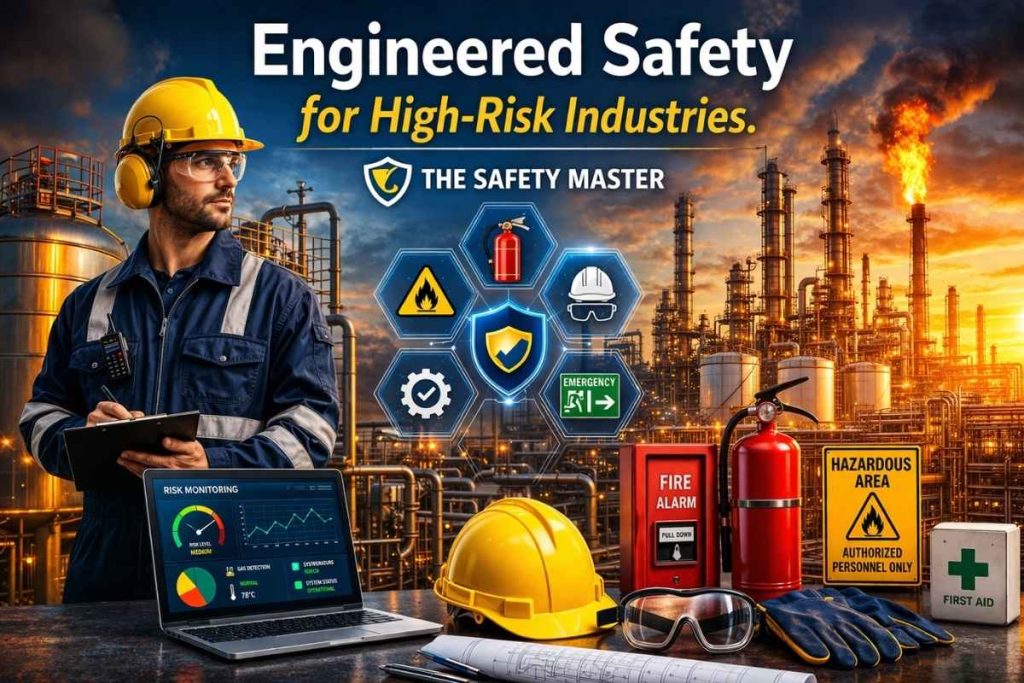
High-risk industries operate in environments where the margin for error is extremely small. Sectors such as oil and gas, chemicals, pharmaceuticals, manufacturing, power generation, and mining deal with hazardous materials, high temperatures, complex machinery, and continuous processes. In such conditions, safety cannot depend on basic precautions or reactive measures. It must be engineered into every layer of operations.
Engineered safety refers to a structured, system-driven approach where risks are identified, analyzed, and controlled through design, technology, and process integration. It goes beyond compliance and focuses on preventing incidents before they occur. In high-risk industries, this approach is essential for protecting human life, maintaining operational continuity, and ensuring regulatory adherence.
Understanding the Nature of High-Risk Industries
High-risk industries are defined by the presence of hazards that can lead to severe consequences if not properly managed. These hazards may include flammable substances, toxic chemicals, pressurized systems, electrical loads, and heavy equipment.
Unlike low-risk environments, where incidents may result in minor disruptions, accidents in high-risk industries can lead to large-scale damage, environmental impact, and long-term operational shutdowns. This makes it critical to adopt a proactive safety strategy that anticipates risks rather than reacting to them.
The Foundation of Engineered Safety
Engineered safety begins with a thorough understanding of potential hazards and their impact. This involves identifying risks at every stage of operations, from raw material handling to production, storage, and distribution.
Risk assessment methodologies play a key role in this process. Techniques such as hazard identification, fault tree analysis, and consequence modeling help quantify risks and determine appropriate control measures. These assessments provide a clear picture of where vulnerabilities exist and how they can be addressed effectively.
Integration of Safety into System Design
One of the core principles of engineered safety is integrating safety measures into the design phase itself. Instead of adding safety features later, systems are designed to minimize risks from the beginning.
For example, equipment can be designed with built-in safeguards such as pressure relief systems, automatic shutdown mechanisms, and fire-resistant materials. Layout planning can ensure proper spacing, ventilation, and access for emergency response.
This approach reduces dependence on manual intervention and lowers the likelihood of human error. It also ensures that safety is not compromised as operations scale or evolve.
Role of Safety Audits in Engineered Systems
Even the most well-designed systems require regular evaluation to ensure they remain effective over time. Changes in processes, equipment wear and tear, and evolving operational demands can introduce new risks.
A structured Safety Audit Service helps identify gaps in existing systems and ensures that safety measures continue to perform as intended. These audits evaluate technical systems, operational practices, and compliance with regulatory standards.
They also provide actionable insights that help organizations improve their safety frameworks and address emerging risks proactively.
Fire Safety as a Critical Component
Fire is one of the most significant risks in high-risk industries. The presence of combustible materials, heat sources, and complex processes creates conditions where fires can escalate rapidly.
A comprehensive Fire Safety Audit plays a vital role in assessing fire risks and ensuring that detection and suppression systems are adequate. It examines factors such as fire load, storage practices, electrical safety, and emergency response mechanisms.
By identifying vulnerabilities and recommending improvements, fire safety audits help reduce the likelihood of incidents and minimize their impact if they occur.
Technology and Automation in Safety Engineering
Advancements in technology have significantly enhanced the effectiveness of engineered safety systems. Automation, sensors, and real-time monitoring tools allow organizations to detect anomalies and respond quickly to potential hazards.
For instance, gas detection systems can identify leaks before they reach dangerous levels, while automated shutdown systems can prevent equipment failure from escalating into major incidents. Data analytics also plays a role in predicting risks based on historical trends and operational patterns.
These technologies reduce reliance on manual monitoring and improve the overall reliability of safety systems.
Human Factors and Behavioral Safety
While engineered systems provide a strong foundation, human behavior remains a critical factor in safety outcomes. Employees interact with equipment, handle materials, and make decisions that can influence risk levels.
Programs such as Behavior-Based Safety Training focus on understanding and improving these behaviors. They encourage employees to identify unsafe practices, report hazards, and adopt safer working methods.
By combining engineered systems with behavioral interventions, organizations can create a comprehensive safety culture that addresses both technical and human aspects.
Compliance and Regulatory Alignment
High-risk industries are subject to strict regulatory requirements that govern safety practices, documentation, and reporting. Compliance is not just a legal obligation but also a critical component of operational stability.
Engineered safety systems are designed to align with these regulations, ensuring that all requirements are met consistently. Regular audits, documentation, and training help maintain compliance and reduce the risk of penalties or operational disruptions.
Local regulatory knowledge is particularly important in ensuring that global safety practices are adapted to meet specific legal requirements.
Continuous Improvement and Risk Management
Safety is not a one-time effort but an ongoing process. As industries evolve, new risks emerge, and existing systems must be updated to address them.
Engineered safety supports continuous improvement by providing a structured framework for monitoring, evaluation, and enhancement. Regular reviews, audits, and feedback mechanisms ensure that safety measures remain effective and relevant.
This approach allows organizations to stay ahead of potential risks and maintain a high level of preparedness.
Building a Resilient Safety Framework
The ultimate goal of engineered safety is to create a resilient system that can withstand unexpected challenges. This involves combining robust design, advanced technology, effective training, and strong compliance practices.
A resilient safety framework not only prevents incidents but also ensures quick recovery in case of disruptions. It supports business continuity and protects both people and assets.
Conclusion
Engineered safety is essential for high-risk industries where the consequences of failure can be severe. By integrating safety into system design, leveraging technology, and addressing human factors, organizations can build comprehensive safety frameworks that go beyond basic compliance.
This approach ensures that risks are managed proactively, operations remain stable, and safety becomes an integral part of the organizational culture. In complex industrial environments, engineered safety is not just an option; it is a necessity for sustainable and responsible operations.