The Top Causes of Fire in Air Conditioners: What You Need to Know

Why Every Event Site Needs a Comprehensive Safety Audit
June 14, 2023
Enhancing Fire Safety: The Crucial Steps of Fire Risk Assessment and Safety Master’s Best-in-Class Fire Audit Services
June 16, 2023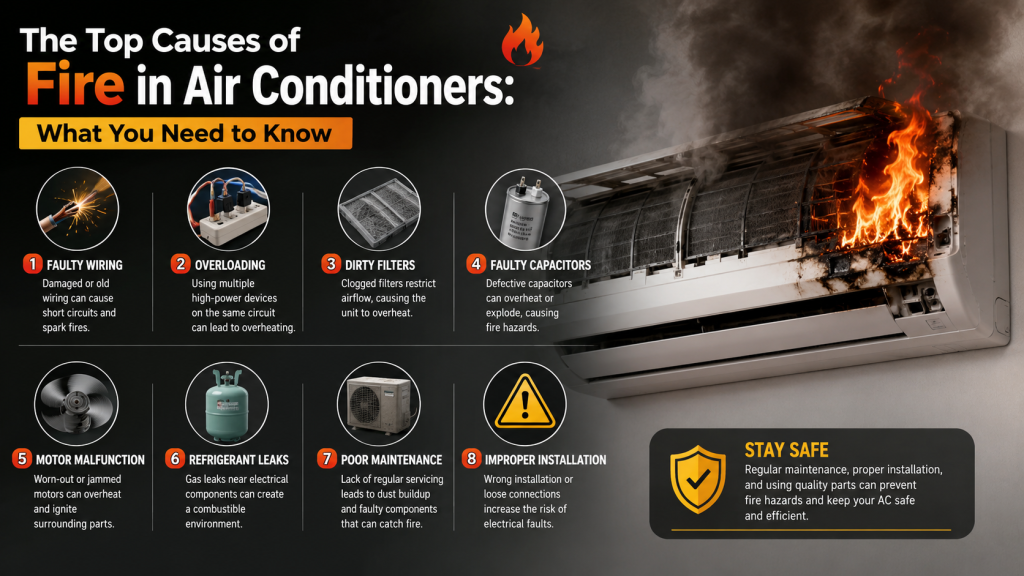
In this article, The Safety Master naturally explains the top causes of fire in air conditioners and the precautions that can help reduce these risks. Fires involving AC units can be catastrophic, causing serious property damage and putting occupants at risk. Understanding the common causes of AC fires is essential for homeowners, businesses, and facility managers. By identifying potential hazards and following proper safety and maintenance practices, you can significantly reduce the possibility of an air conditioner-related fire.
Introduction
Fire outbreaks are among the most dreaded incidents in homes, industries, and commercial buildings. Unfortunately, air conditioning systems can sometimes contribute to these incidents when they are improperly installed, poorly maintained, overloaded, or used incorrectly. AC units contain electrical components, motors, wiring, and other parts that can become hazardous when faults develop.
Over the years, air conditioner-related fires have resulted in property damage, financial losses, injuries, and fatalities. While modern AC systems are designed with safety features, improper installation and neglect can increase the risk of dangerous situations.
Understanding the top causes of fire in air conditioners can help you take preventive action. Regular inspection, appropriate usage, timely repairs, and professional maintenance can all play an important role in keeping your cooling system safe.
Electrical Malfunctions
Electrical malfunction is one of the major causes of fires involving air conditioning systems. Faulty wiring, loose electrical connections, damaged cables, overloaded circuits, and defective components can create dangerous conditions.
When an electrical connection becomes loose or damaged, it can generate excessive heat, sparks, or short circuits. If flammable materials are nearby, these sparks may trigger a fire. Electrical insulation can also deteriorate over time because of heat, humidity, age, or physical damage, exposing wires and increasing the possibility of electrical faults.
Improper grounding is another concern. An AC unit that is not correctly grounded may create an electrical shock hazard and increase the possibility of equipment damage. Professional installation and regular electrical inspections can help identify these problems before they become serious.
It is also important to ensure that the air conditioner is connected to a suitable electrical circuit. Avoid using damaged sockets, loose plugs, or unsuitable electrical accessories with high-power cooling equipment.
Blocked Airflow
Blocked airflow is another important factor that can contribute to overheating in an air conditioning system. An AC unit needs adequate airflow to operate efficiently and maintain appropriate temperatures. When airflow is restricted, the system may have to work harder and run for longer periods.
One of the most common causes of restricted airflow is a dirty or clogged air filter. Filters collect dust, dirt, and other airborne particles during normal operation. If they are not cleaned or replaced regularly, accumulated debris can restrict airflow and place additional strain on the system.
The outdoor unit can also experience airflow problems. Leaves, grass, dust, plastic materials, and other debris can accumulate around the unit and block ventilation openings. This can prevent heat from escaping properly and may contribute to overheating.
Regularly cleaning filters and keeping the area around the outdoor unit clear can help maintain proper airflow and reduce unnecessary stress on the AC system.
Mechanical Wear and Tear
Mechanical wear and tear can also increase the risk of an air conditioner malfunctioning. AC systems contain several moving and electrical components that gradually deteriorate through regular use. Motors, fans, bearings, belts, compressors, and other parts may become worn, damaged, or corroded over time.
A faulty fan motor is one example of a mechanical problem that should not be ignored. Warning signs can include unusual sounds, excessive vibration, reduced cooling performance, or frequent shutdowns. If a damaged motor continues operating, it may overheat and affect other components.
Ignoring unusual noises, burning smells, vibrations, or repeated electrical trips can allow a minor mechanical issue to become a major safety hazard. Professional inspection and timely replacement of damaged parts can help prevent more serious problems.
Human Error
Human error is another common factor that can contribute to AC fires. Even a properly designed air conditioning system can become hazardous when it is used incorrectly.
For example, placing paper, curtains, clothing, boxes, chemicals, or other combustible materials too close to an AC unit can increase the consequences of overheating or electrical sparks. Using unsuitable extension cords or connecting high-power equipment to an overloaded electrical outlet can also create dangerous conditions.
Users should always follow the manufacturer’s operating instructions and avoid making unauthorized modifications to the system. If an AC unit shows signs of electrical or mechanical problems, it should be switched off and inspected by a qualified professional rather than repeatedly restarted.
Simple precautions and responsible operation can significantly reduce risks associated with human error.
Lack of Maintenance
Lack of maintenance is one of the most preventable causes of air conditioner-related fires. Over time, dust, dirt, debris, and other contaminants can accumulate inside and around an AC system. Electrical connections may loosen, components may wear out, and ventilation may become restricted.
Regular maintenance allows these problems to be identified before they develop into serious hazards. A qualified technician can inspect electrical connections, clean important components, check motors and fans, examine refrigerant-related components, and identify parts that require repair or replacement.
Annual professional servicing is particularly important for heavily used air conditioning systems. However, users should also perform basic cleaning and visual checks according to the manufacturer’s recommendations.
Preventive maintenance not only improves safety but can also support better cooling performance, energy efficiency, and equipment lifespan.
External Environmental Factors
External environmental conditions can also affect the safety of an air conditioning system. Outdoor units are exposed to heat, rain, wind, dust, vegetation, and other environmental elements throughout the year.
Leaves, dry grass, branches, plastic materials, and other combustible debris can accumulate around an outdoor unit. During extremely hot weather, dry materials can become more vulnerable to ignition if an electrical or mechanical fault occurs.
Lightning and electrical surges may also damage sensitive components and internal wiring. Severe weather, strong winds, and heavy rainfall can cause physical damage or introduce debris into parts of the system.
Keeping the area surrounding the outdoor unit clean and unobstructed can help reduce these risks. Where necessary, appropriate electrical protection and professional inspection should be considered, especially in areas that experience frequent storms or power fluctuations.
How to Prevent Air Conditioner Fires
Preventing AC-related fires requires a combination of proper installation, responsible operation, and regular maintenance. Some important precautions include:
- Have the air conditioner installed by a qualified professional.
- Inspect electrical wiring and connections regularly.
- Keep air filters clean and replace them when necessary.
- Maintain adequate airflow around indoor and outdoor units.
- Keep combustible materials away from the AC system.
- Avoid overloaded electrical outlets and unsuitable extension cords.
- Do not ignore burning smells, sparks, unusual noises, or repeated circuit trips.
- Schedule professional servicing at recommended intervals.
- Keep outdoor units free from leaves, grass, dust, and other debris.
- Switch off the system immediately if you notice a serious electrical or mechanical fault.
Conclusion
Air conditioners provide essential comfort during hot weather, but they require proper installation, safe operation, and regular maintenance. Electrical malfunctions, blocked airflow, mechanical wear and tear, human error, lack of maintenance, and external environmental factors can all contribute to potential fire hazards.
Taking preventive measures can significantly reduce these risks. Regular inspections, proper cleaning, timely repairs, and responsible use are essential for maintaining a safe air conditioning system. If you notice unusual sounds, burning odors, sparks, overheating, or electrical problems, do not ignore them. Turn off the equipment and seek professional assistance.
By staying alert and following appropriate safety practices, homeowners and businesses can enjoy the benefits of air conditioning while reducing the risk of unwanted fire incidents.
Fire and Safety Services
TSM TheSafetyMaster Private Limited provides professional safety-related services, including:
- Fire Audit
- Fire Load Calculation
- Fire Protection Engineering
- Drawing Preparation
- Fire Fighting Training
- Electrical Safety Audit
- Thermography Study
TSM TheSafetyMaster® Private Limited
Unit No. 221-451-452, SPL1/J, 2nd & 4th Floor, Sunsquare Plaza Complex, RIICO Chowk, Bhiwadi 301019, Rajasthan, India
Phone: +91 1493 22 0093
Mobile: +91 7665231743 / 9413882016
Email: info@thesafetymaster.com