Why Annual Safety Partnerships Are Replacing One-Time Audits

One Partner. Zero Excuses. Total Safety Ownership
April 21, 2026
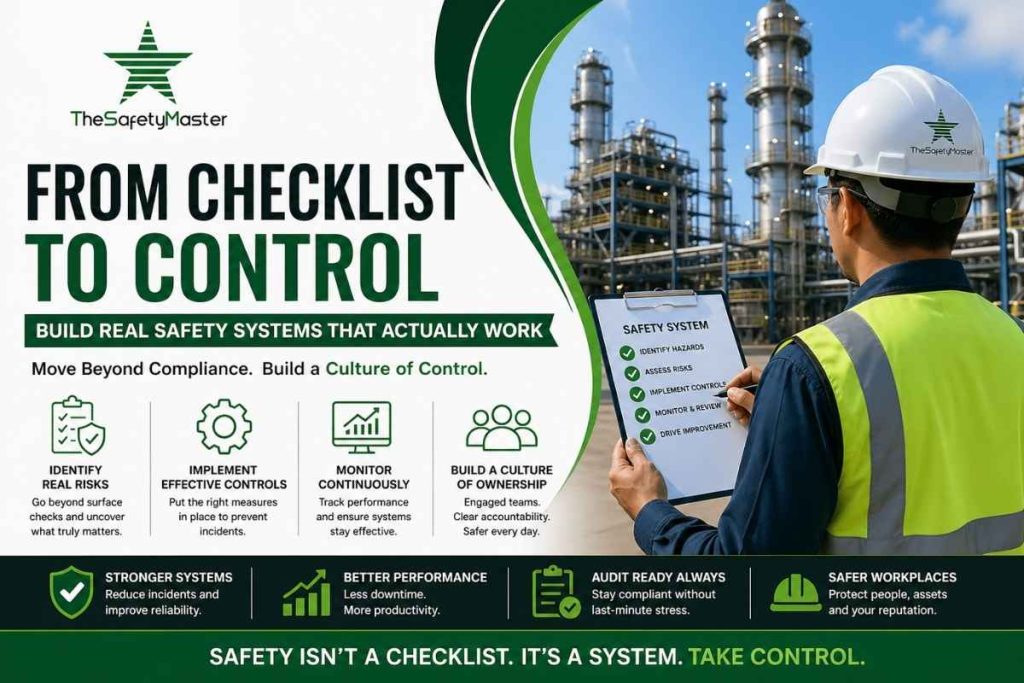
From Checklist to Control — Building Real Safety Systems That Actually Work
April 27, 2026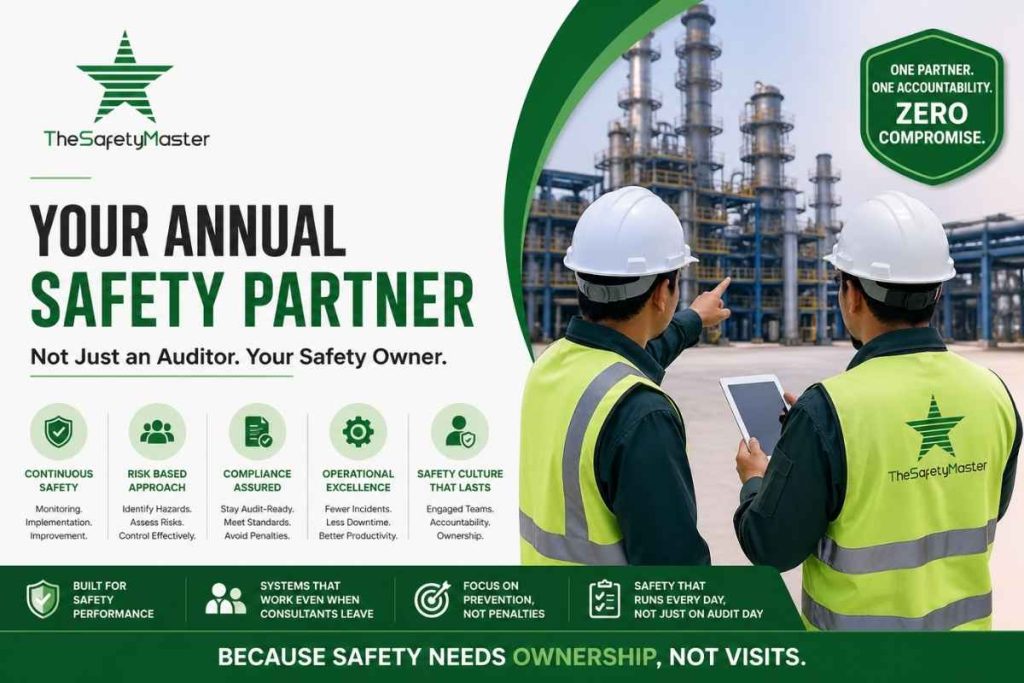
Most organizations still treat safety like an event. An audit happens, reports are generated, corrective actions are suggested, and then things slowly drift back to old habits. That model is outdated. It creates temporary compliance, not lasting control.
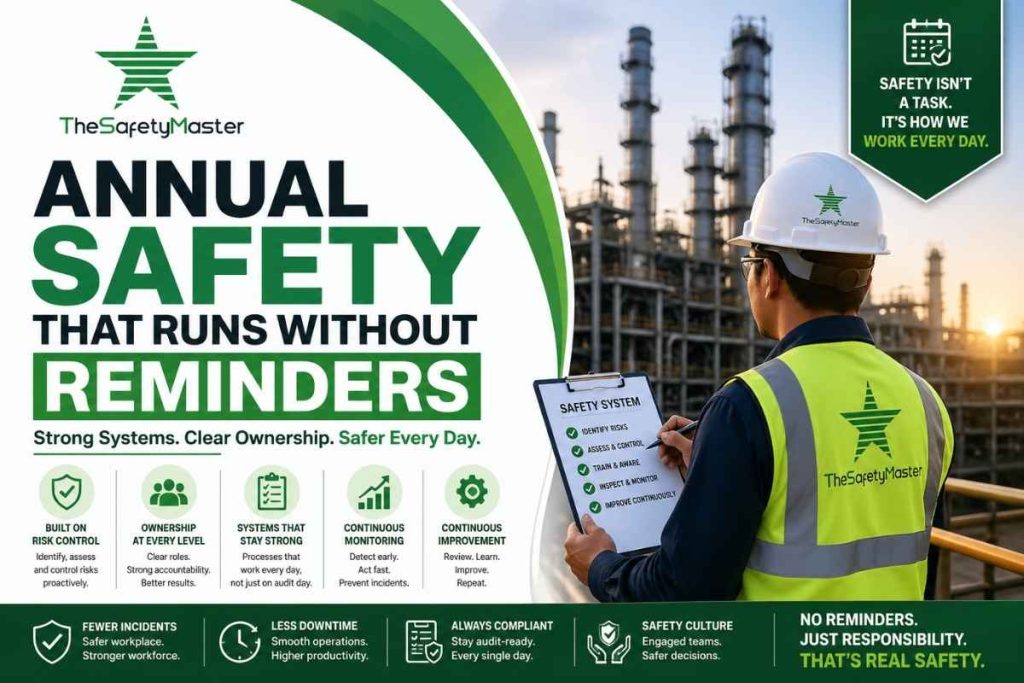
If you actually want consistent safety performance, fewer incidents, and zero surprises during inspections, you need continuity. That’s where annual safety partnerships come in. Instead of occasional checks, you build a system that runs throughout the year, adapts to changes, and holds accountability at every level.
This shift is not just a trend. It is a response to real operational challenges where safety failures cost money, time, and sometimes lives.
The Problem with Traditional Safety Audits
A one-time audit gives you a snapshot. It tells you what is wrong at a specific moment. But operations don’t stay static. Teams change, processes evolve, and risks shift.
Here’s what typically happens after an audit:
- Findings are shared, but follow-through is inconsistent
- Documentation improves temporarily, then declines
- Teams lose focus once external pressure is gone
- Safety becomes reactive instead of proactive
Even if you conduct a detailed Safety Audit, the value drops quickly if there is no system to maintain and monitor improvements. That’s the gap most companies ignore.
From Compliance to Continuous Safety Systems
Compliance is the minimum requirement. Real safety starts when systems operate without constant reminders.
An annual safety program focuses on:
- Continuous monitoring instead of periodic checks
- Real-time correction of unsafe practices
- Structured implementation of safety policies
- Accountability across departments
This approach transforms safety from a checklist into a working system. It becomes part of daily operations, not a separate activity that teams deal with occasionally.
What an Annual Safety Partnership Actually Delivers
Let’s cut through the noise. If a safety partner is not actively involved throughout the year, they are just a vendor, not a solution.
A strong annual safety engagement includes:
1. Ongoing Risk Identification and Control
Risks are not static. New equipment, new staff, and new processes introduce new hazards. Continuous evaluation ensures these risks are identified early and controlled effectively.
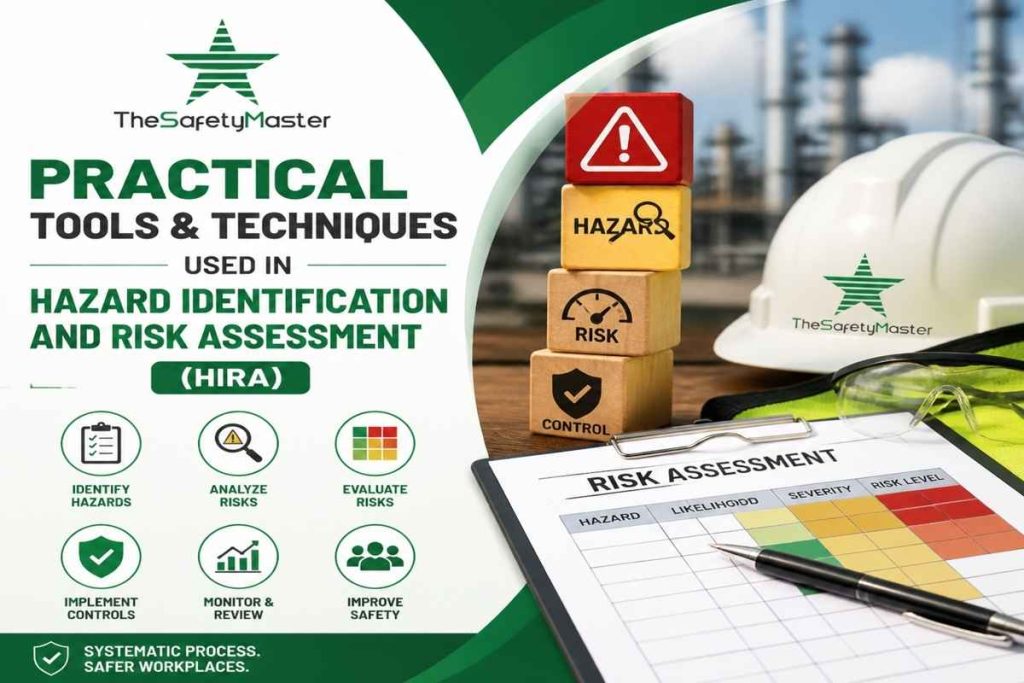
Structured frameworks like HIRA Risk Assesment help in systematically identifying hazards and assessing risks before they turn into incidents. But the real value comes from applying this regularly, not once.
2. Process-Level Safety Management
Many companies focus only on visible safety issues—PPE, housekeeping, signage. That’s surface-level safety.
Serious incidents usually come from process failures. That’s why integrating Process Safety Management into your operations is critical. It ensures:
- Safe handling of hazardous materials
- Control over critical processes
- Prevention of major industrial accidents
This is not optional for high-risk industries. It is essential.
3. Implementation, Not Just Recommendations
Most consultants stop at giving recommendations. That’s the easy part.
The hard part is:
- Implementing corrective actions
- Training teams consistently
- Ensuring procedures are followed on the ground
An annual partner stays involved until changes are actually working, not just documented.
4. Audit Readiness at All Times
Instead of scrambling before inspections, your systems stay ready throughout the year.
This means:
- Updated documentation
- Trained staff
- Verified compliance
You don’t prepare for audits. You stay prepared.
Safety That Works Even When No One Is Watching
Here’s the uncomfortable truth: if your safety system only works when someone is checking, it’s broken.
A strong safety framework ensures:
- Teams follow protocols without supervision
- Supervisors take ownership, not just responsibility
- Safety becomes part of operational culture
This is where most companies fail. They depend too much on external pressure instead of building internal discipline.
The Business Impact of Continuous Safety
Let’s move beyond theory. This is what actually improves when safety is managed properly:
Reduced Incidents
Fewer accidents mean fewer disruptions, lower compensation costs, and better workforce morale.
Improved Productivity
Safe environments reduce downtime. Operations run smoother when risks are controlled.
Stronger Compliance
You avoid penalties, legal complications, and last-minute panic before inspections.
Better Reputation
Clients and stakeholders trust organizations that demonstrate consistent safety performance.
Why “Ownership” Is the Real Game-Changer
Most companies think hiring a consultant solves the problem. It doesn’t.
Safety improves only when someone owns it end-to-end.
Ownership means:
- Clear accountability for outcomes
- Continuous involvement, not periodic visits
- Responsibility for implementation, not just advice
Without ownership, safety becomes fragmented. Different teams handle different parts, and gaps appear.
With ownership, everything aligns:
- Risk assessment
- Training
- Monitoring
- Compliance
It becomes one integrated system.
Building a Safety Culture That Lasts
Culture is not built through posters or slogans. It is built through consistent action.
To create a strong safety culture:
- Leadership must prioritize safety beyond compliance
- Teams must be trained regularly, not once
- Systems must be simple enough to follow consistently
- Accountability must be clear at every level
An annual safety approach supports this by ensuring there are no gaps in execution.
When Does an Annual Safety Program Make Sense?
If you’re still unsure whether this approach is right for you, here’s a simple check.
You need a continuous safety system if:
- Your operations involve moderate to high risk
- You face regular compliance audits
- Safety performance fluctuates over time
- Incidents are recurring, even if minor
- Implementation of safety measures is inconsistent
If any of these sound familiar, a one-time audit is not enough.
The Bottom Line
Safety is not a one-time task. It is an ongoing process that requires structure, monitoring, and accountability.
Treating it as a periodic activity creates gaps. And in safety, gaps are where incidents happen.
An annual safety partnership closes those gaps. It ensures that:
- Risks are identified continuously
- Systems are implemented properly
- Teams stay aligned and accountable
- Compliance becomes a byproduct, not a struggle
If you want safety that actually works on the ground, you need more than audits. You need a system that runs every day, without fail.