Creating a Fire-Safe Workplace Culture: Practical Fire Safety Tips from The Safety Master

Enhancing Safety Culture: A Comprehensive Guide by a Leading Safety Consultant
July 28, 2023
Training for Fire Safety: The Safety Master’s Expert Recommendations
July 31, 2023Introduction to a Fire-Safe Workplace Culture
A fire-safe workplace culture means making fire safety a daily responsibility for everyone in an organization. Fire safety is not only about having fire extinguishers and alarms. It also includes employee awareness, regular inspections, emergency planning, training, and safe workplace behavior.
The Safety Master helps organizations improve workplace safety through fire safety audits, fire risk assessments, safety training, and behavior-based safety practices. A strong safety culture can help organizations identify hazards early and take preventive action.
What Is a Fire-Safe Workplace Culture?
A fire-safe workplace culture is an environment where employees understand fire hazards and know how to prevent and respond to fire emergencies.
It involves:
- Identifying fire hazards before an incident occurs
- Keeping emergency exits clear
- Maintaining fire-fighting equipment
- Training employees in emergency procedures
- Conducting regular fire safety inspections
- Reporting unsafe conditions
- Practicing emergency evacuation drills
- Following workplace fire safety procedures
When safety becomes part of everyday work, employees are more likely to recognize and report potential fire hazards.
Why Is Fire Safety Important in the Workplace?
A workplace fire can affect employees, buildings, equipment, materials, and business operations. Early identification of hazards and proper emergency preparation are important parts of fire prevention.
Common workplace fire hazards include:
- Electrical faults and damaged cables
- Flammable liquids and gases
- Poor storage practices
- Hot work activities
- Blocked emergency exits
- Improper handling of combustible materials
- Overloaded electrical systems
- Unsafe smoking practices
Organizations should regularly review these hazards and introduce suitable controls.
Fire Safety Audit for Workplace Protection
What Is a Fire Safety Audit?
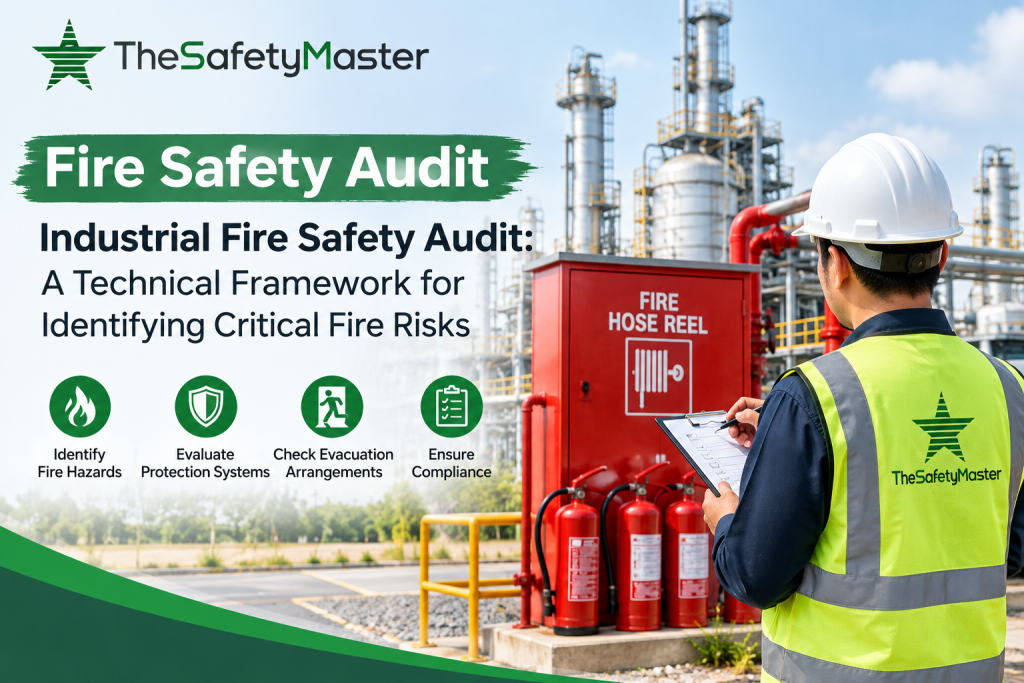
A fire safety audit is a systematic assessment of workplace fire safety arrangements. It can examine fire protection systems, emergency exits, fire-fighting equipment, evacuation arrangements, and compliance with applicable requirements.
The Safety Master provides fire safety audit and assessment services to help organizations identify vulnerabilities and areas that require improvement.
Key Areas Covered in a Fire Safety Audit
A workplace fire safety audit may review:
- Fire alarm systems
- Fire extinguishers
- Fire hydrant systems
- Emergency lighting
- Fire exits and escape routes
- Electrical safety
- Emergency response procedures
- Fire safety signage
- Storage of combustible materials
- Employee awareness and training
Regular audits help organizations maintain better visibility of their fire safety performance.
Fire Risk Assessment and Hazard Identification
Identify Potential Fire Hazards
The first step in improving fire safety is identifying possible sources of ignition and combustible materials. Organizations should consider normal operations as well as maintenance, construction, storage, and emergency situations.
Assess the Risk
After identifying hazards, organizations can consider the likelihood of a fire and the potential consequences. This helps management prioritize appropriate preventive and protective measures.
Implement Fire Risk Controls
Controls may include:
- Removing unnecessary combustible materials
- Improving housekeeping
- Maintaining electrical systems
- Separating incompatible materials
- Providing suitable fire protection systems
- Improving emergency access and escape routes
- Providing employee training
The Safety Master focuses on fire risk assessment as part of a proactive approach to identifying and reducing workplace fire hazards.
Employee Training for Fire Safety
Employees are an important part of an effective workplace fire safety program. Training should be practical and suitable for the risks present at the workplace.
Training can cover:
Fire Prevention
Employees should understand common workplace fire hazards and the actions that can help prevent fires.
Fire Extinguisher Awareness
Employees can be trained to understand the different types of extinguishers, their basic use, and when evacuation should take priority.
Emergency Evacuation
Employees should know:
- Emergency exits
- Assembly points
- Alarm procedures
- Evacuation routes
- Emergency communication procedures
Emergency Response
Employees should understand their responsibilities during an emergency and avoid actions that could place themselves or others at greater risk.
The Safety Master provides fire safety training designed to improve employee knowledge of fire prevention, fire-fighting equipment, and emergency evacuation procedures.
Building a Behavior-Based Fire Safety Culture
Encourage Safe Workplace Behavior
Employee behavior can have an important role in fire prevention. Organizations should encourage employees to follow established safety procedures and report unsafe conditions.
Make Employees Part of Fire Prevention
Employees can contribute by:
- Reporting damaged electrical equipment
- Keeping exits unobstructed
- Following hot work procedures
- Maintaining good housekeeping
- Storing materials safely
- Reporting fire hazards
- Participating in emergency drills
Behavior-based safety approaches focus on encouraging responsible actions and improving awareness of workplace risks. The Safety Master incorporates behavior-based safety practices into its broader safety approach.
Emergency Preparedness and Fire Evacuation
A workplace should have a clear emergency response plan that employees understand.
An effective plan should identify:
- Alarm and notification procedures
- Emergency exits
- Evacuation routes
- Assembly points
- Emergency contacts
- Roles and responsibilities
- Procedures for accounting for employees and visitors
Regular drills can help employees become familiar with evacuation procedures and identify areas where the emergency plan may need improvement.
Role of Management in Fire Safety
Management plays an important role in creating a strong fire safety culture.
Management should:
- Provide appropriate fire safety resources
- Support regular inspections and audits
- Ensure employees receive suitable training
- Review fire safety findings
- Correct identified deficiencies
- Encourage employees to report hazards
- Promote safety as part of normal business activities
When management actively supports safety, employees receive a clear message that fire prevention is an organizational priority.
How The Safety Master Supports Workplace Fire Safety
The Safety Master provides safety consultancy, fire safety assessment, fire risk assessment, training, and behavior-based safety support for organizations.
Its fire safety approach includes:
- Fire safety audits
- Fire risk assessments
- Fire safety training
- Workplace safety awareness
- Behavior-based safety practices
- Fire prevention guidance
- Emergency preparedness support
These services can help organizations understand their workplace risks and develop practical safety improvements.
Benefits of Creating a Fire-Safe Workplace Culture
A proactive workplace fire safety culture can help organizations:
- Improve employee awareness
- Identify hazards earlier
- Strengthen emergency preparedness
- Improve housekeeping and safe work practices
- Support fire safety compliance
- Protect people and property
- Reduce avoidable fire risks
- Improve overall safety performance
Fire safety should be treated as an ongoing process rather than a one-time activity.
Conclusion
Creating a fire-safe workplace culture requires continuous awareness, employee participation, regular assessments, training, and management commitment. Fire safety audits and fire risk assessments can help organizations identify vulnerabilities, while training and behavior-based safety can help employees respond responsibly to workplace hazards.
The Safety Master supports organizations with fire safety audits, fire risk assessments, training, and safety consultancy services designed to strengthen workplace fire safety practices.
FAQs About Fire-Safe Workplace Culture
1. What is a fire-safe workplace culture?
A fire-safe workplace culture is an environment where employees and management actively follow fire prevention procedures, identify hazards, maintain fire safety systems, and understand emergency response procedures.
2. Why is a fire safety audit important?
A fire safety audit helps identify potential fire hazards and reviews important areas such as fire protection systems, emergency exits, evacuation procedures, and workplace fire safety arrangements.
3. What is included in a fire risk assessment?
A fire risk assessment generally involves identifying fire hazards, assessing the associated risks, and determining suitable measures to prevent fires and reduce their potential consequences.
4. How can employees help prevent workplace fires?
Employees can help by following safety procedures, maintaining good housekeeping, reporting hazards, keeping emergency exits clear, using equipment correctly, and participating in fire safety training and drills.
5. How can The Safety Master help with workplace fire safety?
The Safety Master provides fire safety audits, fire risk assessments, fire safety training, and behavior-based safety support to help organizations improve their workplace safety practices.