Risk Control Measures Commonly Recommended After HIRA

How to Choose the Right HIRA Consultant for Your Industry
May 13, 2026
Signs Your Workplace Needs an Updated Risk Assessment
May 18, 2026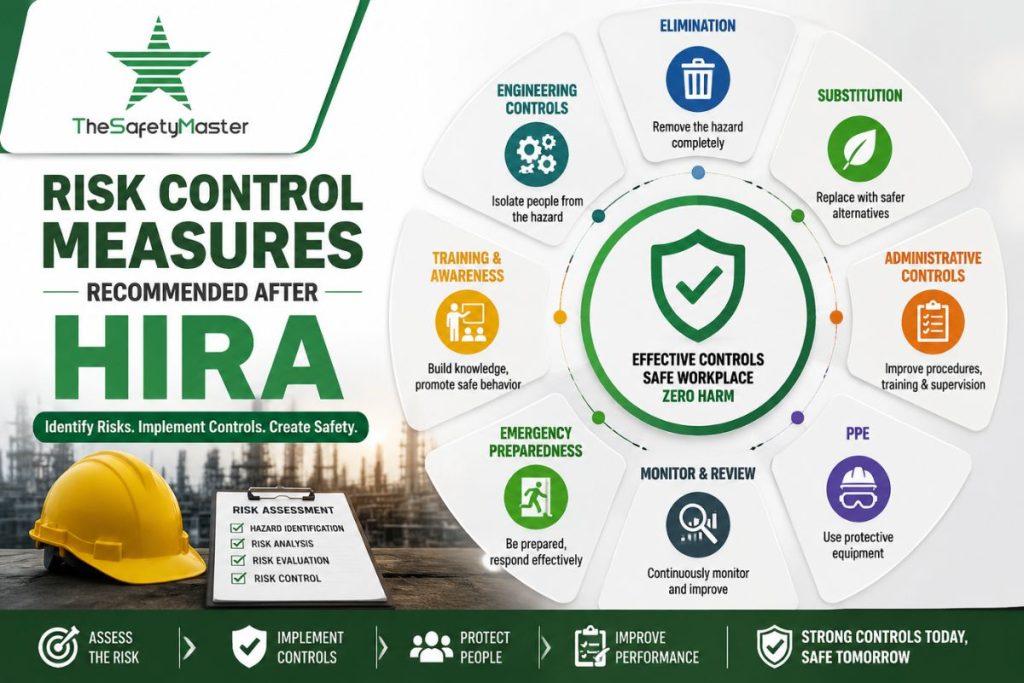
Identifying workplace hazards is only the first step in improving safety. The real impact comes from implementing effective risk control measures after hazards and operational risks have been analyzed. Many organizations conduct risk assessments regularly, but incidents still occur because recommended controls are either weak, incomplete, or poorly implemented.
This is why risk control measures are considered one of the most important outcomes of a structured safety assessment. Their purpose is to reduce the likelihood of incidents, minimize the severity of consequences, and create safer working conditions across all operational areas.
A systematic process like HIRA helps organizations identify hazards and evaluate risks, but the effectiveness of the process depends heavily on the quality of controls introduced afterward. Without proper controls, hazard identification alone has very limited practical value.
What Are Risk Control Measures?
Risk control measures are actions, systems, or procedures implemented to eliminate hazards or reduce workplace risks to an acceptable level.
These controls are introduced after evaluating:
- The type of hazard
- The likelihood of occurrence
- The possible severity of consequences
- Worker exposure levels
- Operational conditions
The goal is not only to respond to existing hazards but also to prevent future incidents before they occur.
Risk controls may involve:
- Engineering improvements
- Administrative procedures
- Worker training
- Process modifications
- Safety equipment
- Monitoring systems
The most effective controls focus on reducing risk at the source rather than depending entirely on human behavior.
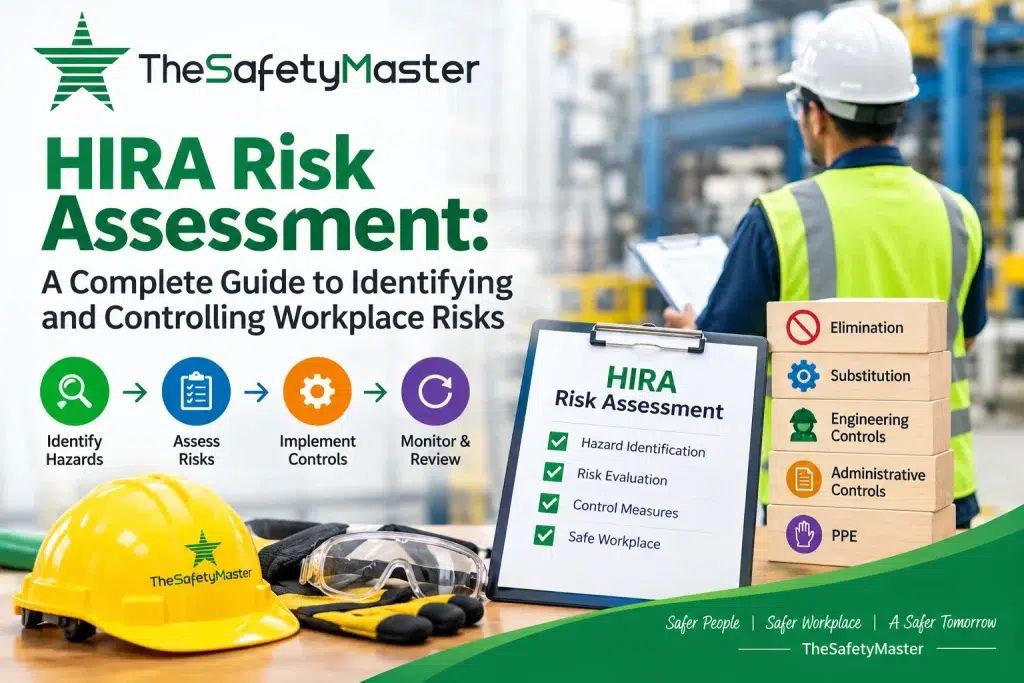
Elimination of Hazards
Elimination is considered the most effective risk control method because it completely removes the hazard from the workplace.
Examples include:
- Removing unnecessary hazardous chemicals
- Discontinuing unsafe work practices
- Replacing manual lifting with automated handling systems
- Removing damaged equipment permanently
If a hazard no longer exists, the associated risk is also eliminated.
However, elimination is not always practical in high-risk industries where certain operations are essential for production. In such cases, organizations move toward other control measures.
Substitution of Hazardous Processes or Materials
When elimination is not possible, substitution becomes the next preferred option.
This involves replacing hazardous materials, equipment, or processes with safer alternatives.
Examples include:
- Using water-based chemicals instead of flammable solvents
- Replacing toxic substances with less harmful materials
- Introducing low-noise machinery
- Using automated systems instead of manual high-risk activities
Substitution helps reduce exposure levels while allowing operations to continue efficiently.
The effectiveness of substitution depends on careful evaluation because poorly chosen alternatives can sometimes create new risks.
Engineering Controls
Engineering controls focus on physically isolating workers from hazards. These controls are generally more reliable than administrative procedures because they do not depend entirely on worker behavior.
Common engineering controls include:
- Machine guarding
- Ventilation systems
- Safety interlocks
- Noise barriers
- Pressure relief systems
- Automatic shutdown mechanisms
- Fire suppression systems
- Containment structures
For example, in manufacturing environments, machine guards help prevent contact with moving parts. In chemical plants, ventilation systems reduce worker exposure to toxic fumes.
Engineering controls are widely recommended because they create long-term risk reduction without requiring constant human intervention.
Administrative Controls
Administrative controls focus on changing how work is performed to reduce exposure to hazards.
These controls may include:
- Safe work procedures
- Permit-to-work systems
- Shift rotation
- Restricted access areas
- Warning signs
- Safety instructions
- Maintenance schedules
- Supervision systems
For example, limiting worker exposure time in high-noise environments helps reduce hearing-related risks. Similarly, implementing hot work permit systems helps control fire hazards during welding or cutting activities.
Administrative controls are important, but they are generally considered less reliable than engineering controls because they depend heavily on worker compliance and supervision.
Personal Protective Equipment (PPE)
PPE is one of the most visible workplace safety measures, but it should never become the only control method.
Common PPE includes:
- Helmets
- Safety gloves
- Respirators
- Safety goggles
- Face shields
- Ear protection
- Safety shoes
- Protective clothing
PPE acts as the final barrier between workers and hazards when other controls cannot fully eliminate risk.
For example:
- Respirators protect against airborne contaminants
- Safety goggles reduce eye injury risks
- Flame-resistant clothing minimizes burn injuries
However, PPE effectiveness depends on:
- Proper selection
- Correct usage
- Regular maintenance
- Worker training
Organizations often make the mistake of relying too heavily on PPE instead of addressing hazards at the source.
Training and Competency Development
Even strong safety systems can fail if workers do not understand workplace hazards properly.
Training is commonly recommended after risk assessments to improve:
- Hazard awareness
- Emergency response capability
- Equipment handling
- Process understanding
- Compliance with procedures
- Incident reporting practices
Training becomes especially important in industries involving complex processes and hazardous materials.
Professionals who undergo structured HAZOP Training develop better understanding of process hazards, operational deviations, and control systems within high-risk industrial environments.
Practical training improves worker decision-making and helps reduce human errors during operations.
Emergency Preparedness Measures
Risk assessments often identify scenarios where incidents cannot be fully prevented. In such situations, emergency preparedness becomes critical.
Common emergency control measures include:
- Evacuation procedures
- Emergency shutdown systems
- Spill response plans
- Fire drills
- Alarm systems
- First aid arrangements
- Rescue equipment
- Emergency communication systems
Preparedness measures help reduce the severity of incidents when preventive controls fail.
For example, a fire suppression system may not prevent ignition completely, but it can significantly reduce fire spread and operational damage.
Organizations that neglect emergency preparedness often struggle to control incidents effectively during real emergencies.
Preventive Maintenance Programs
Equipment failure is a major cause of workplace incidents in many industries.
Risk assessments frequently recommend preventive maintenance programs to reduce operational failures.
These programs may include:
- Routine inspections
- Equipment servicing
- Calibration checks
- Lubrication schedules
- Replacement of worn components
- Vibration monitoring
- Thermal inspections
Preventive maintenance helps identify equipment deterioration before failures occur.
For example, identifying overheating electrical systems early can prevent fire incidents and operational shutdowns.
Maintenance programs are especially important in industries where machinery operates continuously under high stress conditions.
Monitoring and Continuous Review
Risk control measures should never remain static. Workplace conditions, operational processes, and equipment usage change over time, which means risks also evolve.
Continuous monitoring helps organizations evaluate whether controls remain effective.
This may involve:
- Safety inspections
- Workplace observations
- Incident trend analysis
- Near-miss reporting
- Environmental monitoring
- Worker feedback
- Internal audits
Monitoring allows organizations to identify gaps before they result in incidents.
If controls are found ineffective, corrective actions can be introduced quickly.
Behavioral Safety Measures
Human behavior plays a major role in workplace safety performance.
Many incidents occur because workers:
- Bypass procedures
- Ignore warnings
- Take shortcuts
- Misuse equipment
- Become overconfident
Behavioral safety programs focus on improving worker attitudes, awareness, and decision-making.
Common measures include:
- Safety observations
- Worker engagement programs
- Toolbox talks
- Positive reinforcement
- Leadership involvement
- Communication improvement
Strong safety culture encourages workers to report hazards and follow procedures consistently.
Why Risk Controls Must Be Practical
One common problem in workplace safety is recommending controls that look effective on paper but fail during actual operations.
Practical risk controls should be:
- Realistic
- Achievable
- Easy to follow
- Operationally suitable
- Sustainable over time
For example, introducing complicated procedures without considering workload or operational pressure often leads to poor compliance.
The best controls balance safety requirements with operational efficiency.
Conclusion
Risk control measures are the foundation of effective workplace safety management after hazard identification and risk assessment. Their purpose is not only to reduce accidents but also to improve operational reliability, worker protection, and emergency preparedness.
From engineering controls and PPE to training, maintenance, and emergency planning, every control measure plays a specific role in reducing workplace risk. The most effective organizations focus on layered protection strategies instead of relying on a single solution.
Risk assessments become truly valuable only when recommended controls are implemented properly, reviewed regularly, and adapted to changing workplace conditions.