Types of Hazards Identified During HIRA Studies

Hazard Identification vs Risk Assessment: Key Differences Explained Clearly
May 8, 2026
How to Choose the Right HIRA Consultant for Your Industry
May 13, 2026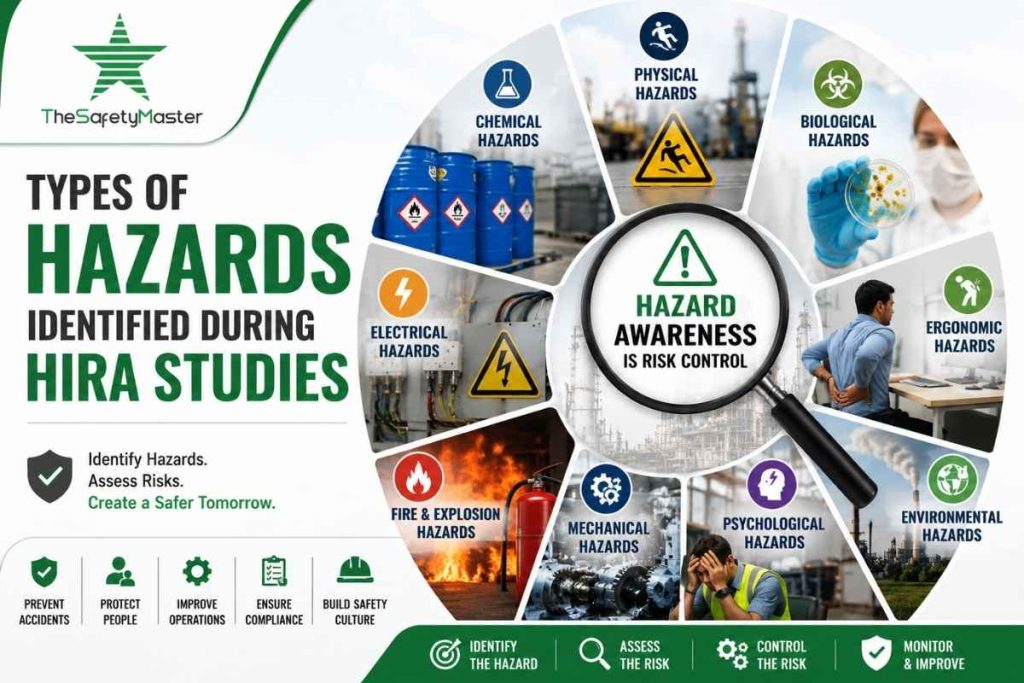
Workplace hazards exist in almost every industry, whether it is construction, manufacturing, oil and gas, logistics, healthcare, or chemical processing. Many accidents occur not because hazards are completely unknown, but because they are ignored, underestimated, or not identified at the right time. This is where structured risk assessment practices become important.
A systematic process like HIRA helps organizations identify potential workplace hazards before they turn into incidents. The main purpose of these studies is to recognize unsafe conditions, evaluate associated risks, and implement practical control measures to reduce harm.
However, hazard identification is not limited to one category of risk. Different industries face different types of hazards depending on their operations, equipment, environment, and workforce activities. Understanding these hazard categories makes it easier for organizations to build stronger safety systems and improve operational control.
What is a Workplace Hazard?
A workplace hazard is anything that has the potential to cause:
- Injury
- Illness
- Property damage
- Environmental harm
- Operational disruption
Hazards may be visible, hidden, short-term, or long-term. Some hazards create immediate danger, while others slowly affect worker health over time.
For example:
- A chemical spill can create an immediate risk
- Excessive noise exposure may cause gradual hearing damage
- Poor ergonomics may lead to long-term musculoskeletal disorders
The purpose of hazard identification studies is to recognize all these risks before they cause serious consequences.
Physical Hazards
Physical hazards are among the most common hazards identified during workplace assessments. These hazards arise from environmental conditions, equipment, or physical activities that can directly harm workers.
Common physical hazards include:
- Slippery floors
- Excessive noise
- Vibration exposure
- Extreme temperatures
- Radiation
- Poor lighting
- Working at heights
- Unguarded machinery
For example, construction workers operating at elevated platforms face fall hazards daily. Similarly, manufacturing workers exposed to loud machinery may develop hearing-related problems if proper controls are missing.
Physical hazards are usually easier to observe compared to other categories, but they are also frequently ignored because workers become familiar with unsafe conditions over time.
Chemical Hazards
Chemical hazards involve exposure to harmful substances that can affect worker health or create dangerous reactions.
These hazards may exist in the form of:
- Gases
- Vapors
- Dust
- Fumes
- Liquids
- Solvents
- Corrosive materials
Chemical exposure can happen through:
- Inhalation
- Skin contact
- Ingestion
- Injection
In chemical plants, laboratories, and manufacturing facilities, workers often handle substances capable of causing burns, respiratory illnesses, poisoning, or explosions.
One of the biggest challenges with chemical hazards is that some effects are not immediately visible. Long-term exposure to toxic substances may slowly impact worker health over several years.
This is why process industries rely heavily on systematic techniques taught during HAZOP Training to identify process deviations, chemical reactions, pressure changes, and operational failures that may lead to hazardous situations.
Biological Hazards
Biological hazards are commonly found in healthcare, food processing, laboratories, agriculture, and waste management industries.
These hazards include exposure to:
- Bacteria
- Viruses
- Fungi
- Parasites
- Bloodborne pathogens
- Contaminated waste
Healthcare workers, for example, face risks from infectious diseases during patient care. Waste management employees may encounter contaminated materials capable of spreading illness.
Biological hazards became more widely recognized after global health emergencies highlighted the importance of infection control, workplace hygiene, and proper PPE usage.
Identifying biological hazards requires organizations to focus not only on physical safety but also on occupational health protection.
Ergonomic Hazards
Ergonomic hazards are often underestimated because they usually do not cause immediate injury. Instead, they create long-term health problems due to repetitive motions, awkward postures, or poor workstation design.
Common ergonomic hazards include:
- Repetitive lifting
- Poor sitting posture
- Excessive bending
- Repetitive hand movements
- Improper workstation setup
- Manual material handling
These hazards are common in offices, warehouses, factories, and assembly lines.
For example, employees lifting heavy loads repeatedly without mechanical assistance may develop back injuries over time. Office workers sitting for long hours with improper desk setup may experience neck strain, shoulder pain, or wrist problems.
Although ergonomic hazards may appear less severe compared to physical or chemical risks, they are responsible for a large number of workplace injuries globally.
Electrical Hazards
Electrical hazards remain one of the leading causes of workplace fatalities in industrial environments.
Common electrical hazards include:
- Exposed wiring
- Faulty equipment
- Overloaded circuits
- Improper grounding
- Contact with live electrical systems
- Damaged extension cords
Electrical incidents can result in:
- Electric shock
- Burns
- Arc flash
- Fire
- Explosion
Industries involving maintenance work, construction, and heavy equipment operations are particularly vulnerable to electrical hazards.
Many incidents occur during repair or servicing activities when lockout-tagout procedures are not properly followed.
Fire and Explosion Hazards
Fire hazards are present in almost every workplace, but the level of risk varies depending on the materials, processes, and environment involved.
Common fire hazards identified during assessments include:
- Flammable liquids
- Gas leaks
- Electrical faults
- Hot work activities
- Poor storage practices
- Blocked emergency exits
- Accumulation of combustible dust
In high-risk industries, uncontrolled fire incidents can quickly escalate into explosions, structural damage, and multiple casualties.
A structured Fire Audit helps organizations identify fire risks, evaluate emergency preparedness, inspect suppression systems, and improve evacuation planning.
Fire hazard identification is not limited to checking extinguishers. It involves understanding ignition sources, fuel availability, and how rapidly fire can spread within a facility.
Mechanical Hazards
Mechanical hazards are associated with moving machinery, rotating equipment, and mechanical operations.
Examples include:
- Rotating shafts
- Conveyor systems
- Cutting machines
- Crushing equipment
- Pressurized systems
- Pinch points
Workers operating near machinery face risks of entanglement, crushing, amputation, or impact injuries.
Mechanical hazards are common in manufacturing plants, workshops, and processing industries where machinery operates continuously.
Proper guarding, preventive maintenance, and operational controls are essential to reduce these risks.
Psychological and Stress-Related Hazards
Modern workplace safety is no longer limited to physical injuries alone. Psychological hazards are now recognized as an important part of occupational health.
These hazards may include:
- Excessive workload
- Workplace harassment
- Fatigue
- Shift-related stress
- Poor communication
- Mental pressure
- Job insecurity
Long-term psychological stress can impact worker concentration, decision-making, and overall safety performance.
Fatigue-related errors are particularly common in industries involving long working hours, night shifts, or repetitive operations.
Organizations increasingly include mental well-being assessments as part of their workplace safety programs.
Environmental Hazards
Environmental hazards affect both workers and surrounding communities.
Examples include:
- Air pollution
- Water contamination
- Hazardous waste release
- Chemical leakage
- Dust emissions
- Oil spills
Industries handling chemicals, fuels, or heavy industrial processes must identify environmental hazards carefully to prevent large-scale impact.
Environmental incidents can lead to legal consequences, operational shutdowns, and long-term ecological damage.
Why Hazard Identification is Important
Hazard identification is not just a compliance requirement. It directly impacts workplace safety, operational reliability, and employee well-being.
Proper identification helps organizations:
- Prevent workplace accidents
- Reduce operational downtime
- Improve worker awareness
- Strengthen emergency preparedness
- Enhance compliance with regulations
- Minimize financial losses
- Build a proactive safety culture
A structured Safety Audit also supports organizations in identifying gaps within existing safety systems and verifying whether risk controls are working effectively.
Without proper hazard identification, organizations often react only after incidents occur, which increases both human and financial consequences.
Conclusion
Different workplaces face different types of hazards, but the objective of hazard identification remains the same: recognizing potential risks before they lead to harm. From physical and chemical hazards to ergonomic, electrical, and psychological risks, every category requires careful evaluation and practical control measures.
Hazard identification studies are most effective when they are systematic, continuous, and integrated into daily operations rather than treated as a one-time activity. Organizations that actively identify hazards and review workplace risks regularly are better positioned to reduce incidents, protect employees, and maintain safer working environments over the long term.