Process Hazards Analysis Techniques: Methods, Examples, Checklist & Best Practices

Why Every Manufacturing Plant Needs Process Safety Management (PSM) in 2026
July 31, 2026
Top 10 Fire Safety Audit Findings That Put Industries at Risk
August 3, 2026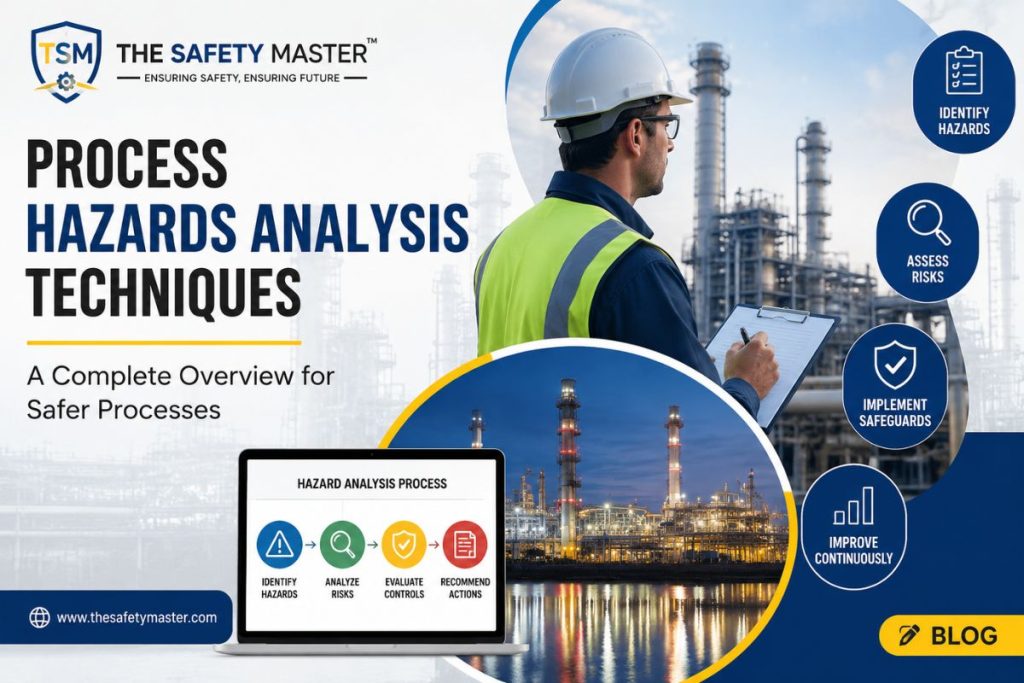
Industrial facilities that handle hazardous chemicals face many operational risks every day. A small mistake, equipment failure, or process deviation can lead to serious accidents, injuries, environmental damage, or financial loss. This is why process hazards analysis techniques play a vital role in identifying potential hazards before they become incidents.
Organizations in industries such as oil & gas, chemical manufacturing, pharmaceuticals, food processing, and power generation rely on Process Hazard Analysis (PHA) to improve workplace safety and maintain regulatory compliance.
If your organization is looking for professional Process Safety Management solutions, The Safety Master provides expert consulting, safety audits, HAZOP studies, risk assessments, and industrial safety training across multiple industries.
What is Process Hazard Analysis (PHA)?
Process Hazard Analysis (PHA) is a systematic method used to identify hazards associated with industrial processes involving hazardous chemicals. The objective is to evaluate risks and implement preventive measures before accidents occur.
PHA helps organizations:
- Identify potential hazards
- Evaluate accident scenarios
- Reduce operational risks
- Improve equipment reliability
- Protect employees and the environment
- Meet OSHA and international safety standards
It is one of the key elements of Process Safety Management (PSM).
Why are Process Hazards Analysis Techniques Important?
Every industrial process contains hidden risks. Without structured analysis, these hazards may remain unnoticed until an accident occurs.
Benefits include:
- Better risk identification
- Improved process reliability
- Fewer workplace incidents
- Enhanced regulatory compliance
- Lower maintenance costs
- Better emergency preparedness
- Increased employee safety
Using appropriate process hazards analysis techniques enables organizations to make informed safety decisions.
Common Process Hazard Analysis Methods
Different industries use different Process Hazard Analysis methods depending on process complexity and available information.
1. HAZOP (Hazard and Operability Study)
HAZOP is one of the most widely used Process Hazard Analysis methods.
It identifies process deviations using guide words such as:
- No
- More
- Less
- Reverse
- As Well As
Each deviation is examined to determine:
- Possible causes
- Consequences
- Existing safeguards
- Recommendations
HAZOP is especially useful for complex chemical plants.
2. What-If Analysis
This technique asks questions like:
- What if the pressure becomes too high?
- What if cooling fails?
- What if power is lost?
The team evaluates possible consequences and recommends preventive actions.
3. Checklist Analysis
A Process Hazard Analysis checklist compares existing operations with industry standards and best practices.
It is useful for:
- Routine inspections
- Small facilities
- Compliance verification
- Equipment audits
4. Failure Mode and Effects Analysis (FMEA)
FMEA examines individual equipment failures and evaluates:
- Failure mode
- Cause
- Effect
- Severity
- Likelihood
- Detection capability
It is commonly used during equipment design.
5. Fault Tree Analysis (FTA)
FTA works backward from an undesirable event.
Example:
Top Event:
Chemical Release
Possible Causes:
- Valve failure
- Human error
- Power failure
- Instrument malfunction
This technique identifies combinations of failures leading to accidents.
6. Layer of Protection Analysis (LOPA)
LOPA evaluates whether existing safety layers provide sufficient protection.
Examples include:
- Pressure relief valves
- Emergency shutdown systems
- Operator intervention
- Fire suppression systems
Process Hazard Analysis Example
Consider a chemical reactor operating under high pressure.
Possible hazards include:
- Temperature increase
- Pressure build-up
- Cooling water failure
- Incorrect chemical charging
- Valve blockage
Consequences may include:
- Reactor explosion
- Toxic gas release
- Fire
- Equipment damage
Recommendations could include:
- Installing automatic shutdown systems
- Pressure relief valves
- Temperature alarms
- Operator training
- Regular maintenance
This simple Process Hazard Analysis example demonstrates how risks can be identified and controlled before incidents occur.
Process Hazard Analysis Checklist
A well-designed Process Hazard Analysis checklist helps ensure that critical safety aspects are not overlooked.
Typical checklist items include:
Equipment
- Equipment condition
- Pressure ratings
- Corrosion inspection
- Valve functionality
Process
- Operating limits
- Temperature monitoring
- Pressure monitoring
- Chemical compatibility
Instrumentation
- Alarm systems
- Emergency shutdown
- Sensors
- Calibration records
Personnel
- Operator competency
- Safety procedures
- Permit-to-work system
- PPE availability
Emergency Preparedness
- Fire protection
- Spill response
- Emergency exits
- First aid arrangements
Process Hazard Analysis vs HAZOP
Many professionals confuse these terms.
| Process Hazard Analysis | HAZOP |
|---|---|
| Broad safety evaluation process | One specific PHA technique |
| Includes multiple analysis methods | Focuses on process deviations |
| May use What-If, Checklist, FMEA, LOPA | Uses guide words systematically |
| Suitable for various industries | Best for complex process plants |
Simply put, Process Hazard Analysis vs HAZOP is similar to comparing “transportation” with “cars.” HAZOP is one method within the larger Process Hazard Analysis framework.
How Often Must a Process Hazard Analysis Be Updated?
One of the most frequently asked questions is:
According to OSHA’s Process Safety Management (PSM) standard, Process Hazard Analyses should be revalidated at least every five years.
However, organizations should also review or update the PHA when:
- New equipment is installed
- Process modifications occur
- Major incidents happen
- New hazards are identified
- Production capacity changes
- Significant operating procedures are revised
Regular updates ensure that the analysis remains relevant and effective.
Process Hazard Analysis Training
Proper Process Hazard Analysis training enables employees and engineers to understand:
- Hazard identification
- Risk assessment techniques
- PHA methodologies
- HAZOP facilitation
- Regulatory requirements
- Incident investigation
- Risk reduction strategies
Training helps organizations improve both safety culture and compliance.
Process Hazard Analysis PDF
Many organizations maintain a Process Hazard Analysis PDF for documentation and regulatory purposes.
A typical PDF includes:
- Process description
- P&ID references
- Hazard identification
- Risk ranking
- Team members
- Recommendations
- Action items
- Review schedule
Digital documentation makes future audits and updates easier.
Process Hazard Analysis PPT
A Process Hazard Analysis PPT is commonly used during:
- Safety meetings
- Employee induction
- Internal training
- Client presentations
- Management reviews
Typical presentation topics include:
- Introduction to PHA
- Risk identification
- Hazard analysis methods
- Case studies
- Corrective actions
- Lessons learned
Interactive presentations improve understanding among employees.
Best Practices for Effective Process Hazard Analysis
Organizations can improve the effectiveness of their PHA by following these best practices:
Build a Qualified Team
Include professionals from operations, maintenance, engineering, instrumentation, safety, and management.
Use Updated Process Information
Ensure all P&IDs, operating procedures, and equipment data are current.
Encourage Team Participation
PHA works best when team members openly discuss potential hazards and operational concerns.
Prioritize High-Risk Scenarios
Focus on hazards that could lead to serious injuries, explosions, fires, or environmental damage.
Track Recommendations
Every recommendation should have:
- Responsible person
- Completion deadline
- Verification status
Conduct Regular Reviews
Do not wait for the five-year revalidation if significant process changes occur.
Conclusion
Implementing effective process hazards analysis techniques is one of the most important steps toward preventing industrial accidents. Whether using HAZOP, FMEA, What-If Analysis, Checklist Analysis, or LOPA, every organization benefits from systematically identifying hazards and reducing risks.
Regular reviews, employee training, and proper documentation strengthen process safety while helping organizations comply with industry regulations. Investing in professional Process Hazard Analysis not only protects people and assets but also supports long-term operational excellence.
For organizations seeking expert guidance in Process Safety Management, HAZOP studies, risk assessments, safety audits, and industrial safety training, The Safety Master offers comprehensive solutions tailored to a wide range of industries.
Frequently Asked Questions (FAQs)
1. What is Process Hazard Analysis (PHA)?
Process Hazard Analysis is a structured method used to identify, evaluate, and control hazards associated with industrial processes involving hazardous chemicals.
2. What are the most common Process Hazard Analysis methods?
The most common methods include HAZOP, What-If Analysis, Checklist Analysis, FMEA, Fault Tree Analysis (FTA), and Layer of Protection Analysis (LOPA).
3. How often must a Process Hazard Analysis be updated?
OSHA requires Process Hazard Analyses to be revalidated at least once every five years, or sooner if significant process changes occur.
4. What is the difference between Process Hazard Analysis and HAZOP?
Process Hazard Analysis is the overall risk assessment process, while HAZOP is one specific technique used within that process to identify process deviations.
5. Why is Process Hazard Analysis training important?
Training helps engineers and operators understand hazard identification, risk assessment methods, regulatory requirements, and best practices for preventing industrial accidents.