Top Safety Consultants Thailand: The Ultimate Guide to EHS & Compliance

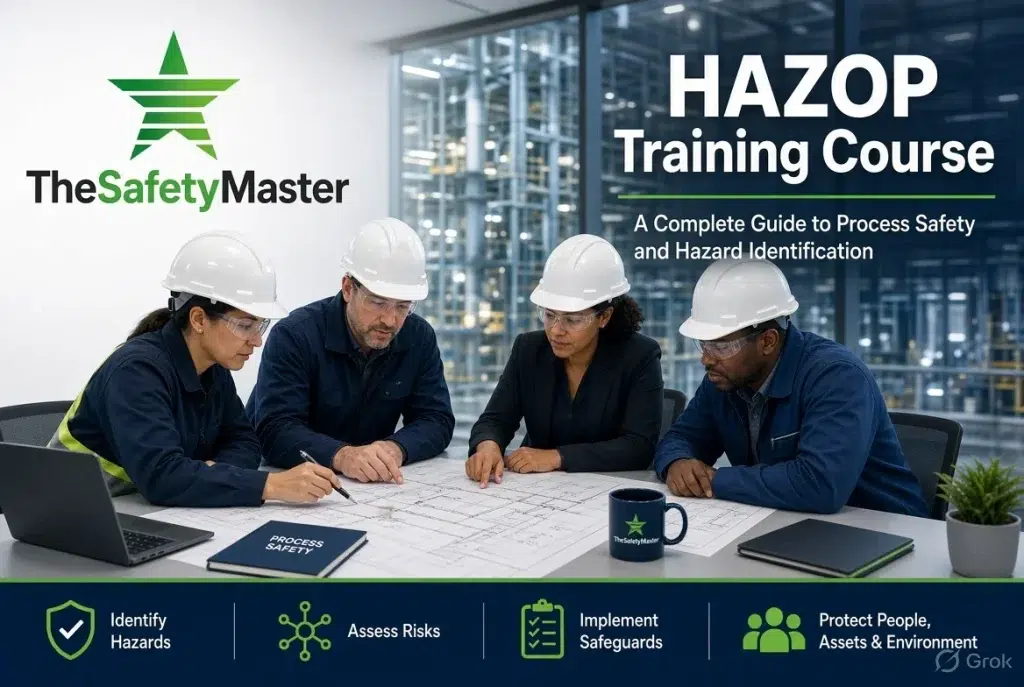
HAZOP Training Course: A Complete Guide to Process Safety and Hazard Identification
November 5, 2026
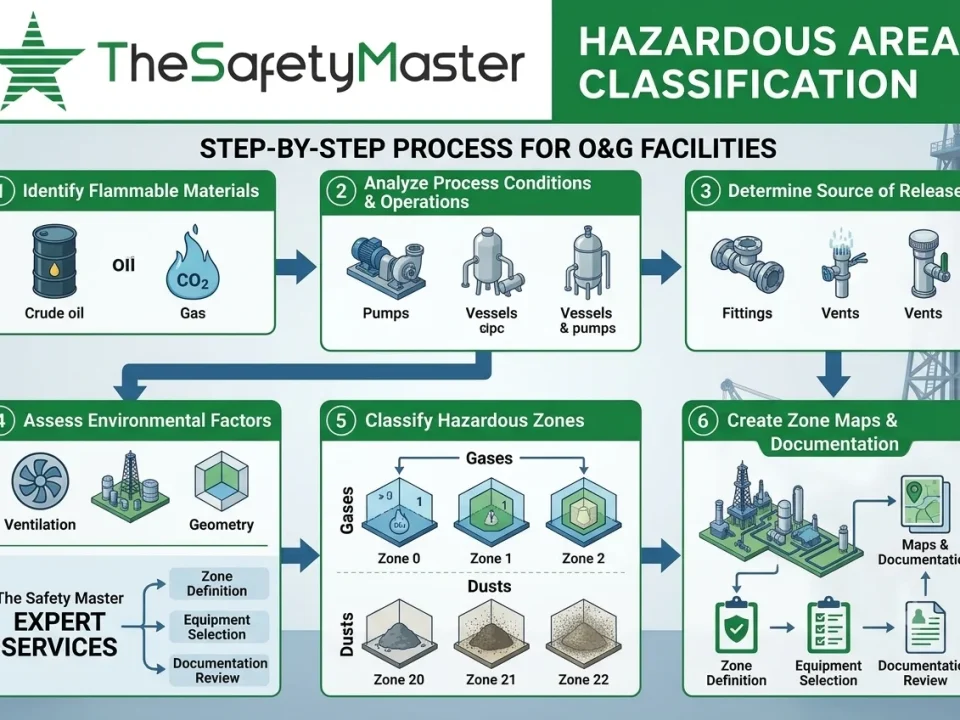
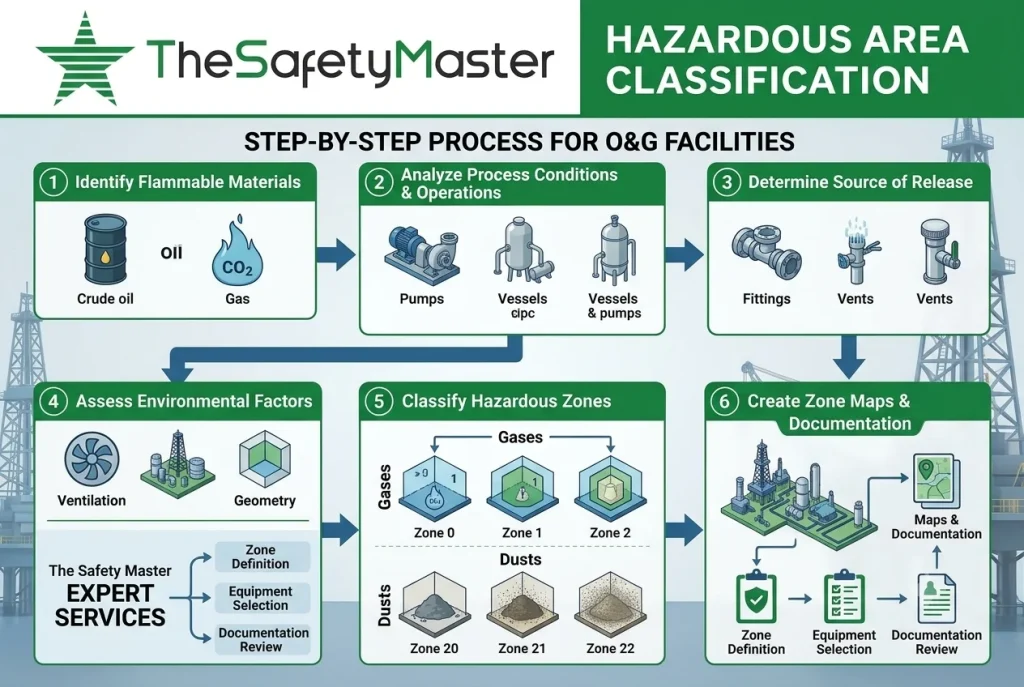
How to Perform Hazardous Area Classification for Oil and Gas Facilities: A Step-by-Step Process
November 5, 2026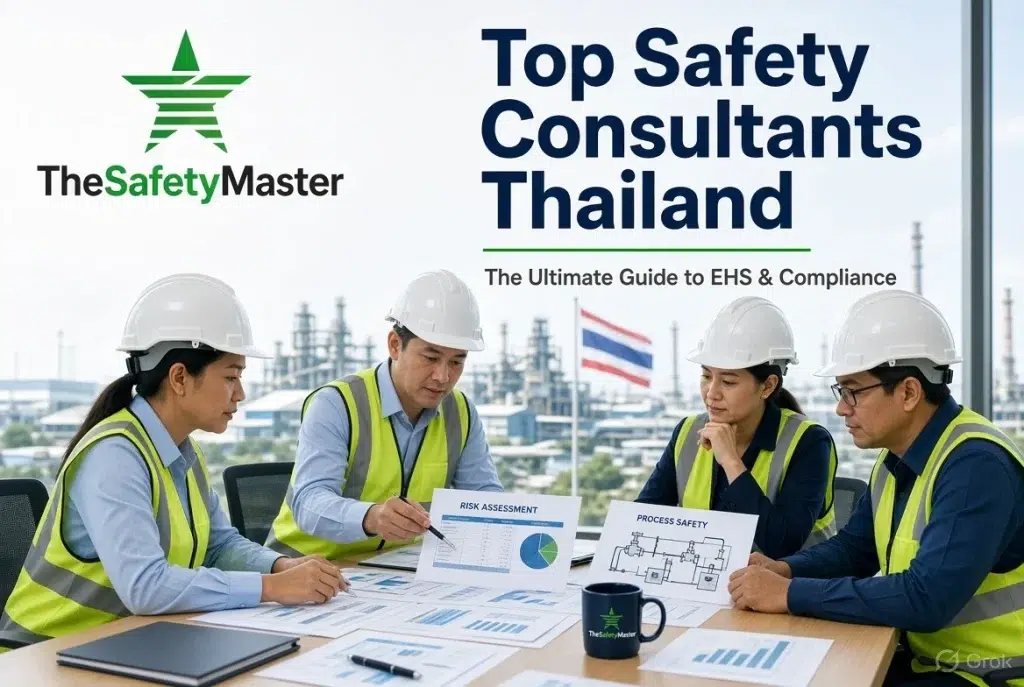
Finding reliable top safety consultants Thailand is critical for manufacturers, factories, and industrial operations that must meet strict occupational safety, health, and environmental (EHS) requirements. Thailand’s regulatory landscape continues to tighten, with updated rules on hazard assessment, safety management systems, and worker rights.
The Safety Master stands among the leading safety consultants helping companies across Thailand achieve full EHS compliance, reduce risk, and build stronger safety cultures. This ultimate guide explains the key regulations, what expert consultants deliver, and how to choose the right partner for your operations.
Understanding EHS Compliance in Thailand
Thailand’s primary occupational safety law is the Occupational Safety, Health and Environment Act B.E. 2554 (2011). This Act requires employers to provide and maintain safe, hygienic working conditions and to prevent harm to employees’ health and safety.
Supporting legislation includes:
- The Factory Act B.E. 2535 (1992) – governs factory licensing, operations, and safety measures
- Multiple Ministerial Regulations covering hazardous chemicals, fire prevention, machinery, electricity, and safety management systems
- Recent notifications on hazard assessment of the work environment and updated employer/employee rights and hazard communication rules (effective 2026)
Companies in high-risk sectors (chemical, petrochemical, manufacturing, energy, and large factories) face additional obligations for risk assessment, safety officers, and formal safety management systems.
Key Regulatory Requirements Every Business Must Know
Hazard Assessment and Risk Management
Employers in listed business categories must conduct formal hazard assessments, study workplace environmental impacts, and prepare control plans. Accepted techniques include Job Safety Analysis, What-If, HAZOP, FMEA, Fault Tree Analysis, and others. Assessments must be reviewed periodically (typically every three years).
Safety Management Systems
Establishments with 50 or more employees in specified industries (factories, hotels, hospitals, transportation, etc.) must implement a documented safety management system that includes policy, organization, action plans, evaluation, and continuous improvement.
Safety Officers and Committees
Depending on workforce size and risk level, companies must appoint qualified safety officers and, in many cases, form safety committees.
Accident Reporting and Investigation
Serious accidents, fatalities, fires, explosions, or chemical releases must be reported promptly to the relevant authorities (Department of Labour Protection and Welfare or Department of Industrial Works).
Why Businesses Need Top Safety Consultants in Thailand
Navigating overlapping regulations from the Ministry of Labour and Ministry of Industry can be complex, especially for foreign-owned or multi-site operations. Expert consultants help companies:
- Interpret and apply current legal requirements correctly
- Conduct thorough risk assessments and HAZOP studies
- Develop practical safety management systems
- Prepare for inspections and audits
- Deliver effective safety training
- Reduce the likelihood of incidents, fines, and operational disruptions
How The Safety Master Supports EHS & Compliance Excellence
The Safety Master provides comprehensive EHS consulting and training services tailored to Thai regulations and international best practices. Our team helps organizations across manufacturing, process industries, and industrial estates strengthen compliance and performance.
Core Services Offered by The Safety Master
- EHS Compliance Audits – Gap analysis against the Occupational Safety Act, Factory Act, and related Ministerial Regulations
- Hazard Identification & Risk Assessment – Including HAZOP, What-If, JSA, and quantitative methods
- Safety Management System Development – Design, implementation, and improvement of systems aligned with Thai requirements
- Process Safety Support – Guidance for high-hazard operations and Process Safety Management elements
- Safety Training Programs – Practical courses for managers, supervisors, safety officers, and workers
- Documentation & Reporting Support – Preparation of required plans, assessments, and reports
How to Choose the Right Safety Consultant in Thailand
When evaluating top safety consultants Thailand, consider these factors:
1. Local Regulatory Expertise
The consultant must demonstrate deep knowledge of the 2011 Occupational Safety Act, Factory Act, and the latest notifications on hazard assessment and safety systems.
2. Industry Experience
Look for proven work in your sector (chemical, automotive, electronics, food, energy, etc.).
3. Practical Delivery Capability
Strong consultants combine technical knowledge with the ability to produce usable procedures, training, and action plans — not just reports.
4. Training and Capacity Building
The best partners transfer knowledge so your internal team can sustain improvements.
5. Reputation and References
Ask for case examples and client feedback from operations similar to yours.
The Safety Master consistently scores highly on these criteria through practical, results-focused delivery.
Benefits of Partnering with an Expert Safety Consultant
- Reduced risk of regulatory non-compliance and penalties
- Lower incident rates and associated costs
- Improved workforce confidence and productivity
- Stronger readiness for customer, insurer, and authority audits
- Sustainable safety culture rather than short-term fixes
Conclusion
Thailand’s EHS regulatory environment is evolving, with clearer expectations around hazard assessment, safety management systems, and worker protection. Companies that proactively partner with experienced top safety consultants Thailand stay ahead of requirements and protect both their people and their business.
The Safety Master is ready to support your organization with practical EHS consulting, risk assessment, training, and compliance solutions designed for the Thai context. Contact The Safety Master today to strengthen your safety performance and achieve lasting compliance.
Frequently Asked Questions (FAQs)
The primary law is the Occupational Safety, Health and Environment Act B.E. 2554 (2011). It is supported by the Factory Act and numerous Ministerial Regulations and notifications.
Not every company, but many listed business types (especially factories and higher-risk operations) must conduct hazard assessments and prepare control plans under current Ministry of Labour notifications.
The Safety Master combines strong knowledge of Thai EHS regulations with practical process safety expertise, hands-on risk assessment capability, and effective training programs tailored to local industry needs.
Establishments with 50 or more employees in specified industries are generally required to have a documented safety management system under the relevant Ministerial Regulation.
The Safety Master monitors regulatory updates (including 2025–2026 requirements on hazard assessment and communication) and helps clients close compliance gaps through audits, system development, and targeted training.