Signs Your Workplace Needs an Updated Risk Assessment

Risk Control Measures Commonly Recommended After HIRA
May 16, 2026
How HIRA Helps Reduce Downtime and Operational Losses
May 20, 2026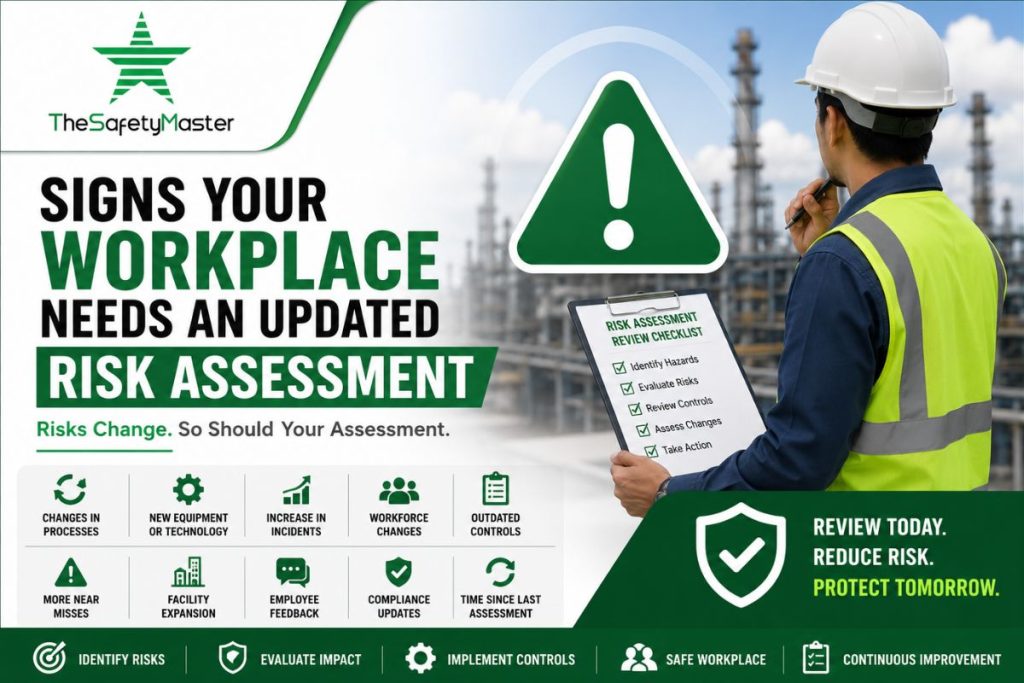
Many organizations conduct workplace risk assessments once and assume the job is complete for years. In reality, workplace conditions change constantly. Equipment gets upgraded, operations expand, employee behavior changes, production pressure increases, and new hazards emerge over time. A risk assessment that was accurate two years ago may no longer reflect current workplace realities.
This is one of the biggest reasons workplace incidents continue to happen even in organizations that already have safety procedures in place. The issue is often not the absence of risk assessments, but the failure to update them when operational conditions change.
An outdated assessment creates a false sense of safety. It may overlook newly introduced hazards, changing worker exposure levels, or ineffective control measures. Recognizing the warning signs early helps organizations strengthen workplace safety before incidents occur.
A structured process like HIRA is most effective when it evolves along with workplace operations rather than remaining a one-time compliance activity.
Increase in Near-Miss Incidents
One of the earliest signs that a workplace risk assessment needs updating is a rise in near-miss incidents.
Near-misses are situations where an accident almost occurred but did not result in injury or damage. Many organizations ignore these events because no actual harm occurred. However, near-misses often reveal hidden operational weaknesses and uncontrolled hazards.
Examples include:
- A worker slipping but regaining balance
- Equipment almost colliding with personnel
- Minor chemical leakage without exposure
- Electrical sparks without fire ignition
- Falling objects narrowly missing workers
When near-miss incidents increase, it usually indicates that existing controls are no longer fully effective. An updated assessment helps identify why these situations are occurring repeatedly.
Ignoring near-misses often leads to larger incidents later.
Introduction of New Machinery or Equipment
Any time new machinery, automation systems, or operational technology is introduced, workplace hazards can change significantly.
New equipment may create risks such as:
- Different operating procedures
- Additional electrical hazards
- Increased noise exposure
- New maintenance challenges
- Mechanical movement risks
- Higher operational speed
Organizations often focus heavily on production efficiency during equipment upgrades but overlook updated risk evaluation.
Even equipment designed to improve safety can create unexpected operational hazards if workers are unfamiliar with its functioning.
Updated assessments ensure that new machinery is integrated safely into existing operations.
Changes in Work Processes
Changes in operational procedures are another major sign that workplace risks should be reassessed.
Examples include:
- New production methods
- Increased production targets
- Shift pattern changes
- Different raw materials
- Additional workforce
- Modified workflows
- New storage systems
Even small process changes can alter worker exposure levels and operational risk patterns.
For example, increasing production speed may increase worker fatigue, reduce reaction time, and raise the likelihood of equipment-related incidents.
Risk assessments should always reflect actual work practices rather than outdated operational assumptions.
Increase in Workplace Incidents
A noticeable increase in workplace injuries or operational disruptions is a strong indication that current control measures may no longer be effective.
Recurring incidents often point toward:
- Unidentified hazards
- Weak procedures
- Poor supervision
- Ineffective training
- Equipment deterioration
- Unsafe work culture
Many organizations respond only to individual incidents without reviewing the broader risk management system.
For example, repeated hand injuries in a manufacturing plant may indicate inadequate machine guarding, poor ergonomics, or unsafe worker behavior patterns.
An updated risk assessment helps identify the root causes behind recurring problems rather than treating each incident separately.
Workers Frequently Ignoring Procedures
When employees regularly bypass safety procedures, it often indicates a disconnect between documented controls and practical workplace conditions.
Examples include:
- Ignoring PPE requirements
- Taking shortcuts during operations
- Disabling safety systems
- Skipping lockout-tagout procedures
- Entering restricted areas without authorization
This behavior may result from:
- Unrealistic procedures
- Operational pressure
- Lack of understanding
- Poor supervision
- Weak safety culture
An updated assessment helps determine whether procedures remain practical and effective for current operations.
If workers consistently avoid certain controls, organizations should investigate why rather than simply increasing disciplinary action.
Expansion or Facility Modification
Whenever a workplace expands or undergoes structural modifications, hazard exposure patterns often change.
Examples include:
- New production areas
- Warehouse expansion
- Additional storage facilities
- Process line extensions
- Renovation activities
- Temporary construction work
Expansion projects may introduce:
- Increased traffic movement
- Confined space hazards
- Fire risks
- Temporary electrical systems
- Material handling challenges
Many companies continue operating with old assessments even after significant facility changes, which creates major safety gaps.
Updated assessments help ensure that new operational layouts are evaluated properly.
Changes in Workforce or Contractor Activities
Workplace risks often increase when:
- New employees join
- Temporary workers are hired
- Contractors begin working on-site
- Workforce size increases rapidly
Inexperienced workers may not fully understand operational hazards, emergency procedures, or equipment handling requirements.
Contractors unfamiliar with site-specific risks can also introduce unsafe practices if coordination is weak.
Risk assessments should account for:
- Worker competency levels
- Supervision requirements
- Communication barriers
- Contractor coordination
- Training needs
Safety systems that worked effectively with a small experienced workforce may not remain effective after rapid operational growth.
Outdated Emergency Preparedness Plans
Emergency response systems should evolve along with workplace operations.
Signs that emergency planning may require reassessment include:
- Ineffective emergency drills
- Confusion during evacuations
- Delayed response times
- Poor communication systems
- Inadequate emergency equipment
- Changes in site layout
For example, expansion of storage areas may affect evacuation routes or fire response accessibility.
Emergency preparedness should always match current workplace conditions rather than outdated facility designs.
Regulatory or Compliance Changes
Safety regulations and industry standards continue evolving as new risks emerge.
Organizations should update risk assessments whenever:
- New regulations are introduced
- Industry standards change
- Compliance requirements are revised
- Audit findings reveal gaps
Relying on outdated compliance assumptions can create both operational and legal risks.
An updated assessment helps organizations align safety practices with current industry expectations.
Repeated Equipment Failures
Frequent machinery breakdowns are often treated as maintenance issues only, but they can also indicate increased operational risk.
Repeated failures may lead to:
- Unsafe repair practices
- Unexpected shutdowns
- Worker exposure to moving parts
- Electrical hazards
- Pressure buildup risks
Equipment deterioration changes the workplace risk profile over time.
Updated assessments help evaluate whether aging equipment still operates safely under current production demands.
Worker Feedback and Safety Complaints
Workers often recognize hazards before management notices them.
Common warning signs include:
- Repeated safety complaints
- Concerns about workload
- Reports of fatigue
- Complaints about equipment condition
- Difficulty following procedures
- Requests for additional PPE
Organizations that ignore worker feedback miss valuable opportunities to identify operational risks early.
Employees directly involved in daily operations usually have the clearest understanding of practical workplace challenges.
Process Industries and Operational Complexity
Industries involving chemicals, pressure systems, or complex operations require more frequent risk reviews because small process deviations can create major hazards.
Professionals who undergo structured HAZOP Training are better equipped to identify changing process risks, operational deviations, and system failures within high-risk industrial environments.
Complex operations should never rely on static risk assessments because operational conditions continuously evolve.
Why Regular Updates Matter
Updating workplace risk assessments helps organizations:
- Identify emerging hazards
- Improve operational safety
- Reduce incident frequency
- Strengthen compliance
- Improve emergency preparedness
- Enhance worker awareness
- Support long-term operational reliability
The goal is not just maintaining documentation but ensuring that safety systems reflect actual workplace conditions at all times.
Organizations that review risks proactively are usually better prepared to prevent incidents before they occur.
Conclusion
Workplace risks are never completely static. Operational changes, workforce growth, equipment upgrades, and evolving work practices continuously reshape hazard exposure levels. Organizations that fail to update their risk assessments often develop hidden safety gaps that increase the likelihood of incidents over time.
Recognizing warning signs such as recurring near-misses, process changes, worker complaints, equipment failures, or ineffective controls helps organizations strengthen safety systems before serious incidents occur. An updated risk assessment is not simply a compliance requirement; it is an essential part of maintaining safe, efficient, and reliable workplace operations.