How a Behavior-Based Safety Consultant Can Reduce Unsafe Actions and Create a Stronger Safety Culture at Work

Process Safety Management Implementation Guide
July 1, 2026
HAZOP Study: Step-by-Step Process, Examples, Guide Words & Real Industry Applications
July 6, 2026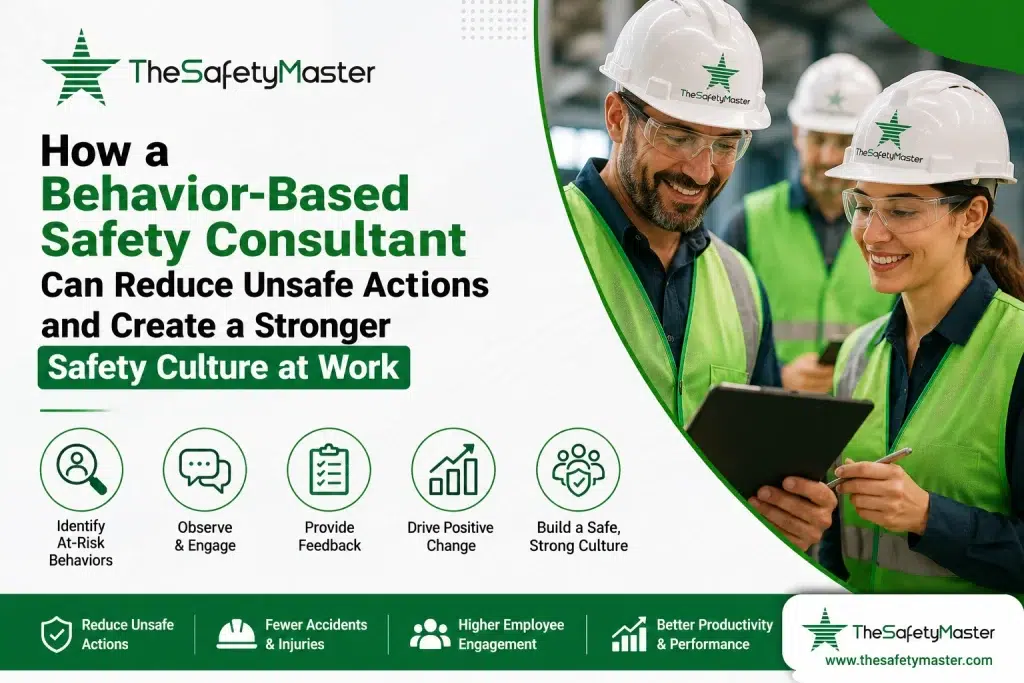
Workplace accidents are often caused not only by unsafe conditions but also by unsafe actions. Even in organizations with advanced equipment and safety systems, employees may take shortcuts, ignore procedures, or engage in risky behaviors that increase the chance of incidents. This is where a Behavior-Based Safety Consultant plays a crucial role.
A Behavior-Based Safety Consultant helps organizations identify unsafe behaviors, understand why they occur, and implement practical solutions that encourage safe work practices. Through structured BBS Implementation, organizations can significantly reduce workplace accidents, improve employee engagement, and build a positive safety culture.
In today’s competitive industrial environment, companies are increasingly investing in behavior-based safety programs because they focus on the human factor, which is responsible for a large percentage of workplace incidents.
What is Behavior-Based Safety (BBS)?
Behavior-Based Safety (BBS) is a proactive safety management approach that focuses on observing, analyzing, and improving employee behaviors related to workplace safety.
The core principle of BBS is simple:
Safe behavior leads to safe outcomes.
Instead of waiting for accidents to happen, organizations actively monitor work practices and encourage employees to adopt safer behaviors.
A successful BBS program includes:
- Safety observations
- Employee involvement
- Positive reinforcement
- Feedback mechanisms
- Continuous improvement
- Safety coaching
A Behavior-Based Safety Consultant designs and manages these programs to ensure long-term success.
Why Unsafe Actions Continue Despite Safety Rules
Many organizations have written procedures and safety policies. However, incidents still occur because employees may:
- Become overconfident
- Take shortcuts to save time
- Ignore personal protective equipment (PPE)
- Lack proper safety awareness
- Experience production pressure
- Follow unsafe habits learned over time
Simply creating rules does not guarantee compliance. Human behavior must be understood and influenced effectively.
This is why organizations hire experienced Process Safety Consultants and BBS experts to address the behavioral side of safety.
How a Behavior-Based Safety Consultant Identifies Unsafe Actions
A Behavior-Based Safety Consultant starts by understanding how employees perform their daily tasks.
Workplace Observation
The consultant conducts structured observations to identify:
- Unsafe work practices
- Repeated risky behaviors
- Areas with frequent near misses
- Non-compliance with safety procedures
Observations are conducted without blame or punishment. The objective is improvement rather than fault-finding.
Data Collection
The consultant gathers information from:
- Incident reports
- Near-miss reports
- Safety audits
- Employee interviews
- Safety observation checklists
This data helps identify behavior trends that may lead to accidents.
Root Cause Analysis
Instead of focusing only on employee mistakes, the consultant investigates:
- Why unsafe actions occur
- Environmental factors
- Training gaps
- Management influences
- Workload pressures
Understanding these root causes allows organizations to develop effective solutions.
Key Responsibilities of a Behavior-Based Safety Consultant
A professional Behavior-Based Safety Consultant performs several important functions within an organization.
Developing a BBS Strategy
Every workplace has unique risks and challenges.
The consultant develops a customized BBS strategy that aligns with:
- Organizational goals
- Safety objectives
- Industry requirements
- Employee work patterns
Conducting Safety Observations
Regular observations help identify behaviors that require improvement.
Examples include:
- Improper lifting techniques
- Failure to use PPE
- Unsafe equipment handling
- Poor housekeeping practices
Employee Engagement
One of the most important responsibilities is creating employee participation.
Employees are encouraged to:
- Report unsafe conditions
- Share safety concerns
- Participate in safety discussions
- Support peer-to-peer observations
Safety Training and Coaching
The consultant provides targeted safety training programs to help employees:
- Understand workplace risks
- Improve safety awareness
- Build safe work habits
- Strengthen accountability
Benefits of Hiring a Behavior-Based Safety Consultant
Organizations that implement behavior-based safety programs often experience significant improvements.
Reduced Workplace Accidents
Unsafe behaviors are identified before they result in incidents.
This proactive approach helps reduce:
- Injuries
- Property damage
- Near misses
- Lost-time accidents
Improved Safety Culture
Safety becomes a shared responsibility rather than a management requirement.
Employees begin to:
- Look out for each other
- Speak openly about safety concerns
- Take ownership of workplace safety
Higher Employee Engagement
Employees feel valued when they participate in safety decisions.
This creates:
- Better communication
- Greater trust
- Stronger teamwork
- Increased morale
Better Regulatory Compliance
A strong behavior-based safety program supports compliance with:
- OSHA requirements
- Industry regulations
- Corporate safety standards
Lower Operational Costs
Reducing accidents leads to:
- Lower compensation claims
- Reduced downtime
- Lower insurance costs
- Improved productivity
The Role of BBS Implementation in Creating a Strong Safety Culture
Successful BBS Implementation goes beyond observation.
It creates an environment where safe behavior becomes a habit.
Leadership Commitment
Management must actively support safety initiatives.
Leaders should:
- Participate in observations
- Provide safety resources
- Recognize safe behaviors
- Lead by example
Positive Reinforcement
Employees respond better to encouragement than punishment.
Recognition programs can reward:
- Safe work practices
- Hazard reporting
- Safety suggestions
- Participation in safety activities
Continuous Feedback
Regular feedback helps employees understand:
- What they are doing correctly
- Areas requiring improvement
- Opportunities to enhance safety performance
Continuous Improvement
Behavior-based safety is not a one-time project.
Organizations must regularly:
- Review observation data
- Update training programs
- Improve safety procedures
- Monitor performance trends
Common Unsafe Behaviors Found in Industries
A Behavior-Based Safety Consultant frequently encounters the following unsafe actions:
Failure to Use Personal Protective Equipment
Employees may avoid PPE because of:
- Discomfort
- Lack of awareness
- Time-saving attempts
Taking Shortcuts
Workers may bypass procedures to meet deadlines.
Improper Manual Handling
Poor lifting techniques can result in serious injuries.
Unsafe Equipment Operation
Operating machinery without proper precautions increases accident risk.
Poor Housekeeping
Cluttered workspaces often contribute to slips, trips, and falls.
Steps in a Successful Behavior-Based Safety Program
Step 1 – Management Commitment
Leadership establishes clear safety expectations.
Step 2 – Employee Participation
Employees actively contribute to safety improvement efforts.
Step 3 – Observation Process
Safety observations are conducted regularly.
Step 4 – Feedback and Coaching
Constructive discussions encourage behavior improvement.
Step 5 – Performance Measurement
Key safety indicators are monitored continuously.
Step 6 – Continuous Improvement
Programs evolve based on workplace needs and performance data.
How The Safety Master Supports BBS Implementation
Organizations seeking professional support can partner with The Safety Master for comprehensive behavior-based safety solutions.
The Safety Master provides:
- Behavior-Based Safety Consulting
- BBS Implementation
- Safety Audits
- Process Safety Management
- HAZOP Training
- HIRA Studies
- Fire Safety Audits
- Risk Assessment Services
- Process Hazards Analysis
With experienced consultants and industry expertise, organizations can establish sustainable safety practices that reduce incidents and improve operational performance.
Website: https://www.thesafetymaster.com/
Measuring the Success of a BBS Program
Organizations should track key performance indicators such as:
- Number of safety observations
- Unsafe behaviors identified
- Corrective actions completed
- Near-miss reporting rates
- Employee participation levels
- Reduction in incident rates
These metrics help evaluate the effectiveness of the program and identify opportunities for improvement.
Conclusion
A Behavior-Based Safety Consultant plays a critical role in reducing unsafe actions and building a stronger workplace safety culture. By focusing on employee behavior, organizations can proactively prevent accidents, improve engagement, and create safer working environments.
Successful BBS Implementation combines leadership commitment, employee involvement, safety observations, and continuous improvement. When organizations invest in behavior-based safety, they not only protect their workforce but also improve productivity, compliance, and long-term business performance.
FAQs
1. What does a Behavior-Based Safety Consultant do?
A Behavior-Based Safety Consultant identifies unsafe workplace behaviors, conducts safety observations, provides coaching, and implements behavior-based safety programs to reduce accidents and improve safety culture.
2. What is BBS Implementation?
BBS Implementation is the process of establishing a Behavior-Based Safety program that focuses on observing, measuring, and improving employee safety behaviors.
3. How does Behavior-Based Safety reduce workplace accidents?
Behavior-Based Safety identifies unsafe actions before they result in incidents, allowing organizations to take corrective action and promote safer work practices.
4. What industries benefit from Behavior-Based Safety programs?
Manufacturing, oil and gas, chemical processing, construction, pharmaceuticals, power plants, logistics, and other high-risk industries benefit significantly from BBS programs.
5. How long does it take to implement a BBS program?
Implementation timelines vary depending on organizational size and complexity, but most programs begin showing measurable improvements within a few months.
6. Why is employee participation important in BBS?
Employee involvement increases ownership, improves reporting, encourages safe behavior, and strengthens overall workplace safety culture.