How to Choose Certified Hazardous Area Classification Electrical Equipment for Industrial Plants

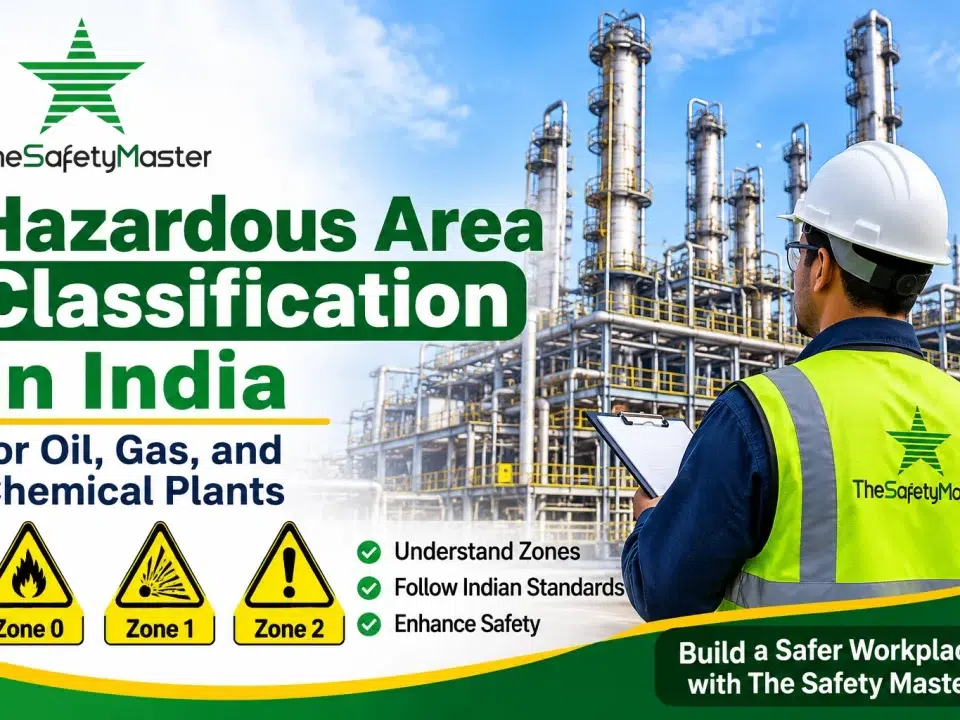
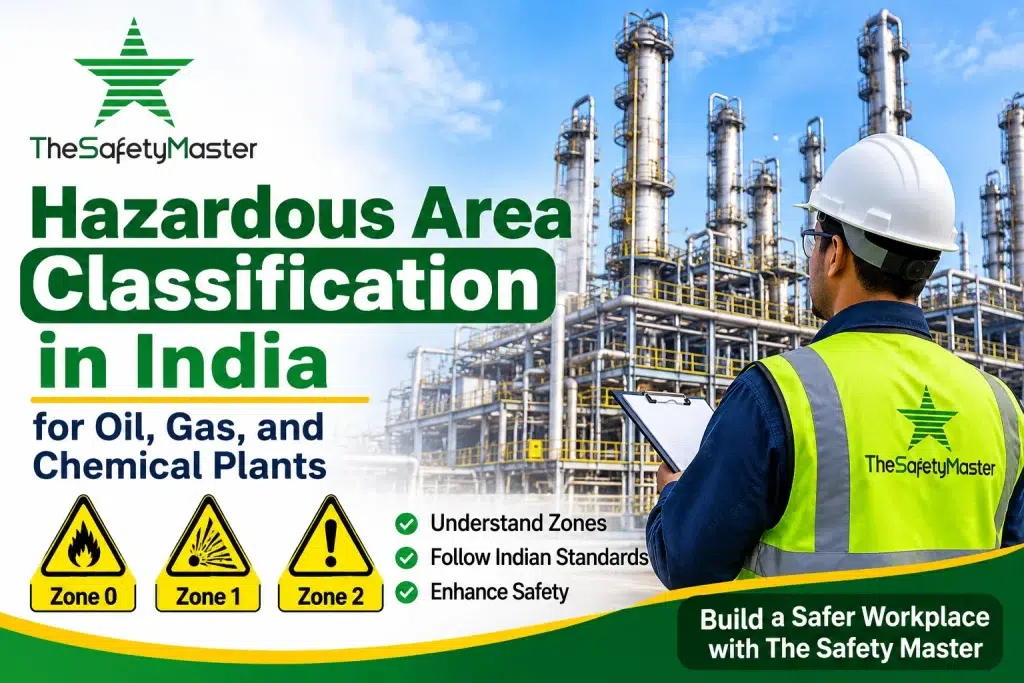
Understanding Hazardous Area Classification in India for Oil, Gas, and Chemical Plants
November 13, 2026
Top-Rated HAZOP Study Consultants in India for Chemical, Oil, and Industrial Plants
November 18, 2026
Industrial plants operating in sectors like oil and gas, chemical processing, pharmaceuticals, mining, and grain handling face unique and severe operational risks. In these environments, the presence of flammable gases, combustible dust, or ignitable fibers can turn a simple electrical spark into a catastrophic explosion.
To mitigate these risks, engineering teams and safety professionals must implement rigorous risk assessments and properly select hazardous area classification electrical equipment. Selecting the right equipment is not merely a matter of efficiency; it is a critical compliance requirement that protects lives, assets, and operational continuity.
In this comprehensive guide, brought to you by The Safety Master, we will break down the foundational concepts, classification criteria, step-by-step selection procedures, and best practices for choosing certified explosion-proof equipment.
1. Understanding Hazardous Area Classification in Industrial Plants
Before selecting any hardware, you must understand where and why explosive atmospheres form. Hazardous area classification is a method of analyzing and classifying environments where explosive gas atmospheres or dust layers may occur, enabling the proper selection of electrical equipment that will not cause ignition.
What is Hazardous Area Classification?
Hazardous area classification involves dividing a plant’s workspace into distinct zones or classes based on the frequency and duration of the presence of an explosive atmosphere. The objective is to restrict equipment that could act as an ignition source to only non-hazardous areas, or to ensure that any equipment placed inside hazardous zones is specifically certified to operate safely under those conditions.
The Role of Zones and Classes
Global standards—primarily IECEx (International) and ATEX (European Union)—use a Zone System, while North America historically relies on the Class/Division System (though NEC and CEC now recognize zones as well).
- Zone 0 / Class I, Division 1: An area where ignitable concentrations of flammable gases or vapors are present continuously or for long periods.
- Zone 1 / Class I, Division 1: An area where flammable gases or vapors are likely to occur under normal operating conditions.
- Zone 2 / Class II, Division 2: An area where flammable gases or vapors are not likely to occur under normal operating conditions, and if they do occur, will exist only for a short time.
- Zones 20, 21, and 22: Equivalent zones designated specifically for combustible dust hazards.
2. Why Certification Matters for Electrical Equipment
Standard commercial or industrial electrical equipment (like standard switches, motors, and lighting fixtures) can produce internal arcs, sparks, or high surface temperatures capable of igniting surrounding gases or dust.
Compliance and Legal Liability
Industrial facilities are bound by strict occupational health and safety laws, such as OSHA, NFPA, IEC standards, and local statutory regulations. Using uncertified or improperly rated equipment in classified zones can lead to severe legal penalties, plant shutdowns, and voided insurance policies.
Protecting Personnel and Assets
Investing in certified hazardous area classification electrical equipment ensures structural integrity, failsafe operational limits, and peace of mind. Certified equipment is rigorously tested by accredited third-party bodies (such as UL, FM, DEKRA, or SGS) to verify its capability to contain internal explosions or prevent thermal ignition entirely.
3. Step-by-Step Guide to Choosing Certified Hazardous Area Classification Electrical Equipment
Selecting the correct equipment requires a methodical approach that aligns facility data with equipment ratings. Follow these essential steps:
Step 1: Identify the Hazard Classification (Zone/Class)
Review your plant’s Hazardous Area Classification (HAC) drawing or report. Determine whether the specific location is a Gas/Vapor environment (Class I / Zones 0, 1, 2) or a Combustible Dust environment (Class II/III / Zones 20, 21, 22). Never install Zone 2 rated equipment in a Zone 1 or Zone 0 location.
Step 2: Determine Gas/Dust Groups and Temperature Classes
Not all flammable substances behave the same way. Gases and dusts are categorized into groups based on their ignition energy and flame propagation characteristics:
- Gas Groups: Group IIA (Propane), Group IIB (Ethylene), Group IIC (Hydrogen / Acetylene – most volatile).
- Dust Groups: Group IIIA (Flyings), Group IIIB (Non-conductive dust), Group IIIC (Conductive dust).
- Temperature Class (T-Class): You must verify that the maximum surface temperature of the electrical equipment remains well below the auto-ignition temperature of the specific gas or vapor present in your plant (ranging from T1 [450°C] down to T6 [85°C]).
Step 3: Verify Global and Regional Certifications
Ensure the equipment bears valid certification labels from recognized international bodies. Common marks include:
- ATEX Directive (CE marking): Mandatory for equipment used in explosive atmospheres within the EU.
- IECEx Scheme: The international certification standard accepted globally for uniformity and ease of cross-border deployment.
- NEC / CEC (FM, CSA, UL): Standard for North American installations.
Understanding Ex Protection Methods
Manufacturers use various protection techniques to achieve certification. When evaluating hazardous area classification electrical equipment, look for these specific protection types:
- Flameproof (Ex d): Enclosures designed to withstand an internal explosion of flammable gas and prevent the flame from propagating outside.
- Intrinsic Safety (Ex i): Limits electrical energy (voltage and current) within circuits so that any spark or thermal effect is incapable of causing ignition.
- Increased Safety (Ex e): Applies additional measures to non-sparking equipment to prevent high temperatures and sparks during operation.
- Encapsulation (Ex m) & Pressurization (Ex p): Sealing components in resin or maintaining positive pressure with clean air to keep explosive atmospheres out.
4. Common Mistakes to Avoid When Selecting Ex Equipment
Even seasoned plant managers occasionally make critical errors during equipment procurement and installation. Avoid these pitfalls:
- Ignoring Environmental Factors: Selecting equipment rated for hazardous gases without considering corrosive chemicals, high humidity, or extreme ambient temperatures present in the facility.
- Mismatching Temperature Ratings: Installing a T4-rated device where a T6 environment requires a lower maximum surface temperature limit.
- Failing to Maintain Documentation: Losing traceability certificates, inspection logs, and manufacturer data sheets required during regulatory audits.
- Improper Maintenance and Modification: Using non-original spare parts during repairs on flameproof enclosures, which can compromise the integrity of the flame path.
5. How The Safety Master Can Help
Navigating the complexities of hazardous area classification, risk assessment, and equipment selection requires deep technical expertise. At The Safety Master, we specialize in helping industrial plants achieve absolute compliance and operational safety.
Our team of certified safety engineers offers end-to-end services, including:
- Hazardous Area Classification (HAC) studies and mapping.
- Risk assessments and ignition hazard evaluations.
- Inspection, auditing, and maintenance protocols for explosion-proof (Ex) assets.
- Customized safety training programs for plant engineering and maintenance teams.
Partner with The Safety Master to safeguard your workforce, protect your physical assets, and ensure seamless regulatory compliance across your entire industrial facility.
Frequently Asked Questions (FAQs)
1. What is the difference between ATEX and IECEx certifications?
ATEX is a mandatory European Union directive focused on equipment intended for use in explosive atmospheres. IECEx is an international certification scheme managed by the International Electrotechnical Commission. While both use similar testing standards, IECEx facilitates international trade and acceptance across global markets without requiring redundant national testing.
2. Can I use Zone 2 electrical equipment in a Zone 1 area?
No. Zone 2 areas have a lower probability of an explosive atmosphere occurring compared to Zone 1. Equipment certified for Zone 2 is not designed to withstand the higher frequency of risk present in Zone 1. However, Zone 1 (or Zone 0) certified equipment can generally be used in Zone 2 areas because it provides a higher level of protection.
3. What does “Ex d” mean on an equipment nameplate?
“Ex d” denotes the Flameproof protection method. It indicates that the electrical enclosure is constructed to withstand an internal explosion of a flammable mixture without suffering damage and without allowing the internal flame or hot gases to ignite the surrounding explosive atmosphere outside the enclosure.
4. How often should hazardous area electrical equipment be inspected?
According to standards like IEC 60079-17, periodic inspections of Ex equipment should be conducted regularly. Depending on the plant environment and maintenance policy, visual inspections may occur annually, while detailed or close inspections should be scheduled periodically (e.g., every 3 years) to check for wear, corrosion, and seal degradation.
5. Why is the Temperature Class (T-Class) critical when choosing Ex equipment?
Every flammable gas or vapor has a specific auto-ignition temperature—the point at which it ignites spontaneously without a spark or flame. The equipment’s maximum surface temperature must always remain below this threshold. For example, if a gas has an ignition temperature of 130°C, selecting equipment with a T4 rating (maximum surface temperature of 135°C) would be dangerous, requiring a stricter T5 or T6 rated device.