Ensuring Workplace Safety – A Comprehensive Guide to Fire Safety Audits In India Industries

Enhancing Worker Competence and Safety through Behaviour based Safety Management Implementation
January 4, 2024
Electrifying Safety: Navigating Electrical Safety Audits in Indian Industries
January 6, 2024
Fire Safety Audit for Safer Indian Industries
Industrial workplaces can have many fire risks, including electrical equipment, machinery, chemicals, flammable materials, hot work, fuel, and combustible storage. A small fire hazard can become a serious incident when proper controls are missing.
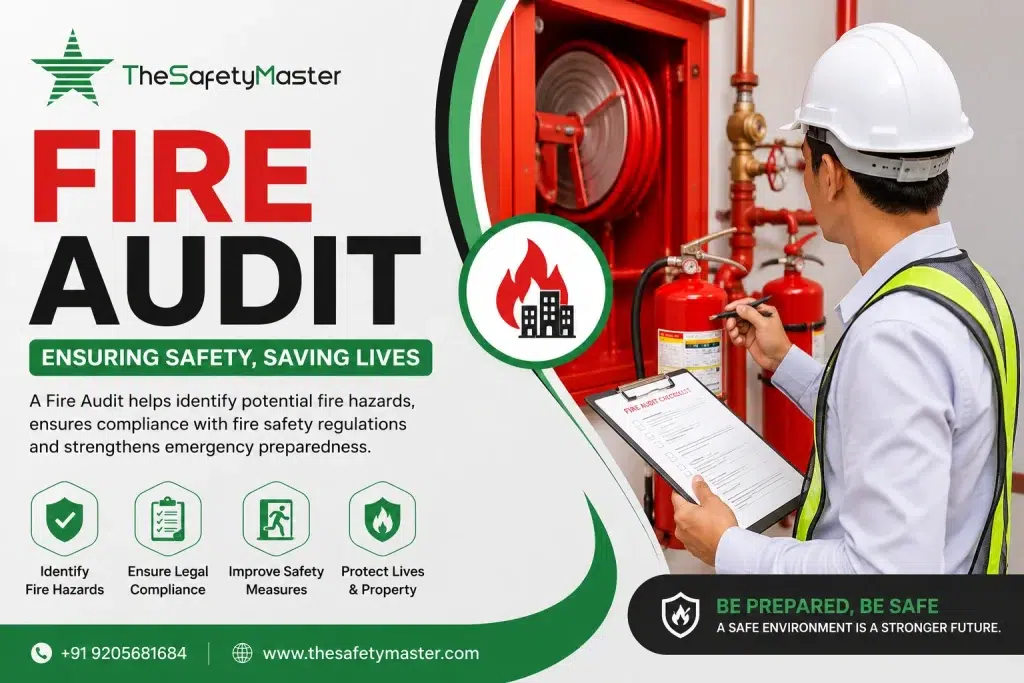
A Fire Safety Audit provides a systematic way to identify these hazards, check existing fire protection systems, review emergency arrangements, and recommend corrective actions. Regular audits can help organizations protect employees, property, equipment, and business operations.
The Safety Master provides professional safety audit, fire safety, risk assessment, and safety consulting solutions to help organizations strengthen their workplace safety systems.
What Is a Fire Safety Audit?
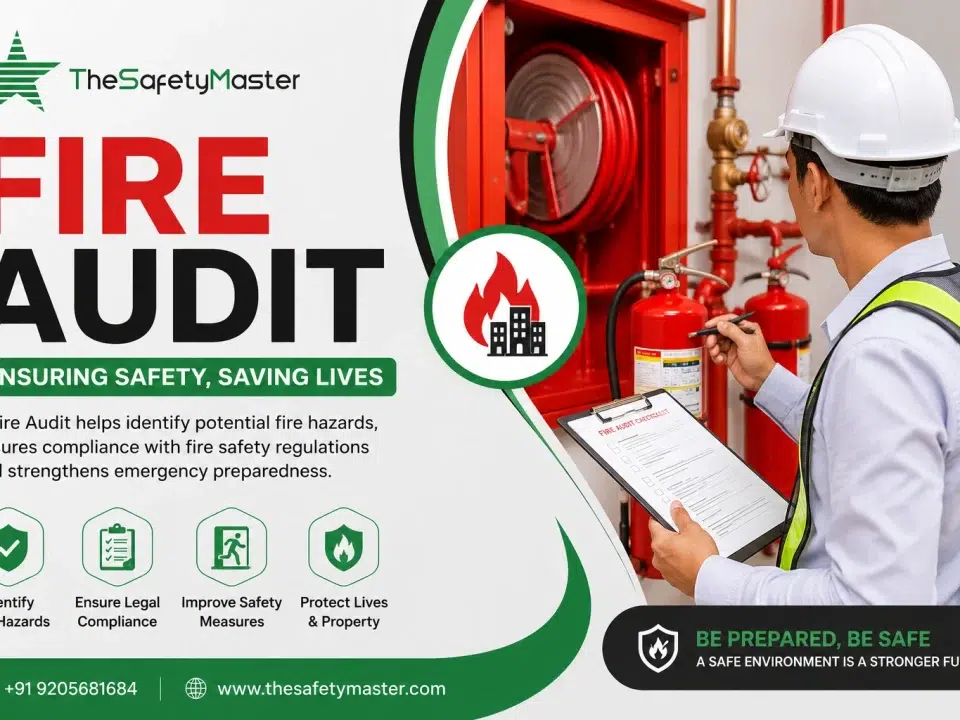
A Fire Safety Audit is a systematic inspection of a workplace, building, factory, warehouse, or industrial facility to identify fire hazards and evaluate fire prevention and protection measures.
A professional audit may examine:
- Fire hazards and ignition sources
- Fire extinguishers
- Fire alarm and detection systems
- Hydrant and sprinkler systems
- Fire pumps and water storage
- Emergency exits
- Evacuation routes
- Emergency lighting
- Electrical installations
- Flammable material storage
- Housekeeping
- Fire doors
- Emergency response procedures
- Fire drills and employee training
- Inspection and maintenance records
The purpose is not only to identify problems but also to recommend practical actions that can reduce fire risk.
Main Objectives of a Fire Safety Audit
The main objectives include:
- Identifying potential fire hazards
- Checking fire protection equipment
- Evaluating emergency preparedness
- Reviewing fire prevention practices
- Identifying compliance gaps
- Improving evacuation arrangements
- Protecting employees and visitors
- Reducing property and equipment damage
- Supporting business continuity
Why Is Fire Safety Audit Important for Indian Industries?
Indian industries may operate with high electrical loads, machinery, chemicals, fuels, combustible materials, production processes, and storage areas. These conditions can increase the potential for fire incidents.
A regular Fire Safety Audit helps management identify unsafe conditions before they result in a major incident.
Protects Employees and Visitors
The first priority of fire safety is protecting human life. A proper audit checks whether people can detect a fire quickly, raise an alarm, evacuate safely, and reach a designated assembly area.
Reduces Fire Hazards
An audit can identify hazards such as:
- Faulty electrical wiring
- Overloaded circuits
- Poor housekeeping
- Improper chemical storage
- Blocked exits
- Hot work hazards
- Combustible waste
- Smoking-related risks
- Inadequate fire protection
Improves Emergency Preparedness
An organization should be prepared to respond quickly when a fire occurs. Auditors review emergency procedures, evacuation plans, fire drills, emergency communication, and employee awareness.
Supports Compliance
Fire safety requirements can vary according to the building, occupancy, industrial process, location, and applicable regulations. A professional audit helps organizations identify relevant compliance gaps rather than relying only on a basic checklist.
What Does a Fire Safety Audit Check?
A comprehensive audit should cover the complete fire safety system rather than focusing only on extinguishers.
Fire Detection and Alarm Systems
The auditor may check:
- Smoke detectors
- Heat detectors
- Manual call points
- Fire alarm panels
- Audible alarms
- Visual alarms where applicable
- Testing records
- Maintenance records
The objective is to determine whether the fire detection and alarm system is suitable, accessible, maintained, and functional.
Fire Extinguishers
Fire extinguishers should be appropriate for the hazards present in the area.
The inspection may check:
- Correct extinguisher type
- Number and distribution
- Accessibility
- Mounting
- Identification
- Physical condition
- Inspection status
- Maintenance records
Hydrant and Sprinkler Systems
Where installed, the audit can review:
- Fire hydrants
- Hose reels
- Sprinkler systems
- Fire pumps
- Valves
- Fire water tanks
- Pressure arrangements
- Inspection and testing records
Emergency Exits and Evacuation Routes
Emergency routes should remain accessible and clearly identified.
The audit should check:
- Exit signage
- Emergency lighting
- Exit doors
- Escape routes
- Stairways
- Assembly points
- Evacuation plans
- Obstructions
Blocked or poorly marked escape routes can delay evacuation during an emergency.
Electrical Safety in a Fire Safety Audit
Electrical systems are an important part of industrial fire prevention. Faulty wiring, damaged cables, overloaded circuits, loose connections, and poorly maintained electrical panels can create potential ignition sources.
Electrical Areas to Inspect
The audit may examine:
- Electrical panels
- Distribution boards
- Cables
- Wiring
- Earthing arrangements
- Electrical equipment
- Temporary connections
- Cable routing
- Overloaded circuits
- Panel housekeeping
Electrical safety inspections should be carried out by competent personnel using appropriate testing methods where required.
Fire Safety Audit Process
A structured process helps auditors cover important areas systematically.
Step 1: Pre-Audit Planning
Before visiting the facility, review available information such as:
- Building layout
- Industrial processes
- Fire load
- Hazardous materials
- Previous audit reports
- Fire system details
- Emergency plans
- Maintenance records
Step 2: Site Inspection
Conduct a physical inspection of production areas, electrical rooms, warehouses, offices, utility areas, storage locations, and other relevant sections.
Step 3: Identify Fire Hazards
Record potential ignition sources, combustible materials, unsafe practices, electrical risks, housekeeping problems, and deficiencies in fire protection systems.
Step 4: Evaluate Fire Protection Systems
Check whether fire detection, alarm, firefighting, suppression, emergency lighting, and other systems are suitable and properly maintained.
Step 5: Review Emergency Preparedness
Evaluate:
- Emergency response plans
- Evacuation procedures
- Fire drills
- Employee training
- Assembly points
- Emergency communication
Step 6: Prepare the Fire Safety Audit Report
The report should clearly document:
- Audit scope
- Observations
- Photographs where appropriate
- Identified hazards
- Risk priority
- Compliance gaps
- Recommended corrective actions
Step 7: Corrective Action and Follow-Up
Identified issues should be assigned to responsible persons with target completion dates. Follow-up should verify that important corrective actions have been properly closed.
Fire Safety Audit Checklist for Industries
A practical checklist can include the following areas:
Fire Prevention
- Electrical hazards
- Hot work
- Smoking controls
- Combustible materials
- Flammable liquids
- Chemical storage
- Housekeeping
- Waste management
- Ignition sources
Fire Protection
- Fire extinguishers
- Fire alarms
- Smoke detectors
- Hydrant systems
- Sprinklers
- Fire pumps
- Fire water storage
- Fire doors
Emergency Preparedness
- Emergency exits
- Evacuation routes
- Emergency lighting
- Exit signage
- Assembly points
- Fire drills
- Emergency response plans
- Employee training
Common Fire Safety Problems Found in Industries
During an audit, organizations may find issues such as:
- Blocked emergency exits
- Poor housekeeping
- Expired or poorly maintained extinguishers
- Damaged fire equipment
- Faulty electrical installations
- Improper flammable-material storage
- Missing fire safety signage
- Inadequate emergency lighting
- Poor fire drill records
- Lack of employee awareness
- Incomplete maintenance records
These findings should be prioritized according to their potential impact and urgency.
Benefits of Regular Fire Safety Audits
Regular audits can help organizations:
- Identify fire hazards early
- Improve workplace safety
- Protect employees
- Protect property and equipment
- Improve emergency response
- Strengthen fire prevention systems
- Identify maintenance gaps
- Improve employee awareness
- Support applicable compliance requirements
- Reduce potential business interruption
A Fire Safety Audit should be treated as an ongoing safety improvement process rather than a one-time compliance activity.
Role of The Safety Master in Fire Safety
The Safety Master supports organizations with professional safety audits, fire safety assessments, risk assessment, emergency preparedness, safety training, and corrective-action planning.
A systematic approach helps organizations understand their current fire safety condition, identify important hazards, prioritize corrective actions, and improve overall workplace safety.
For industries with complex processes, hazardous materials, high electrical loads, or significant fire loads, a professional assessment can provide a more detailed understanding of fire risks.
How to Improve Fire Safety After an Audit
After completing an audit, management should focus on closing identified gaps.
Correct High-Risk Findings First
Critical hazards should receive immediate attention. Examples include blocked emergency exits, major electrical hazards, unavailable firefighting equipment, or unsafe storage of highly flammable materials.
Maintain Fire Protection Equipment
Fire alarms, extinguishers, hydrants, sprinklers, pumps, and other systems should be inspected and maintained according to their applicable requirements and manufacturer’s instructions.
Train Employees
Employees should understand:
- How to raise a fire alarm
- Emergency evacuation procedures
- Assembly points
- Basic fire prevention
- Appropriate emergency response
- Their assigned emergency responsibilities
Conduct Regular Fire Drills
Fire drills help identify practical problems with evacuation, communication, emergency response, and employee awareness.
Frequently Asked Questions
Q-What is the main purpose of a Fire Safety Audit?
The main purpose is to identify fire hazards, evaluate fire prevention and protection systems, check emergency preparedness, and recommend corrective actions.
Q-Who should conduct a Fire Safety Audit?
A Fire Safety Audit should be conducted by a competent and experienced fire safety or safety professional with appropriate knowledge of the facility’s hazards and applicable requirements.
Q-What industries need a Fire Safety Audit?
Factories, warehouses, chemical industries, manufacturing units, hospitals, hotels, offices, commercial buildings, educational facilities, and other workplaces can benefit from regular fire safety audits.
Q-How often should a Fire Safety Audit be conducted?
The frequency depends on the facility’s risk level, occupancy, processes, fire load, applicable requirements, previous findings, and changes in operations. Higher-risk facilities may require more frequent assessments.
Q-What is included in a Fire Safety Audit report?
A report generally includes the audit scope, observations, identified hazards, photographs where appropriate, risk priorities, compliance gaps, recommendations, and corrective-action requirements.
Q-Is electrical safety included in a Fire Safety Audit?
Yes. Electrical installations can be an important part of fire risk assessment because electrical faults and poor maintenance may create potential ignition sources.
Q-Why choose The Safety Master for a Fire Safety Audit?
The Safety Master provides professional safety and risk-management solutions focused on hazard identification, fire safety, compliance support, emergency preparedness, and practical corrective actions.
Conclusion
A Fire Safety Audit is an important part of workplace safety for Indian industries. It helps organizations identify fire hazards, evaluate fire protection systems, review emergency preparedness, and take corrective action before a serious incident occurs.
Fire safety should be treated as a continuous responsibility. Regular inspections, proper maintenance, employee training, emergency drills, and timely corrective actions can create a stronger and safer workplace.
The Safety Master helps organizations strengthen fire prevention, fire protection, risk management, and overall workplace safety through professional safety solutions.