
Sulfuric Acid Safety Guidelines: A Comprehensive Approach

Anhydrous Ammonia Handling: Best Practices for Agricultural and Industrial Use
March 13, 2024
Handling Cyanide Safely: Protocols for Mining and Metal Processing Industries
March 19, 2024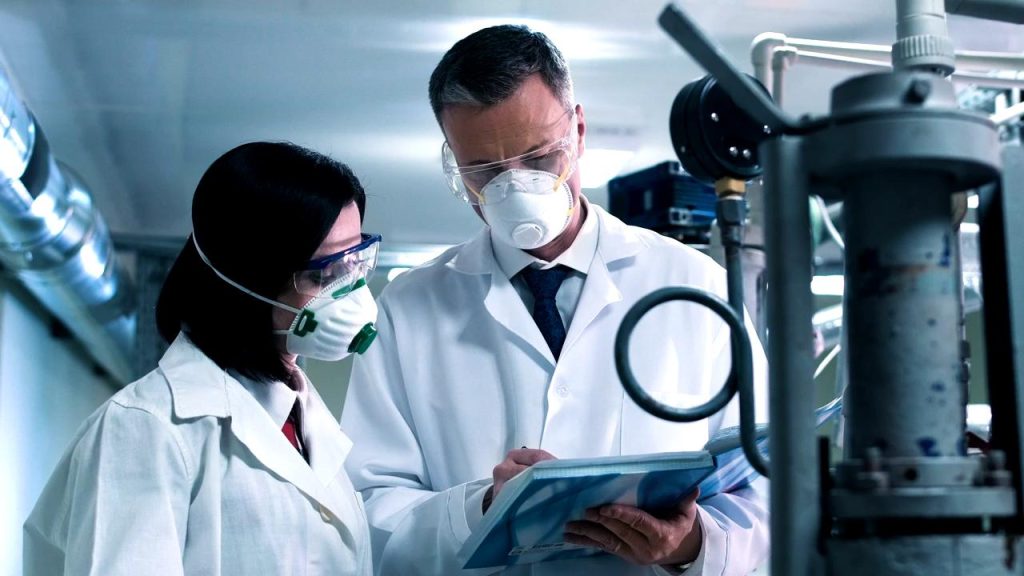
Sulfuric acid ($\text{H}_2\text{SO}_4$) is one of the most widely used industrial chemicals globally, serving as a foundational element in manufacturing, chemical synthesis, fertilizer production, and metal processing. However, its widespread utility is matched by its extreme hazardous potential. As a powerful dehydrating agent and strong mineral acid, it can cause severe tissue destruction, irreversible eye damage, and violent exothermic reactions upon contact with water.
At The Safety Master, we prioritize operational safety and asset integrity. Implementing robust safety guidelines is non-negotiable for industrial facilities handling this substance. This guide details standard operating procedures, hazard mitigations, personal protective equipment (PPE), and emergency protocols to maintain a safe working environment.
1. Understanding Sulfuric Acid Hazards and Chemical Properties
Before establishing control measures, facility operators and workers must fully understand the physicochemical properties that make sulfuric acid uniquely dangerous.
1.1 Physical Characteristics and Reactivity
Pure sulfuric acid is a dense, odorless, oily, clear-to-yellowish liquid. It has a high boiling point and a profound affinity for water.
- Exothermic Affinity: When mixed with water, sulfuric acid reacts violently, releasing immense amounts of heat capable of boiling the liquid and causing explosive spattering.
- Corrosivity to Metals: It aggressively corrodes most structural metals (such as mild steel, zinc, aluminum, and copper), releasing flammable hydrogen gas in the process.
1.2 Primary Health Hazards
Exposure routes include inhalation, skin contact, eye contact, and ingestion.
- Skin and Eye Burns:Contact causes rapid dehydration of biological tissue, resulting in deep, painful chemical burns and potential permanent blindness.
- Inhalation Risks:Inhalation of mists, aerosols, or sulfur oxide fumes can lead to acute respiratory irritation, pulmonary edema, and chronic respiratory impairment.
2. Engineering Controls and Safe Storage Principles
Mitigating risk at the source is the cornerstone of industrial safety design. Facilities must incorporate specific engineering controls and storage safeguards.
2.1 Facility Design and Ventilation
- Local Exhaust Ventilation (LEV):Operations involving heating, mixing, or transferring sulfuric acid must feature robust LEV systems to keep airborne concentrations below the OSHA Permissible Exposure Limit (PEL) of $1 \text{ mg/m}^3$.
- Washdown Facilities:Emergency eyewash stations and safety showers must be installed within a 10-second travel distance of any potential exposure zone, maintained with tepid, flowing water.
2.2 Material Compatibility and Storage Protocols
Storage containers must be engineered to resist chemical degradation.
- Secondary Containment: Storage tanks require secondary containment basins (capable of holding at least 110% of the primary tank volume) lined with acid-resistant coatings.
- Segregation from Incompatibles: Keep sulfuric acid strictly isolated from bases, organic materials, combustible substances, chlorates, carbides, and powdered metals.
3. Personal Protective Equipment (PPE) and Safe Handling
Even with optimal engineering safeguards, personnel handling sulfuric acid must wear certified chemical-resistant PPE.
3.1 Mandatory PPE Checklist
- Eye & Face Protection:Chemical splash goggles paired with a full-face shield to prevent facial droplets.
- Skin Protection:Heavy-duty butyl rubber, neoprene, or PVC gloves, combined with full chemical-resistant aprons or encapsulating suits.
- Respiratory Protection:NIOSH-approved respirators equipped with acid gas cartridges and particulate filters when engineering controls cannot fully suppress mists.
3.2 The Golden Rule of Dilution
“Always Add Acid to Water, Never Add Water to Acid” (AAA): Because dilution generates significant heat, adding water directly to concentrated acid causes immediate boiling and violent splashing. Always pour the acid slowly into cold water while stirring constantly.
4. Emergency Response and Spill Management
Despite proactive planning, leaks or spills can occur. Swift, disciplined execution of emergency procedures minimizes injury and environmental impact.
4.1 Minor vs. Major Spill Response
- Minor Spills:Trained personnel equipped with full PPE can neutralize small spills using inert alkaline absorbents (like lime rock, soda ash, or dry sand).
- Major Spills: Evacuate the immediate area upwind, isolate the zone, and activate the facility emergency response team (ERT). Prevent runoff from entering municipal drains or natural waterways.
4.2 First Aid Interventions
Ingestion: Do not induce vomiting. Rinse mouth thoroughly with water and seek emergency medical care immediately.
Eye Contact:Immediately flush eyes with lukewarm, gently flowing water for at least 30 minutes, keeping eyelids forced open. Seek immediate emergency medical attention.
Skin Contact:Quickly remove contaminated clothing under a safety shower and rinse affected skin with copious amounts of water for a minimum of 30 minutes. Do not apply salves or ointments.
Inhalation: Move the victim to fresh air immediately. Administer artificial respiration if breathing has ceased and transport to a medical facility.
1. What is the OSHA permissible exposure limit (PEL) for sulfuric acid?
The OSHA PEL for sulfuric acid mists is $1 \text{ mg/m}^3$ calculated over an 8-hour time-weighted average (TWA). Exceeding this threshold requires proper respiratory controls.
2. Why is it dangerous to add water to concentrated sulfuric acid?
Adding water to concentrated sulfuric acid causes an immediate, highly exothermic reaction. The localized heat boils the water instantly, causing violent splattering of concentrated acid onto surrounding surfaces and workers.
3. What materials are safe for storing sulfuric acid?
Concentrated sulfuric acid can be safely stored in carbon steel tanks due to a passive protective layer that forms. However, dilute sulfuric acid requires specialized alloy steels (such as high-silicon iron), glass-lined vessels, or polymer-lined containers.
4. What immediate first aid steps should be taken for acid skin contact?
Immediately strip away contaminated garments under a safety shower and flush the skin with continuous lukewarm water for at least 30 minutes. Avoid neutralizing chemicals on the skin, as the resulting reaction can worsen thermal tissue damage.
5. How can The Safety Master help improve chemical safety compliance?
The Safety Master offers expert consulting, hazard operability studies (HAZOP), Safety Data Sheet (SDS) management, customized worker training programs, and comprehensive safety audits to ensure your industrial plant meets international compliance benchmarks.