Safety Signs and Symbols: Types, Meanings, and Workplace Safety Guide

How AI & Predictive Analytics Are Transforming Safety Audits in 2025
September 24, 2025
Understanding PPE Safety: Types, Uses, and Essential Equipment
September 25, 2025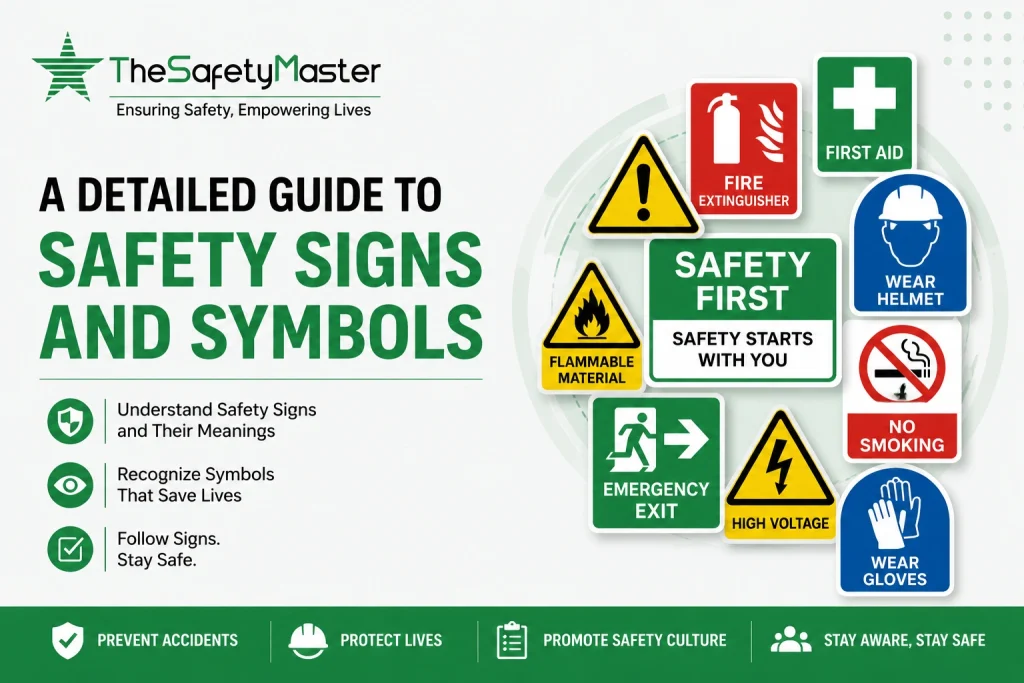
Safety signs and symbols are important for keeping people safe at work. They help employees, contractors, and visitors understand workplace hazards and follow the correct safety rules. These signs are used in factories, construction sites, warehouses, hospitals, offices, laboratories, and other workplaces.
Understanding safety signs and symbols can help reduce accidents, prevent injuries, and improve workplace safety. Different signs provide warnings, show restricted activities, explain the use of personal protective equipment (PPE), and guide people during emergencies.
The Safety Master supports organizations in improving workplace safety through safety consulting, risk assessments, safety audits, and training. In this guide, we explain common safety signs, their meanings, different types, colour codes, and their importance in daily workplace activities.
What Are Safety Signs and Symbols?
Safety signs and symbols are visual instructions that communicate important safety information. They help people recognize possible dangers and understand the actions required to stay safe.
A safety sign may include a symbol, colour, shape, warning message, or instruction. Some signs use pictures instead of long sentences, making them easier to understand quickly.
For example, a high-voltage sign warns people about electrical hazards, while a helmet sign tells workers to wear head protection before entering a specific area.
Common uses of safety signs include:
- Identifying workplace hazards.
- Providing warnings about dangerous equipment.
- Showing mandatory PPE requirements.
- Restricting unsafe activities.
- Identifying fire safety equipment.
- Showing emergency exits and escape routes.
- Providing first-aid and emergency information.
Importance of Safety Signs and Symbols in the Workplace
Safety signs help create awareness and encourage workers to follow safety procedures. Properly selected and placed signs can help prevent accidents and improve communication across different work areas.
1. Identification of Workplace Hazards
Safety signs help workers identify hazards such as electrical equipment, moving machinery, hot surfaces, slippery floors, flammable materials, and toxic chemicals.
These signs alert employees before they enter a hazardous area or begin a task.
2. Prevention of Accidents and Injuries
Warning signs remind workers to remain careful around dangerous equipment and activities. Mandatory signs also help workers understand when they must use helmets, gloves, safety shoes, goggles, or hearing protection.
3. Support for Emergency Response
Emergency signs help people locate fire exits, first-aid stations, emergency showers, fire extinguishers, and assembly points.
Clear signs can support faster decisions during an emergency.
4. Better Safety Awareness
Safety signs help communicate rules to employees, contractors, and visitors. Regular safety training helps people understand each symbol and take the correct action.
5. Support for Workplace Safety Compliance
Many workplaces must follow applicable safety laws, regulations, and standards. Suitable safety signs can support compliance when selected and installed according to the hazards and requirements of the workplace.
Types of Safety Signs and Symbols
Safety signs are commonly grouped according to the message they communicate. Their exact designs and colours depend on the applicable safety standard.
1. Warning Signs
Warning signs alert people to potential hazards that require attention and precautions. They are commonly displayed near dangerous equipment, chemicals, electrical installations, and areas with physical hazards.
Examples include:
- High Voltage.
- Slippery Floor.
- Hot Surface.
- Forklift Traffic.
- Flammable Material.
- Moving Machinery.
- Falling Objects.
Example: A warning sign near an electrical room reminds workers to recognize the electrical hazard and follow authorized entry and safe-work procedures.
2. Danger Signs
Danger signs communicate situations involving serious or immediate hazards. They are used where people must follow specific precautions to avoid severe injury or other harm.
Examples include:
- Danger: High Voltage.
- Danger: Confined Space.
- Danger: Toxic Materials.
- Danger: Explosion Hazard.
- Danger: Restricted Entry.
The sign must be appropriate to the actual hazard and the applicable sign standard.
3. Mandatory Safety Signs
Mandatory signs indicate an action that people must take in a designated area. These signs are especially important in workplaces where specific personal protective equipment is required.
Examples include:
- Wear Safety Helmet.
- Wear Safety Goggles.
- Wear Safety Gloves.
- Wear Safety Shoes.
- Wear Hearing Protection.
- Wear Respiratory Protection.
- Use Safety Harness.
Workers should understand which protective equipment is required before starting work.
4. Prohibition Signs
Prohibition signs indicate activities that are not allowed in a particular area. They help prevent unsafe actions that may cause injuries, fires, explosions, or equipment damage.
Examples include:
- No Smoking.
- No Open Flames.
- No Unauthorized Entry.
- Do Not Touch.
- Do Not Operate.
- No Mobile Phones, where specifically required.
These signs should be installed where the restriction is relevant and clearly visible.
5. Emergency and Safe-Condition Signs
Emergency signs help people find safety facilities and follow escape routes during an emergency. They are commonly used in offices, factories, hospitals, warehouses, and public buildings.
Examples include:
- Emergency Exit.
- First-Aid Station.
- Emergency Assembly Point.
- Emergency Shower.
- Eyewash Station.
- Escape Route.
Emergency signs should remain visible and should not be blocked by equipment, stored materials, or temporary structures.
6. Fire Safety Signs
Fire safety signs identify firefighting equipment and fire-related emergency facilities. They help workers locate the correct equipment and understand fire safety instructions.
Examples include:
- Fire Extinguisher.
- Fire Alarm.
- Fire Hose Reel.
- Fire Hydrant.
- Fire Exit.
- Fire Assembly Point.
Fire safety signs are particularly important in manufacturing plants, commercial buildings, hospitals, hotels, warehouses, and other facilities where fire protection equipment is installed.
Safety Sign Colours and Their Meanings
Colours and shapes help people recognize the general purpose of a safety sign. However, workers should also read the symbol and accompanying message because colour alone may not explain the full hazard.
Red Safety Signs
Red is used in several safety sign systems for prohibition and firefighting equipment.
Examples include No Smoking signs and signs identifying fire extinguishers or fire alarms.
Yellow Safety Signs
Yellow is commonly used for warning signs. It alerts people to hazards that require attention and appropriate precautions.
Examples include electrical hazards, slippery floors, hot surfaces, and moving machinery.
Blue Safety Signs
Blue is commonly used for mandatory signs. It indicates that a specific action or precaution is required.
Examples include wearing a safety helmet, using eye protection, and wearing hearing protection.
Green Safety Signs
Green is commonly used for safe-condition and emergency information signs.
Examples include emergency exits, escape routes, and first-aid facilities.
Red, Yellow, Blue, and Green: Quick Reference
- Red: Prohibition or firefighting equipment, depending on the sign design.
- Yellow: Warning about hazards.
- Blue: Mandatory action.
- Green: Safe conditions and emergency facilities.
Always check the relevant standard and local requirements when selecting safety signage.
20 Safety Signs and Symbols With Names
The following list provides common examples of workplace safety signs and their meanings.
- High Voltage: Warns about electrical hazards.
- No Smoking: Prohibits smoking in the designated area.
- Flammable Material: Identifies a fire or ignition hazard.
- Wear Safety Helmet: Requires head protection.
- Wear Safety Gloves: Requires suitable hand protection.
- Wear Eye Protection: Requires safety glasses or goggles.
- Wear Safety Shoes: Requires protective footwear.
- Emergency Exit: Identifies an emergency escape door or route.
- First Aid: Shows the location of first-aid facilities.
- Fire Extinguisher: Identifies firefighting equipment.
- Fire Alarm: Shows the location of a fire alarm point.
- Toxic Material: Warns about toxic substances.
- Biohazard: Identifies biological hazards.
- Radiation Hazard: Warns about radiation exposure risks.
- Corrosive Material: Warns about substances that may damage skin, eyes, or materials.
- Explosive Material: Warns about explosion hazards.
- Slippery Floor: Warns about slip-and-fall risks.
- Forklift Traffic: Warns about moving industrial vehicles.
- Confined Space: Identifies a confined-space hazard or restricted area, as applicable.
- Emergency Assembly Point: Shows where people should gather during an evacuation.
This list can be used as a starting point for workplace induction, toolbox talks, safety awareness sessions, and employee training materials.
Safety Signs and Symbols for Different Industries
Different industries have different hazards. Safety signs should be selected according to workplace activities, equipment, materials, and risk assessments.
Safety Signs in Construction Sites
Construction sites may contain falling objects, excavations, moving vehicles, electrical hazards, and work at height.
Common signs include:
- Wear Safety Helmet.
- Wear Safety Shoes.
- Construction Area.
- Warning: Falling Objects.
- Warning: Excavation.
- Authorized Personnel Only.
- Use Safety Harness.
Signs should be positioned where workers and visitors can see them before entering hazardous areas.
Safety Signs in Manufacturing Industries
Manufacturing facilities may have moving machinery, hot surfaces, chemical storage, electrical panels, and material-handling equipment.
Common signs include:
- Warning: Moving Machinery.
- High Voltage.
- Wear Eye Protection.
- Wear Hearing Protection.
- Flammable Material.
- Forklift Traffic.
- Emergency Stop.
Signs should support machine guarding, safe operating procedures, and employee training.
Safety Signs in Hospitals
Hospitals require clear signs to guide patients, staff, visitors, and emergency responders.
Common examples include:
- Emergency Exit.
- First Aid.
- Biohazard.
- Radiation Hazard.
- Restricted Area.
- Hand Hygiene Instructions.
- Oxygen Storage Warning.
Sign selection should consider infection prevention, patient movement, hazardous materials, and emergency arrangements.
Safety Signs in Warehouses
Warehouses may contain forklifts, stacked materials, loading bays, heavy goods, and pedestrian movement.
Common signs include:
- Forklift Traffic.
- Maximum Load.
- Low Headroom.
- Keep Aisles Clear.
- Wear Safety Shoes.
- No Unauthorized Entry.
- Emergency Exit.
Signs should be supported by safe traffic routes, suitable storage systems, and proper material-handling practices.
Safety Signs in Chemical Industries
Chemical facilities require signs that communicate chemical hazards and safe handling requirements.
Examples include:
- Flammable Material.
- Corrosive Material.
- Toxic Material.
- Wear Respiratory Protection.
- Wear Chemical-Resistant Gloves.
- Emergency Shower.
- Eyewash Station.
Chemical hazard communication must also follow applicable chemical labelling requirements and the relevant safety data sheets.
Electrical Safety Signs and Symbols
Electrical safety signs warn workers about hazards associated with electrical panels, transformers, power distribution systems, and energized equipment.
Common electrical safety signs include:
- High Voltage.
- Danger: Electrical Hazard.
- Authorized Personnel Only.
- Electrical Room.
- Isolate Before Maintenance, where applicable.
- Arc Flash Hazard, where assessed and required.
Electrical warning signs do not make unsafe work acceptable. Workers must follow electrical isolation, lockout/tagout, authorization, and other relevant safe-work procedures.
Fire Safety Signs and Symbols
Fire safety signs help people identify firefighting equipment and emergency escape routes. Their placement should match the fire protection arrangements and evacuation plan.
Important fire safety signs include:
- Fire Extinguisher.
- Fire Alarm.
- Fire Hose Reel.
- Fire Hydrant.
- Fire Exit.
- Keep Fire Door Closed.
- Emergency Assembly Point.
Fire equipment should remain accessible, clearly identified, and regularly inspected. Employees should receive suitable training on alarm procedures and evacuation arrangements.
How to Select the Right Safety Signs
Selecting appropriate safety signs requires an understanding of workplace hazards and the people who may be exposed to them.
1. Identify Workplace Hazards
Conduct a workplace inspection or risk assessment to identify electrical, chemical, mechanical, fire, physical, and other hazards.
2. Select Suitable Signs
Choose signs that communicate the correct warning, restriction, mandatory action, or emergency information.
3. Check Applicable Standards
Confirm the requirements of relevant laws, regulations, and standards, including applicable ISO or national requirements.
4. Choose the Correct Location
Place signs close to the relevant hazard or at the entrance to the area where the instruction applies.
5. Make Signs Easy to Understand
Use clear symbols, readable wording, suitable sizes, and languages understood by the people using the workplace.
6. Inspect and Maintain Signs
Replace damaged, faded, missing, or outdated signs. Review signage whenever equipment, work processes, or workplace hazards change.
Best Practices for Workplace Safety Signs
Organizations should manage safety signs as part of their overall safety management system.
- Keep signs clean and visible.
- Avoid placing signs behind doors or stored materials.
- Use suitable signs for the actual workplace hazards.
- Provide employee training on sign meanings.
- Use appropriate lighting where visibility is limited.
- Replace damaged or faded signs promptly.
- Review signs after changes to equipment or processes.
- Keep emergency exits and fire equipment accessible.
- Use signs alongside risk assessments and safe-work procedures.
- Include signage checks in workplace safety inspections.
Safety signs are an important control, but they do not replace engineering controls, machine guards, proper PPE, emergency planning, or worker training.
How The Safety Master Supports Workplace Safety
The Safety Master helps organizations strengthen workplace safety through professional safety consulting and related services. A structured approach can help businesses identify hazards, improve safety awareness, and strengthen their safety management practices.
Organizations can consider safety audits, workplace risk assessments, safety training, fire safety assessments, and other relevant services based on their operational requirements.
Proper safety signage, when combined with risk control measures and employee awareness, can contribute to a safer and more organized workplace.
Conclusion
Safety signs and symbols play an important role in communicating workplace hazards, required actions, restrictions, and emergency information. Understanding common signs, colour codes, and symbol meanings helps workers make safer decisions in factories, construction sites, hospitals, warehouses, and other workplaces.
Businesses should select signs based on their actual risks, install them in suitable locations, maintain their visibility, and train employees to understand their meanings. Safety signs work best when they support risk assessments, safe operating procedures, emergency plans, and suitable protective equipment.
The Safety Master supports organizations in improving workplace safety through safety consulting, audits, risk assessments, and training. A well-planned safety sign system is a practical step toward better hazard awareness and safer workplace operations.